


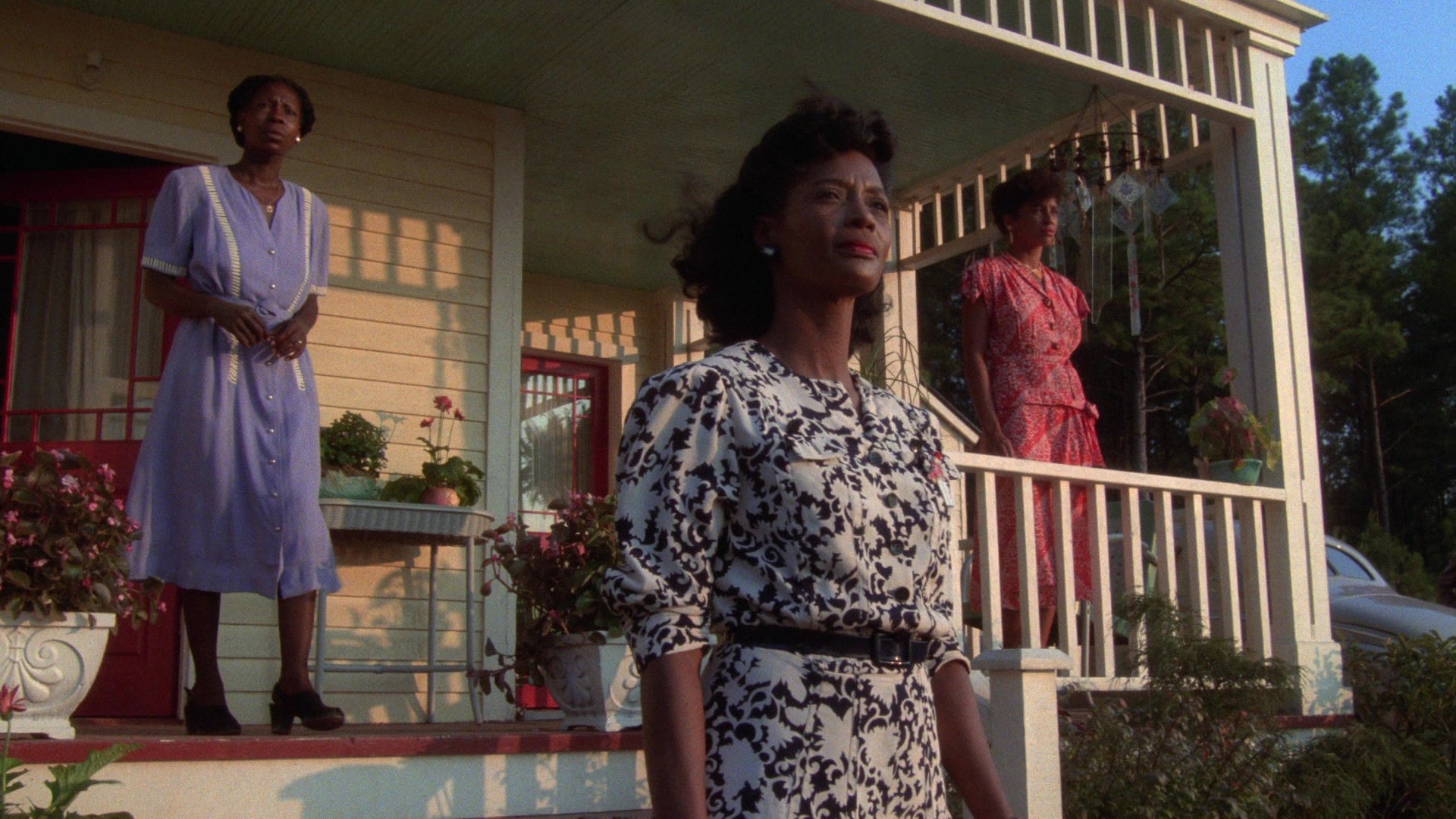
THE COLOR PURPLE (1985) is one of the most emotionally cathartic prison movies ever made, overlooked as such because its walls and bars and guards are invisible. Based on the Pulitzer Prize winning novel by Alice Walker, Hollywood remained faithful by retaining the humor and universality of her story, both book and movie discerning on sorrow and naturalism. Filled with discoveries in its cast and in the range of its director, the film is sumptuous entertainment that moving forward, helped make a huge impact on opportunities for Black filmmakers to tell their stories.

Alice Walker was born in 1944 the youngest of eight children to a sharecropping family near Eatonton, Georgia. Her mother worked as a maid, and picked cotton for their landlord. At the age of eight, Alice was playing with her siblings when one of her brothers accidentally shot her with a BB gun. Losing sight in her left eye, Walker grew up a loner, immersed in books like Jane Eyre. Her injury qualified her for a partial scholarship to Spelman College in Atlanta and later, to Sarah Lawrence College in Yonkers. Between universities, she spent the summer of 1964 as an exchange student in Uganda, starting what became her first novel, The Third Life of Grange Copeland (the following summer, Walker would live with a host family in Kenya). Graduating from Sarah Lawrence, Walker accepted a grant to move to Jackson, Mississippi, collecting depositions from sharecroppers, teaching at Jackson State University and Tougaloo College, and writing. She met her husband, a Brooklyn-raised attorney and civil rights organizer, and their union would be the first (legal) interracial marriage in the Magnolia State. Her novel was published in 1970, which Walker followed with a collection of poetry titled Revolutionary Petunias in 1974, which was nominated for a National Book Award.
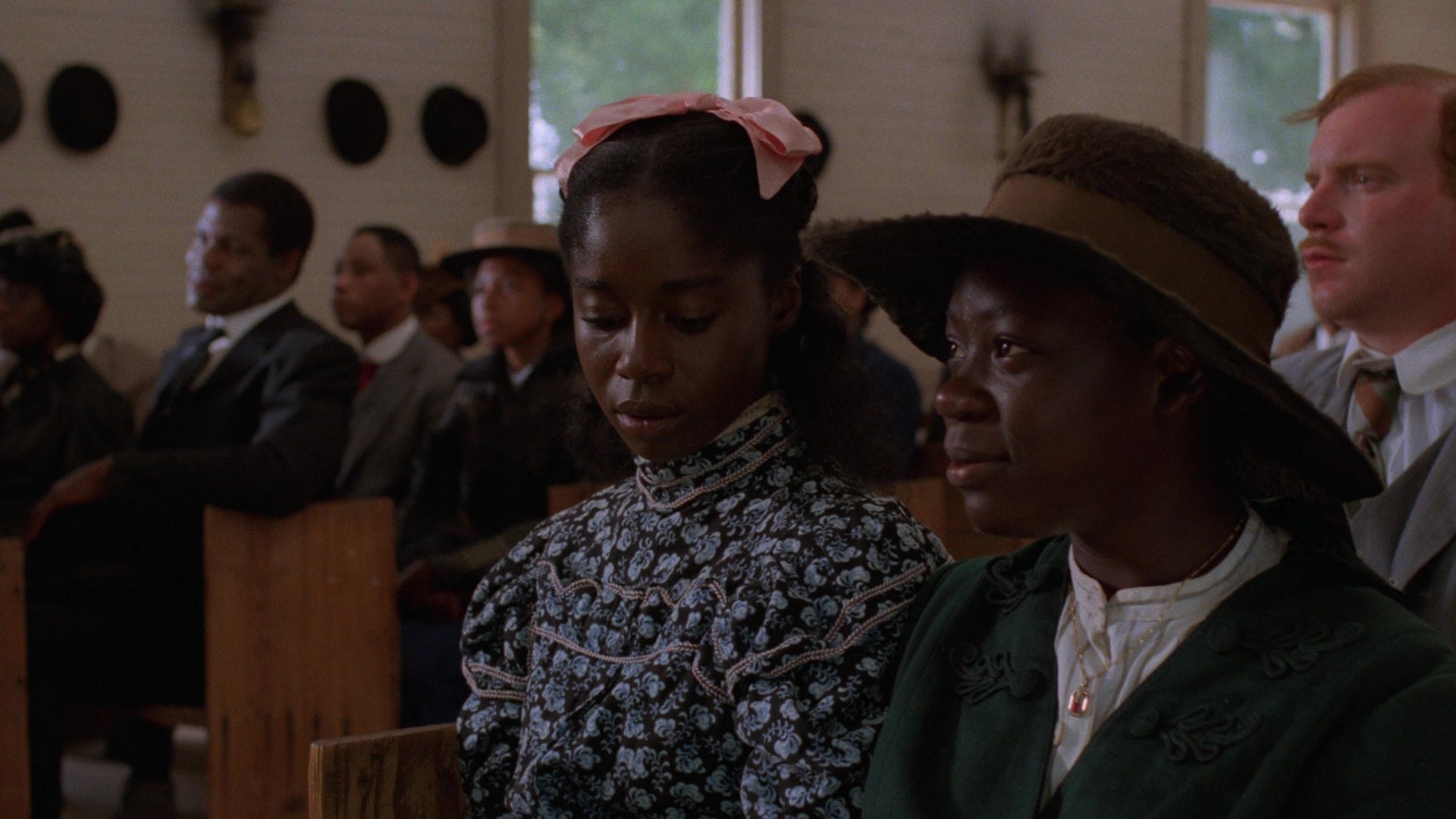
The following year, Walker took a job as a contributing editor to Ms. magazine, co-founded by Gloria Steinem, who’d become one of her mentors. Walker published her second novel, Meridian, in 1976, but living in Brooklyn with her husband and daughter, tension had pushed her to consider taking her own life. Walker’s environment had not only ground down her mental and spiritual health, but her creativity, and the grandparents whose stories she wanted to tell in her next novel were inaudible to her living in New York. Walker divorced her husband and headed west looking for a place similar to the one she’d grown up in. Settling in San Francisco, Walker discovered a town in Mendocino County named Boonville and surrounded by nature, she spent nine months writing The Color Purple. She named the character of Celie after her paternal great-grandmother and Celie’s sister Nettie for her maternal grandmother. The real Celie had been a slave, raped and sired two children by the man who’d legally owned her, babies she never saw again. Nettie had wanted to travel but never did.
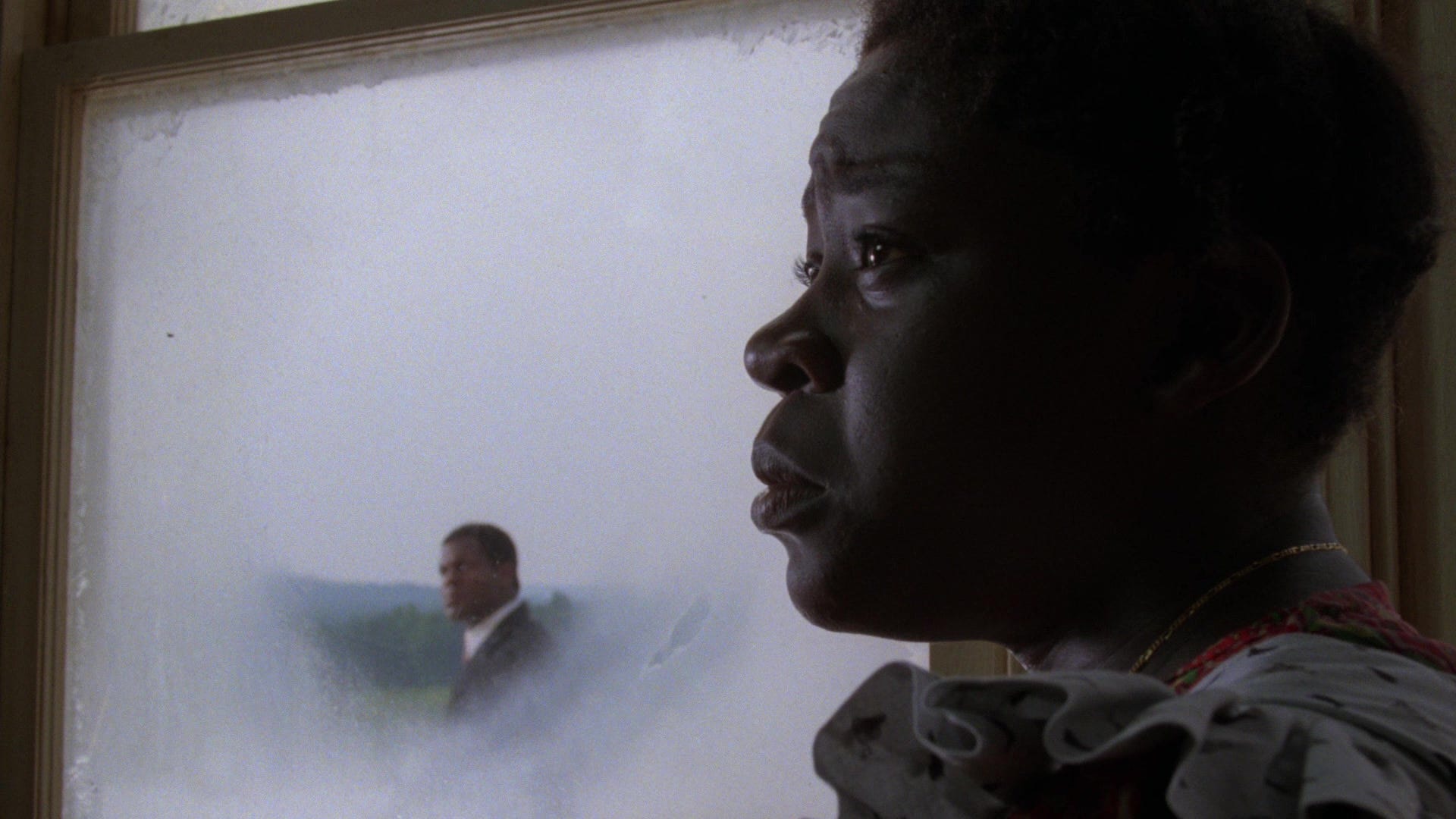
While women’s struggle was part of Walker’s work, she wanted to focus on female bonding in The Color Purple, as well as show how goodness could triumph over ugliness. She rewrote her family history, delivering Celie more love than she’d come by in life, and gave Nettie the opportunity to live in Africa. Celie was influenced by Walker’s stepgrandmother, whose husband had been a heavy drinker and kept a tall, elegant mistress so unlike his oppressed wife. Walker unspooled her novel in epistolary format, composed of letters Celie writes to God, letters her sister Nettie writes to her, and letters Celie pens for her sister, exiled by an oppressive husband Celie holds in such contempt she can only refer to him as Mr. ___. Published in 1982, The Color Purple used a clear style, humor and triumph to connect with readers in a way Walker’s previous books had not. In 1983, it was awarded the Pulitzer Prize for literature. Soon, Hollywood came calling. As the former president of Columbia Pictures and chairman of Casablanca Record and Filmworks, Peter Guber’s track record had won him the job of running a new movie and television division of PolyGram Group, and he’d brought in his friend Jon Peters as co-owner and co-managing director, of PolyGram Pictures, in 1980. By the time The Color Purple was published, Guber & Peters had departed PolyGram to launch their own company. Their dealmaking had helped get Flashdance (1983) produced, though it was acknowledged in the industry that Guber & Peters hadn’t had much creative to do with the blockbuster.
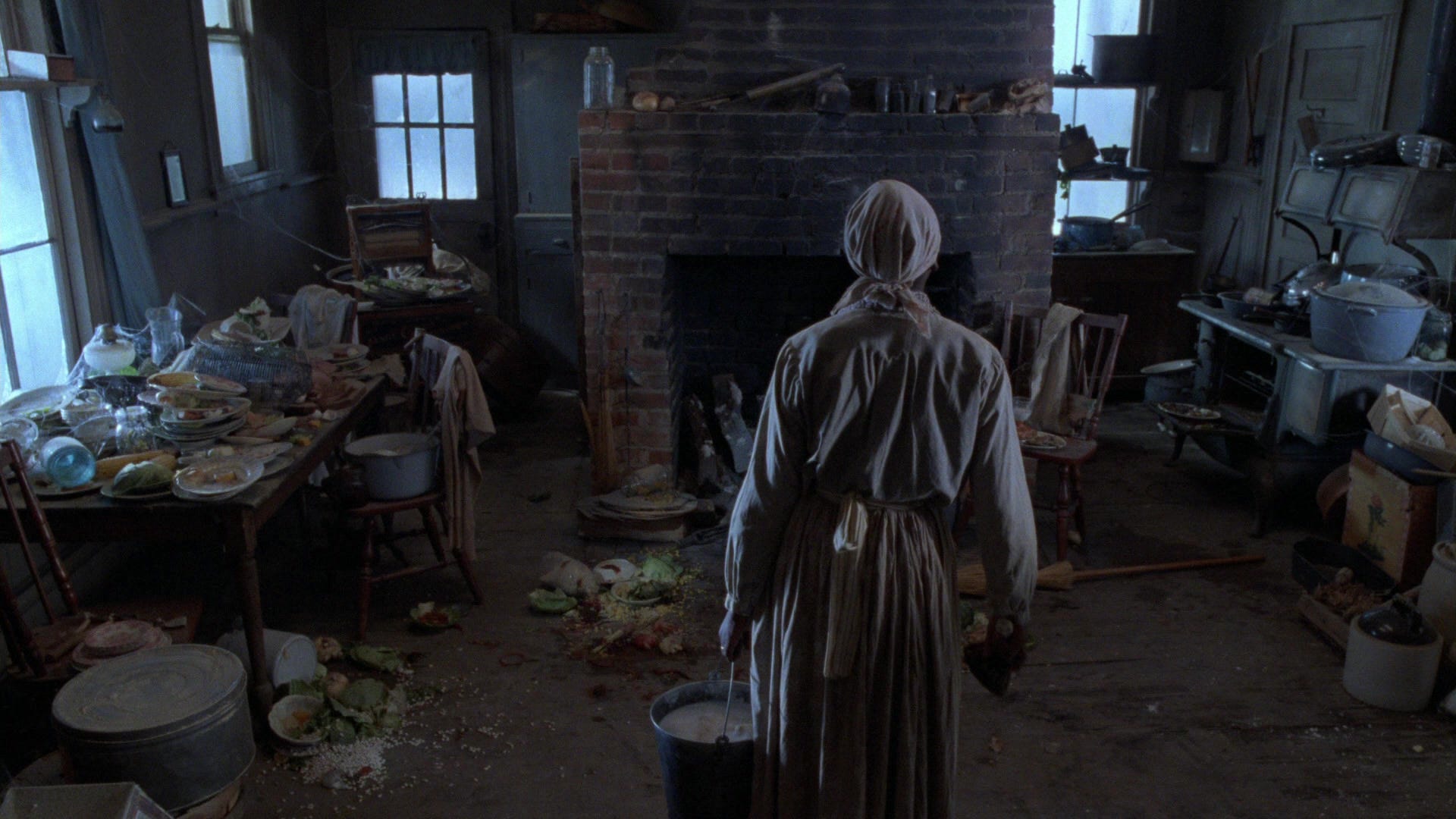
Walker didn’t know anything about the film industry, didn’t even watch much in the way of movies or television. It took convincing by friends spread out across the country–actors Ruby Dee & Ossie Davis, poet and author Maya Angelou, writer and activist Toni Cade Bambara, and Gloria Steinem–for Walker to agree to meet with Guber. According to Walker, he showed up looking nothing like a sleazy movie producer: young, with long hair and wearing a backpack, as he was searching for her house on foot. In the hour he spent pitching Walker to option him film rights to The Color Purple, Guber mentioned his close relationship with his grandmother, who’d read family letters to him as a boy. Guber envisioned an event film that would employ the talents of Walker’s favorite artisans. He threw out Steven Spielberg’s name, but Walker didn’t know who the director was. When Guber mentioned composer and record producer Quincy Jones, Walker got interested. Jones had toured France in 1959 with his own jazz band and upon returning to New York, accepted a job with Mercury Records as director of A&R. There were no African Americans scoring motion pictures, so when director Sidney Lumet asked Jones to score The Pawnbroker (1964), he quit his job to do so. As a record producer, Jones would produce Off the Wall and Thriller for Michael Jackson, transforming the former child star into “the King of Pop,” a Black superstar embraced the world over. This may have been what got Walker’s attention.
Jones would claim that The Color Purple first came to him as a book he packed on a trip to France because it looked like the shortest read. When Guber phoned Jones two months later–looking for help closing a deal with Walker–it was to gauge the producer’s interest in writing songs for the film. Jones, who’d been waiting fifteen years for the opportunity to produce a major film, told Guber he’d like to be involved, but as the producer. Though he’d produced soundtracks for In the Heat of the Night (1967), The Hot Rock (1972) and The Wiz (1978), Jones had never line produced a movie, but assured Guber if he got in over his head, he’d reach out for help. With Jones developing a film version of The Color Purple, Alice Walker convened a council of those in San Francisco whose opinion she most trusted. This included her partner Robert Allen, a political writer and professor at Mills College, and her sixteen-year-old daughter, Rebecca Walker Leventhal. Barbara Christian was a literary critic and professor at Berkeley. Faith Mitchell, a medical anthropologist, Daphne Muse an author and social commentator, and Belvie Rooks a human rights activist.
Allen and several others came out against Walker making a movie deal, their experience with Hollywood’s portrayal of Black culture resoundingly negative. Quincy Jones’ involvement forced them to reconsider. Christian asked what any of them expected to change if they were unwilling to take a risk. Walker realized that millions around the world would never read her novel, while everyone could watch a movie. In November 1983, the press announced that Warner Bros. Pictures had optioned the film rights to The Color Purple, with Quincy Jones and the Guber-Peters Co. as producers. Independent of Jones’ search for a director, producer Kathleen Kennedy–co-founder of Amblin Entertainment with Steven Spielberg and Frank Marshall–handed Spielberg a copy of The Color Purple, not to vet its potential for a movie they might make, but for Spielberg to give it a read over the weekend to appreciate its writing. By his own admission, Spielberg was not a heavy reader, but Kennedy knew he was interested in broadening his palette as a filmmaker. Between post-production on Indiana Jones and the Temple of Doom (1984) and executive producing Amblin’s inaugural production of Gremlins (1984), Spielberg was unsettled on what he would direct next. At the top of his list was a musical adaptation of Peter Pan (though not, as reported at the time, starring Michael Jackson) and a historical fiction set during the Holocaust based on Thomas Keneally’s novel Schlinder’s Ark.
By framing her story as a series of letters written in plain language, Walker had given readers like Spielberg the key to access her book and finish it in a few hours. When he enthused to Kennedy that The Color Purple would make a great movie, she suggested Spielberg talk to Quincy Jones about directing it. He’d just worked with the producer, Jones producing an audio storybook for E.T. The Extra Terrestrial (1982) that Michael Jackson had narrated and would win a Grammy Award for Best Recording For Children. The closest Spielberg had really come to working with a Black cast was The Bingo Long Traveling All-Stars & Motor Kings (1976), a comedy about Negro league baseball which Spielberg briefly considered directing should Jaws (1975) start to look like a boondoggle and leave him unemployed. Spielberg took nearly three months to be reassured by Jones that if he didn’t direct The Color Purple, a film would never be made. Spielberg refused to get involved without the approval of Alice Walker. In February 1984, he joined Jones in San Francisco to meet the author. Walker’s teenage daughter had found E.T. playing in the Bay Area and taken her mother to see it. Walker liked the movie, and considered that if Spielberg could make her empathize with a frumpy little alien, her characters might be in safe hands.
Spielberg’s window into Celie’s world had been the divorce of his parents at the age of fourteen, and families breaking apart and being made whole again would be central to several of his films, beginning with E.T. Spielberg impressed Walker with his love and enthusiasm for her characters, and the author trusted Quincy Jones that Steven Spielberg was the right choice to direct. In addition to remaining involved as a consultant—on all things related to a Black family in rural Georgia from clothing to church hymns to dialect—Walker was asked by Jones and Spielberg to adapt her novel to screenplay. Exhausted from spending the last year giving Pulitzer Prize interviews and defending her work, Walker went up to Mendocino County for three months to write a script. Adding descriptions not in her book to the script, Walker also offered an alternate title (Watch For Me In the Sunset) out of concern that a movie titled The Color Purple would never do her novel justice. With Steven Spielberg, Kathleen Kennedy, Frank Marshall and Quincy Jones as producers, and Jon Peters & Peter Guber rewarded executive producer credits, Walker finished a draft for Hollywood in May 1984. Lucy Fisher–the executive VP of worldwide production at Warner Bros. who was shepherding Gremlins at the studio--praised Walker for her contributions, while the director acknowledged that Walker had gone beyond her novel to introduce new ideas, but neither were satisfied with the script.
Several screenwriters Spielberg approached either didn’t think Walker’s novel was filmable, or weren’t willing to take a chance finding out. Melissa Mathison, author of E.T., traveled to San Francisco to meet Walker, but beyond her being a woman too, Walker didn’t click with her. Amblin got down to a screenwriter named Menno Meyjes with zero screen credits. Born and raised in Holland, with Dutch as his primary language, Meyjes had started out typing what he thought was a screenplay, which a neighbor who worked in episodic television coached him with. Mastering English in international school, Meyjes ended up attending San Francisco Art Institute. He landed a literary agent, who got him a meeting at Zoetrope Studios, which commissioned Meyjes to write a script he’d pitched them about the Children’s Crusade, which would be produced as Lionheart (1987) with Eric Stoltz starring. Meyjes had already read The Color Purple twice before Amblin called to discuss him adapting it. He offered that ignoring the epistolary structure of the book and focusing on Celie, it was actually a simple book to adapt: one woman’s point of view, one primary location, one woman’s life. Meyjes admired Terrence Malick’s use of voiceover narration in his pastoral films Badlands (1973) and Days of Heaven (1978) and felt Celie and Nettie’s letters could be presented similarly.
Walker had been concerned that any screenwriter unfamiliar with Black history might assume that folk speech indicated characters who were living in squalor, whereas Mr. was a landowner who’d never known poverty. Meyjes had grown up in an area of Holland with its own rural dialect, which speakers of proper Dutch tended to look down on, but gave Meyjes a facility writing folk speech. Inexplicably, Alice Walker and Menno Meyjes clicked. The screenwriter booked a room at the Chateau Marmont in Los Angeles, wrote and sent his pages to Spielberg daily while the director was across town supervising production of The Goonies (1985). Working with Spielberg, Meyjes completed five drafts of The Color Purple over five months. Casting got underway with the hiring of Reuben Cannon, a Black casting director who’d worked mostly in television but notably on A Soldier’s Story (1984), a film with an all-Black cast distributed by a major studio.
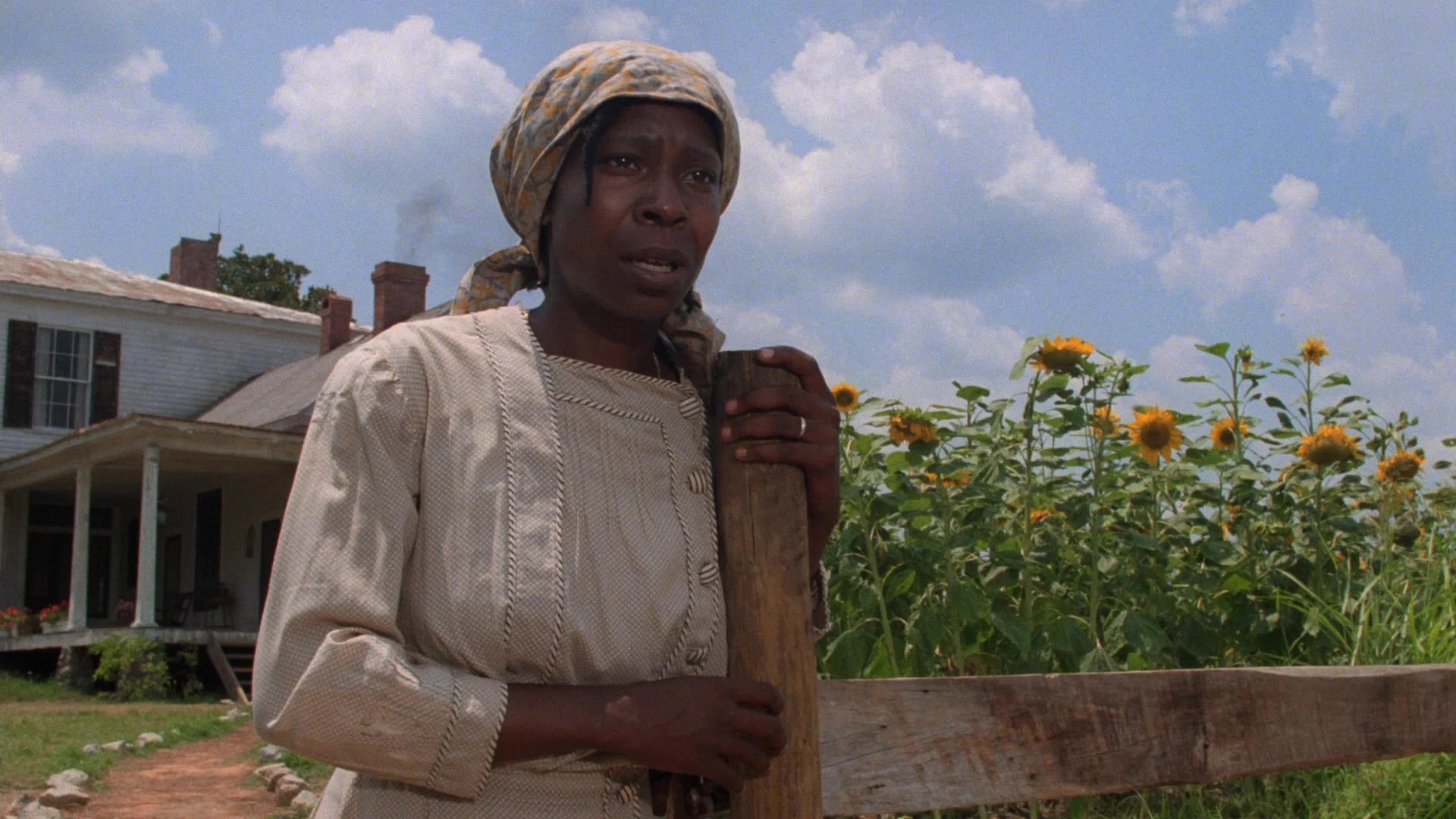
After her novel, Alice Walker’s biggest contribution to The Color Purple may have been the casting of Whoopi Goldberg in her film debut. Born Caryn Johnson, Goldberg was a sketch comedian whose act Walker had caught at the Valencia Rose, a cabaret in San Francisco. Goldberg had reached out to the author first, hearing her read her work on NPR and writing Walker a letter in which she offered to play anything if The Color Purple were made into a movie. Walker had written the performer back. In 1984, Goldberg’s career was on a rocket. Her one-woman monodrama (The Spook Show) at the Dance Theater Workshop in Chelsea had been a sensation in the spring, Vanity Fair calling Goldberg a cross between Richard Pryor and Lily Tomlin, and that fall, Mike Nichols produced Whoopi Goldberg on Broadway. Spielberg took Walker and Jones up on their advice and asked the performer to come to L.A. to audition. Goldberg didn’t consider herself an actor and asked if she could do her show for them instead. Arriving at the Amblin Entertainment facility at Universal Studios, Goldberg was greeted by an audience that included not only Steven Spielberg and Quincy Jones, but Richard Pryor, Michael Jackson, Ashford & Simpson and at least forty others. When Spielberg told Goldberg he was directing The Color Purple and wanted her in it, Goldberg’s instinct was to ask to play Sofia, who she thought was the more dynamic character. Spielberg wanted Goldberg to play Celie.
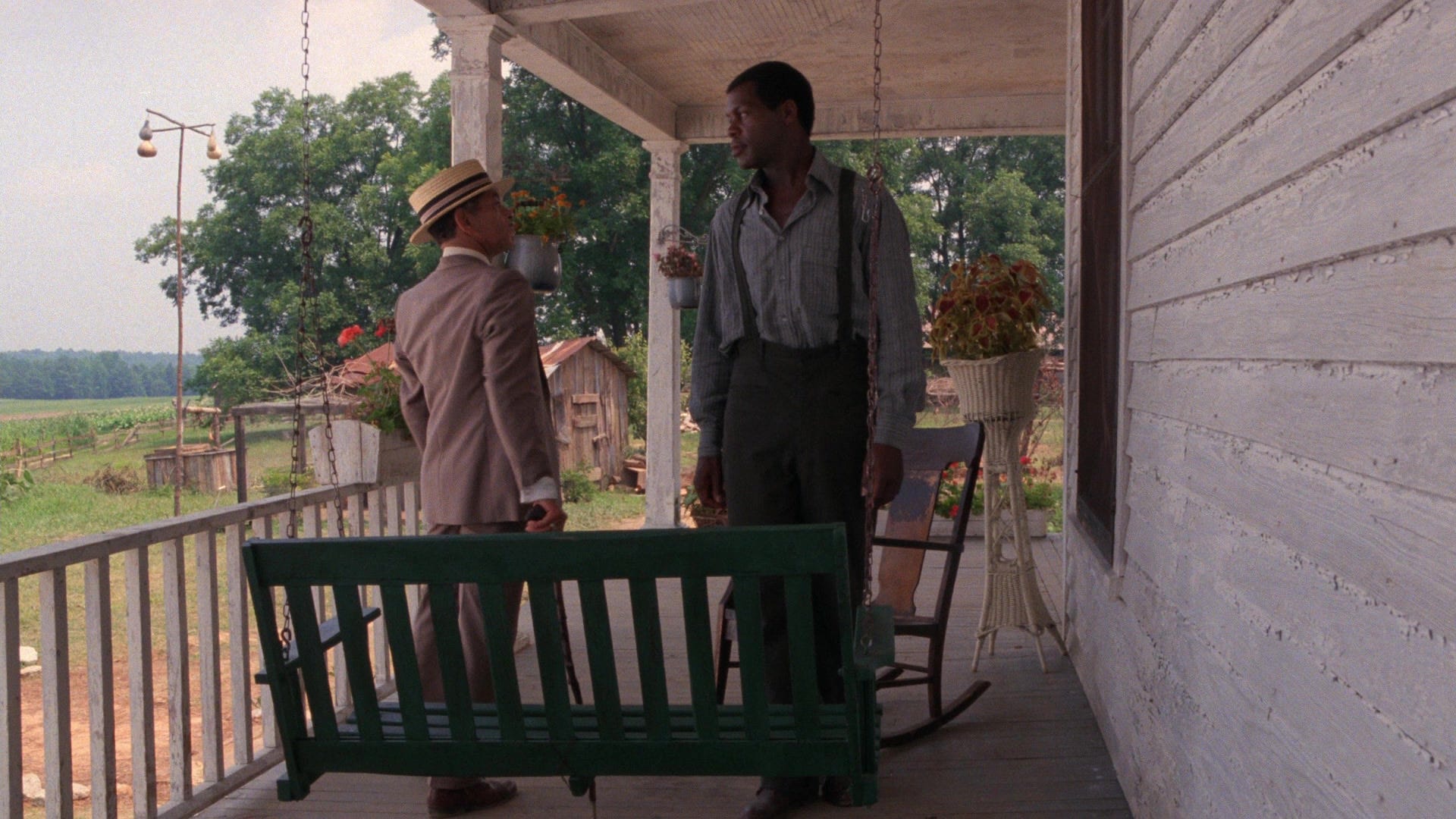
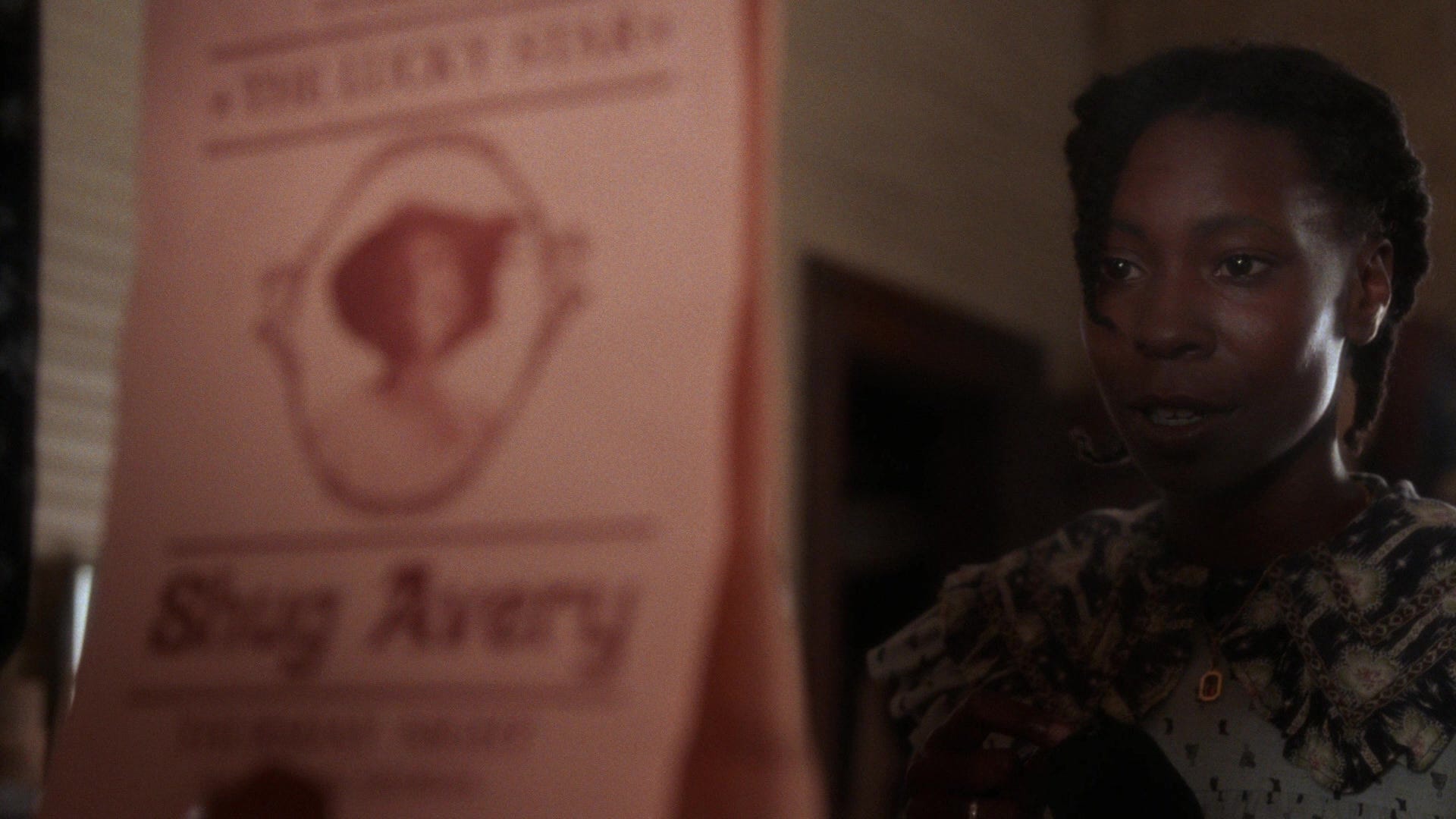
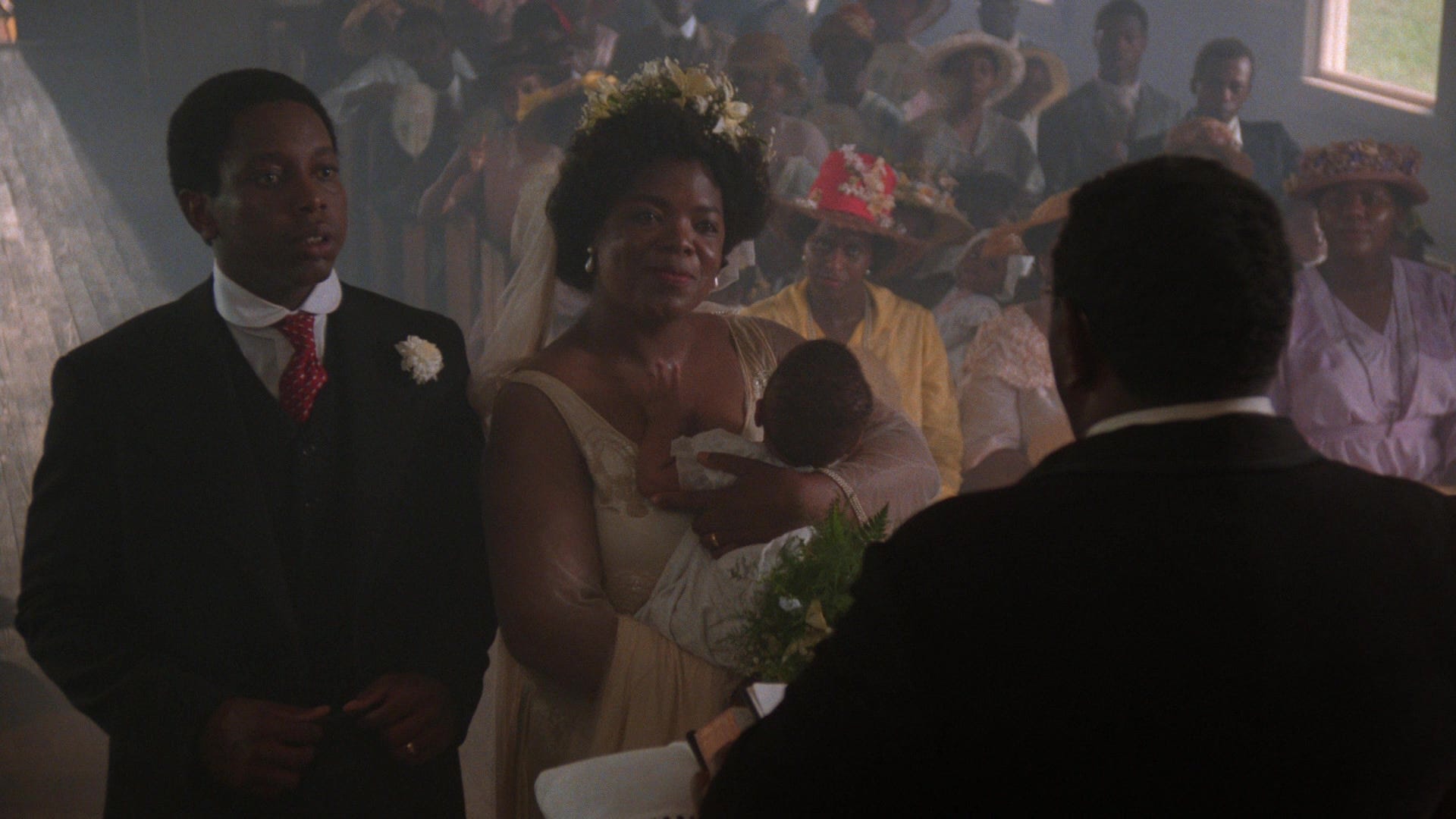
Danny Glover emerged as the director’s choice to play Mr., based on his performance in Places In the Heart (1984). For the role of Mr’s blues-belting mistress Shug Avery, Spielberg and Jones courted Tina Turner, at her maximum career prestige following the success of her solo LP, Private Dancer. Turner turned the part down by stating that she’d already played a battered woman–married to Ike Turner for sixteen years–and was more interested in playing a character like Indiana Jones. Turner got her wish, accepting the role of heroic villain Auntie Entity in Mad Max Beyond Thunderdome (1985). Margaret Avery had worked mostly in television and after winning the part of Shug, had to remind Spielberg that they’d worked together before, her small screen debut made in a TV movie he’d directed titled Something Evil (1972). According to legend, Quincy Jones was in Chicago to be deposed in a nuisance lawsuit a musician had filed against Michael Jackson for plagiarism. Jones was up early and turned on A.M. Chicago, a new half-hour news magazine hosted by a 30-year-old named Oprah Winfrey. The producer thought he was watching Sofia, the bold daughter-in-law of Celie. After flying to Los Angeles to audition for Cannon, Winfrey heard silence for two months, and had booked herself into a health spa to lose weight when she got the call from Amblin offering Winfrey the role of Sofia without needing to shed a pound.
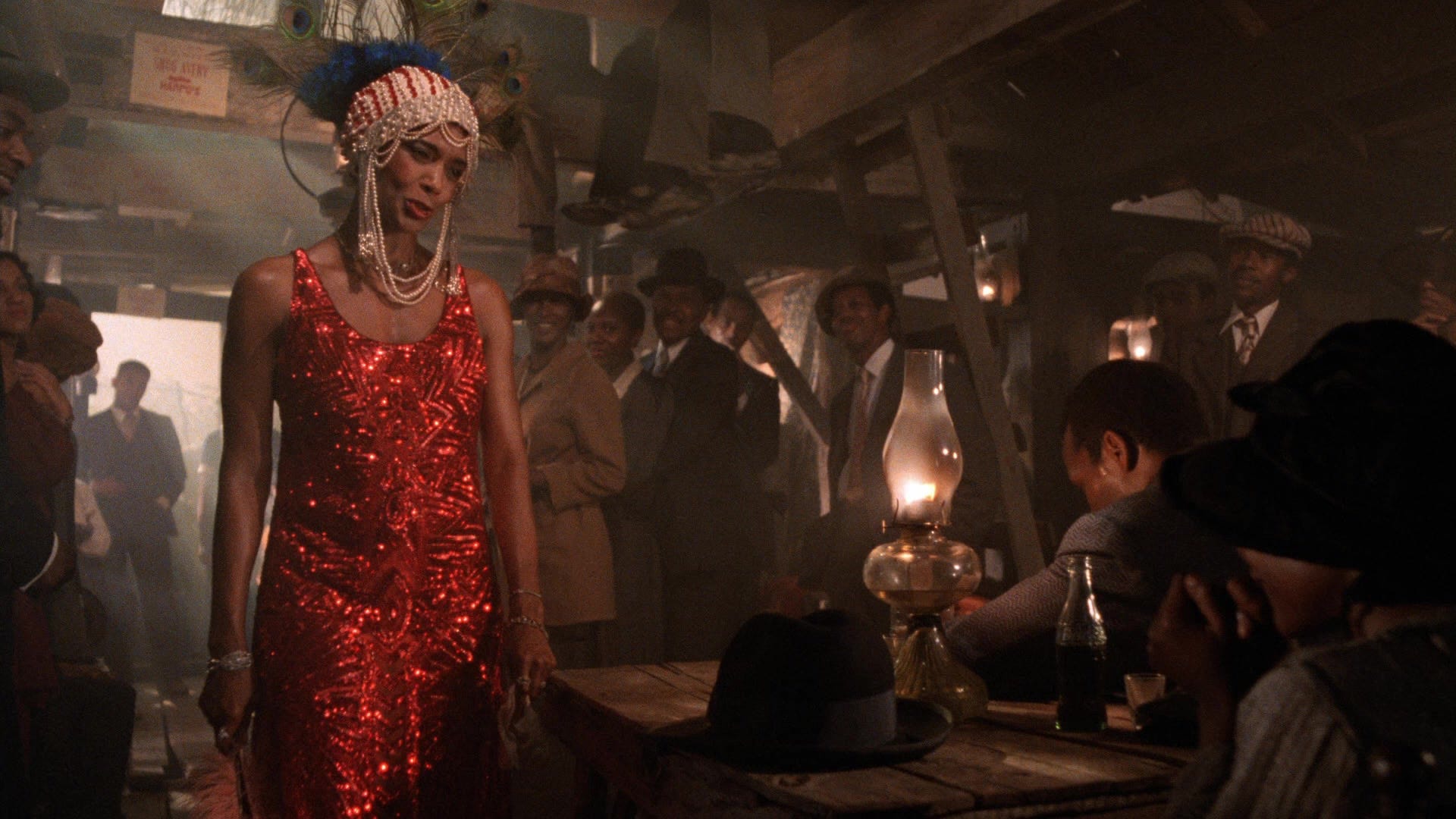
Ghana-born Akosua Busia was cast as Celie’s sister Nettie, Willard Pugh as Sofia’s husband Harpo, Rae Dawn Chong as Harpo’s second wife Squeak, and Adolph Caesar, who Cannon had cast as the despised drill sergeant in A Soldier’s Story, as Celie’s father-in-law, Old Mr. As a producer, Spielberg anticipated that the audience for The Color Purple would be a specialty audience, and to reduce the financial exposure for Warner Bros., chose to work for the DGA minimum, compelling Quincy Jones to do the same under union guidelines for the PGA. The production budget for The Color Purple would be $15 million (two other prestige dramas released in December 1985, Out of Africa and Revolution, would cost $31 million and $28 million to produce). Alice Walker had specified in her contract that at least half the crew of The Color Purple be female, African American or “people of the Third World,” but Spielberg had the blessing of Quincy Jones to assemble a team to make the best movie he was capable of making, regardless of who they were.
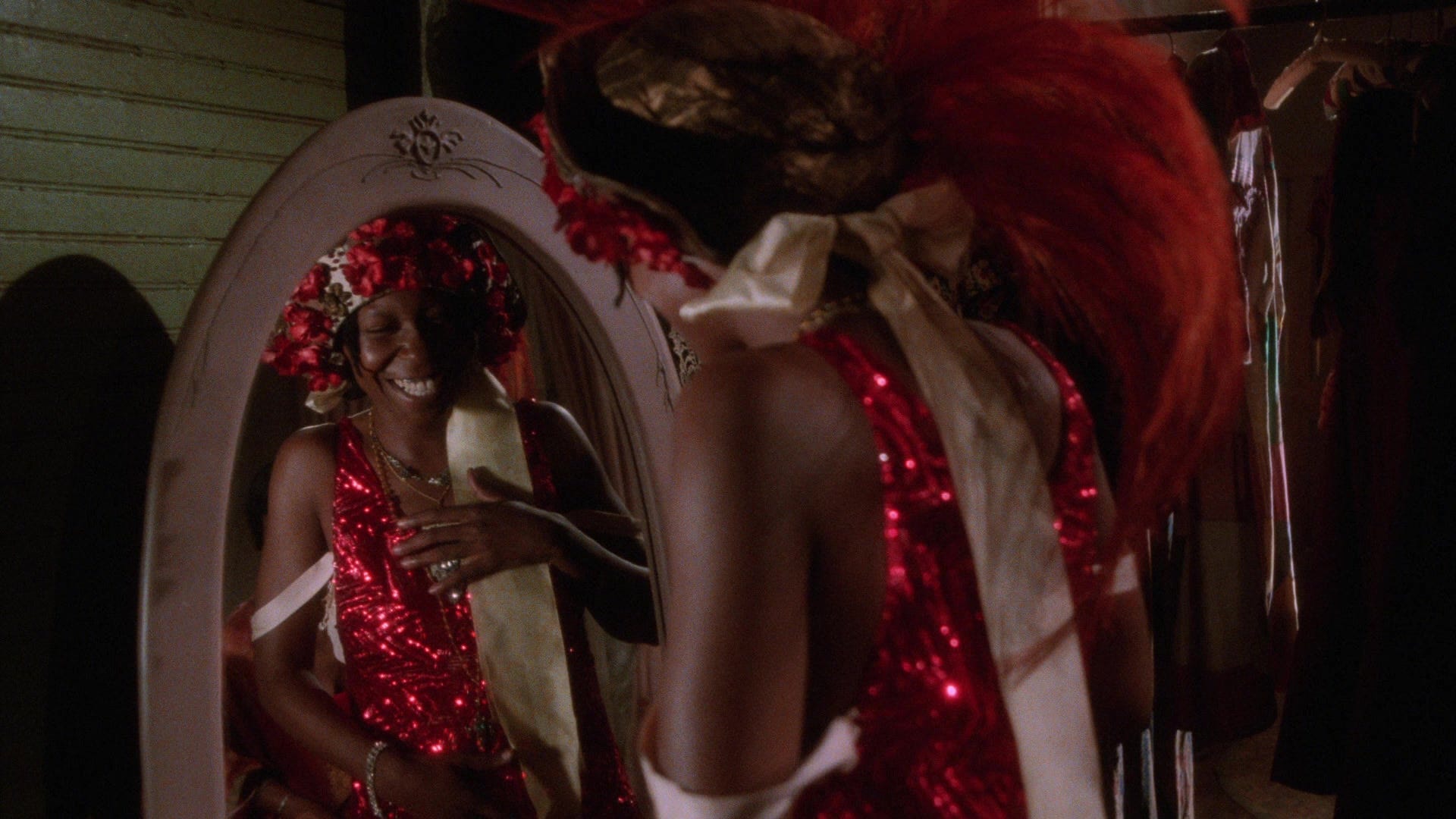
Cinematographer Allen Daviau had lit Spielberg’s college thesis Amblin’ (1968) as well as E.T. Production designer J. Michael Riva had built the worlds of The Adventures of Buckaroo Banzai: Across the 8th Dimension (1984) and The Goonies (1985). Art director Bo Welch was coming off the WWII era picture Swing Shift (1984). Linda DeScenna had worked with Riva as set decorator of Buckaroo Banzai and The Goonies, and Blade Runner (1982). Another Buckaroo Banzai veteran, Aggie Guerrard Rodgers, had designed costumes for American Graffiti (1973) and Return of the Jedi (1983). Perhaps using John Ford’s adaptation of The Grapes of Wrath (1940) as a touchstone, Spielberg had considered filming The Color Purple in black and white with director of photography Gordon Willis, who used low light and muted colors for films like The Godfather (1972). Realizing he couldn’t shoot a movie titled The Color Purple without color, or further minimize their audience, Spielberg abandoned the idea. Visually, he told Daviau that he wanted to see faces, which had not always been the case when Black actors were lit for film by white cameramen. A more subtle lighting scheme necessitated set interiors and decor in the background that were darker and wouldn’t compete with the actors’ faces in the foreground.
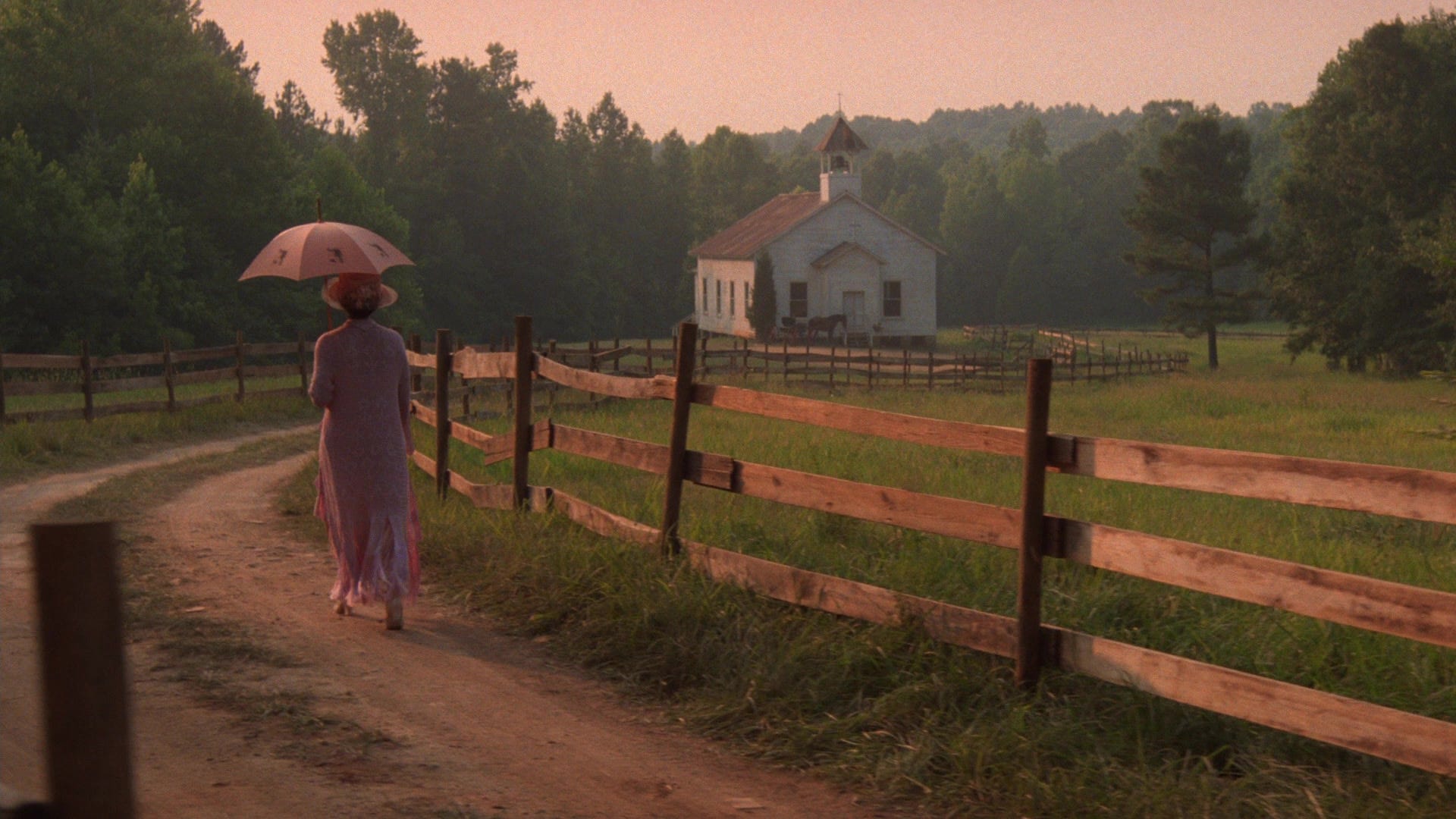
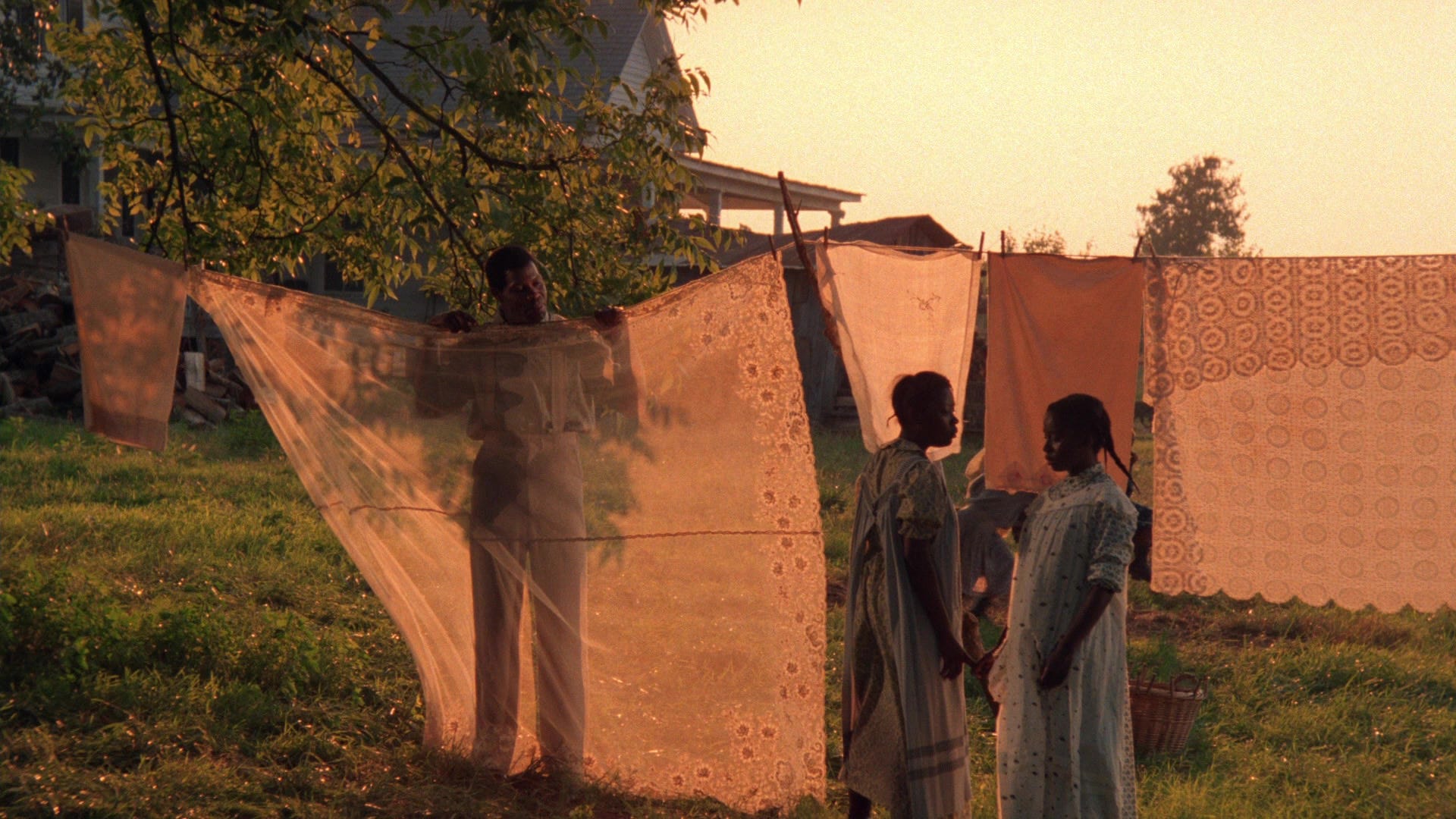
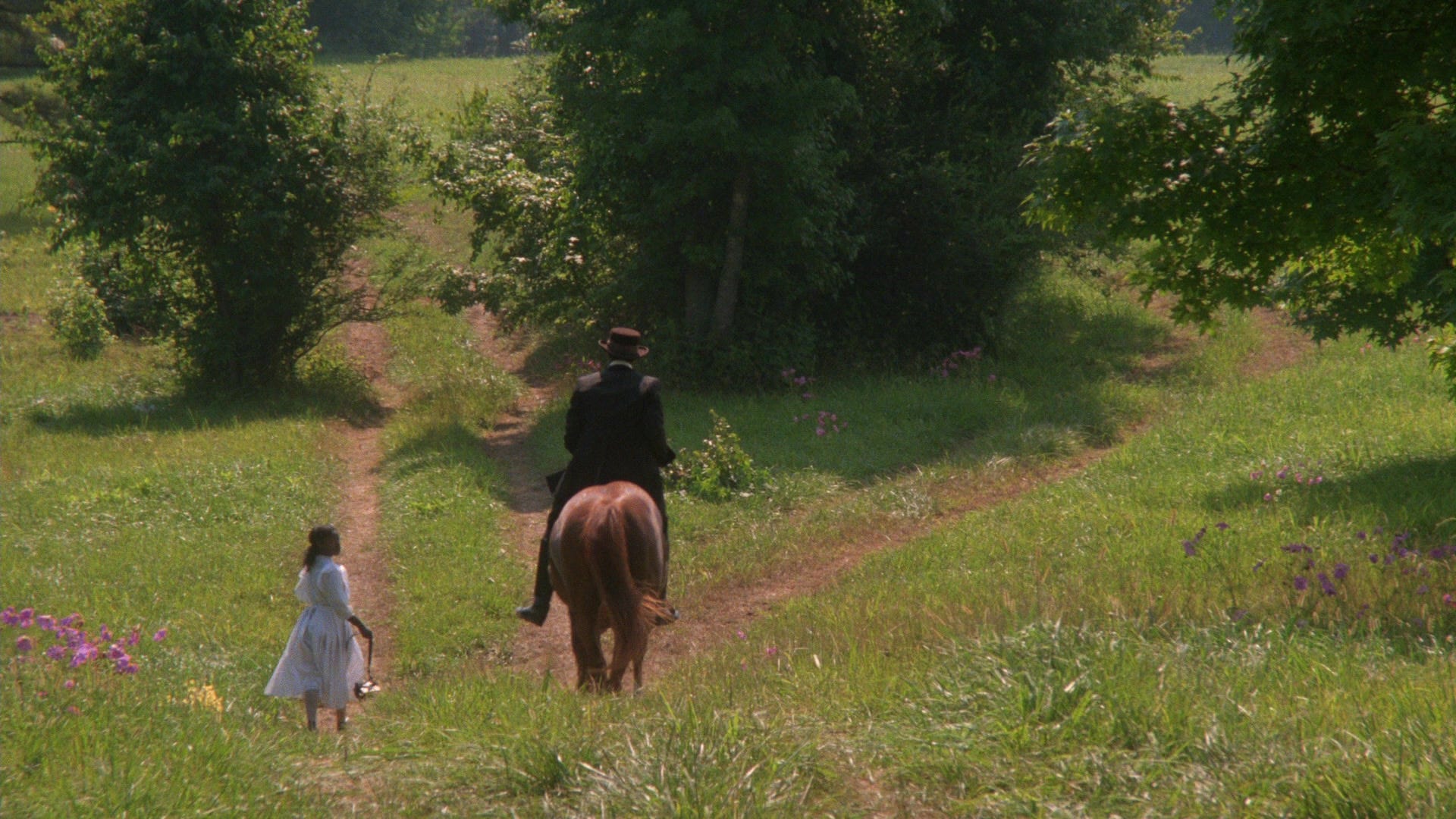
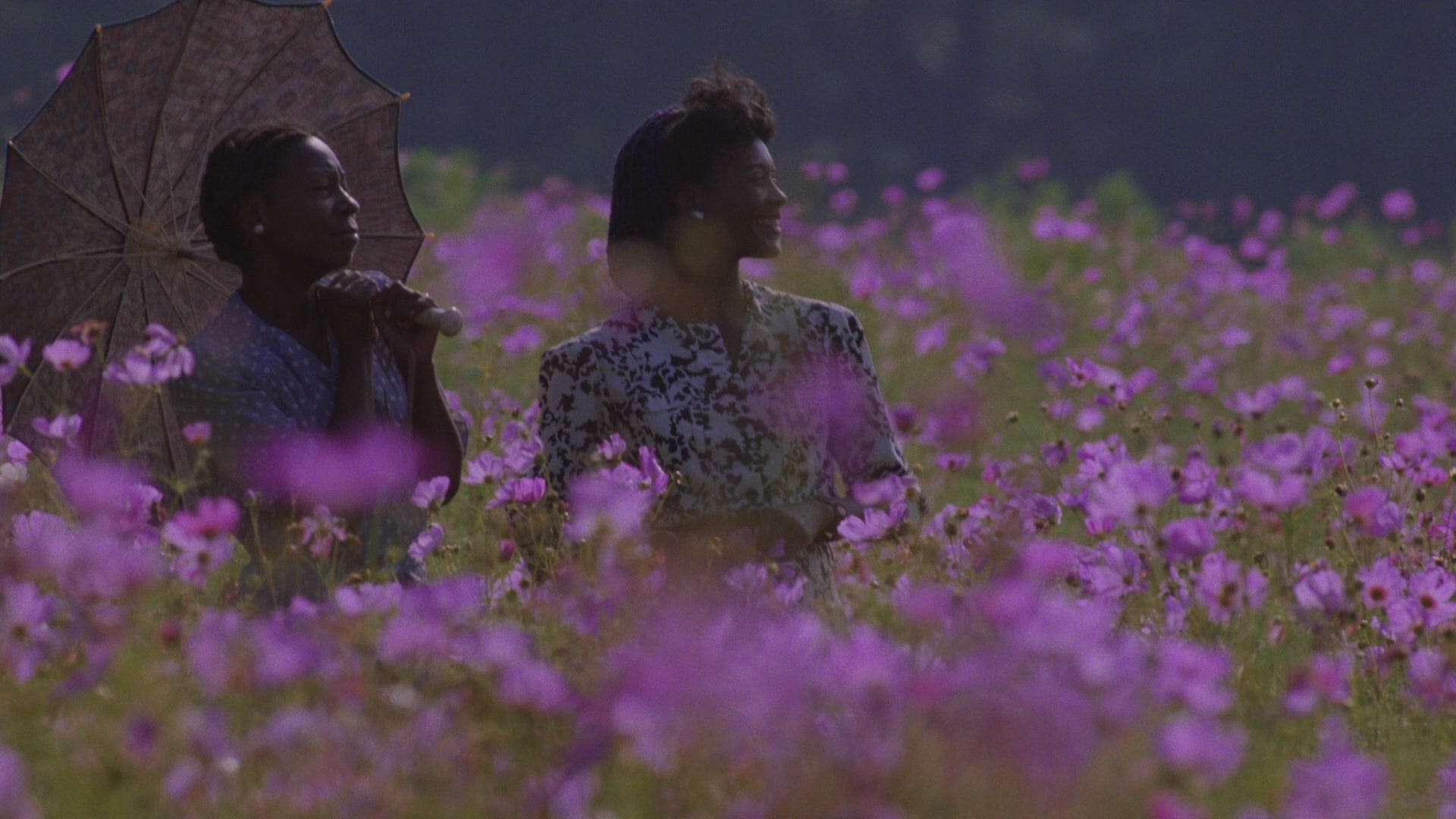
Shooting commenced in early June 1985. The first three weeks of production took place on soundstages at Universal Studios in Los Angeles, where Harpo’s juke joint and most of the interiors were filmed. This was followed by eight weeks on location in North Carolina. The town of Marshville in Union County stood in for Hartwell, Georgia, clay poured over paved streets where necessary to mimic a rural town in 1910, 1922 and 1930. Mr’s farm was constructed and filmed on a parcel near the Anson County town of Wadesboro. A sixty-year-old Baptist church facing demolition was transported to the location, while exteriors for Celie’s childhood house and Harpo’s juke joint were built nearby. Greensman Danny Ondrejko had arrived six weeks prior to plant tobacco, pearl millet and sunflowers on Mr’s farm, as well as a field of cosmos in front of Celie’s house. When the flowers bloomed, Spielberg and others were alarmed that despite the seed packets being labeled lavender, the flowers looked pink. This led to a debate over what was purple and what was pink, and as a workaround, Riva and his crew spraypainted flowers in the foreground purple for shots of actors in the field. In an era before digital compositing, the production designer also defoliated the trees and to spoof snow for the winter scenes, poured Epson salt on the ground. For the East Africa sequence, a second unit crew led by producer Frank Marshall was dispatched to Maasai tribal areas in Kenya.
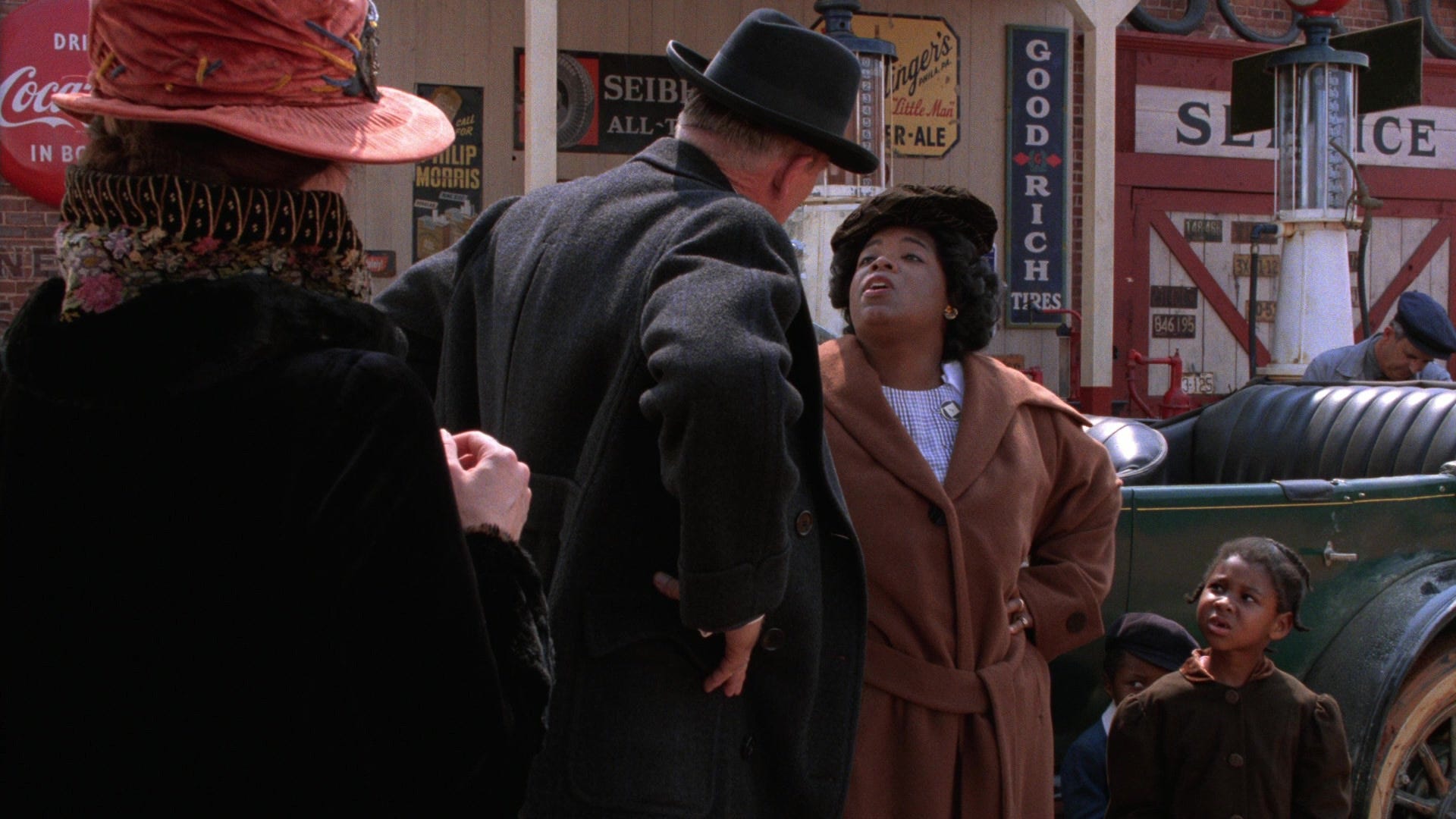
In the weeks leading up to its release, The Color Purple drew fire from both ends of the political spectrum. Some conservatives factored what they saw as a negative portrayal of men and a positive representation of lesbianism to conclude Walker’s novel was an attack on the Black family. Some progressives responded to reports that Spielberg–like most of his peers, sheepish when it came to filming sex–had neutered Walker’s book by tip-toeing around Celie and Shug’s relationship. Walker had fielded some of these complaints in 1982, but fueled by a major motion picture, the discontent among social critics amplified. Many questioned who gave Steven Spielberg a pass to adapt a Black feminist novel (the only viable alternative that critics of the film’s hiring practices could come up with for director was Sidney Poitier). A small demonstration by a group calling itself the Coalition Against Black Exploitation took place in front of Quincy Jones’ office in November 1985. The NAACP seemed to take both sides into account, praising the film for employing as many Black actors as it did, while remaining sensitive to how Black men were portrayed by the media. As for Alice Walker, she’d admit in her journal that her first reaction to the film—screened for the author, her partner Robert Allen and friend Belvie Rooks in December 1985 in a mostly empty theater—was that it was “slick, sanitized, apolitical.” Her likes and dislikes equally divided, she was left with a feeling of disappointment that the movie didn’t turn out better. Attending the world premiere in New York six weeks later and watching The Color Purple with an audience, Walker loved it, having by this time let go of scenes that weren’t in the movie.
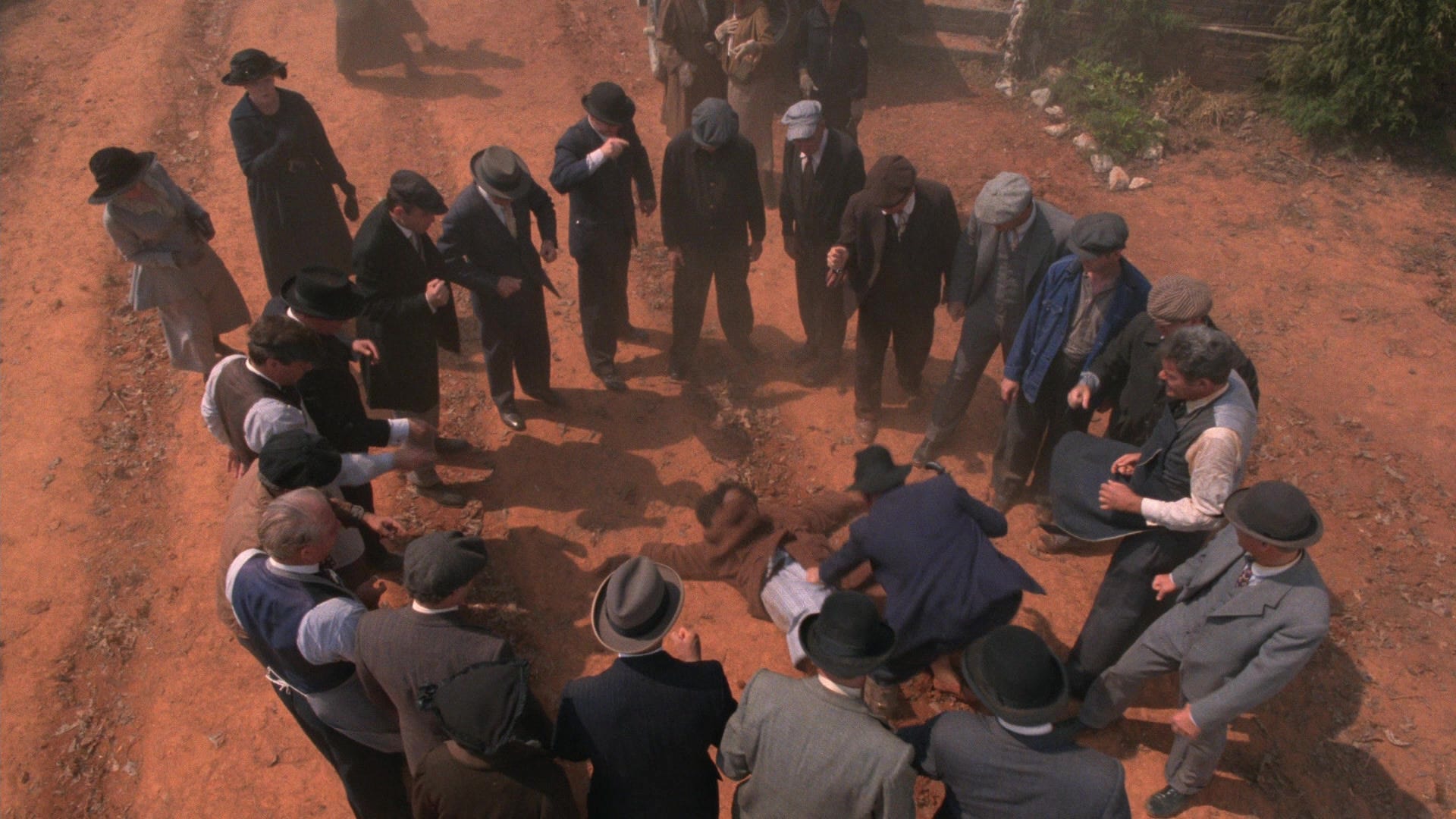
The Color Purple opened in limited release on December 20, 1985 in 192 theaters in the U.S. Newspaper critics leaned positive. On their syndicated TV program, Gene Siskel & Roger Ebert hailed it as one of the year’s best films. Siskel credited Spielberg for getting two great debut film performances from Whoopi Goldberg and Oprah Winfrey, and found their growth as characters memorable, generating well-earned tears at the end. Ebert–screened the movie separately–knew the moment his partner was talking about and admitted he cried too, out of joy as opposed to sadness. Ebert was amazed that Spielberg could direct a film as emotionally engaging as Close Encounters of the Third Kind (1977) or E.T. without special effects. Siskel would notch The Color Purple #3 on his list of the year’s ten best films, while Ebert crowned it #1. Writing for the New York Times, Vincent Canby articulated the feelings of many of the film’s detractors: “Another director might have transformed The Color Purple into a film that functioned as a tribute to the book. Mr. Spielberg’s film is a tribute to Hollywood. He’s over his head here, but the film is insidiously entertaining.” Canby did agree with Quincy Jones that without Steven Spielberg directing, it was unlikely that Alice Walker’s “black feminist family chronicle, set in the deep South, with not a decent white person in sight” would’ve been made.
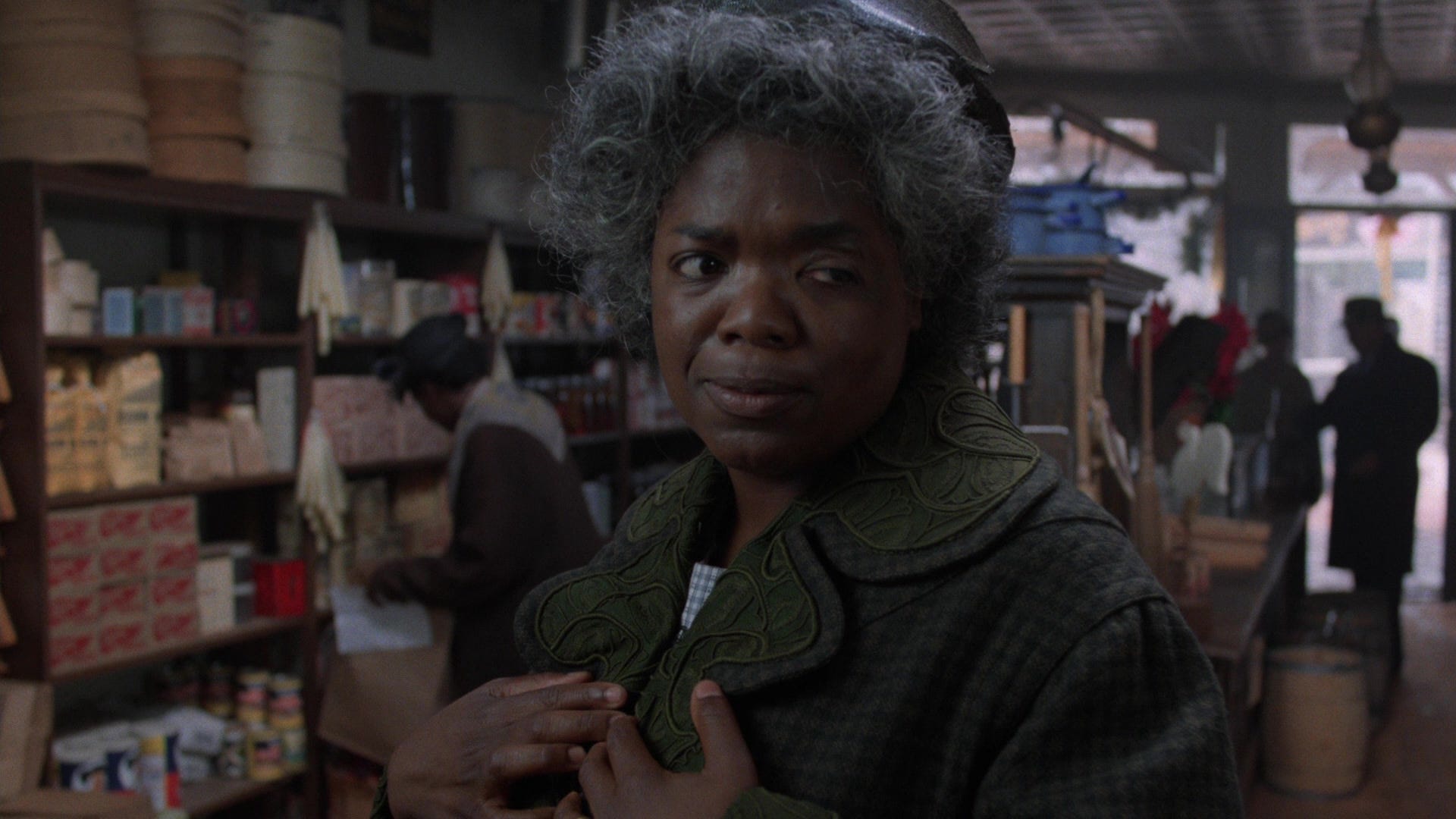
On January 17, Warner Bros. nearly doubled the number of theaters The Color Purple was playing in and for the next ten weekends, the film moved between first and fourth place at the box office. Days following the announcement it had been nominated for eleven Academy Awards, the studio expanded the release to 1,109 theaters. In very different times, The Color Purple became a blockbuster, finishing the fourth highest grossing film released in 1985, behind Back to the Future, Rambo: First Blood Part II and Rocky IV. In a troubling sign, Steven Spielberg–three times Oscar nominated for Best Director, for Close Encounters of the Third Kind, Raiders of the Lost Ark (1981) and E.T.--was passed over for a nomination as director, winning a DGA Award for Outstanding Directorial Achievement in Motion Pictures. AMPAS bestowed The Color Purple with nominations for Best Picture, Best Actress (Whoopi Goldberg), Best Supporting Actress (Margaret Avery, Oprah Winfrey), Best Writing, Best Cinematography, Best Art Direction, Best Costume Design, Best Makeup, Best Original Score and Best Original Song.
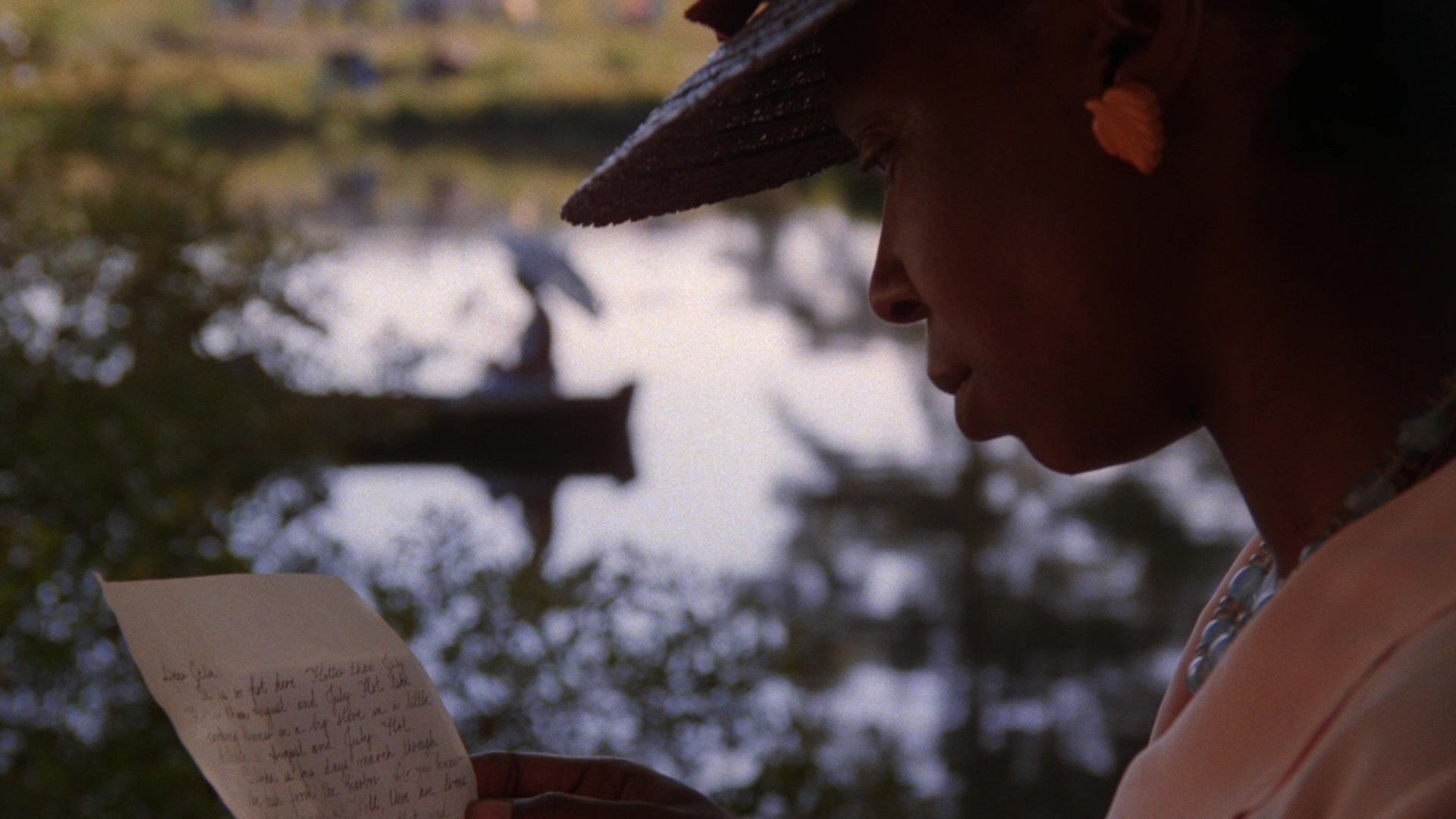
On the night of the Oscar telecast, The Color Purple was overlooked in every category. Whoopi Goldberg interpreted the shut-out as an industry-wide apology to the film’s detractors. While the cast and crew of The Color Purple, including Oprah Winfrey–who went into national syndication with a daytime talk show in 1986 and became a media titan–would maintain that the book and film were about the human experience, discussion around the movie had a discernible effect on the next generation of films about the Black experience. Coming To America (1988) evaded controversy over white screenwriters and a white director making a movie with a Black cast, the Eddie Murphy comedy taking place in a world of fantasy. From that point on, movies touching on Black culture would be written, directed and often produced by Black filmmakers: Do The Right Thing (1989), House Party (1990), Mo Better Blues (1990), New Jack City (1991), The Five Heartbeats (1991), A Rage In Harlem (1991), Jungle Fever (1991), Boyz N the Hood (1991), Strictly Business (1991), Malcolm X (1992), Posse (1993), Menace II Society (1993), Poetic Justice (1993), Crooklyn (1994), I Like It Like That (1994), Jason’s Lyric (1994), Friday (1995), Devil In a Blue Dress (1995), Dead Presidents (1995), Waiting To Exhale (1995) and more.
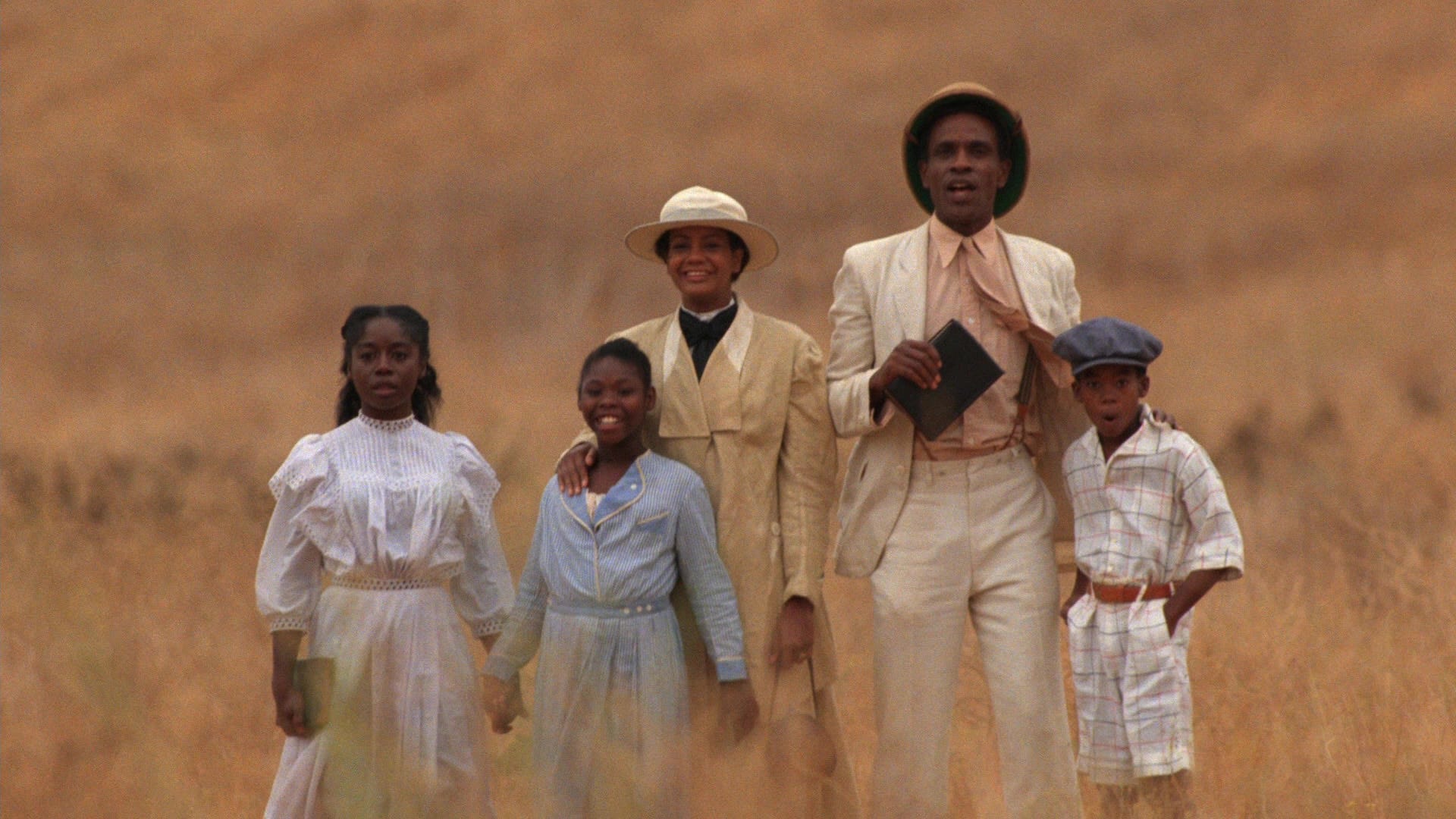
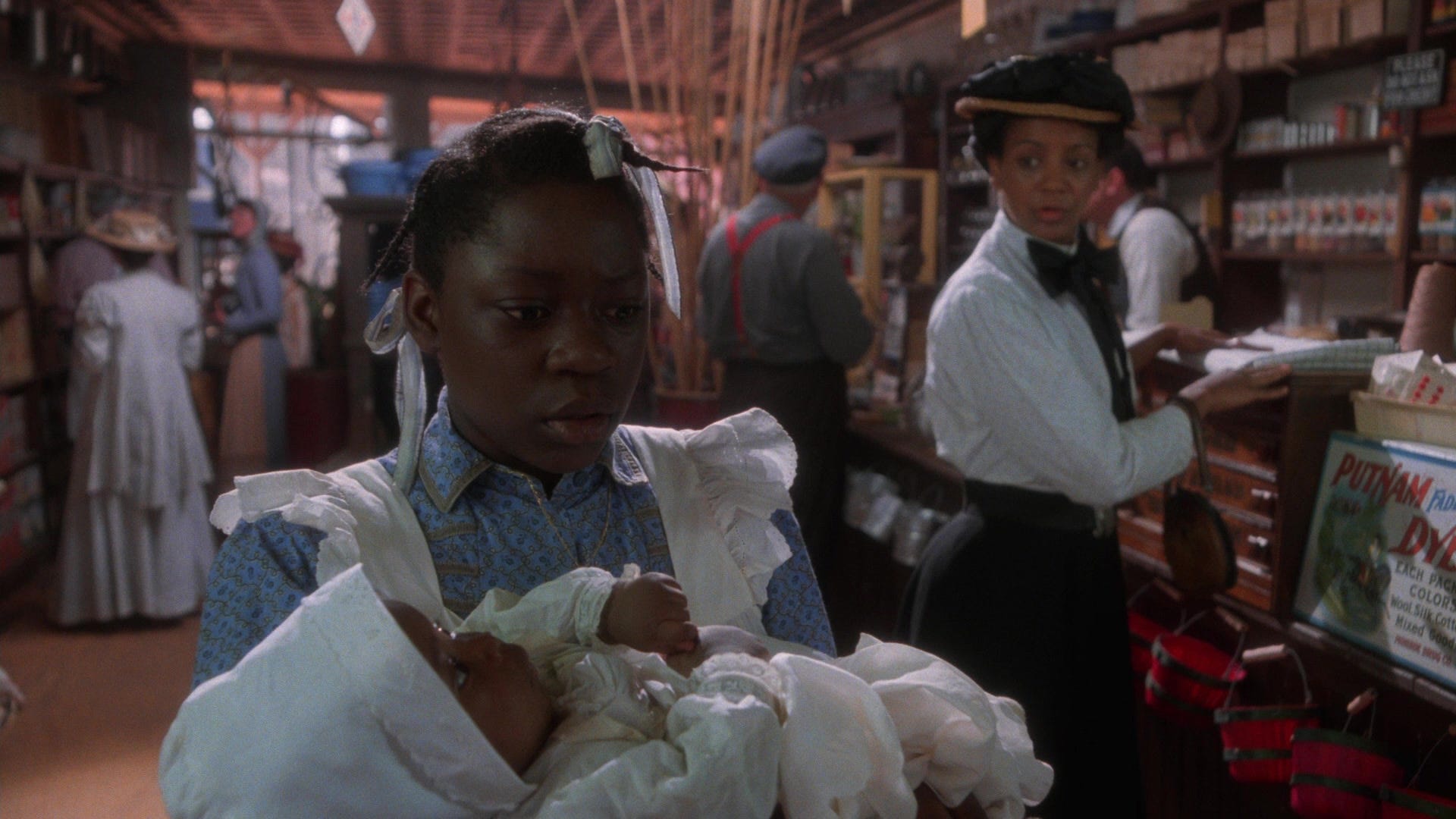
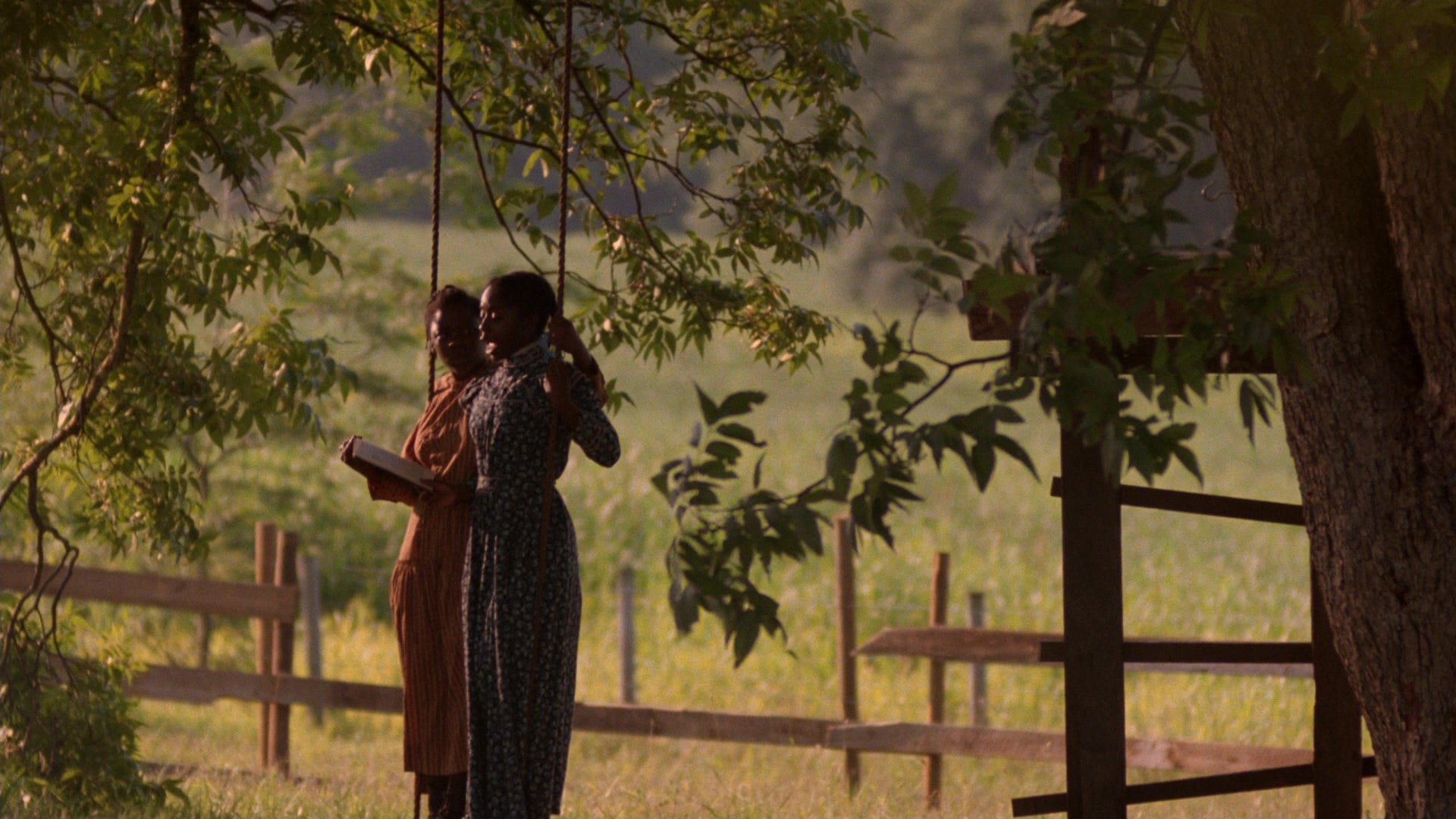
At 154 minutes, The Color Purple moves faster than most movies that run two hours, and despite having no more than five rural locations, takes the viewer on a journey as memorable as some epic adventures. This is due to how rich the characters and landscape are, and how beautifully they’re filmed. Celie’s imprisonment–by a lecherous stepfather who sires two children by her and at 14, transfers ownership to a husband who uses her like he might an ox–is relatable beyond race, gender or era because Walker, Meyjes and Spielberg reveal aspects of Celie’s inner life that stir in most of us. In the presence of those who are more prized–for their beauty or fertility–Celie is a survivor, and through hard work and submissiveness, grows powerful over the years, while others, whether charitable or cruel, weaken, offering her a transfer of power. It is difficult not to recognize aspects of ourselves in Celie, and root for her to triumph. In terms of casting, the absence of Tina Turner–Mad Max Beyond Thunderdome demonstrating her finesse in practically singing her dialogue–as the femme fatale Shug Avery is felt, but Whoopi Goldberg and Oprah Winfrey establish ownership of Celie and Sofia. In Goldberg, we can see her character thinking and readying a devastating quip when the moment is safe for her to do so. In subsequent film roles, Goldberg would rarely be allowed to be this still, introduced as brash, unbridled and modern (Goldberg would thrive as the intergalactic bartender Guinan on Star Trek: The Next Generation who knows more about strange new worlds than she’s letting on).
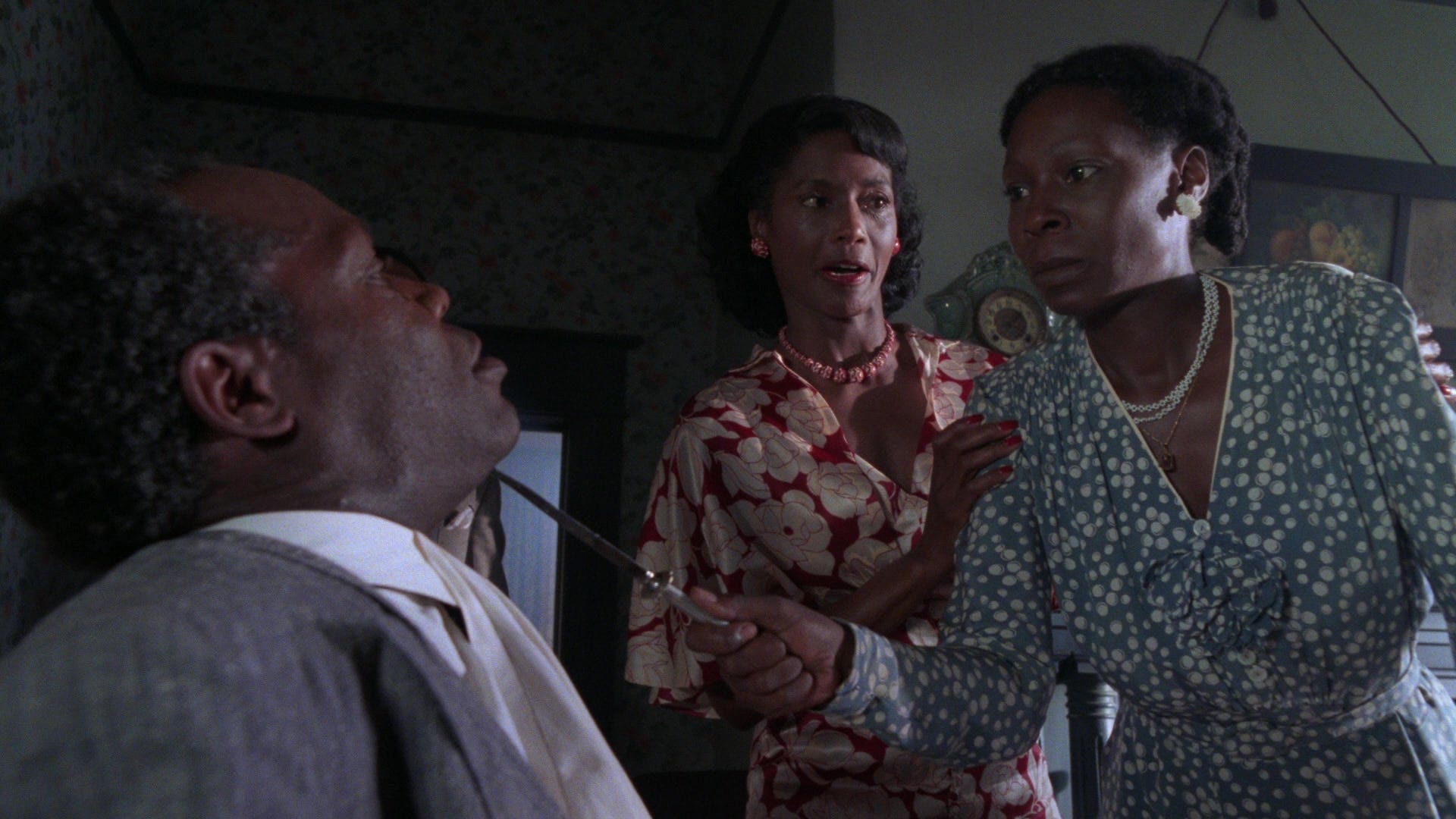
In a beguiling contrast of methods, Winfrey had zero acting experience and despite being more familiar with performing for the camera than Goldberg, was an unorthodox choice. Little of Winfrey’s talk show personality is visible in Sofia, a role that stifles her, humiliates her and ages her before she rediscovers her dignity. Danny Glover convincingly portrays how weak Mr. is, trapped by attitudes he inherited but is given a chance to redress. The fourth most compelling character in The Color Purple is the Johnson mailbox, which before electricity or the dawn of television, was the rural person’s portal to other worlds. Like a dutiful housekeeper, Celie doesn’t visit places; places visit her. In what struck some as overly sentimental, The Color Purple bends into the Hollywood musical Spielberg had envisioned since Indiana Jones and the Temple of Doom (session vocalist Táta Vega performs Shug’s singing voice in three numbers, an original song “Miss Celie’s Blues” written by Quincy Jones, Lionel Richie and Rod Temperton). Like Walker’s accessible writing style, Spielberg’s ardor for the Golden Age of Hollywood and his visual wit–cutting to an empty rocking chair Celie has fled as soon as Mr. approaches their wood-burning stove with a can of kerosene–strengthen these characters rather than muddle them, and empower us along with them.
Video rental category: Drama
Special interest: Candy Cinema
Hey Joe, good morning! Loved the Color Purple… I felt it was so deserving of all the accolades it received… As always, great job, and thank you, for all your background information research and analysis… Peace! CPZ