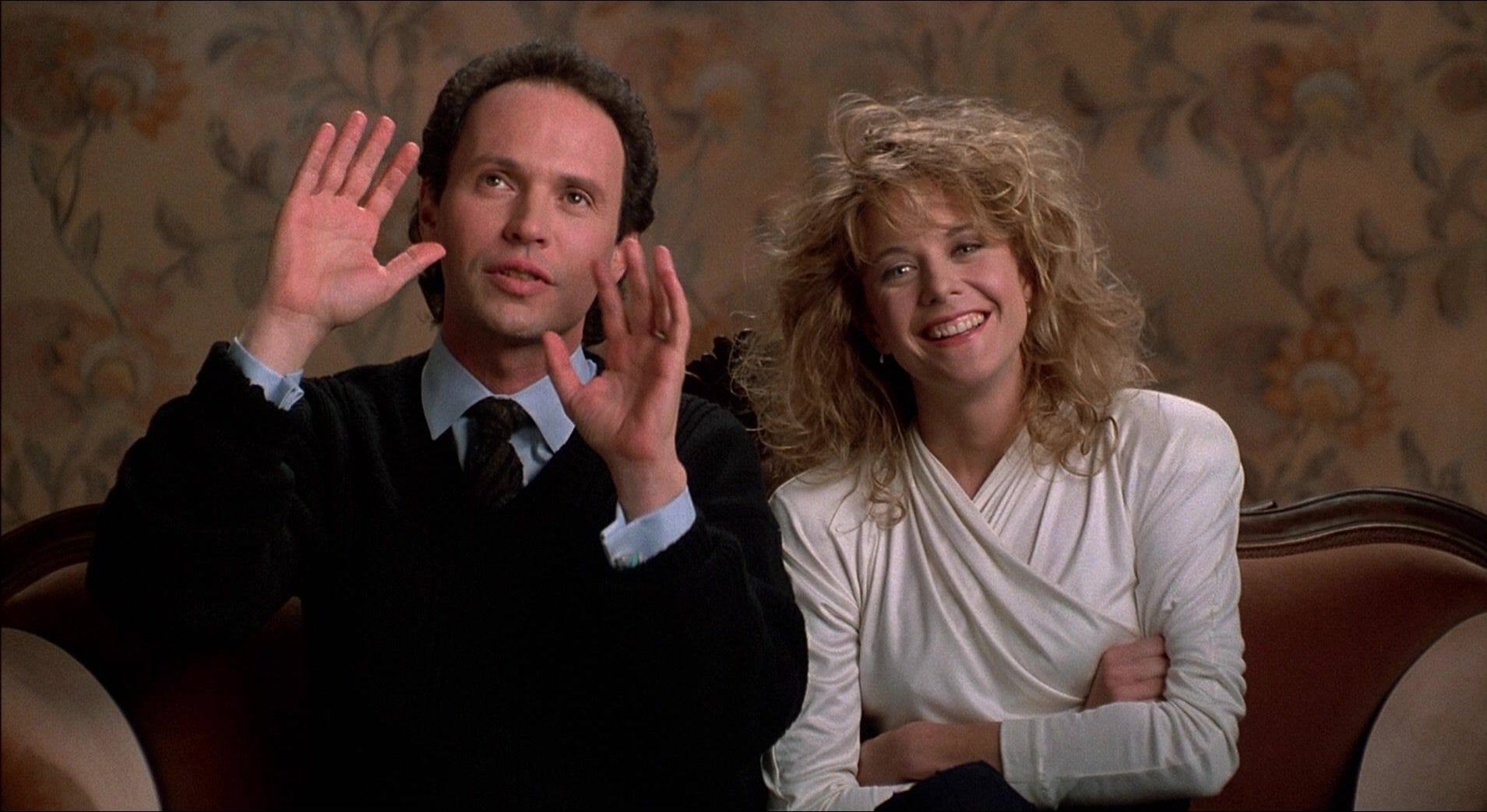

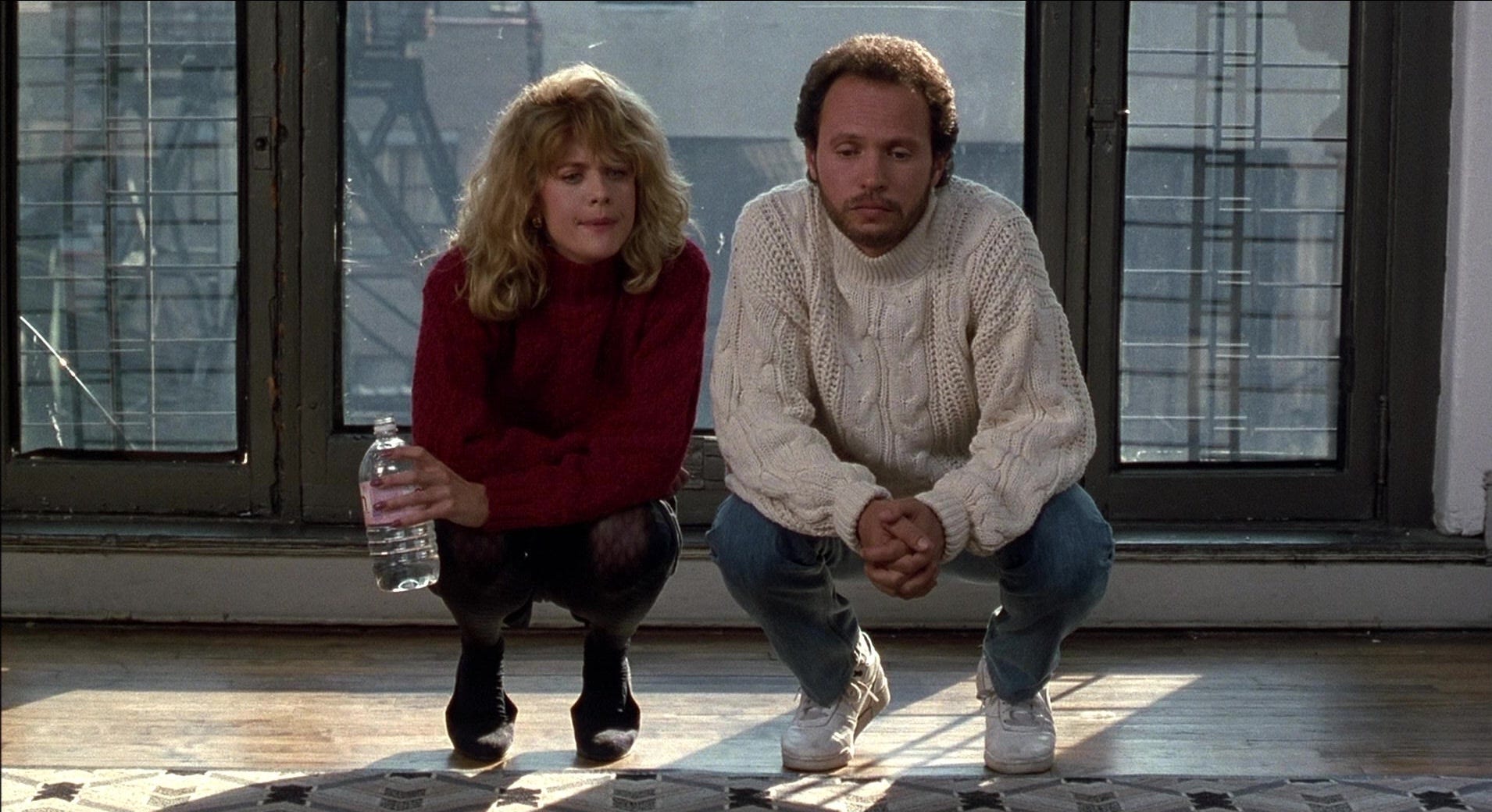
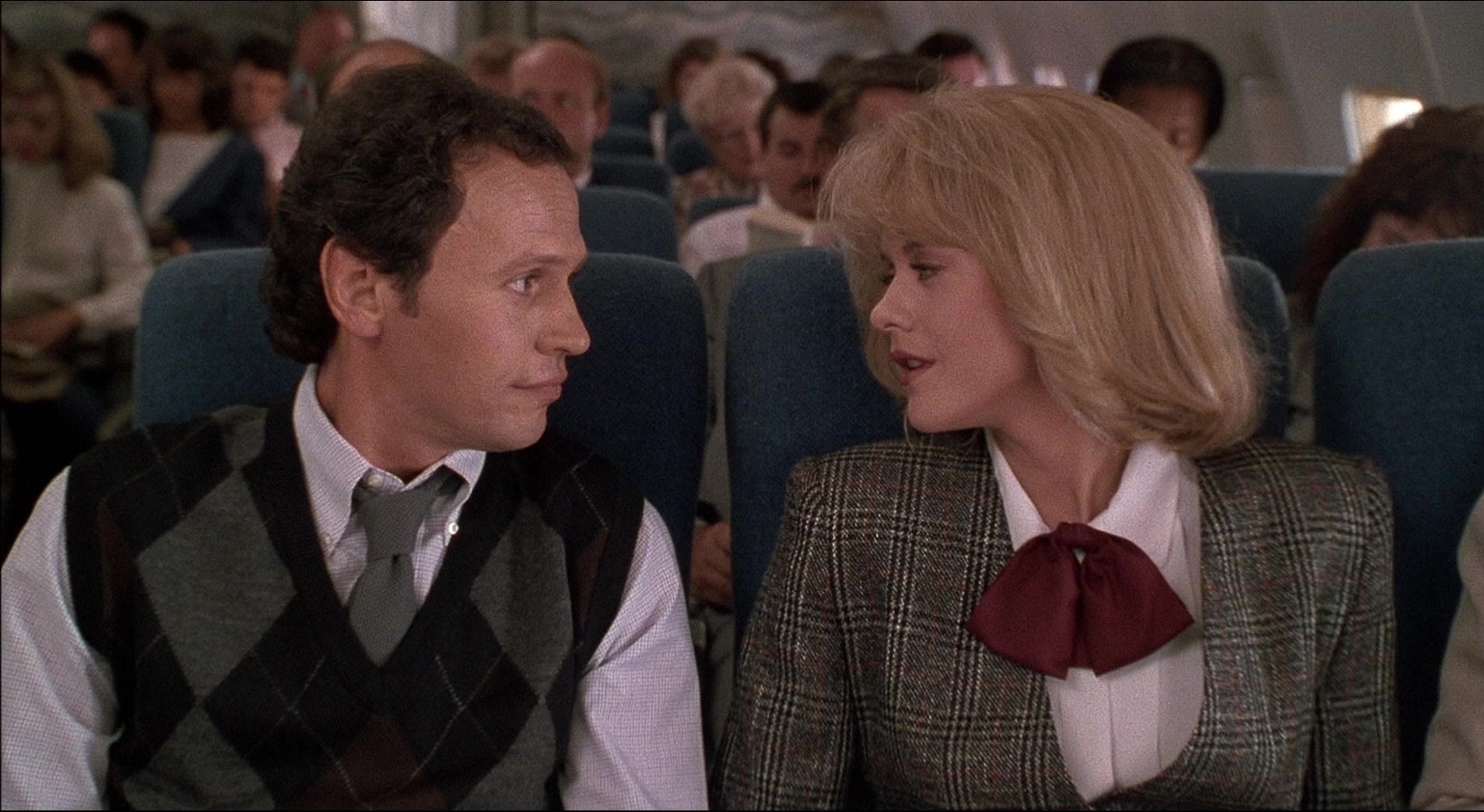
WHEN HARRY MET SALLY … (1989) might be the best movie at 35,000 feet. Romantic comedy is tailored for treating the stresses of air travel, and the film is one of the funniest, coziest, most satisfying of its era. Powered by words, there’s no nudity, violence or flashing lights, nothing on our screen to disturb other passengers. At 96 minutes, it can be finished while most flights are in progress. Two scenes even take place at an airport, and the scene between them aboard a plane. And like friends or family we’re on our way to visit, its title characters remain as consistent in their neuroses or quirks as they were when we first met them.
Nora Ephron was born and raised in Beverly Hills, the first of four children, all daughters, to Harry & Phoebe Ephron, a writing duo who named Nora after the protagonist in Henrik Ibsen’s play A Doll’s House. Her birth and its impact on her parents would be dramatized by them in a play they authored: Three’s A Family. Harry & Phoebe Ephron would most famously adapt the plays of others to film: Daddy Long Legs (1955) starring Fred Astaire and Leslie Caron, Carousel (1956) from the Rodgers & Hammerstein musical, and Desk Set (1957) starring Spencer Tracy and Katharine Hepburn. Nora would go east, graduating from Wellesley College, a private women’s liberal arts school in Massachusetts, and moving to New York City in 1962, as soon as she graduated. Ephron started her career at Newsweek, in the mailroom, practically the only department of the magazine where there were women. In her 2010 memoir I Remember Nothing: and Other Reflections, Ephron admitted that she didn’t even know how to write when she applied for a job as reporter for the New York Post. As a tryout, she was sent to an aquarium in Coney Island to write about two seals who were supposed to mate and refused to. Her second day, she interviewed actor Tippi Hedren, her third day an Italian film director named Nanni Loy. Her fourth day she was sent to the Upper West Side to get background on a businessman who’d apparently killed his wife. On her fifth day, she was hired.
Five years later, Ephron’s work for the daily tabloid merited a call from Esquire magazine, which offered her a job as film critic. Turning the position down, Ephron was asked if she’d be interested in reviewing books. She again demurred, not because Ephron disliked movies or books, but because she didn’t want to write about them. Asked what she did want to write, Ephron asked Esquire for a column, and in 1970, began incorporating her opinions into her work. Believing she lacked the natural talent of someone like Joan Didion, when most of her peers started taking work in the film business, Ephron began taking commissions to write screenplays. All went unproduced until Meryl Streep, who like Ephron was represented by International Creative Management in New York, asked for a qualified woman to take over screenwriting duties on a film being developed for her. To chronicle the life and death of lab tech and labor activist Karen Silkwood, Ephron worked with a friend, freelance journalist Alice Arlen. Along with Meryl Streep, Cher and director Mike Nichols. Ephron & Arlen would be nominated for an Academy Award for their work on Silkwood (1983). That same year, Ephron published Heartburn, a comic novel loosely based on the breakup of her marriage to famed journalist Carl Bernstein. (The 1986 film adaptation from Ephron’s script was directed by Nichols and starred Streep as a New York-based food writer who uncovers her journalist husband’s infidelity while pregnant. Many jokes ensued, but reviews and word of mouth were dismal).
In 1984, director Rob Reiner and his producing partner Andrew Scheinman were in New York and arranged a meeting with Ephron. Son of television and film writer/ performer/ director Carl Reiner, Rob Reiner had cemented his own feet in pop culture, as Archie Bunker’s son-in-law Mike “Meathead” Stivic on the sitcom All In The Family from 1971-1979. More interested in directing than acting, Reiner struck gold in his debut as a feature film director with This Is Spinal Tap (1984), joining Christopher Guest, Michael McKean and Harry Shearer in the mockumentary, which hadn’t been booked into enough theaters to be a hit, but was one of the best reviewed comedies of its day. Reiner had wrapped his next film, a road trip romantic comedy starring John Cusack and Daphne Zuniga titled The Sure Thing (1985) that distributed by MGM, would be better attended and almost as well reviewed as his debut. Meeting with Ephron in between the release of those films, Reiner pitched the screenwriter an idea he wanted to collaborate with her on. Before they could order lunch, Ephron expressed her lack of enthusiasm for it. Having wrapped up business, Reiner and Scheinman started talking to Ephron about their social lives, the director having divorced actor Penny Marshall in 1981 and returning to the singles scene after ten years of marriage. Ephron, twice divorced, was in a relationship with journalist Nicholas Pileggi, whose focus on organized crime would produce the book Wiseguy: Life In a Mafia Family, which Pileggi would adapt with director Martin Scorsese as GoodFellas (1990).
Her ear attuned for material, Ephron let the men share their dating experiences, neither having much to say about them that was positive. A year or so later, Reiner was back in New York with another idea he met with Ephron to pitch. Once again, the screenwriter wasn’t interested. On Ephron’s way to the door, Reiner mentioned that he’d always wanted to do a movie about the friendship between a man and a woman, which they sustain by never having sex, until they do have sex and ruin their friendship. This got Ephron’s attention. On the cab ride home, she saw a beginning (couple meet, but never at the right time to be anything more than friends), middle (couple enjoy their friendship, which ultimately leads to sex) and end (sex kills the friendship). While Reiner decamped to Oregon in the summer of 1985 to shoot his third film in three years–Stand By Me (1986)–Ephron sketched out a draft of their romantic comedy. Reiner read it upon his return and gave Ephron notes, and as Reiner and Scheinman headed to England in the summer of 1986 to begin work on their next picture, The Princess Bride (1987), Ephron worked on a second draft. Once Reiner was back in the States and ready to focus on his fifth film, he huddled with Ephron to dial in the script for what would have many titles, How They Met and Boy Meets Girl among them.
By this time, Reiner had co-founded a film and television production company with Andrew Scheinman and three film executives they branded Castle Rock Entertainment, a nod to the town in Stand By Me. With Reiner and his partners owning 60% of the company and Columbia Pictures 40%, they struck a deal with Nelson Entertainment, exchanging domestic video and foreign distribution rights for co-financing on what Castle Rock anticipated would be eighteen pictures over the next five years, plus television, with an emphasis on half-hour comedy. Castle Rock bowed in 1989 with an adaptation of the John Ehle novel The Winter People starring Kurt Russell and Kelly McGillis. Starting with Reiner & Ephron’s romantic comedy, Castle Rock’s track record would become the envy of Hollywood, producing Misery (1990), City Slickers (1991), Honeymoon In Vegas (1992), A Few Good Men (1992), In The Line of Fire (1993), The Shawshank Redemption (1994) and Before Sunrise (1995) among many others in its first five years. Castle Rock’s foray into TV began with a pilot for NBC starring Morris Day titled Heart and Soul that wasn’t picked up for series. Castle Rock’s next effort was one of the greatest sitcoms ever produced: Seinfeld. With distribution by Columbia, Reiner & Ephron’s romantic comedy would be co-financed on a production budget of $14 million.
Through the start of principal photography, the screenplay was credited to Nora Ephron, Rob Reiner & Andrew Scheinman, but the producers would surrender their claims of authorship, clearing the way for the WGA to award Ephron sole writing credit. Her script did grow out of a close collaboration with Reiner and the actors he’d cast. Ephron favored the title Harry, This Is Sally and that stuck for a while. Reiner proposed When Harry Met Sally, which Ephron didn’t like as much, but Reiner did after he added an ellipsis. He offered a case of champagne to anyone among cast or crew who could come up with a better title than When Harry Met Sally …, but no one did. For Ephron, there was no debate where a smart movie in which characters who lived by their words and wits should take place, which as a resident of New York, she was prejudiced for. Ephron had modeled the character of Harry Burns on Rob Reiner, particularly his neuroses and tendency to think they were front page news (Ephron actually pined for Reiner to play Harry, but the director’s inability at age 40 to pass himself off as a college student likely precluded him from considering the part).
Reiner leaned toward casting Richard Dreyfuss, a friend from Beverly Hills High School who’d played the adult Gordie Lachance in Stand By Me and narrated the film. Dreyfuss was of the opinion that Harry needed to be fleshed out more than he was in the script. Reiner & Ephron disagreed, not wanting to force a work subplot into their romance the way other movies forced a romance into the action. While Sally writes for a newspaper she refers to as “the News” and Harry states that he works as a political consultant, other than two brief shots of them sitting alone at their desks–looking more tired than they do content–no one mentions their work. Reiner had observed how particular Ephron was when ordering food, making menus better than they were, and this became a defining characteristic of Sally Albright. Ephron didn’t base Sally on anyone in particular, writing a woman who would be the opposite of Harry: prim, polite and optimistic. After considering several possibilities–Tom Hanks and Elizabeth Perkins from Big (1988) were discussed–Reiner chose Billy Crystal and Meg Ryan. Crystal had been a good friend of Reiner’s since Norman Lear cast him as Mike Stivic’s buddy Al Bender on two episodes of All In the Family. A veteran writer and performer, Crystal emerged as the star of Saturday Night Live in its 1984-85 season before Lorne Michaels returned to produce the show and Crystal departed to make movies–appearing as a caterer in This Is Spinal Tap and the wizard in The Princess Bride–none of which he’d carried as a leading man.
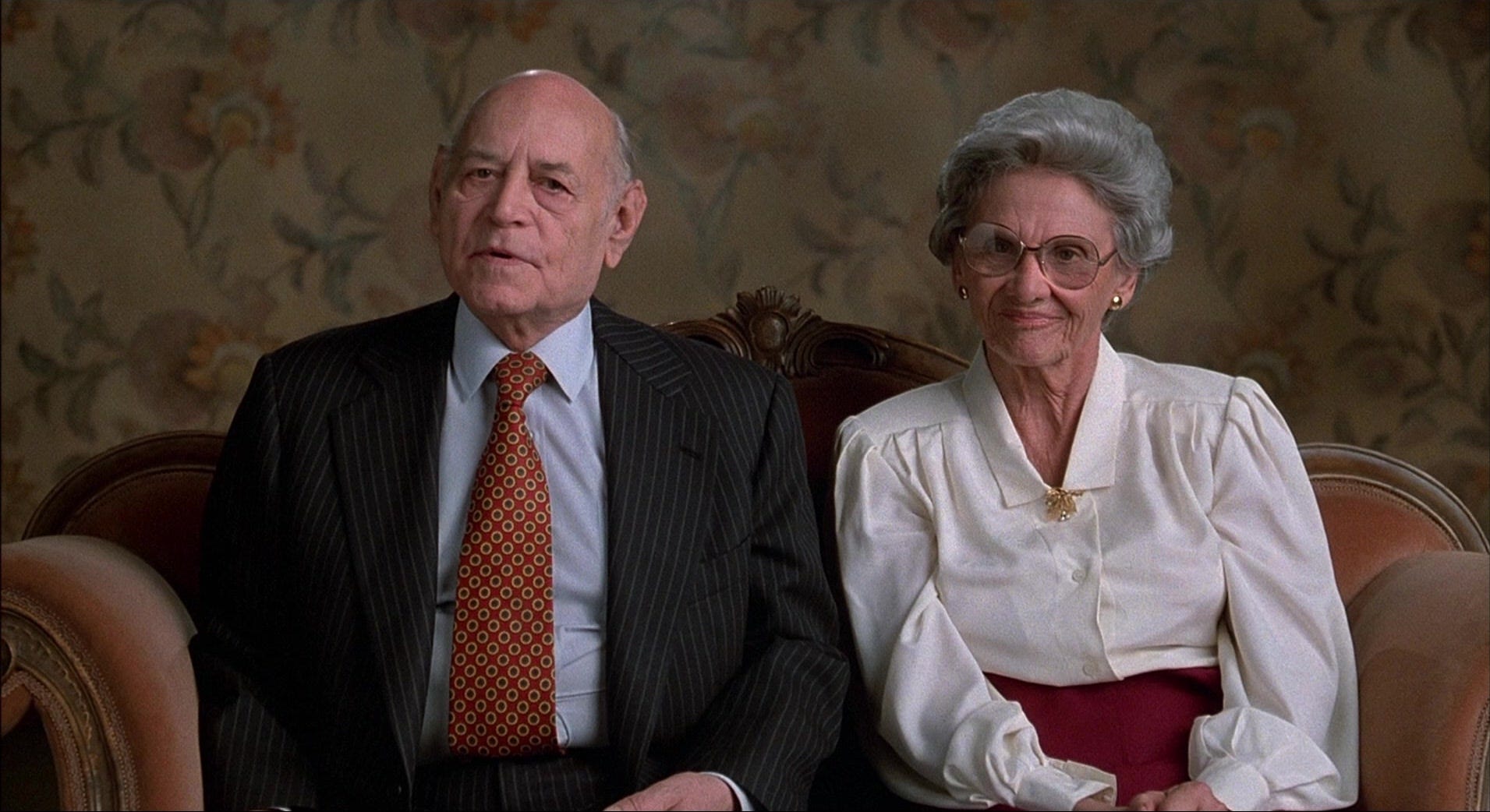
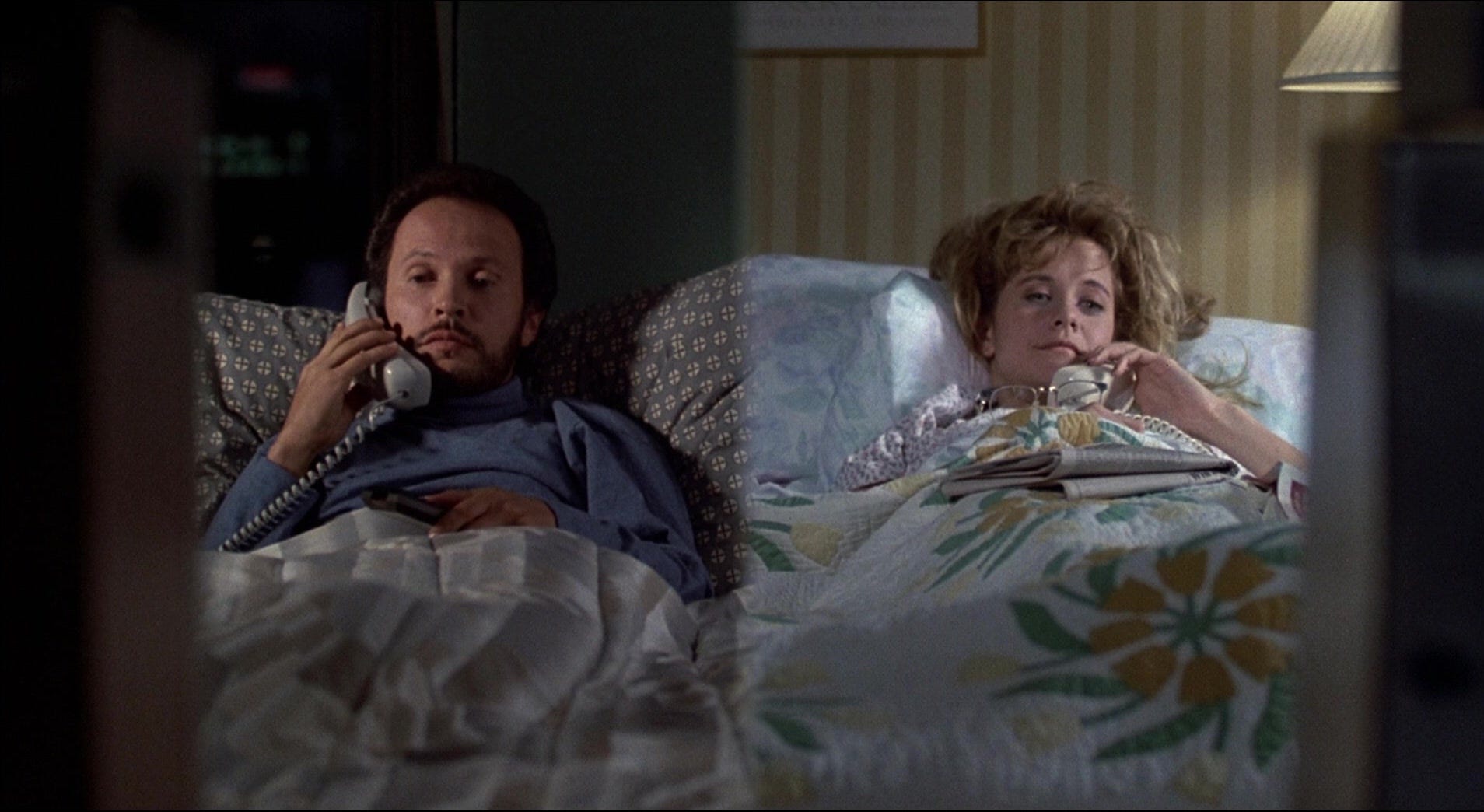
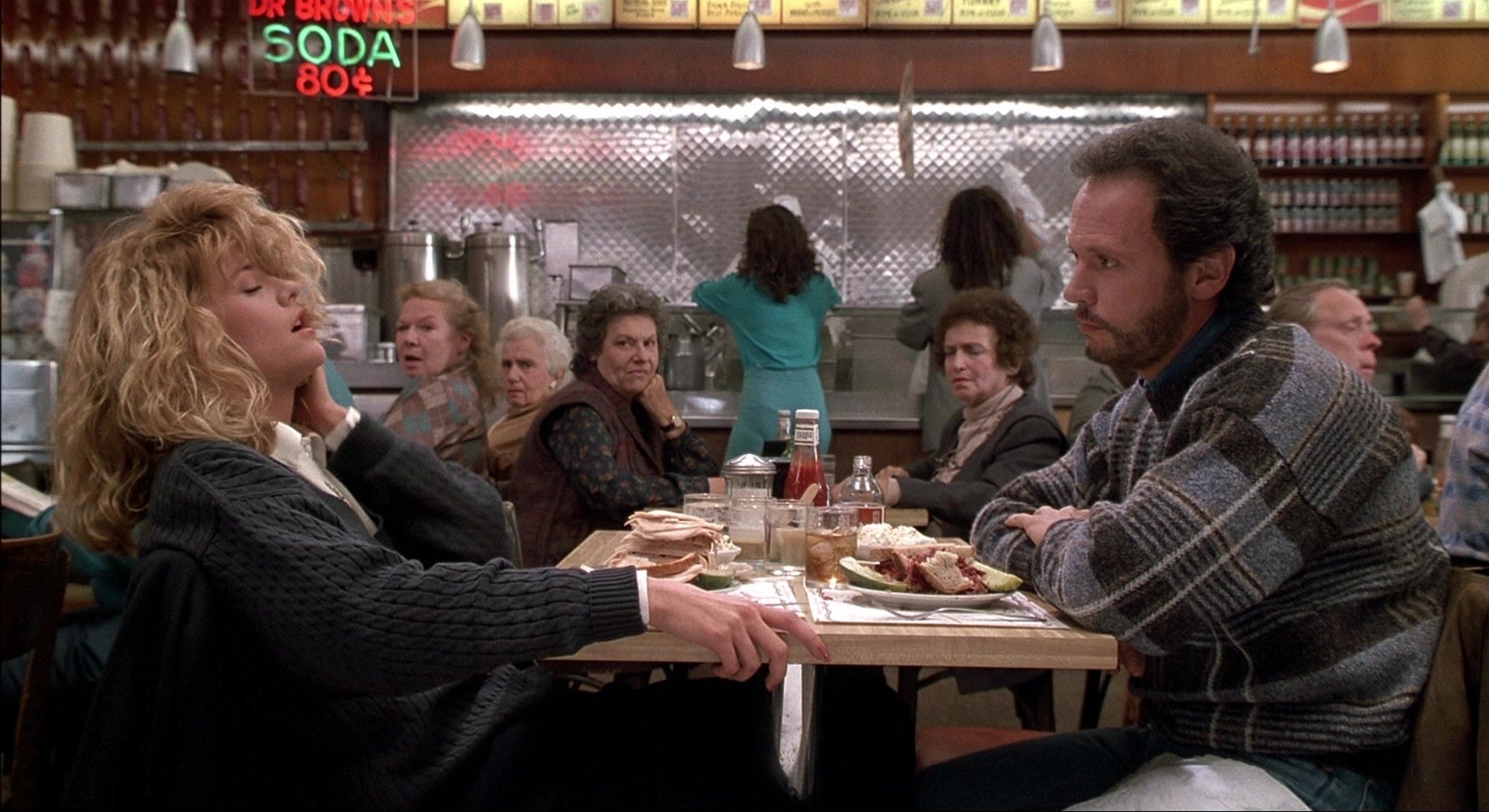
As they continued to work on the script, Reiner challenged Ephron to reveal something men would be shocked to learn about women, the way they’d peppered the script with insights into the mind of the single man. Ephron did shock Reiner by telling him that most women had faked orgasms. After an office poll convinced Reiner that this was indeed the case, Ephron wrote a scene in which Sally demonstrates it to Harry. Proving Ephron’s thesis, Ryan stated she’d have no problem faking an orgasm, but suggested the scene be set in the least likely place a woman would, like a crowded restaurant. Crystal added a punchline, a female diner telling her server, “I’ll have what she’s having,” and to deliver the line, Reiner cast his mother, Estelle. To serve as a framing device, Reiner had Ephron write six vignettes of couples who’d been together for fifty years talking to an off-camera interviewer about how they’d met. The ending wasn’t agreed upon until late in the script’s development, Reiner using anecdotal experience to assume that Harry and Sally would go their separate ways. Ephron may have turned Reiner away from the dark side, their shooting script dated 8/23/88 including the final scenes as seen in the film. Billy Crystal threw in an extra line for Harry about how he loves the crinkle that forms above Sally’s nose whenever he says something crazy, Crystal having noticed this on Ryan’s face.
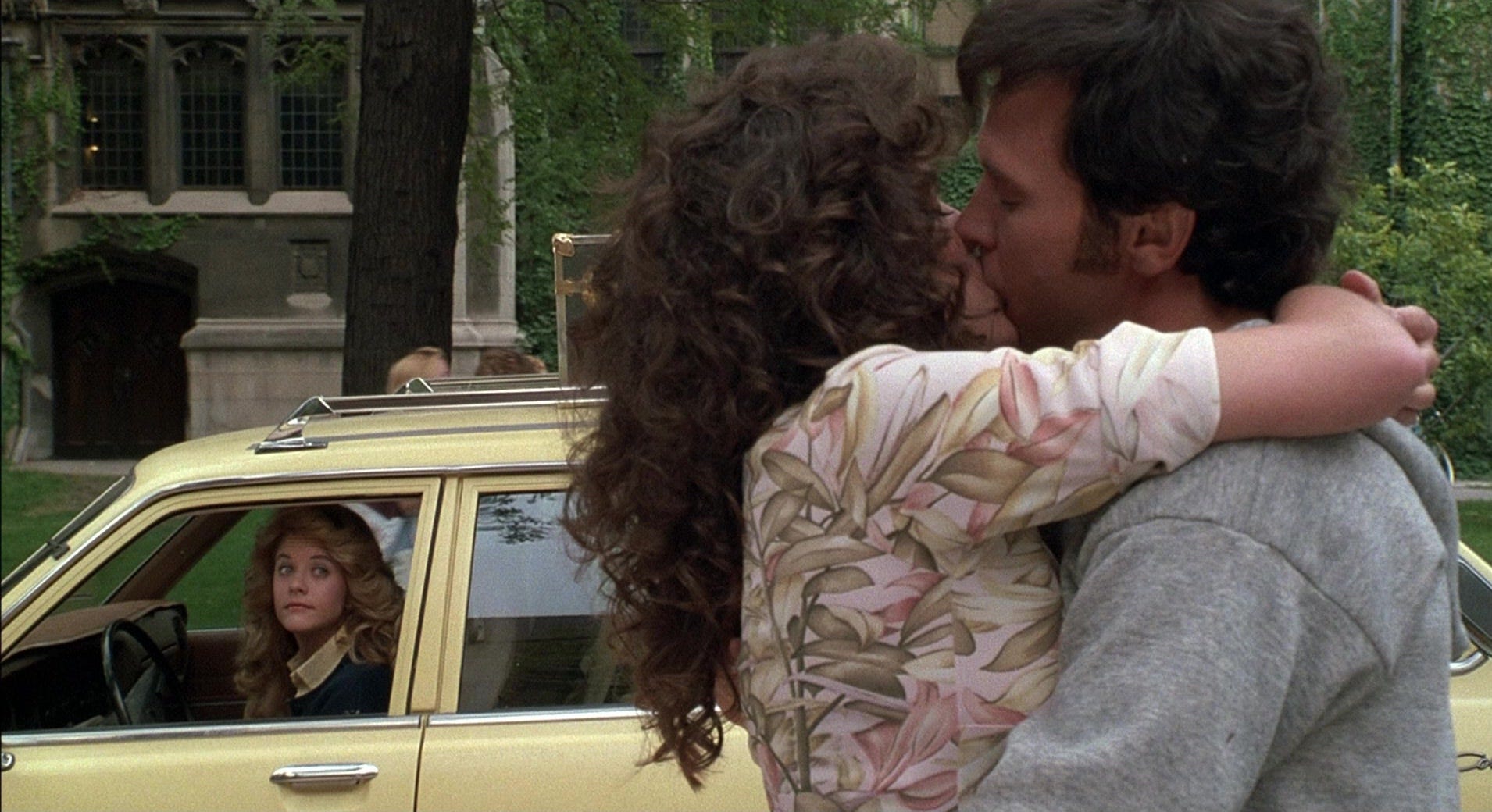
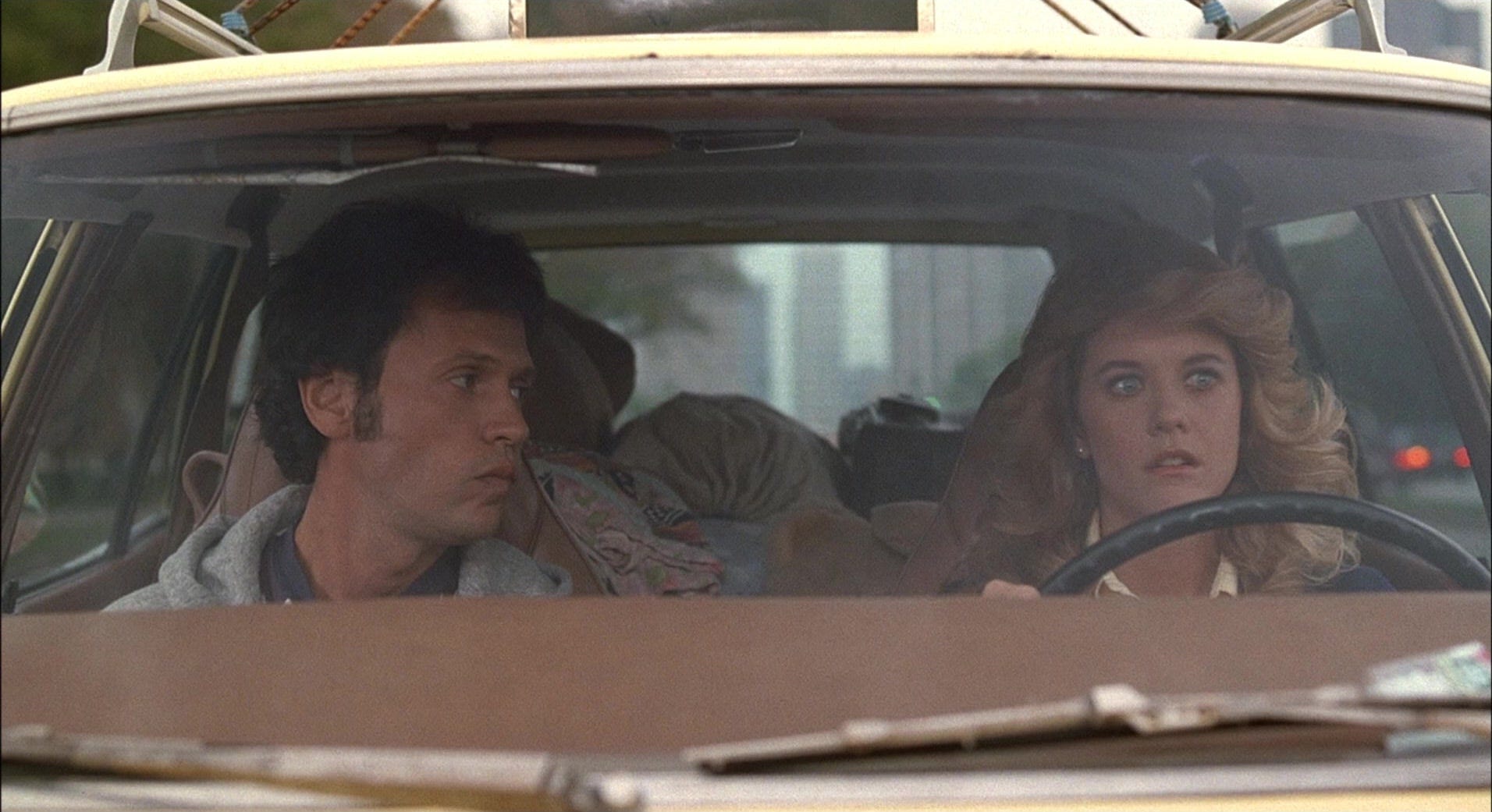
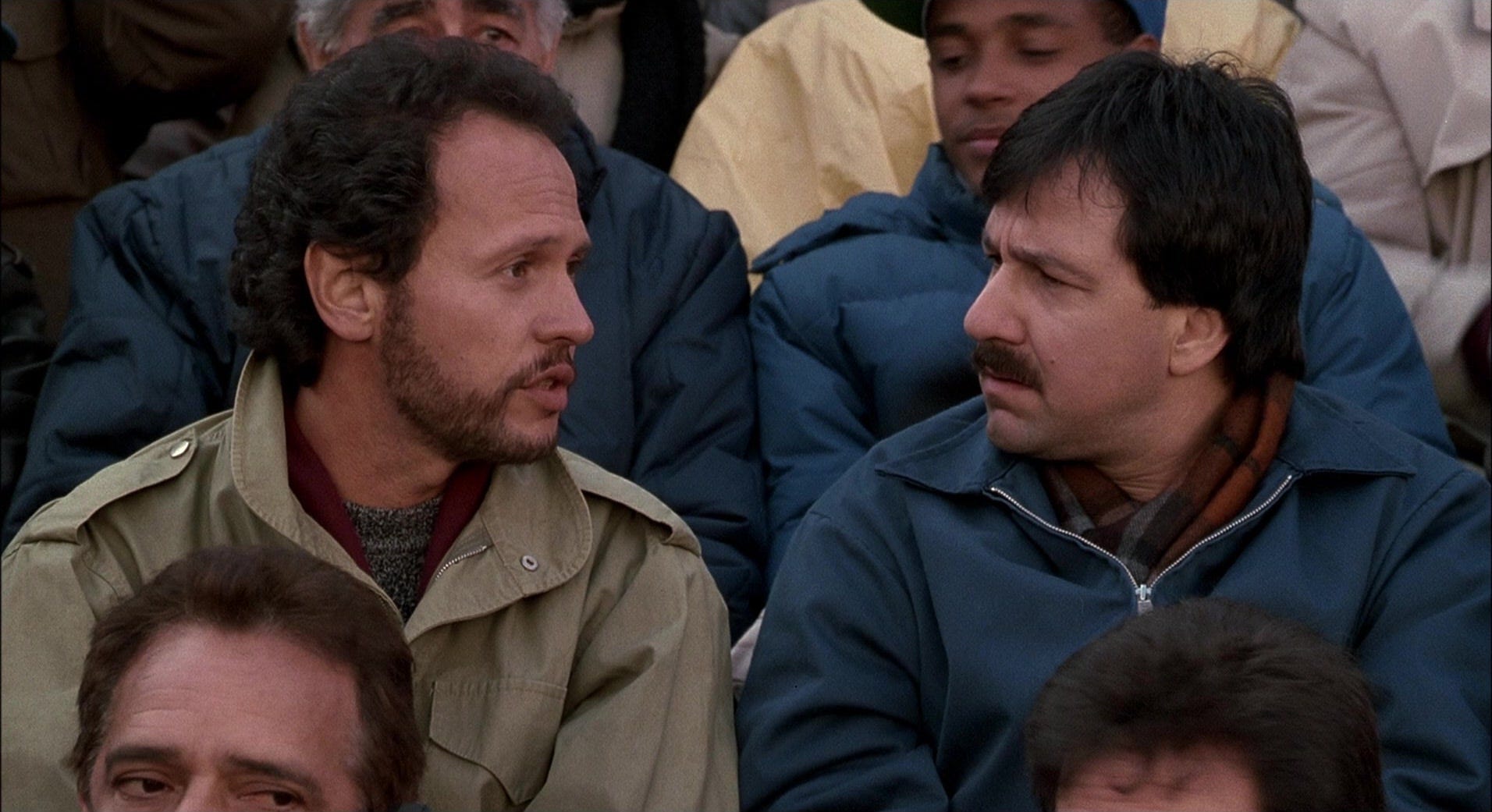
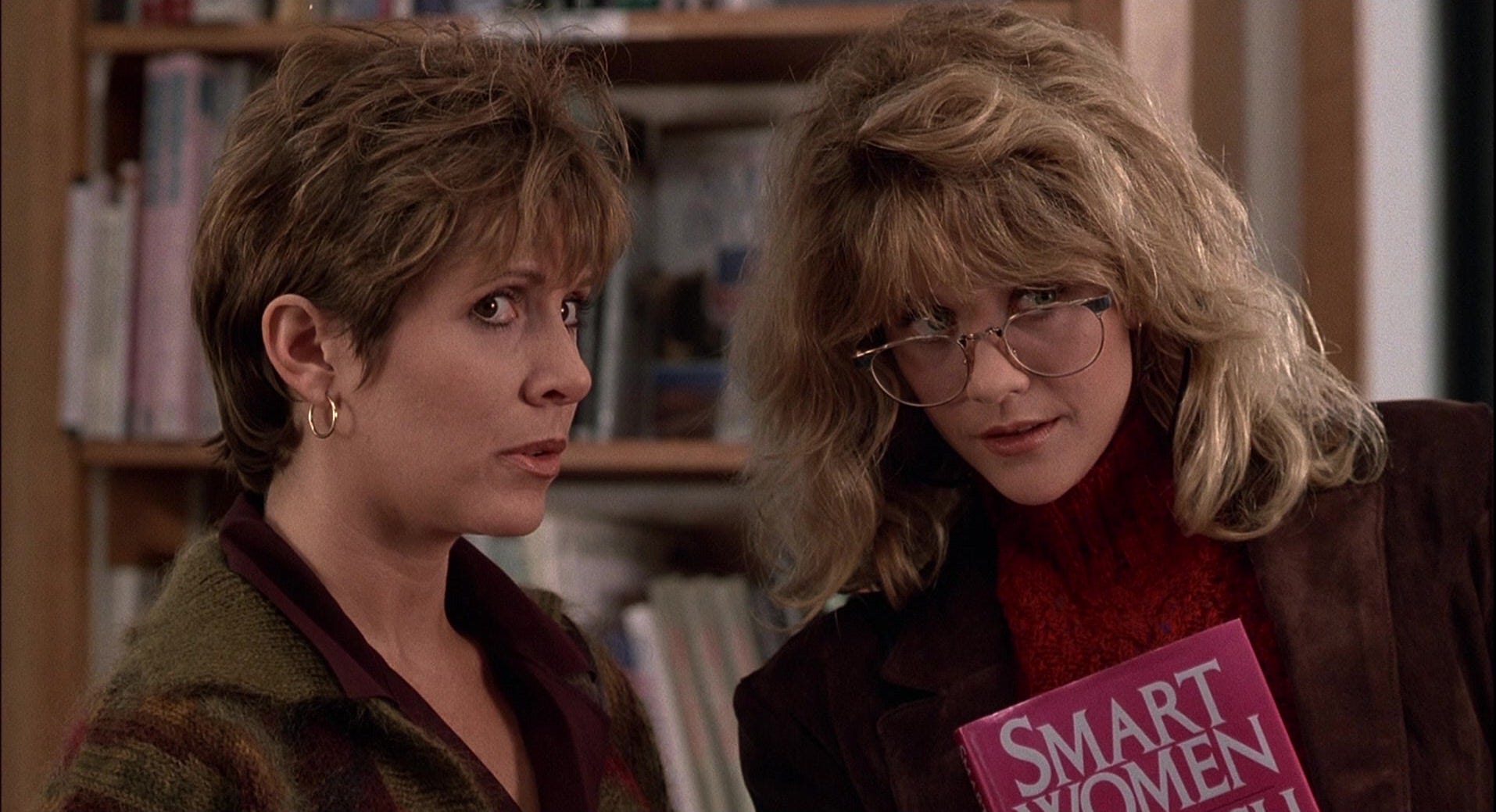
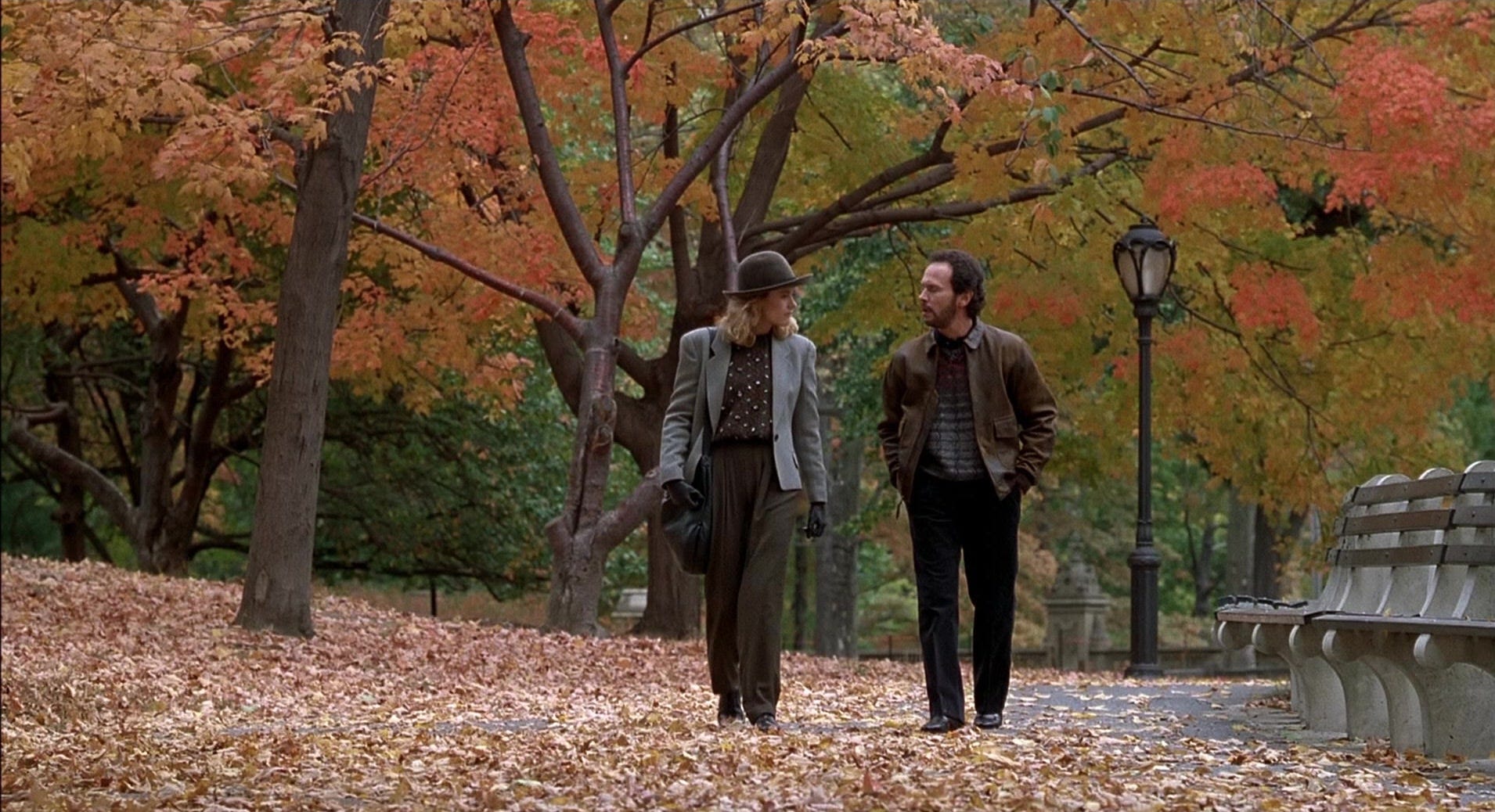
With Carrie Fisher and Bruno Kirby as Sally and Harry’s friends Marie and Jess, shooting commenced August 1988 in New York. Wary of the film playing out in apartments or diners, Reiner and director of photography Barry Sonnenfeld filmed college-age Harry and Sally parting ways in Washington Square, while Harry and Jess have conversations among the crowd at Giants Stadium and the batting cages at Coney Island. Sally’s brunch with Marie and their friend Alice (Lisa Jane Persky) was filmed at the Loeb Boathouse in Central Park, where the autumn foliage would be incorporated for a scene of Harry and Sally walking in the park. The couple’s second reunion was shot in a bookshop on the Upper West Side called Shakespeare and Co., a location that closed in 1996. Marie & Jess’ wedding and both New Year’s Eve parties were shot in penthouses of the historic Puck Building in SoHo. A number of scenes were filmed in Los Angeles. The diner where Harry and Sally stop on their college trip was the Port Cafe, in the industrial neighborhood of Wilmington. A number of interiors were filmed at Hollywood Center Studios, formerly American Zoetrope Studios, formerly General Service Studios.
When it came to the music, Reiner reached out to a friend named Bobby Colomby, former drummer for the brass-heavy rock band Blood, Sweat & Tears, whose early incarnation performed at Woodstock. Colomby had gone on to a career as a record executive, ultimately a VP of creative development at Columbia Records. He knew many artists on the label and suggested one of them to Reiner. Barely old enough to enter a bar, pianist Harry Connick Jr. had already released two LPs, one of instrumental arrangements from the American songbook, followed by 20, with several tracks featuring his vocals. Commissioned to arrange and perform songs for When Harry Met Sally …, the Harry Connick Jr. Trio (Connick Jr. on piano, Ben Wolfe on bass, Jeff “Tain” Watts on drums) put their spin on “It Had To Be You,” “But Not For Me,” “Autumn In New York” and “Stompin’ At the Savoy,” while Connick Jr. performed vocals with big band backing for two songs heard during New Year’s Eve celebrations: “I Could Write a Book” and “Don’t Get Around Much Anymore.” Reiner also picked Louis Armstrong & Ella Fitzgerald (“Our Love Is Here To Stay” and “Let’s Call the Whole Thing Off”), Ella Fitzgerald (“Where or When”) and Ray Charles (“Winter Wonderland”) for the film. Connick Jr. would play piano or croon or both on all 11 tracks for the soundtrack album, which went double platinum, won a Grammy Award for Best Jazz Male Vocal Performance, and launched Connick Jr’s career, which would segue into acting roles in Copycat (1995), Hope Floats (1998) and The Iron Giant (1999).
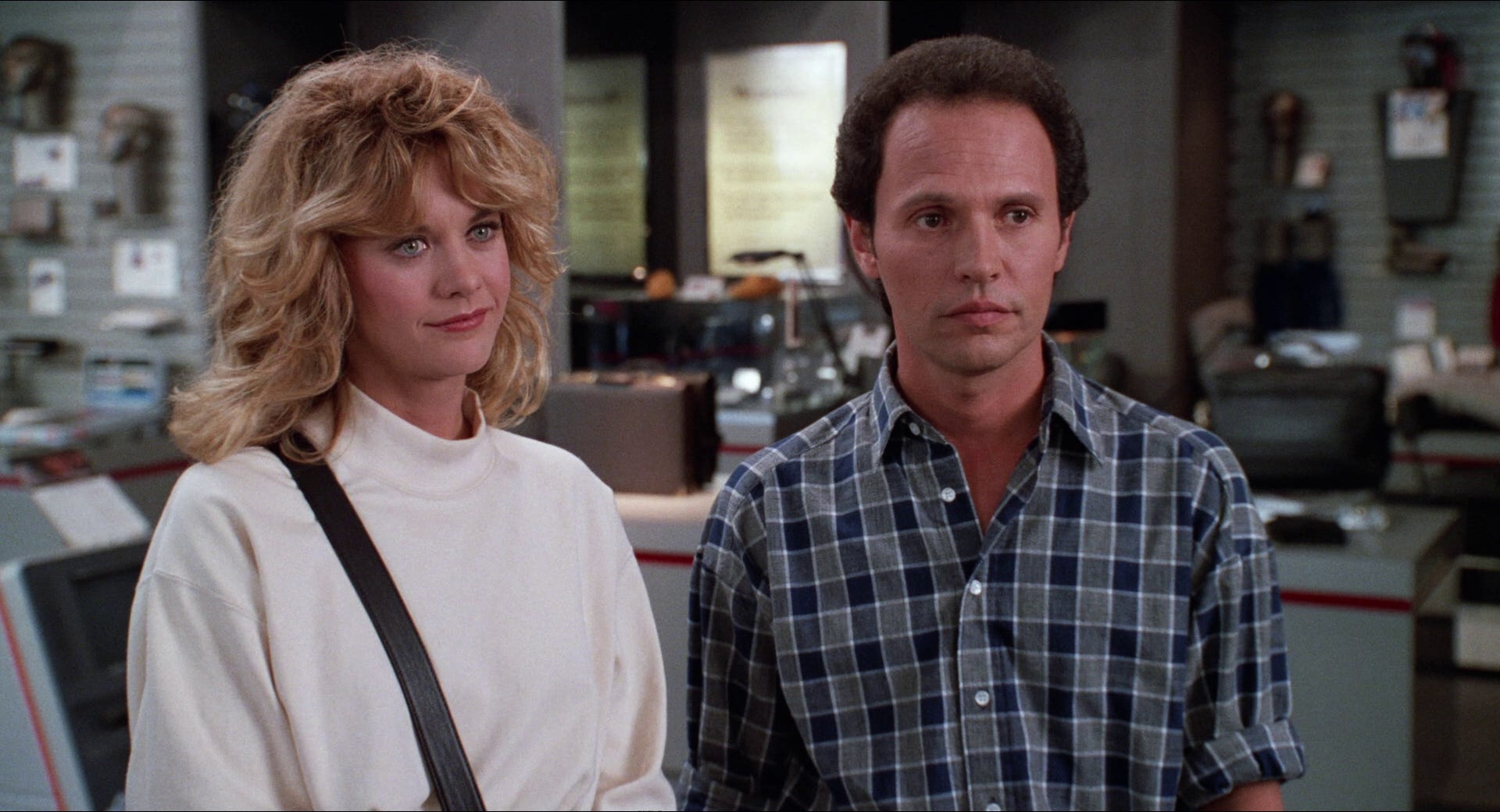
When Harry Met Sally … opened in limited release on July 14, 1989 in nine cities: New York, Los Angeles, Toronto, Chicago, Houston, Dallas, Washington D.C., Boston, Seattle and Denver. Reviews tipped positive. Gene Siskel and Roger Ebert gave the film two marginal thumbs up. Siskel was adamant that the movie was not in the same class as Annie Hall (1977) in spite of a framing device, locations and music reminiscent of Woody Allen, but acknowledged it had cute moments, working more as a comedy than a social commentary. Ebert singled out Meg Ryan, and especially Billy Crystal for how tender the comedian was with his co-star. His bone to pick with the film concerned the deli scene, which Ebert admitted was funny, but went straight for a joke instead of anything resembling reality, undercutting the film’s believability. Writing for the New York Times, Caryn James pointed out that the opening credits–white letters on a black background–were similar to certain romantic comedies set in New York, calling it “a perfectly pleasant Woody Allen wannabe, full of canned romance.” James concluded that When Harry Met Sally … was missing the sly edge and sardonic tone of This Is Spinal Tap and The Sure Thing, Reiner shifting into the softer, more nostalgic rendering of Stand By Me and The Princess Bride. Audiences didn’t seem to mind, Columbia expanding When Harry Met Sally … to 775 theaters its second weekend and 1,133 theaters by its fourth weekend. It opened wide against two other comedies–Parenthood and Uncle Buck–and all were hits, When Harry Met Sally … spending thirteen weekends in the middle of the top ten grossing films in the U.S.
The major flaw in When Harry Met Sally … is the conclusion that Nora Ephron and Rob Reiner arrive at. While friendships can lead to marriage and in some cases happy marriages, more often than not, the absence of sexual attraction is a warning that something is missing, either below the waistline or above it. In spite of this fallacy, the film’s ending feels honest, Ephron in what seems to have been a healthy relationship with Nicholas Pileggi, who she’d marry in 1987 and remain married to until her passing in 2012. The New Year’s resolution was neither reshot to appease test audiences, nor a concession to comfort future generations of air travelers, but is the only ending the filmmakers were capable of delivering. The first half hour of the movie is so candid and so funny in terms of what make Harry and Sally incompatible–Harry has no utility for a woman who’s not going to sleep with him, while Sally simply has no space for someone like him in her plans–that by the third time they cross paths, we’re invested in seeing their relationship stick no matter how improbable it might be. The Harry Connick Jr. Trio are slipped into the picture much in the way the Vince Guaraldi Trio were for the Peanuts holiday specials, giving the film a simple and subtle jazz accompaniment.
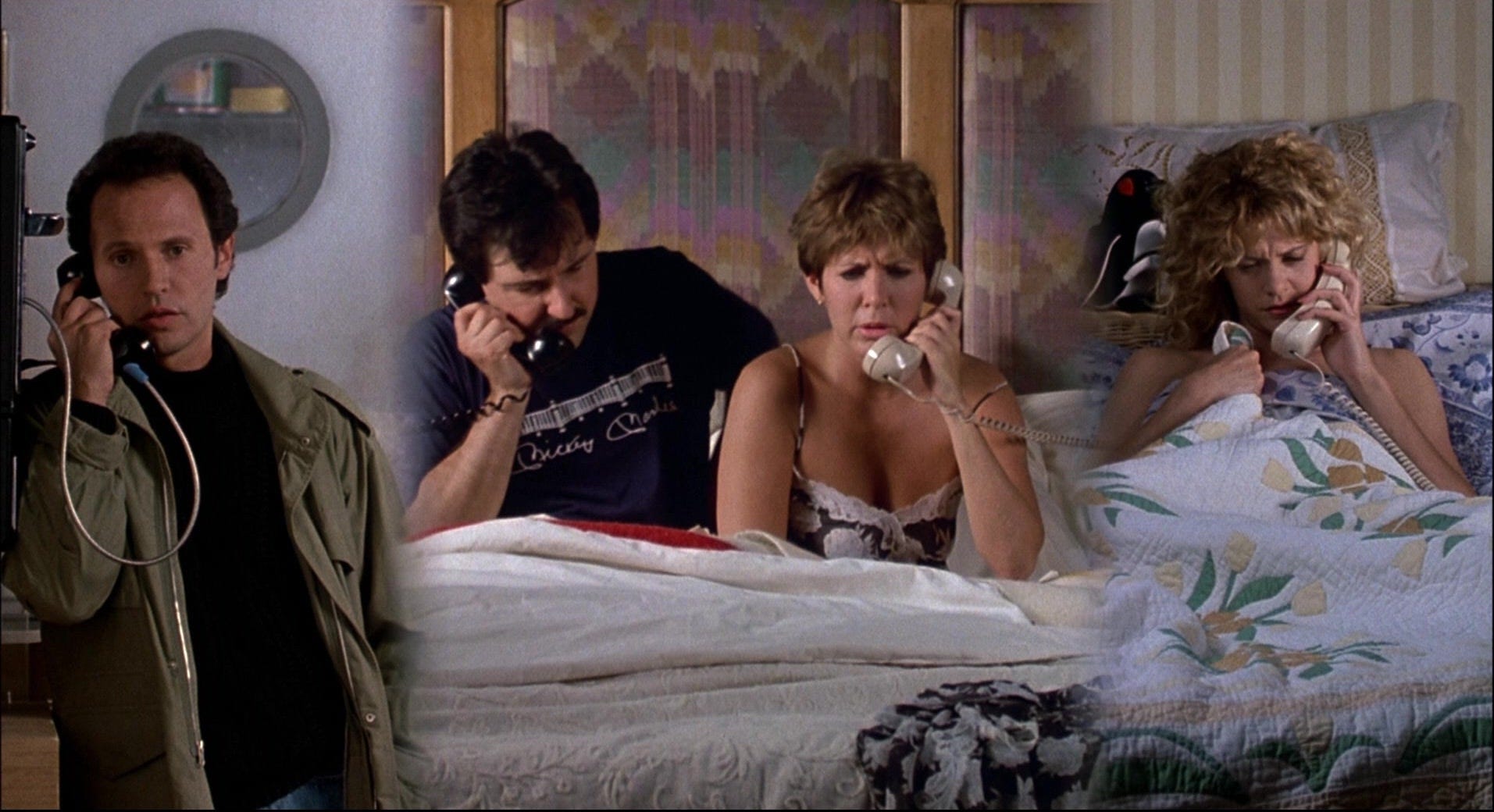
Ephron & Reiner suggest that sexual chemistry doesn’t necessarily lead to a healthy relationship, and intellectual stimulation as well as mutual respect may be more important. In this way, the movie is a comforting fantasy for smart people. Excellent music and atmosphere setting the table–Harry and Sally carrying a Christmas tree down a sidewalk on the Upper West Side and Sally struggling home with a tree by herself one year later all the film needs to feel thoroughly New York–watching When Harry Met Sally … is like hanging out with old friends. It’s not only comfortable, but unlike classics in other genres, plays well at a low volume. Instead of using music for an emotional jolt, Reiner actually lets most of the movie play without any, Ephron’s dialogue like music. Crystal’s character takes precedence over Ryan’s, but this reserves Harry the most criticism. The film implies that women are better equipped emotionally to recover from a breakup and how “good timing” is simply finding someone we can actually relate to, Harry and Sally only connecting when they realize they have failed love lives in common. The famed diner scene requires surprise to work and doesn’t play well on repeat viewings, but the leads are funny throughout, and Billy Crystal is a revelation. Rather than simply perform for her, he has to listen to Ryan’s character, discover things about her and remember them. Crystal’s transformation into a leading man mirrors what it takes for men to go from sleeping with women to building a lasting relationship with one.
Video rental category: Romantic Comedy
Special interest: On the Road