

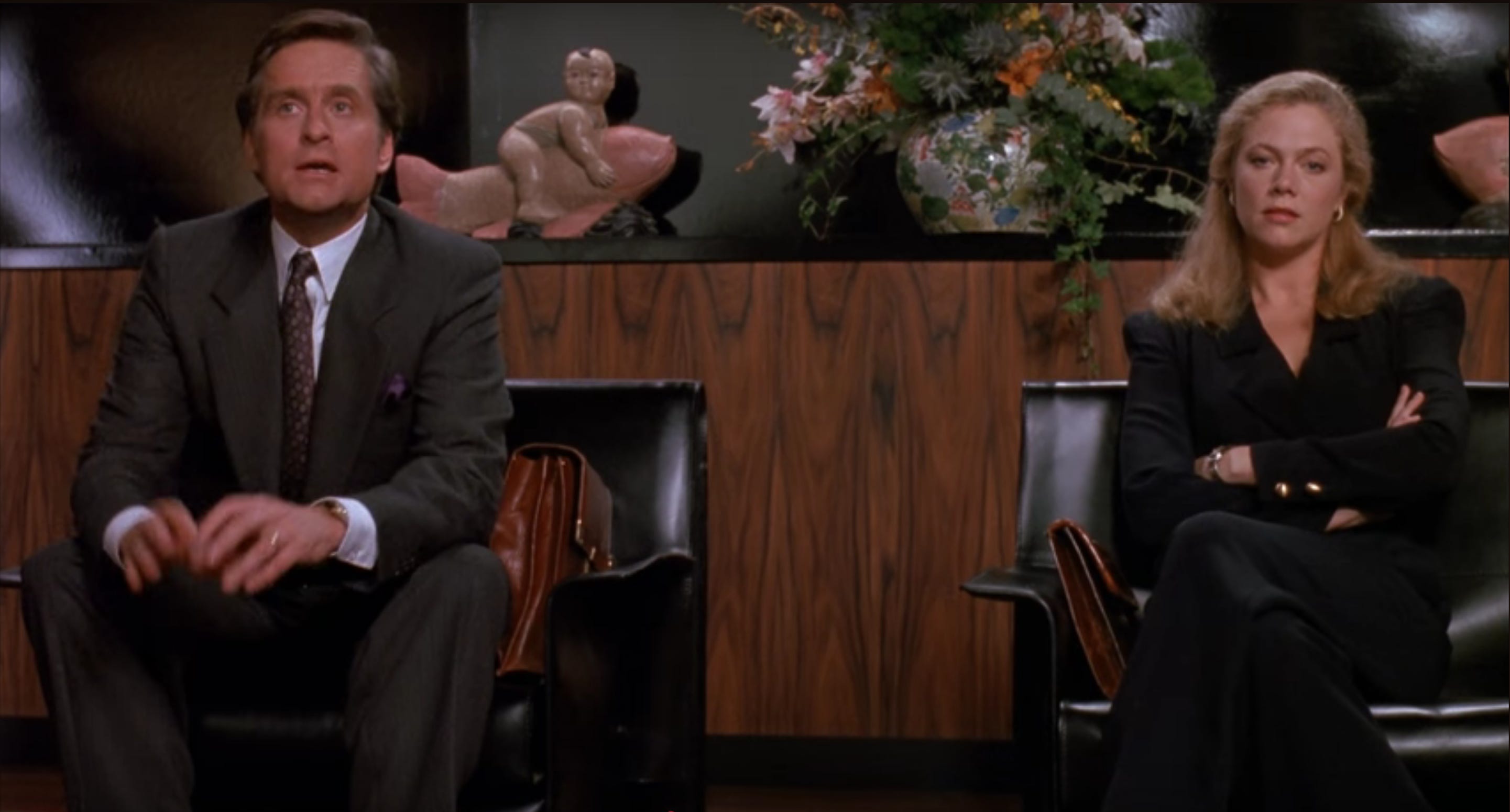
THE WAR OF THE ROSES (1989) is a two-character play missing the crucial third player necessary to ground this increasingly dark and satiric take on modern marriage, and to be considered rewatchable. Its stars–Kathleen Turner and Michael Douglas, with Douglas’s prestige winning him top billing, but Turner’s character a footcandle or two more prominent than his in the spotlight–have never been funnier in a movie, which is bitter in the best possible sense, but it does suffer from choices that authors can get away with on the page, but filmmakers aren’t as easily forgiven for.
By 1978, Warren Adler had authored a number of far fetched thrillers that waded in post-Watergate paranoia to the point of satire. He was at a dinner party where one of his friends–who was dating another of his friends–had to excuse himself, telling Adler that his wife would lock him out of the house if he hadn’t returned by a certain hour. Clarifying his marital status, the man stated that he and his wife were co-habitating while their divorce was finalized, in separate bedrooms with locks. The laundry room was neutral territory. Refrigerator space was clearly defined. Adler thought a strategic divorce would make for an interesting study on human behavior. In The War of the Roses, the perfect couple–Barbara Rose is a homemaker with aspirations to launch a gourmet food business, Jonathan Rose a successful Washington D.C. attorney–dissolve their marriage and go to war over their house, whose carefully curated antiques were what brought them together. Months before its publication in April 1981, producers Richard D. Zanuck and David Brown optioned film rights to Adler’s manuscript, and as they had with Peter Benchley and Jaws (1975), commissioned Adler to take the first pass at adapting The War of the Roses to screenplay. To star, the author envisioned Jane Fonda and either Burt Reynolds or George Segal, three of the biggest romantic comedy stars of the time.
Unable to secure a director or cast, Zanuck & Brown allowed their option on The War of the Roses to lapse in 1982. Moving with what he thought was sufficient speed to acquire the book, writer/ producer James L. Brooks became involved. Brooks was then known for his work in network television sitcoms, beginning in the mid-sixties as a writer adept at mixing comedy and drama. He created Room 222, The Mary Tyler Moore Show and (with Allan Burns) the spinoff Rhoda. Aging best was a sitcom that had been canceled the most abruptly, Taxi, which Brooks co-created with Stan Daniels, David Davis and Ed. Weinberger. Its success allowed Brooks to break into film, adapting the screenplay for the Burt Reynolds-Jill Clayburgh-Candice Bergen romantic comedy Starting Over (1979). A year after its release, Brooks fixated on writing and directing a film version of the Larry McMurtry novel Terms of Endearment. Brooks’s gambit was to reach out to Polly Platt, one of the most renowned art directors in film, Platt designing the look and feel of The Last Picture Show (1971) and Paper Moon (1972) for her then-husband, director Peter Bogdanovich. Brooks knew that Platt was in contact with McMurtry, and sent her his script for Terms of Endearment in an effort to introduce himself to the Texas author.
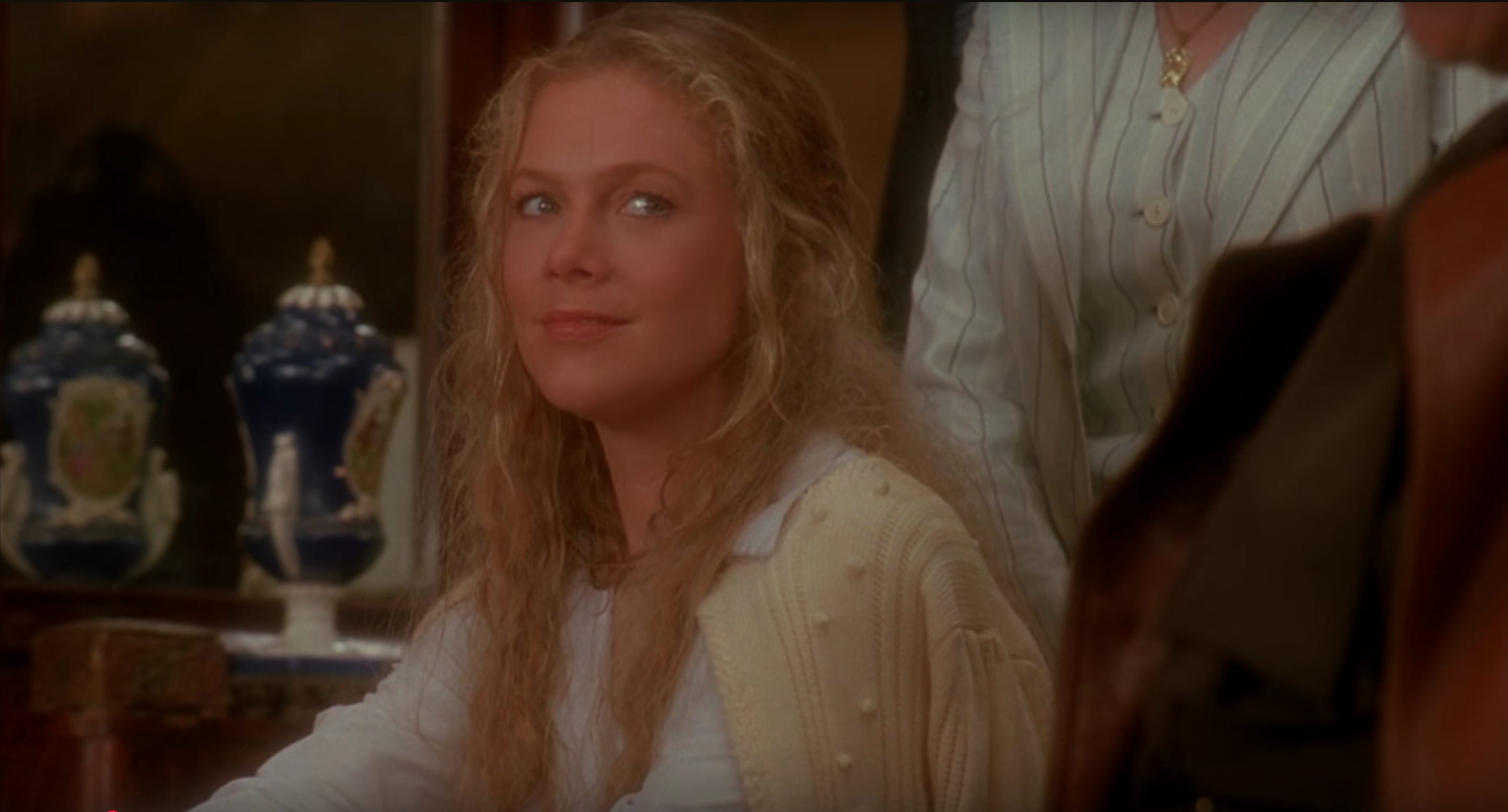
Recognizing the quality of Brooks’s adaptation, Platt did help him option the film rights to Terms of Endearment (1983) and Brooks spent three years wooing Platt to produce it for him. Family matters concerning her daughters kept Platt in Brooklyn, but she did agree to come aboard as art director and, for Brooks’s directorial debut, a creative consultant. In different times, Terms of Endearment, a mother/ daughter comedy/ drama set in the exclusive River Oaks neighborhood of Houston, was a blockbuster, winner of five Academy Awards: Best Picture (James L. Brooks), Best Director (Brooks again), Best Adapted Screenplay (Brooks’s third Oscar of the night), Best Actress (Shirley MacLaine), and Best Supporting Actor (Jack Nicholson). Brooks was vocal about how much of his success belonged to Polly Platt. Setting up his production company Gracie Films at Twentieth Century Fox, Brooks wrangled Platt to make her directorial debut on a film version of The War of the Roses. As it turned out, Arnon Milchan–producer of The King of Comedy (1983), Once Upon A Time In America (1984) and Brazil (1985)--had not only gotten to Adler’s agent and picked up the film rights first, but spent three years trying to get the dark comedy made himself. Seeking a return on his investment, Milchan received a generous fee and was awarded a producer’s credit in order for Fox to acquire the book for James L. Brooks as producer.
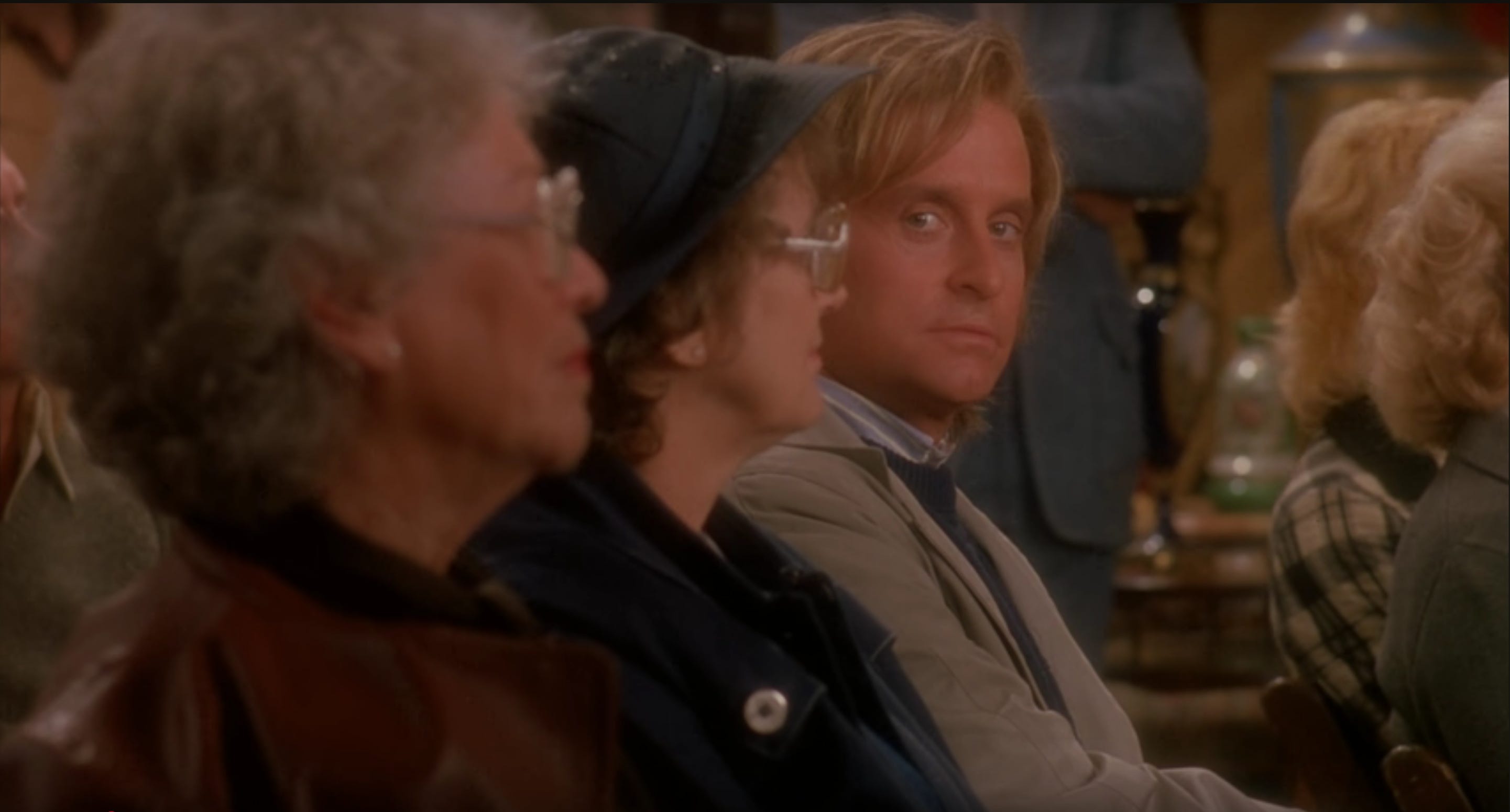
To adapt a fresh screenplay, Brooks commissioned Michael Leeson, who’d won an Emmy Award for his writing on Taxi, including what aired as the third episode (Leeson’s storyline inspiring jazz composer Bob James to write “Angela,” which became the sitcom’s iconic theme). Polly Platt was critical of Leeson’s script, believing Barbara Rose came off as obnoxious and her husband (now named Oliver) a wimp. She took an opportunity to help another talented but awfully green filmmaker–George Miller–adapt a big novel for Hollywood, Platt serving as art director for The Witches of Eastwick (1987). To direct The War of the Roses, Platt was counting on her third ex-husband, property manager Anthony Wade, to serve as her line producer, but living with an illness for many years, Wade was found comatose on a job in Florida and later died. In the wake of Wade’s death, Platt didn’t think she had it in her to direct, and never would. Brooks turned to Danny DeVito, whose career he’d launched as a cast member of Taxi. After directing several short films, DeVito had come out of the gate strong in feature films with Throw Momma From the Train (1987).
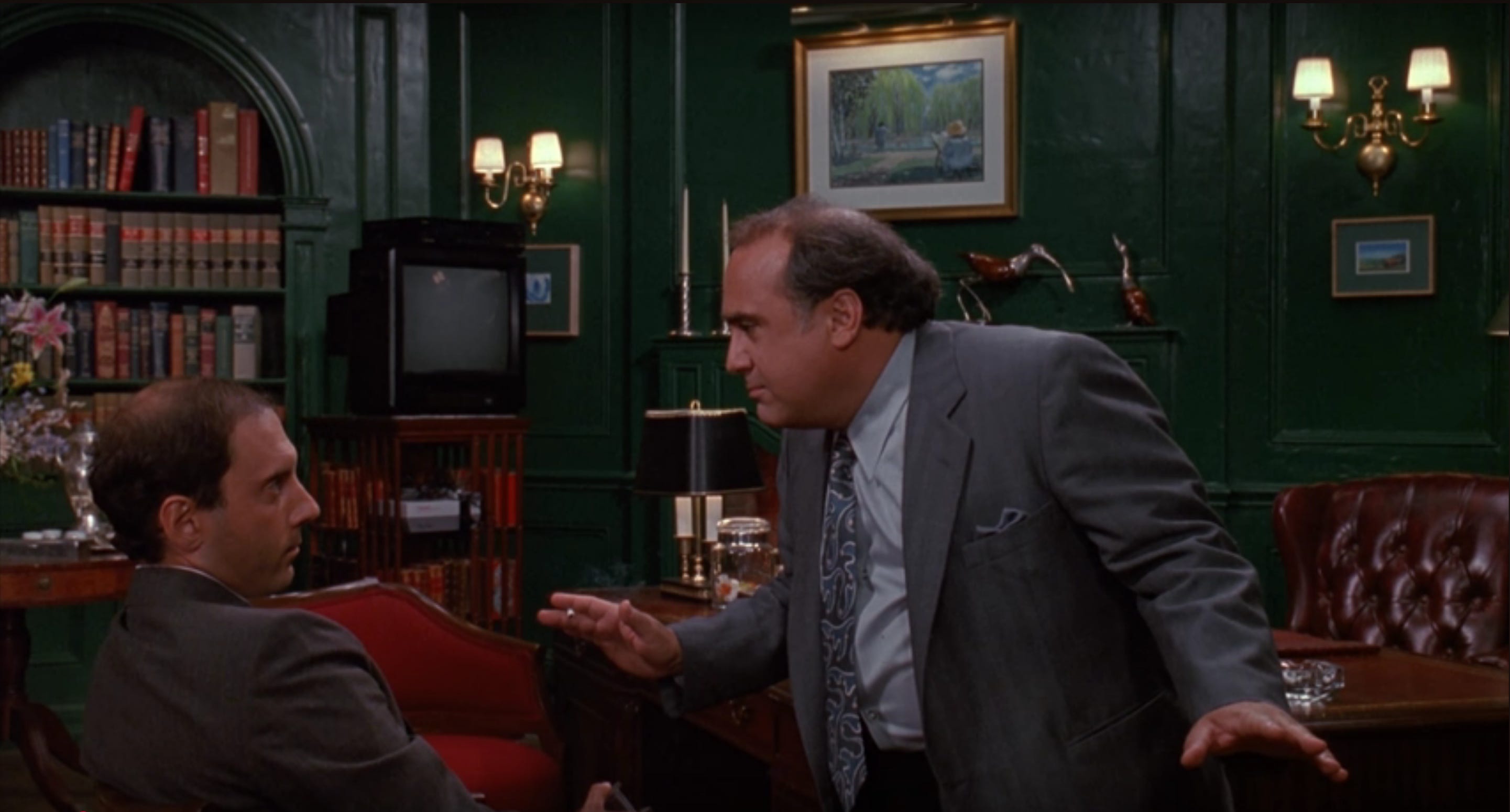
DeVito had been looking for a project that would reteam him with Kathleen Turner and Michael Douglas, his co-stars in Romancing the Stone (1984) and The Jewel of the Nile (1985), without having to go back to the well for another sequel. Assured that Platt was ready to pass the baton, DeVito agreed to direct The War of the Roses, taking the role of Oliver Rose’s colleague, Gavin D’Amato. DeVito sent the script to Douglas, who as fate would have it, wanted to cash in his chips earned from winning an Academy Award for Best Actor in Wall Street (1987) by doing a comedy. Turner had an opportunity to play Maggie the Cat in a stage revival of Cat on a Hot Tin Roof, but compelled the producers to wait for her so she could make The War of the Roses first. Shooting commenced in March 1989 at Fox Studios in Century City, where interiors for the Rose house would be shot. The Universal Studios backlot stood in for Cambridge, Massachusetts on a snowy night, while the town of Coupeville, Washington on Whidbey Island substituted for the film’s exteriors of Nantucket Island. The production returned to Los Angeles to finish production, exteriors for the Rose house filmed in the neighborhood of Hancock Park.
Fox opened The War of the Roses on December 8, 1989 in a modest number of theaters: 1,259 in the U.S., far from a tentpole release. Reviews set the film on its path of commercial success, Gene Siskel & Roger Ebert giving The War of the Roses two thumbs up. Siskel credited the picture’s dark tone and gutty commentary on modern marriage, predicting the film would stand the test of time. Though not as enamored, Ebert credited the filmmakers for refusing to hold back, warning viewers it might go too far for some of them. Siskel would rank The War of the Roses #10 on his list of the year’s ten best films. Writing for the New York Times, Janet Maslin was not as enthusiastic, but offered that even though the Roses were caricatures, viewers would be able to empathize with the ups and downs of their marriage and the nastiness in which it spirals. The War of the Roses opened in a crowded holiday field, Fox going head to head with a domestic comedy Orion Pictures hoped would appeal to a broad audience, Meryl Streep and Roseanne Barr in She-Devil, while National Lampoon’s Christmas Vacation was in its second weekend of release. The War of the Roses opened at #1 at the box office and strong word of mouth kept it near the top for two months, among the top ten grossing films for ten weekends. The film’s release on laserdisc (retailing at $69.98) was one of the first–if not the first–in which a film director recorded an audio commentary for home video. A second disc included deleted scenes, trailers, the shooting script and a gallery of production stills and posters, special features most consumers had never seen.
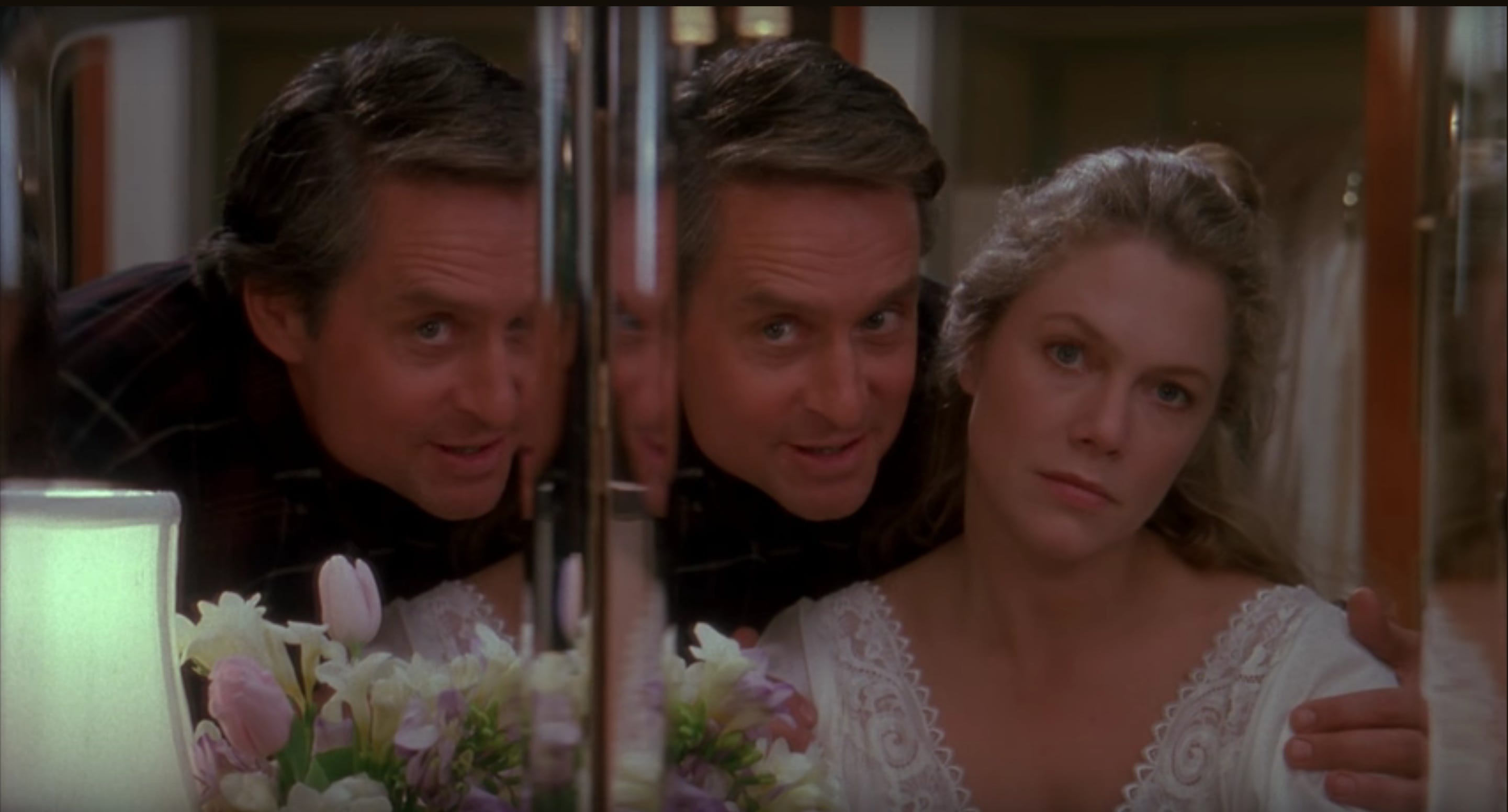
The War of the Roses runs 116 minutes and its first hour is fantastic. Most homicide victims know their killers intimately, and like a murder investigation, Michael Leeson’s screenplay is loaded with forensic clues on the when and how a relationship filled with love started to break bad. Barbara Rose is by her nature charitable and free-spirited. Oliver is hard-working and loyal. They make each other happy. They have great sex. The relationship doesn’t stand a chance. The couple meet as college students at an estate sale, already collecting the stuff they hope to fill their future homestead with. The person they might share that home with is of minor importance. Kathleen Turner was 35 years old when production began, Michael Douglas 44 years old, and neither are very credible playing twenty-one-year-old versions of their characters (Turner is doubled unconvincingly by a gymnast for the acrobatic positions required for her character, a former gymnast). The age disparity is the only unbelievable detail, though. The script’s characterization is nuanced, each scene reinforcing what attracts the couple to each other and also what repels them, all highlighted with tempestuous wit.
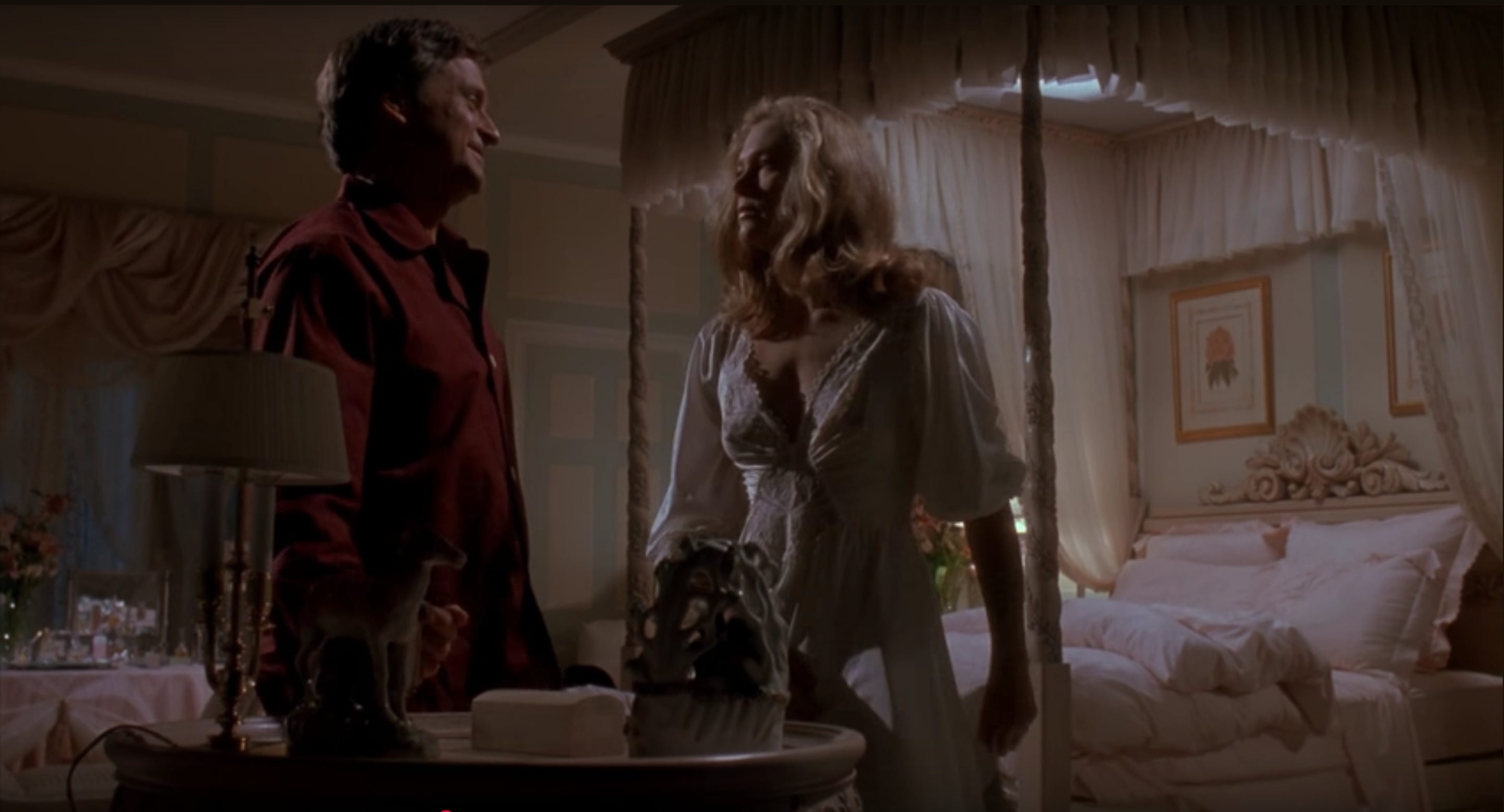
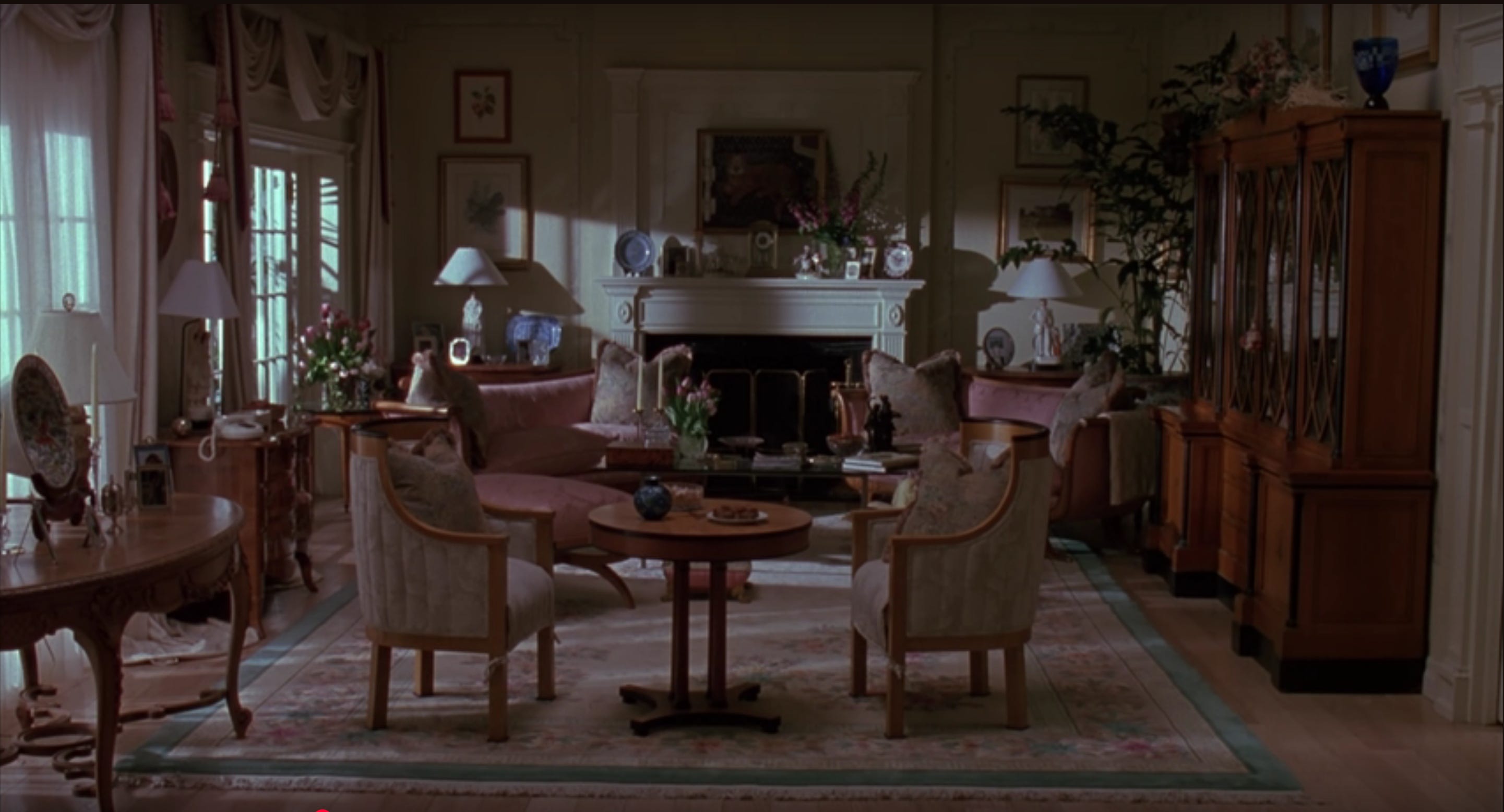
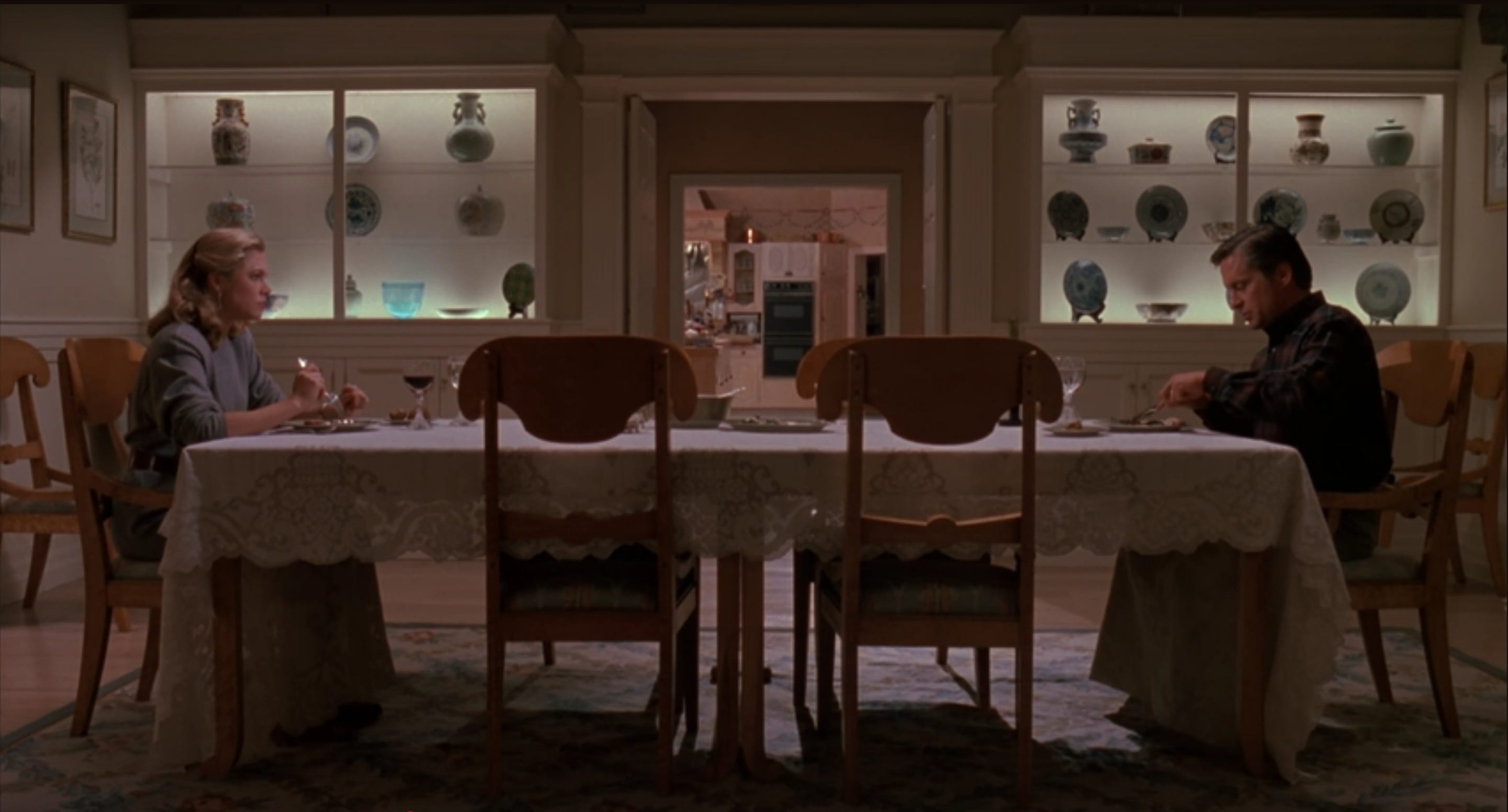
The film’s conceit is that a couple could be so devoted to a house that they’re pushed to increasingly deranged lengths to keep it for themselves. For this to appear plausible, the house needed to not only look and feel grand, but be a character. The ideal director would have had a design sensibility and impeccable taste. Someone like Polly Platt. Directed by Danny DeVito, The War of the Roses settles into a grand scale entertainment, funnier than it probably would’ve been if directed by Platt, but ultimately, less sophisticated. Shot on sound stages by director of photography Stephen H. Burum in a heightened theatrical style, the interiors of the house resemble a sitcom, what we see of the exteriors are generic, and the ceramic figurines so much fuss are raised over are forgettable. Turner and Douglas give maximum-level performances, committing themselves 110%, but the material strands them in the movie by themselves. German actor Marianne Sägebrecht plays the couple’s housekeeper in a role that the filmmakers can’t seem to decide whether to punch up (for someone like Catherine O’Hara or Julia Louis-Dreyfus) or cut even further back, like the children, played by Heather Fairfield and Sean Astin. If the comedies of Nancy Meyers are criticized for their magnificent interior design and sham characters, The War of the Roses exposes the problem of having magnificent characters and sham design in a story where better homes and gardens were important.
Video rental category: Comedy
Special interest: The Payback
Hey, good morning Joe! Thank you for this one… I loved this movie. I think my favorite line in the whole thing is when Michael Douglas and Danny DeVito were talking about dividing up the house, and it’s some weird configuration and Michael. Douglas says “yeah, but I have more square footage!” as always, a wonderful job with background information and your analysis… Have a great day! Peace! CPZ