

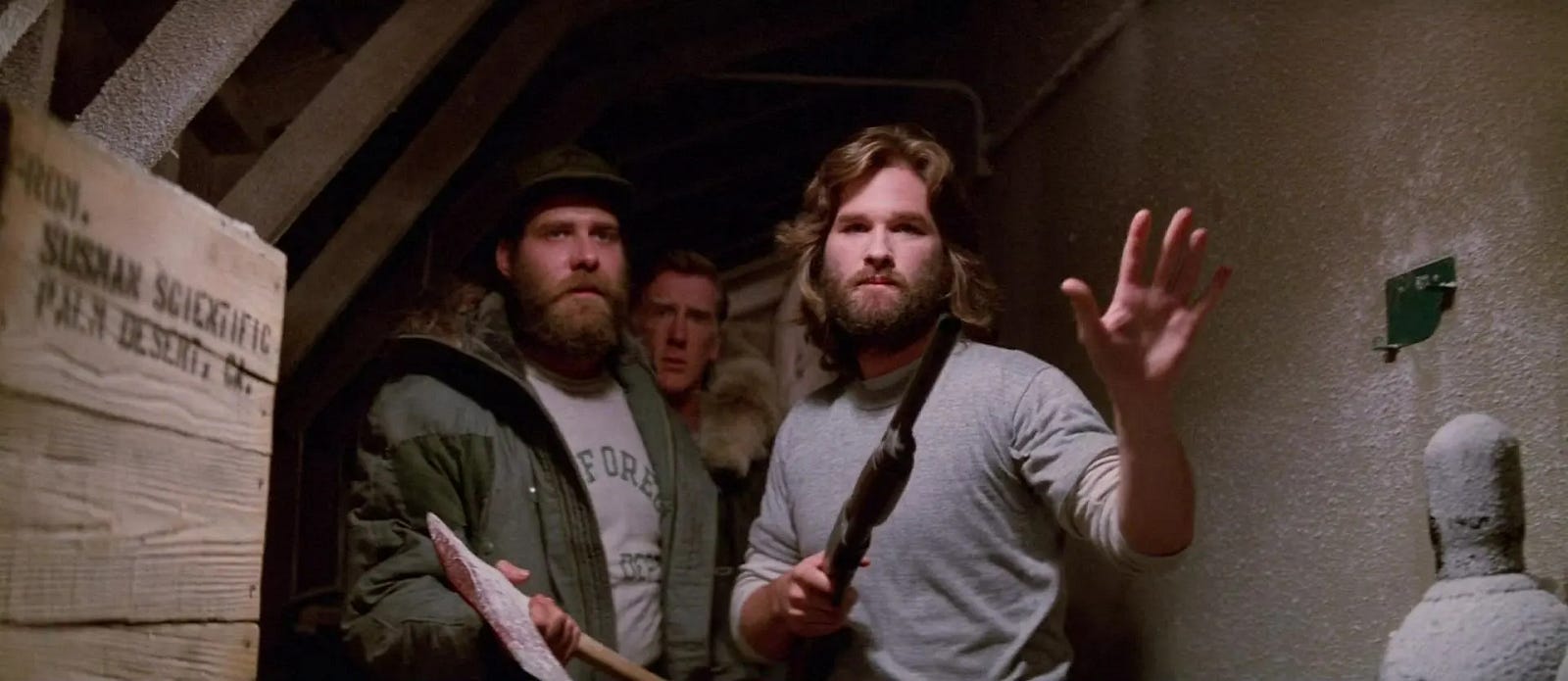
THE THING (1982) is a lurid paperback cover wrapped around a novel of extraordinary craft. Its director was perfecting the siege film, in which characters face an unspeakable force trying to breach their defenses. The script draws its twelve-man ensemble with economy, and the composer’s main theme plays like last rites. Some of the best technicians in the business built the creature effects, and even in a digital age, those effects hold up. Not everything in the picture does, but at the time of its release, not many people got past the cover, and those who did didn’t care for the ending.

John W. Campbell Jr. was born in Newark, New Jersey, in 1910 and grew up there and in the nearby township of Maplewood. His mother and aunt were identical twins, and the sisters would sometimes play a prank on Campbell, trading places before he returned from school. This might account for Campbell’s suspicion that people were not who they appeared to be. He was accepted to MIT in 1928, and by his sophomore year had begun writing and submitting stories to the pulps. Campbell launched his publishing career in Amazing Stories magazine in January 1930 with a piece titled “When the Atoms Failed.” He branched into deeper, more introspective stories than his assembly-line fiction, submitting them as Don A. Stuart, a play on his wife’s name, Doña Stewart.
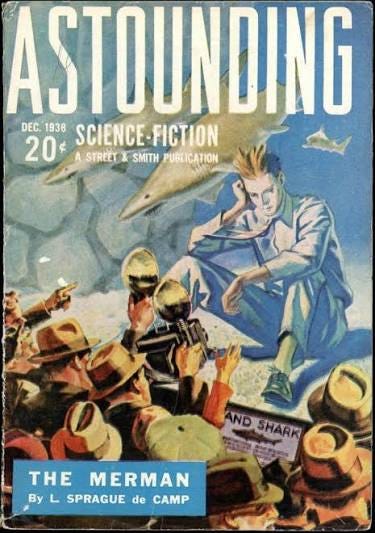
In 1937, Campbell accepted the job as editor of Astounding Stories magazine, which he rebranded Astounding Science-Fiction. Robert Heinlein and Theodore Sturgeon became regular contributors, and Campbell published L. Ron Hubbard and Isaac Asimov. He demanded stories grounded in real science, and his writers would help the genre grow up. Campbell largely stopped writing after taking the job, but in August 1938, a new Don A. Stuart story appeared in his own magazine. “Who Goes There?” is set at a research station in Antarctica. The men have discovered an extraterrestrial craft buried in 20 million years of ice and removed a frozen occupant. Campbell writes, “Three mad, hate-filled eyes blazed up with a living fire, bright as fresh-spilled blood, from a face ringed with a writhing, loathsome nest of worms, blue, mobile worms that crawled where hair should grow.” Thawing the alien for tests, the men discover too late that not only is the specimen alive, but it has the ability to imitate any living thing it absorbs. This means one or more of the men aren’t what they appear to be.
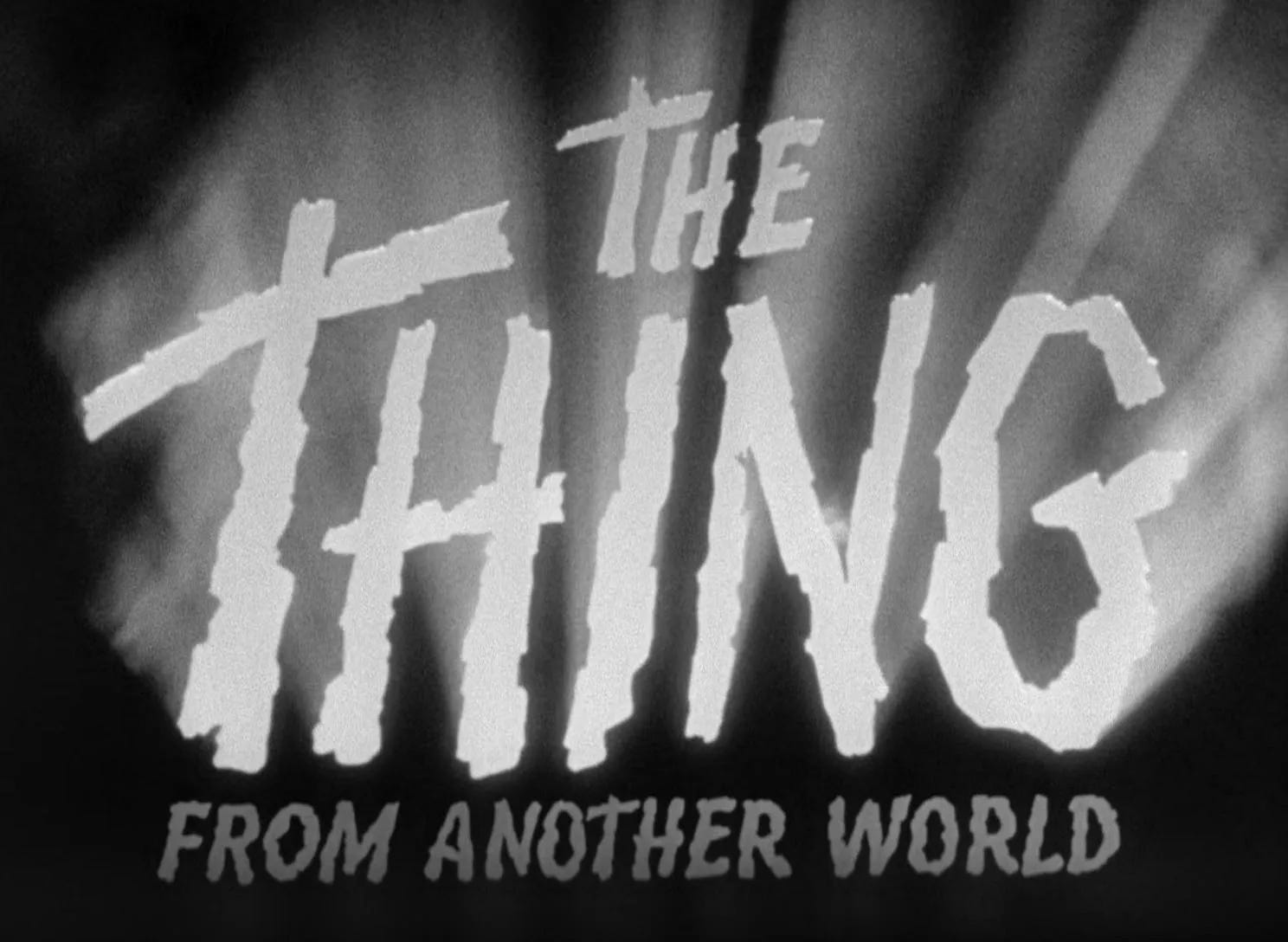
Director Howard Hawks was in Heidelberg, Germany, in the fall of 1948, shooting exteriors for the comedy I Was a Male War Bride (1949) starring Cary Grant. According to legend, Hawks was browsing the newsstand of an Army PX when he picked up a copy of “Who Goes There?” By the age of fifty-two, Hawks had directed a film of nearly every type, including romantic adventure with To Have and Have Not (1944), hardboiled crime with The Big Sleep (1946) and western with Red River (1948). “Science fiction” barely existed as a film genre, with serials featuring rocket ships or spacemen considered junk by most adults.“Who Goes There?” was different. Campbell’s tale features a Hawks staple: rugged professionals working together at a remote outpost.
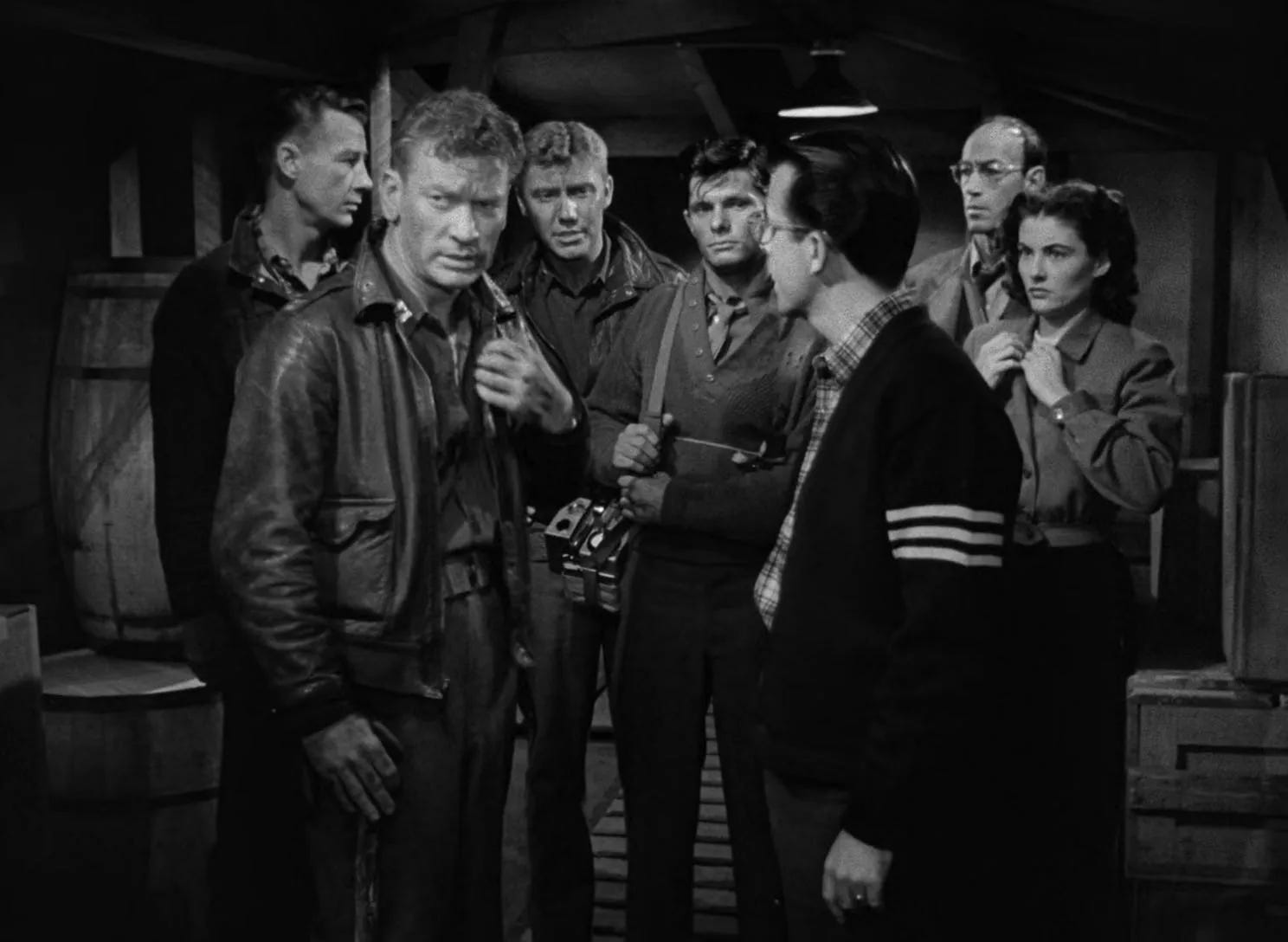
In May 1950, Hawks made a deal with RKO Pictures to produce and direct two pictures and produce a third. Optioning the film rights to “Who Goes There?” he commissioned screenwriters Charles Lederer and Ben Hecht to write a screenplay. Rather than a research station in Antarctica, Lederer & Hecht set their adaptation at a scientific outpost near the North Pole. Needing a monster that would be as practical as it would be scary, the screenwriters abandoned Campbell’s shapeshifting alien in favor of a hulk that resembled Frankenstein’s Monster. To direct, Hawks hired editor Christian Nyby, who’d cut To Have and Have Not and The Big Sleep and triaged Red River, transforming what Hawks and Nyby agreed didn’t work into one of John Wayne’s best westerns. The Thing from Another World cost a then-considerable sum of $1.25 million. Premiering in April 1951, it was one of the first major-studio pictures about a hostile visitor from space and, with the public gripped by UFO hysteria, terrified many who saw it. Hawks’s production played regularly on television in the 1960s, sending a generation of baby boomers running from their living rooms.

Stuart Cohen had recently attended film school at the University of Southern California and was working in television, earning an associate producer credit on a movie-of-the-week starring Linda Blair. In late 1975, Cohen was at a party in Los Angeles, where he recognized David Foster, former publicist for Steve McQueen. Foster had been a producer on The Getaway (1972) and, with Lawrence Turman, co-founded the Turman-Foster Company, landing a development deal with Universal Pictures. Cohen hoped to move into features and asked Foster whether he could bring him an idea. A few weeks later, he pitched a book Foster didn’t care for. Cohen returned, this time with “Who Goes There?” Foster, who had read the novella in high school, laughed and reminded him that it had already been made into The Thing from Another World. Cohen urged him to read it again, pointing out that ninety percent of the story never made it to the screen.
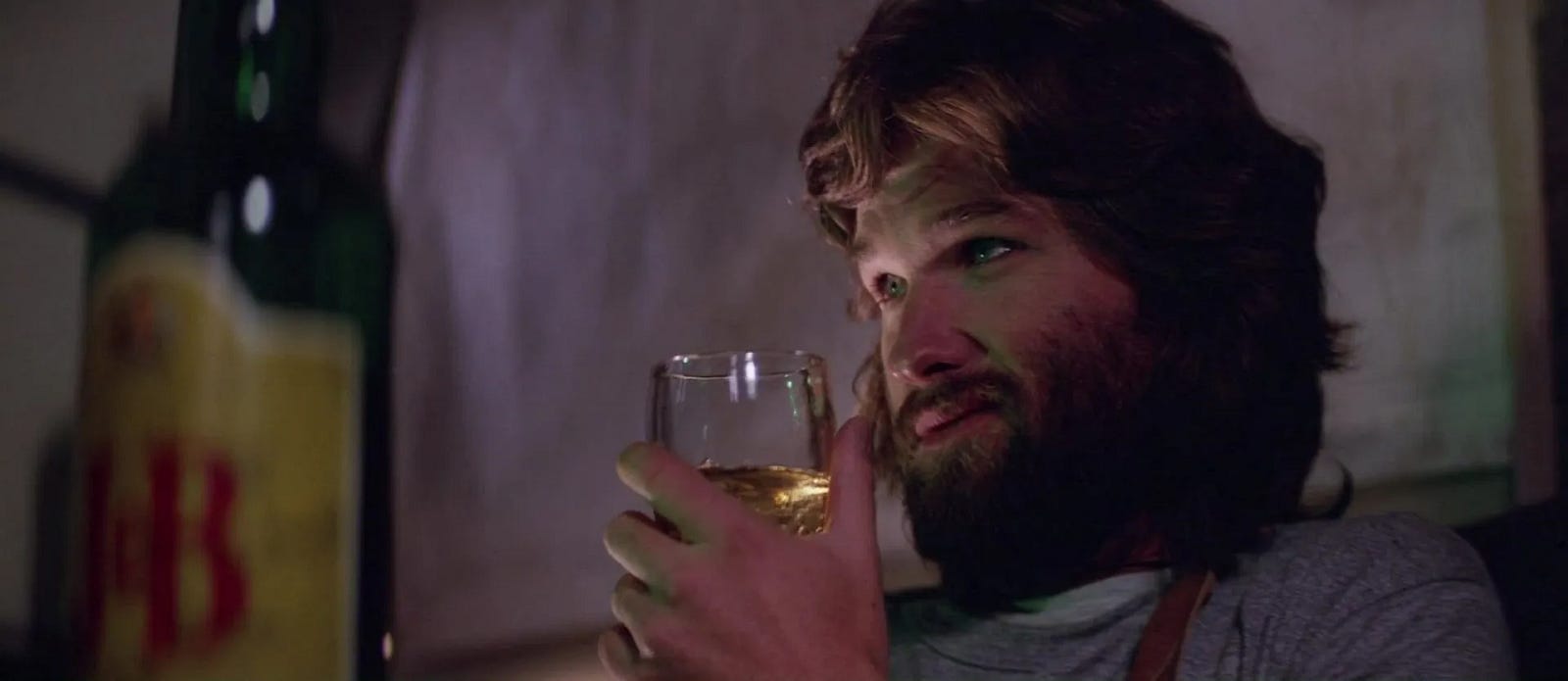
On his blog, The Original Fan, Cohen revealed he’d been excavating Campbell’s tale of subzero paranoia for half his life. He’d read the novella at twelve. It first scared him, then hooked him. Cohen wrote, “At its heart a classic locked door murder mystery, it had always seemed to me that the story’s strength lay in its success in dramatizing the internal nature of the conflict and the resultant issues of trust and identity rather than the external threat … My hope was to stay as faithful as possible to this basic idea by utilizing the shapeshifting aspect central to the novella, rather than attempting any sort of straight ahead remake of the first film.” Cohen, Foster and Turman spent two weeks working out how they would adapt “Who Goes There?” Foster recalled, “Then Larry and I went to Ned Tanen, the president of Universal, with it, told him what we wanted to do, and left the story with him. Two days later, he called us up and said he was excited about it, let’s get together. That’s when we put it together as a Turman-Foster production, Stuart Cohen, co-producer.”
Cohen recalled, “The rights to the short story had been kicking around Hollywood for a while, usually with a very low level of interest attached … It was sitting with the writing team of Hal Barwood & Matthew Robbins, but when they passed, Universal bought the rights for us to produce. Separately, to cover all the bases, the studio also acquired the remake rights to the original film, as well as its title, from a gentleman named Wilbur Stark.” RKO — once one of the Big Five Hollywood studios — ceased production in 1957, and by 1980, Stark had snapped up remake rights to twenty-two of its properties, including Cat People (1942), Out of the Past (1947) and The Thing from Another World. In exchange for an executive producer credit, Stark cleared the way for Universal to move forward with its remake. Cohen lobbied for Who Goes There? as the title, but the studio saw more marketing value in The Thing.
Five years before pitching the novella to Foster, Cohen had discussed its potential with a USC classmate over french fries in the student cafeteria. While many of their peers were enamored with European art films, John Carpenter, raised in Bowling Green, Kentucky, had zero tolerance for pretension. He was the co-writer, editor and composer of a student short titled The Resurrection of Broncho Billy (1970). The western would win an Academy Award for Best Short Subject (Live Action), and Carpenter dropped out of school in 1971 to expand another student project into a feature. Dark Star (1975) built a cult following but barely registered at the box office. In 1975, Cohen met Carpenter for another order of french fries, this time at Bob’s Big Boy in Hollywood, where they discussed adapting “Who Goes There?” Carpenter was interested, but Universal asked the producers to consider writers and directors it had under contract or already knew.
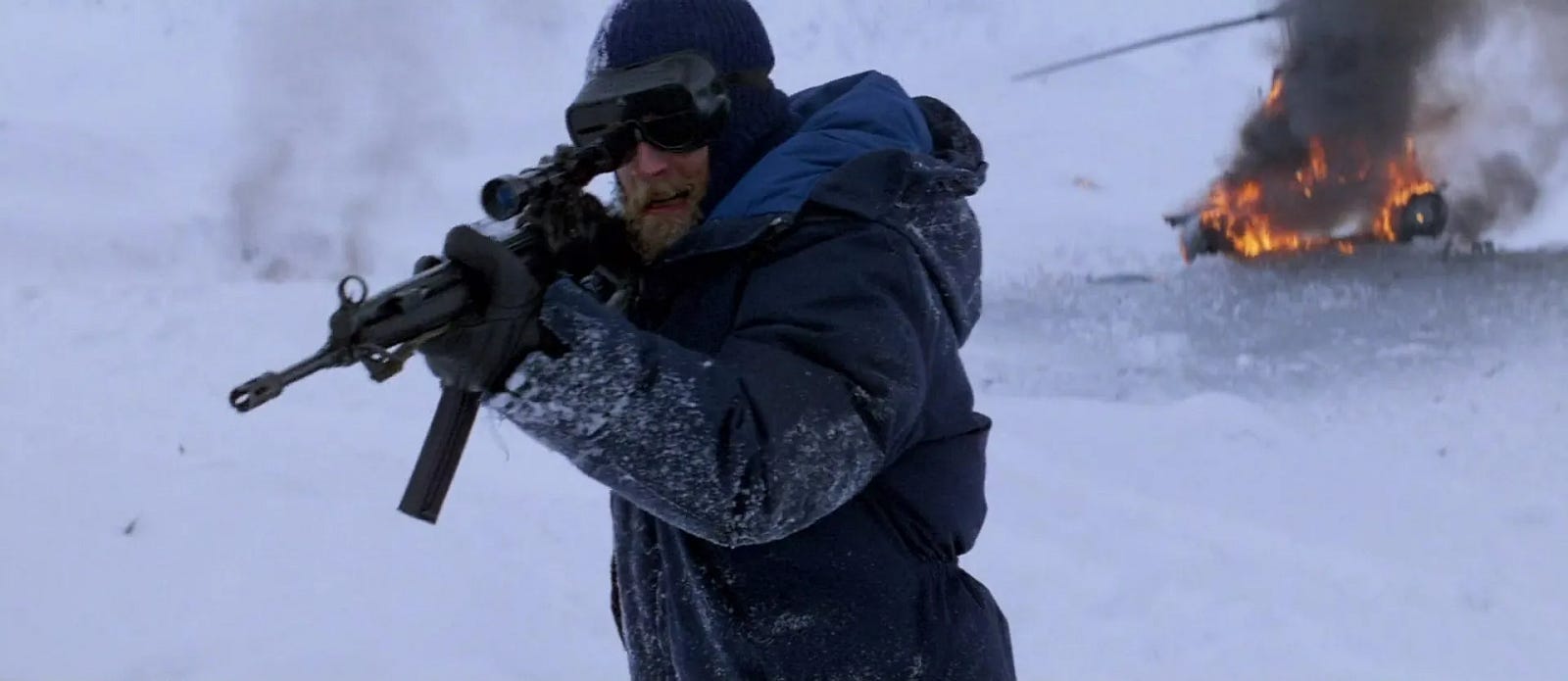
The success of The Texas Chain Saw Massacre (1974) had landed Tobe Hooper and Kim Henkel a deal with Universal, and the studio offered the director and his co-writer The Thing. The pair weren’t interested in exploring themes of trust. They tossed out Campbell’s premise and, writing quickly to beat an impending writers strike, took a stab at a screenplay. Cohen remembered their script as “a sort of Antarctica Moby-Dick,” a man-versus-monster tale with an Ahab figure referred to as the Captain. Universal deemed the script a disaster and took Hooper and Henkel off the project. Foster suggested playwright David Wiltse, a well-regarded script doctor at Universal, but the pairing never clicked. The studio put forward William F. Nolan, who had co-authored the novel Logan’s Run. Nolan delivered a treatment in which three aliens leap from host to host, reducing them to husks, similar to the pods in Invasion of the Body Snatchers (1978). The producers didn’t bother commissioning a screenplay. After three attempts, Cohen admitted they hadn’t proven that a first-class monster movie was lurking in “Who Goes There?”
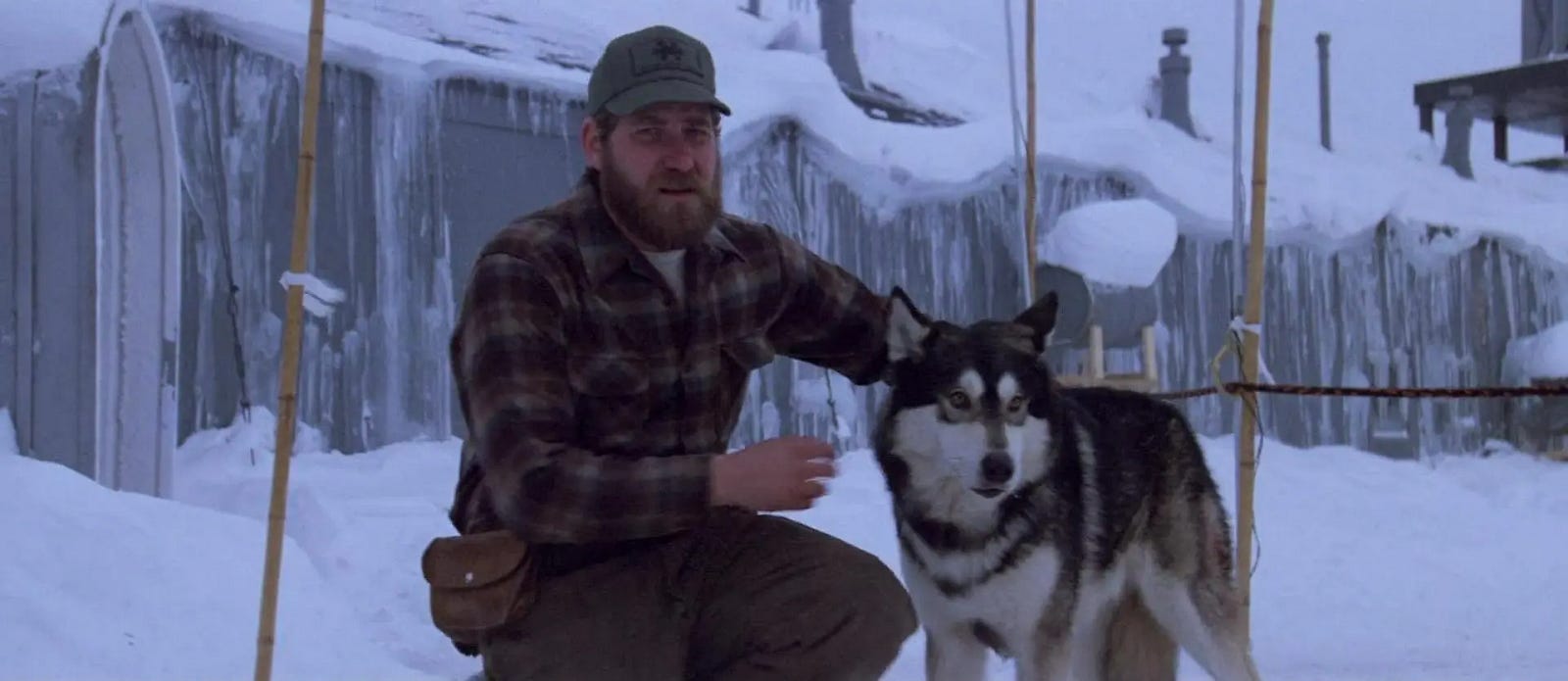
Two hit films proved it for them. First was a low-budget horror thriller, which executive producer Irwin Yablans pitched to its director as a simple concept: a killer stalking babysitters. Carpenter co-wrote the script with producer Debra Hill, directed it and composed the music. He even gave The Thing from Another World a cameo, flickering on a TV set. Halloween (1978) finished its theatrical run among the top-ten-grossing movies of the year. Produced for $325,000, it became the most profitable independent film up to that time. Second, Alien (1979), a studio picture about a hostile organism stalking the isolated crew of a space freighter, was the №1 movie in the country for its first three weeks. Cohen recalled, “On the Monday following Alien’s opening weekend, I walked into David Foster’s office and asked the following question: ‘Do you think they’ll understand now?’ … David responded, ‘I think they will.’ And they did.” Universal agreed to restart development on The Thing with Carpenter at the helm. The director insisted on retaining the premise of “Who Goes There?” Carpenter recalled, “All the scripts were awful because they tried to change the story and make it into something it wasn’t. I don’t think many people at Universal understood the story, because of its pulp style. The concept of the Thing being a chameleon never [really] hit home.”
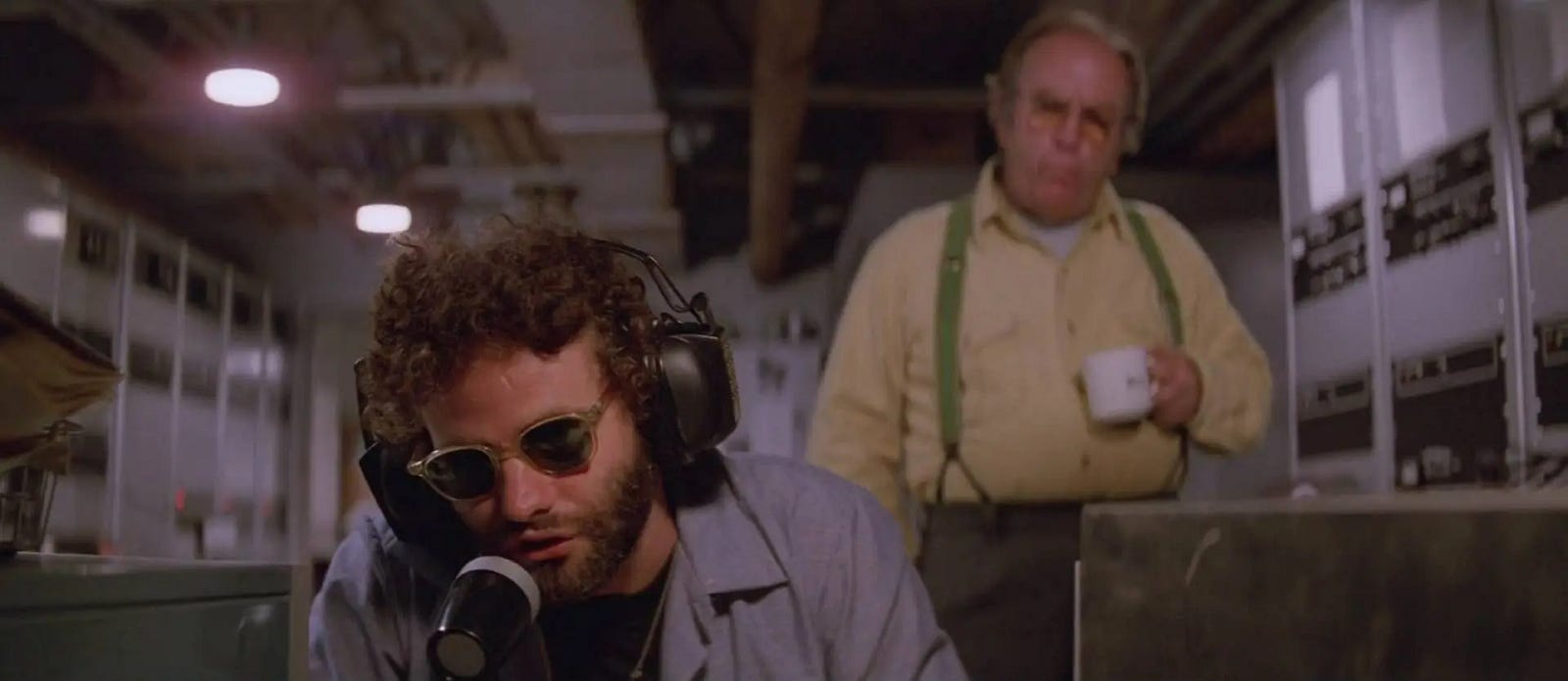
Carpenter had been writing a screenplay based on the urban legend that a U.S. Navy experiment to render a warship invisible had teleported the vessel and its crew. He had what he considered two great acts but hadn’t been able to crack the third. Anxious he might encounter similar resistance with The Thing, Carpenter preferred that another writer handle the adaptation. Cohen and Foster started with the author of I Am Legend. Richard Matheson declined without a meeting. According to his agent, he wanted nothing to do with a project called The Thing, however faithful it was to the novella. Among others, the producers met with Deric Washburn, screenwriter of The Deer Hunter (1978), and Ron Koslow, who’d written Lifeguard (1976). Cohen recalled, “We detected a heavy note of condescension from some toward the entire project. For others, it was old hat. It struck us that we had been meeting with or discussing writers primarily much older than we — was there someone out there of our generation … who hadn’t written science fiction or horror before but might like to try his hand at it?”
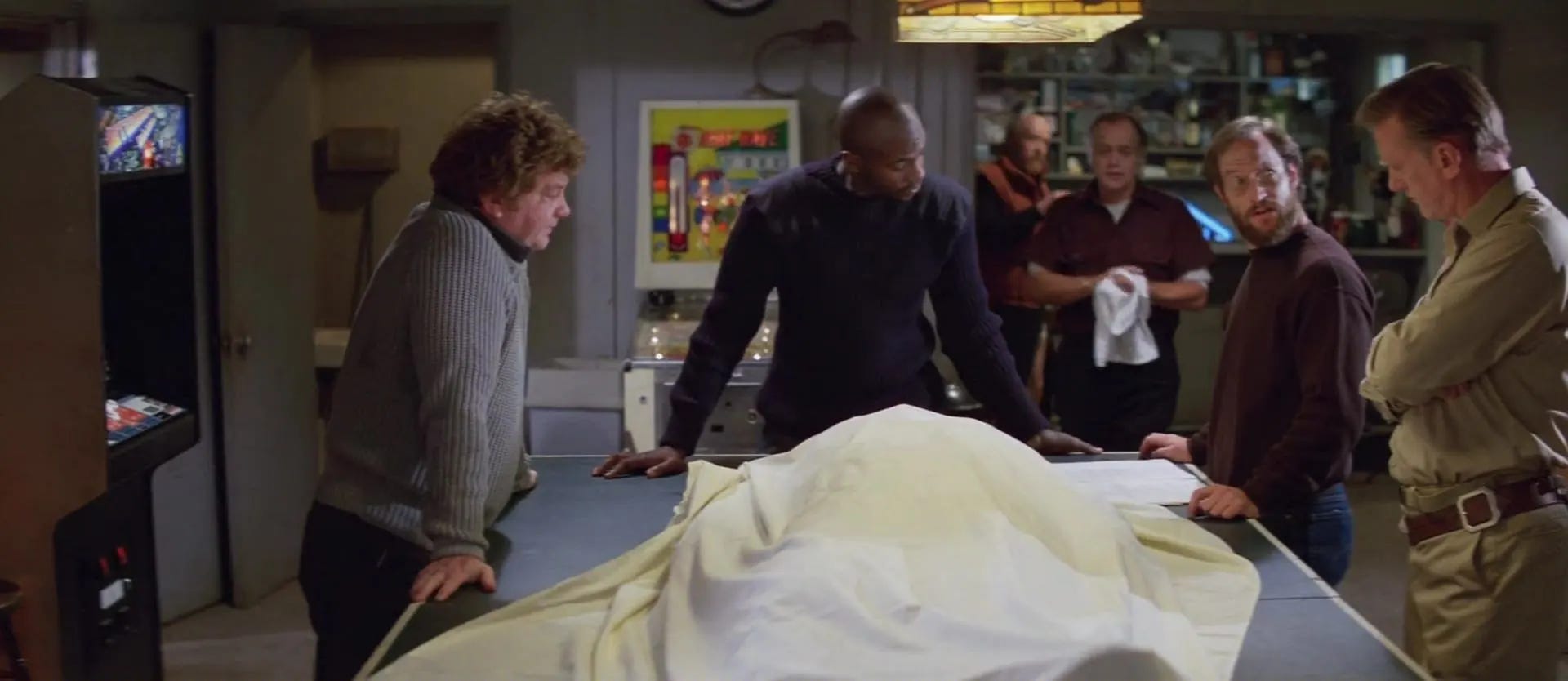
In 1977, Cohen had proposed meeting with Bill Lancaster, screenwriter of The Bad News Bears (1976). Lancaster knew how to make a dozen characters distinct with little screen time. He’d been discussing other projects with Turman when The Thing from Another World came up. Invited to a screening, Lancaster loved the film but had no interest in remaking it, and he sensed the producers wanted to do just that. Science fiction got little respect in the Lancaster household. Cohen recalled that Bill’s father, Burt Lancaster, dismissed the genre as a “children’s playground.” In August 1979, Turman thought of Bill Lancaster again. By this time, Lancaster had read “Who Goes There?” and found it merely “workable.” He met with Carpenter while the director was scoring The Fog (1980) and told him that he wanted to adapt Campbell’s story, not remake the Hawks production. Cohen recalled, “He imagined descending levels of mistrust among the characters so profound that the line of reality became blurred — something, if he worked it correctly, so airtight that it no longer mattered whether there was a monster or not — the men became the biggest threat to themselves … I could sense John thinking, ‘Ok, you supply the story and structure, I’ll supply the monster.’”
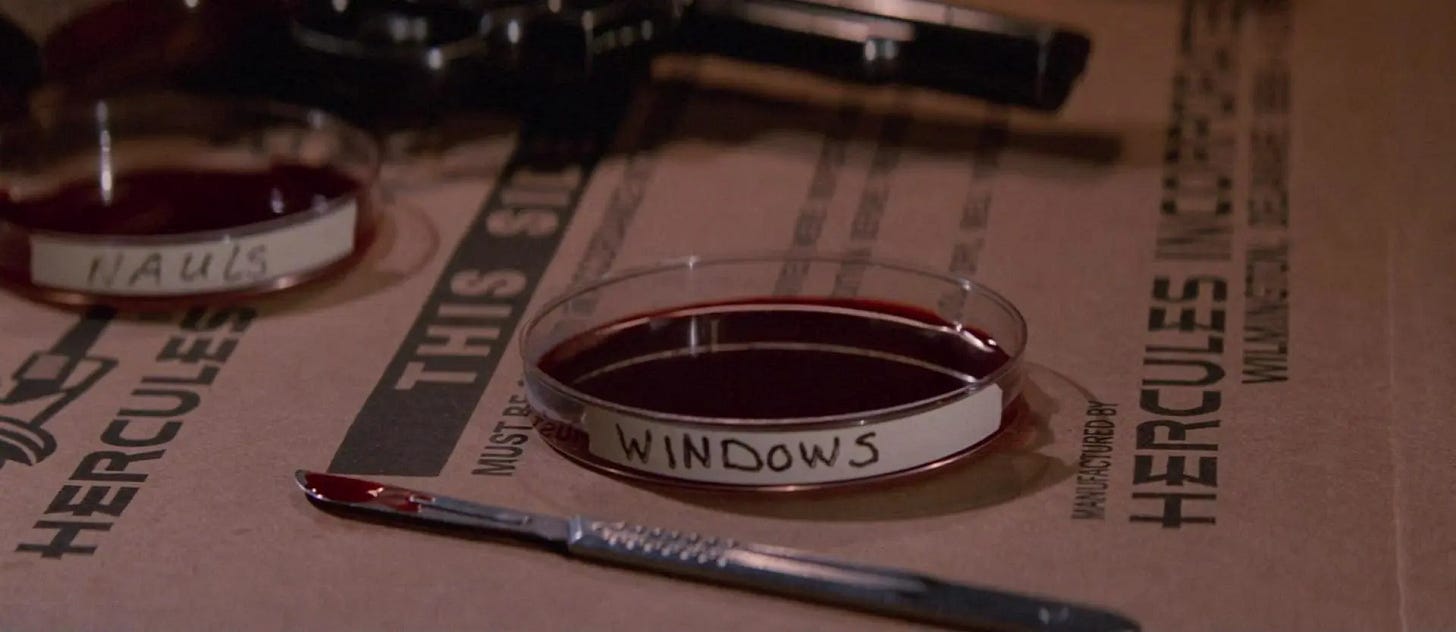
Carpenter recalled, “We met with a lot of people on The Thing and it was only when Bill Lancaster talked about what he would do with the short story that I thought, ‘This is the guy.’” Foster suggested keeping the ensemble male. Lancaster later explained, “In reality there usually aren’t any women in these kinds of situations. I remember thinking as a kid that the obligatory love scenes in horror movies interrupted the action. It seemed more honest to have a group of just men in that situation … Women have taken a different role in 1982 than they did in 1951, so perhaps we should have put in one or two, but they would have seemed gratuitous to me.” Lancaster promptly wrote thirty pages, which Cohen described as the first thirty minutes of the film. As Carpenter had feared he might himself, Lancaster struggled to finish the script, and it was close to a year, in the fall of 1980, before the screenwriter completed a draft of The Thing. Cohen recalled Carpenter’s reaction: “This is the best script I’ve ever read.” Carpenter credited Lancaster with a couple of key moments: “He came up with the scene where the doctor tries to shock another character and the Thing comes out of his chest. And we discussed the idea of the blood tests — that’s the reason I wanted to do the movie.”
To supply the monster, Carpenter approached a twenty-one-year-old makeup artist named Rob Bottin. He’d begun apprenticing under Rick Baker as a teenager, making molds, trimming rubber and sewing costumes on King Kong (1976). Bottin was barely out of high school when he landed a job handling the makeup effects for Rock ’n’ Roll High School (1979). Its director of photography, Dean Cundey, had lit Halloween, and Bottin, a fan of the film, asked Cundey to introduce him to Carpenter. Bottin’s enthusiasm compelled Carpenter to hire him to do the makeup effects for The Fog, which was financed and distributed by AVCO Embassy Pictures. Bottin created the showstopping werewolf transformations for another AVCO Embassy production, The Howling (1981). Then Carpenter asked him to design and build the Thing. Bottin recalled, “At that time, I didn’t know if I wanted to do it or not. It was going to be a big studio picture. Pretty scary.” The director began looking for another wizard.
Roy Arbogast, a veteran moldmaker who’d helped build and maintain the shark in Jaws (1975), was heading the mechanical effects for The Thing. On his recommendation, Carpenter summoned effects artist Dale Kuipers for an interview at Universal. Kuipers recalled, “From a previous telephone conversation, John had indicated that he wanted a creature that didn’t ‘fly, crawl, swim or walk.’ For the next couple of hours I sketched page after page. When John arrived he did cartwheels over my initial designs … I was hired on the basis of that work and allowed to fly back to Green Bay to develop a working prototype of the Thing in my own studio.” Working from Lancaster’s script, which climaxed with the Thing revealing itself in its original form, Kuipers came up with a monster whose life cycle was similar to that of a parasitoid wasp. The Thing clamped onto its victim’s head to probe brain patterns necessary for imitation. Kuipers was building a prototype when, one night, a drunken biker shoved him through a quarter-inch plate-glass window outside a Green Bay department store. He spent over two months unable to work. Carpenter went back to his original monster maker. Bottin recalled, “I’m a big fan of Dale’s work. He’d come up with something that was a lot better than Alien’s facehugger, but it was basically a big bug. In a match cut, the dog or whatever would explode, and there’d be this big bug sitting there, and it’d go off and do its destruction. For me, because of the title, I expected something a little more like a thing.”
Carpenter recalled, “Rob’s concept was the Thing could do anything. It doesn’t look like any one particular entity, and has no respect for what it imitates. It can look like a million lifeforms from a million different planets, depending on what it needs to do. That gave me the opportunity to do things that have never been done in a movie, because there’s been no excuse to do them before. The audience isn’t going to expect this.” Bottin maintained that his concept was initially too radical even for Carpenter. He recalled, “John couldn’t get a handle on it. He said, ‘Rob, this is really weird. Let me think about it.’” The next day, Carpenter offered him the job. At Bottin’s request, the production invited Kuipers to stay on as a sculptor, but he declined, seeing that Bottin’s design departed significantly from his own. Bottin got to work on The Thing in April 1981, and his crew would grow to forty. Carpenter paired him with conceptual artist Michael Ploog, who’d been on the payroll for a month. Bottin knew Ploog’s work as an illustrator of Marvel Comics titles like Ghost Rider and Werewolf by Night. Ploog had also done concept art and storyboards for the Ralph Bakshi animated film Wizards (1977). Ploog recalled, “Carpenter just gave me the script and said, ‘Start to work.’ I would work for a week, call him up and tell him I had a sequence to show him … He pretty much let me do whatever I felt like. Then Rob came in and we started working on what the Thing was going to look like.”
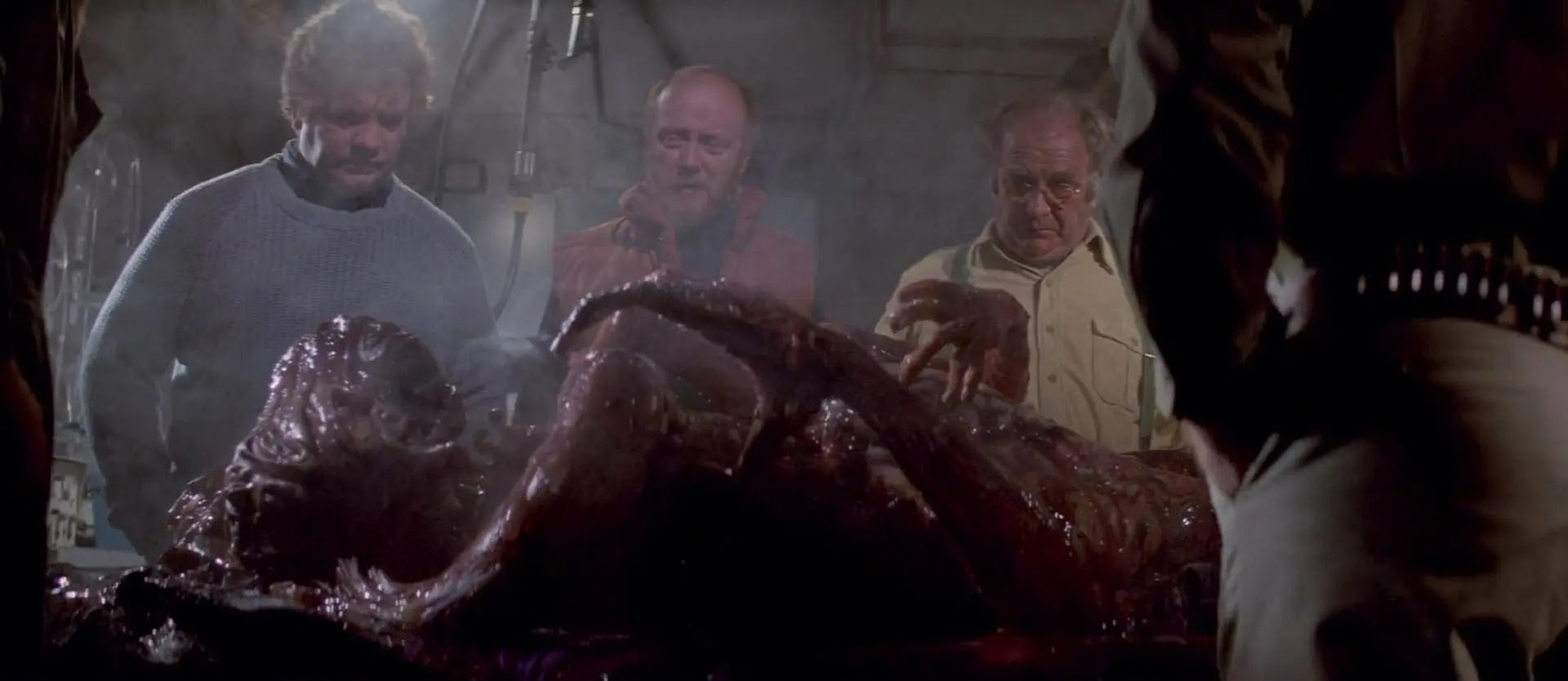
Bottin recalled, “I described the scene with the guy’s head coming off, and he just started laughing. Ploog’s out of his mind. He’s the kind of guy, who, while describing a scene, will start to strangle you. He was wrestling me around the room on the first day I met him.” Bottin and Ploog worked side by side on the Universal lot, one sculpting in clay, the other sketching. In Ploog’s opinion, writers often left gaps in their stories, and he thrived where Lancaster’s script lacked detail. Ploog came up with ideas like the death of Garry, the station manager. Lancaster, who by then had spent nearly two years working on The Thing, welcomed the input during his bull sessions with the pair. He recalled, “Out of the five or six big sequences, I had written something I thought was pretty bizarre … Bottin and Ploog got this look in their eyes, and said, ‘Oh, you think that’s strange, Lancaster? Watch this!’ Right then, it was like a game of, ‘Can you top this?’ Looking at where they’d taken my idea, I had to ask, ‘Is that really possible?’ Bottin said, ‘Sure.’”
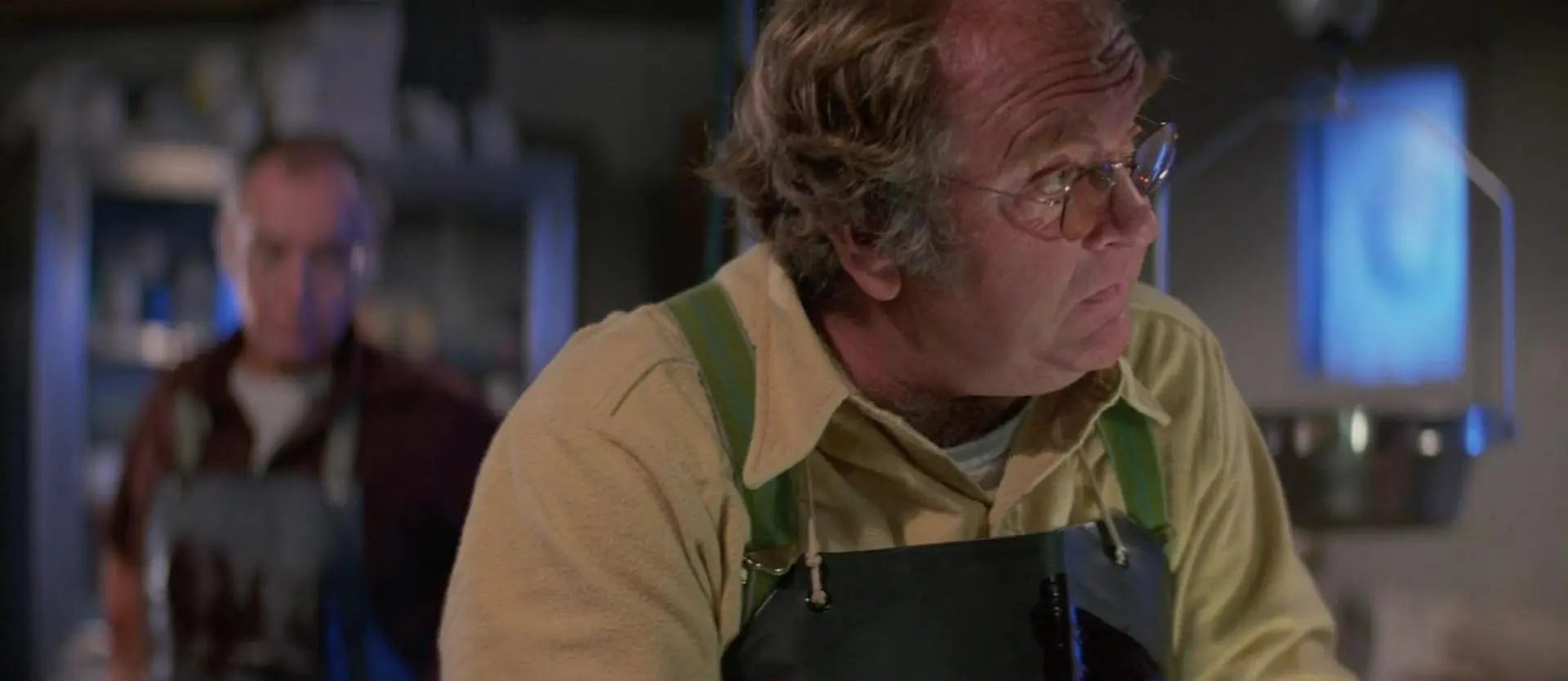
The studio initially proposed a production budget of $8 million. Cohen recalled, “Universal had budgeted a paltry $200,000 for what they termed ‘Creature Effects,’ scattered around the mechanical special effects and make-up departments …When we told them this wasn’t going to be adequate, they were genuinely surprised, stating this was more than they had ever budgeted for a monster movie — after all, didn’t Universal have some experience in making monster movies?” Carpenter himself was a budget-conscious filmmaker. Running a mere $10,000 over on The Fog had angered him. But according to Cohen, the director wanted the makeup effects for The Thing pulled off “live, in front of the camera, like a magic show.” With much of the design and storyboard work awaiting final approval, Cohen’s best guess put the budget of Bottin and Arbogast’s “magic show” at $750,000. Bottin recalled, “I don’t think they really understood the amount of work that had to be done. They were going to put me near this big metal machine that keeps pounding all day, and I didn’t need that.” Bottin proposed the effects be built and shot at the Hartland effects studio in North Hollywood, which Universal Television had used for Battlestar Galactica. Hartland offered Bottin both a state-of-the-art machine shop and soundstages, and most of the effects shots in The Thing would be made there.
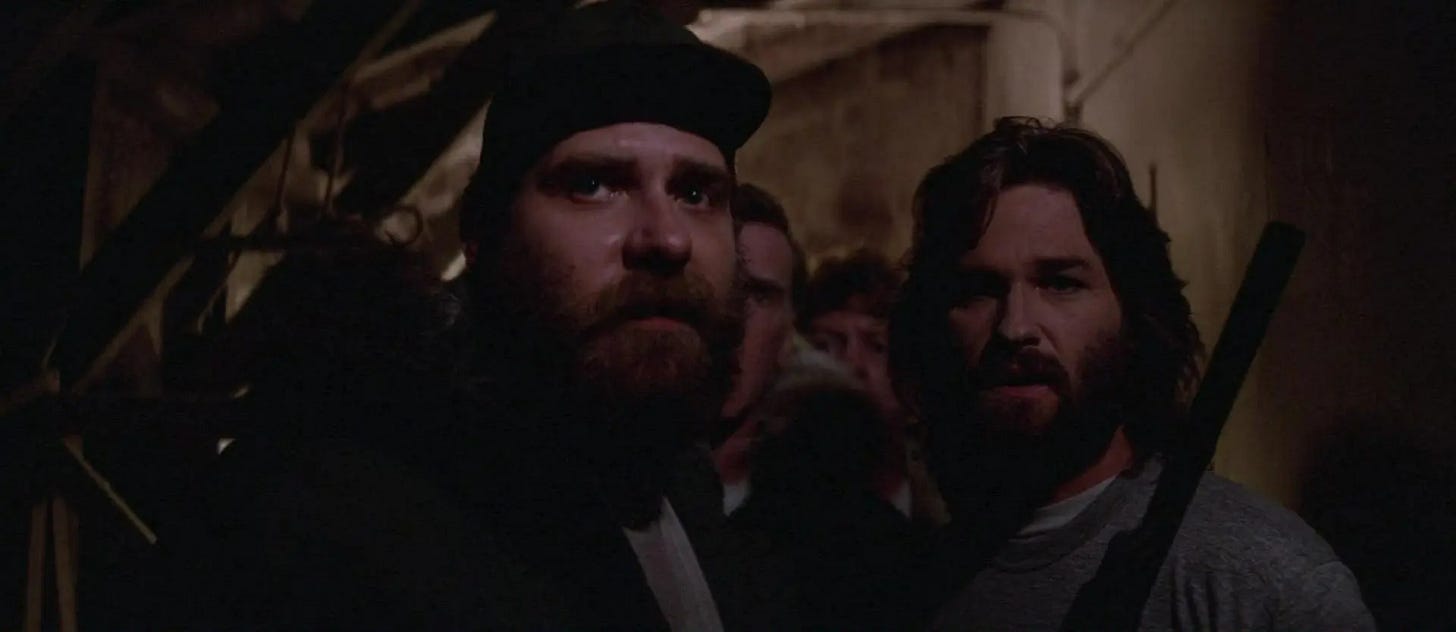
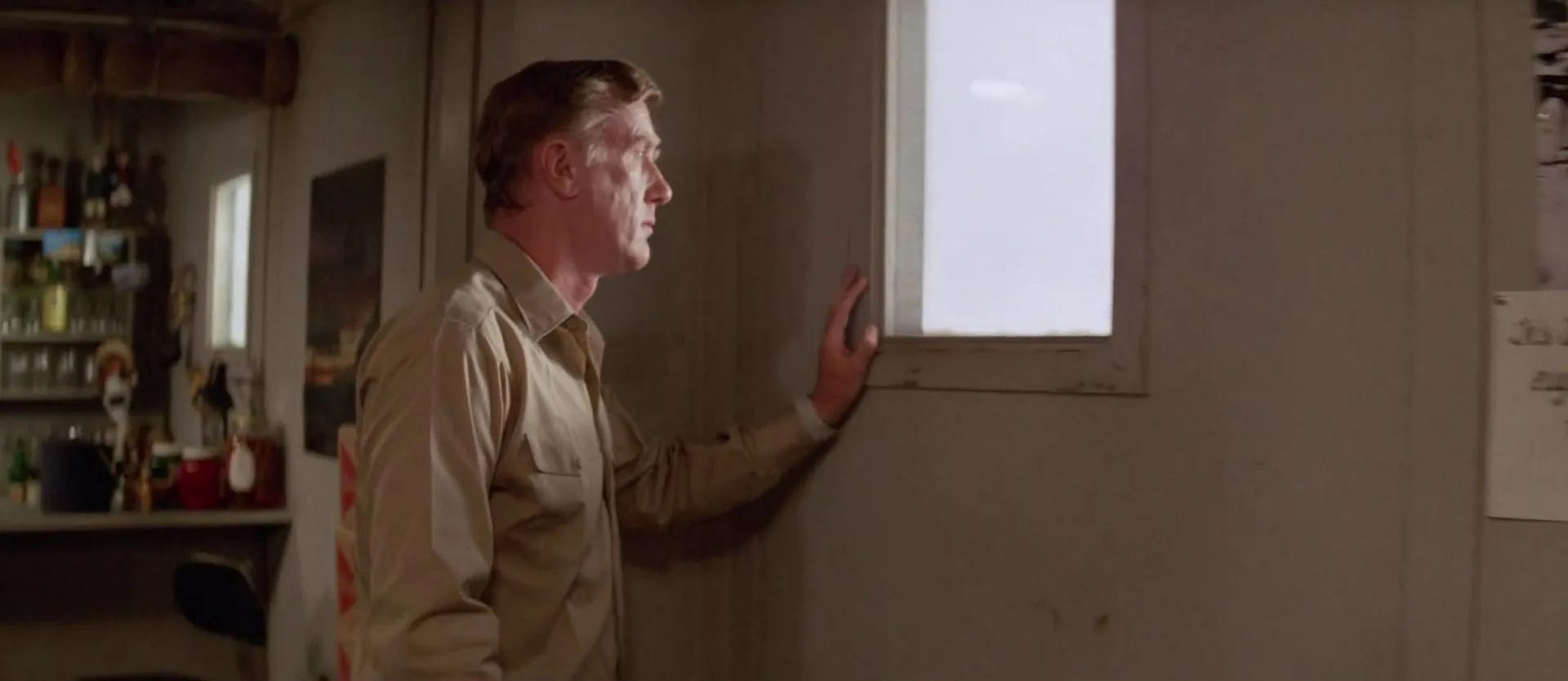
The title itself was the first hurdle in casting: actors and their agents assumed it belonged to an exploitation picture, until they read the script. For the role of Garry, Carpenter considered Lee Van Cleef, having just worked with him on Escape from New York (1981). Jerry Orbach was a more prestigious choice, fresh from Prince of the City (1981). Kevin Conway, who’d played multiple characters in Tobe Hooper’s horror movie for Universal, The Funhouse (1981), gave what Cohen considered a beautiful reading for the station manager. Richard Mulligan’s agent suggested him for Garry, and Mulligan’s work on the sitcom Soap also put him in the running for Palmer, a chopper pilot the script describes as having “slight sixties acid damage.” As a youthful alternative for Garry, Powers Boothe was mentioned. Donald Moffat, a character actor of stage, television and film, most recently seen as the Taxman in Popeye (1980), won the part.
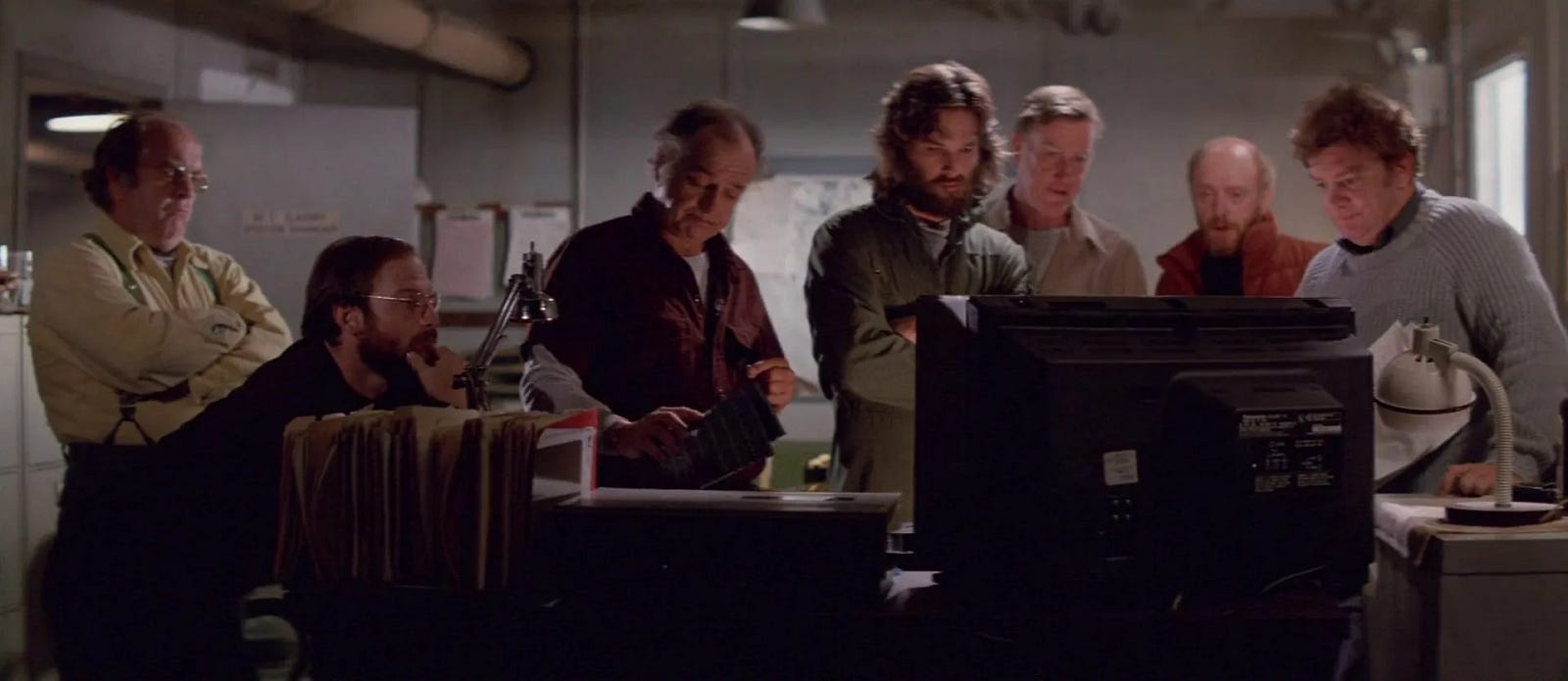
William Daniels was submitted for the role of Dr. Copper, but it was Brian Dennehy who nearly got it. Carpenter wavered until the end before choosing Richard Dysart, a character actor most recently seen as a compassionate physician in Being There (1979). For the role of Blair, Carpenter considered Donald Pleasence, but Cohen worried that audiences would notice if such a familiar actor vanished from the film for long stretches. Cohen recalled, “Far from occupying his now familiar role as everyone’s authentic grandfather and Quaker Oats spokesman, Wilford Brimley at the time of casting The Thing was completely unknown, a fresh face.” Brimley was a former ranch hand whose first job in the film business had been shoeing horses. Foster arranged a screening of Brimley’s scene-stealing work in the upcoming Absence of Malice (1981). With a strong recommendation from director Sydney Pollack, Brimley got the part.
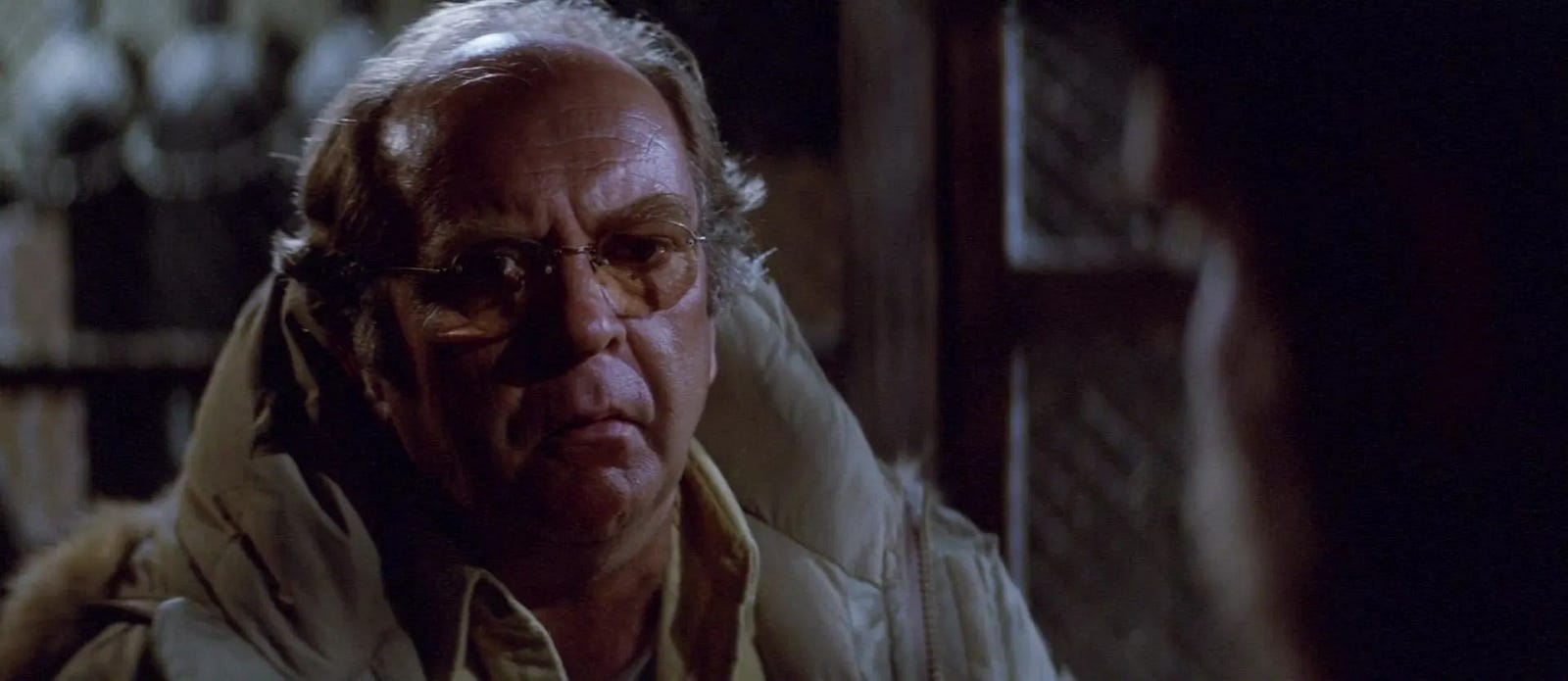
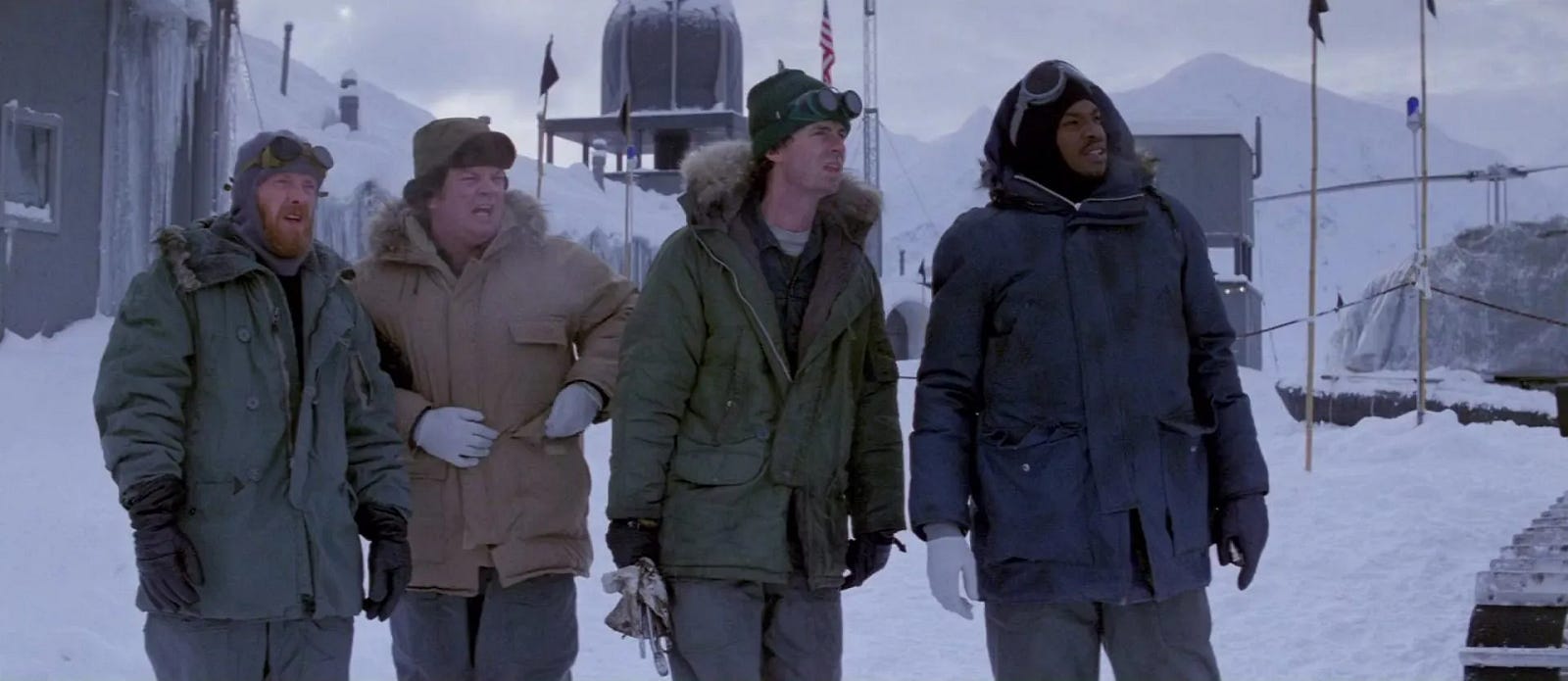
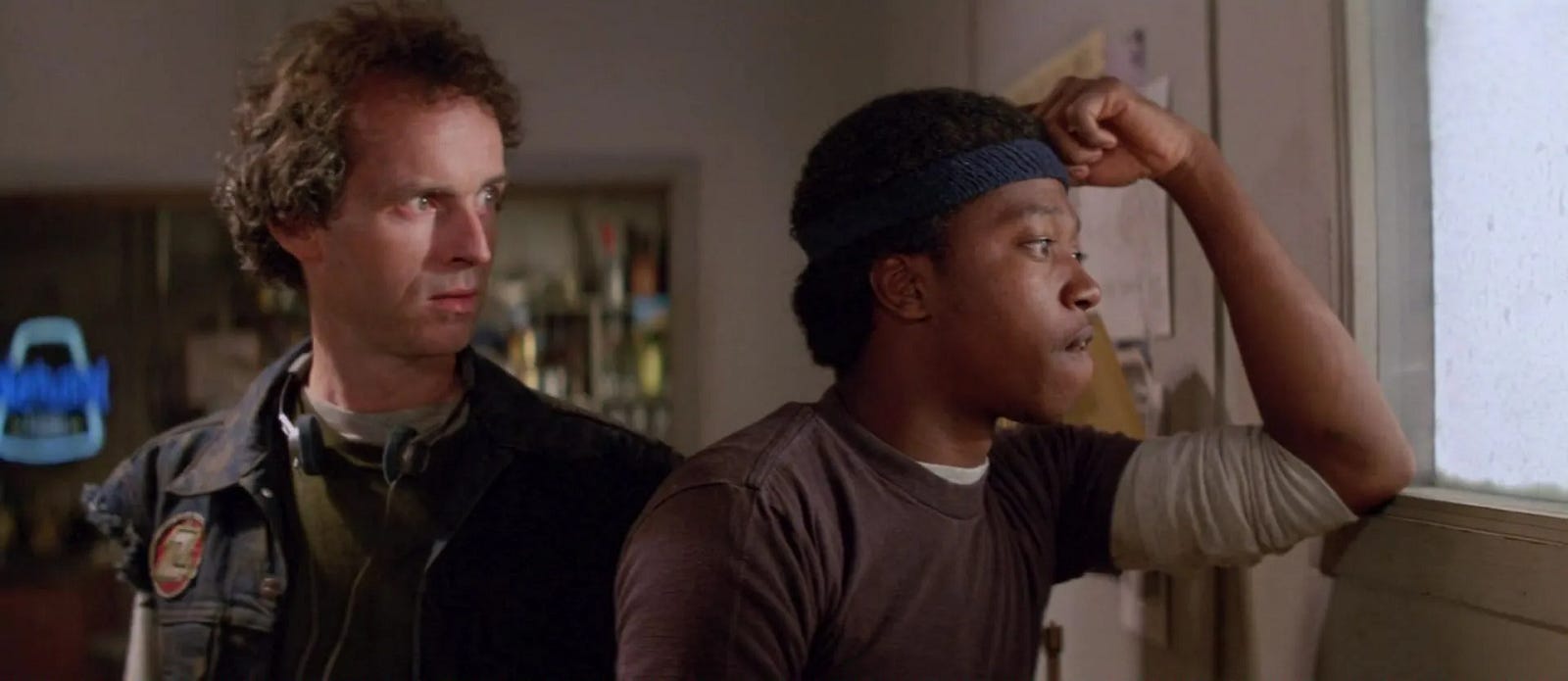
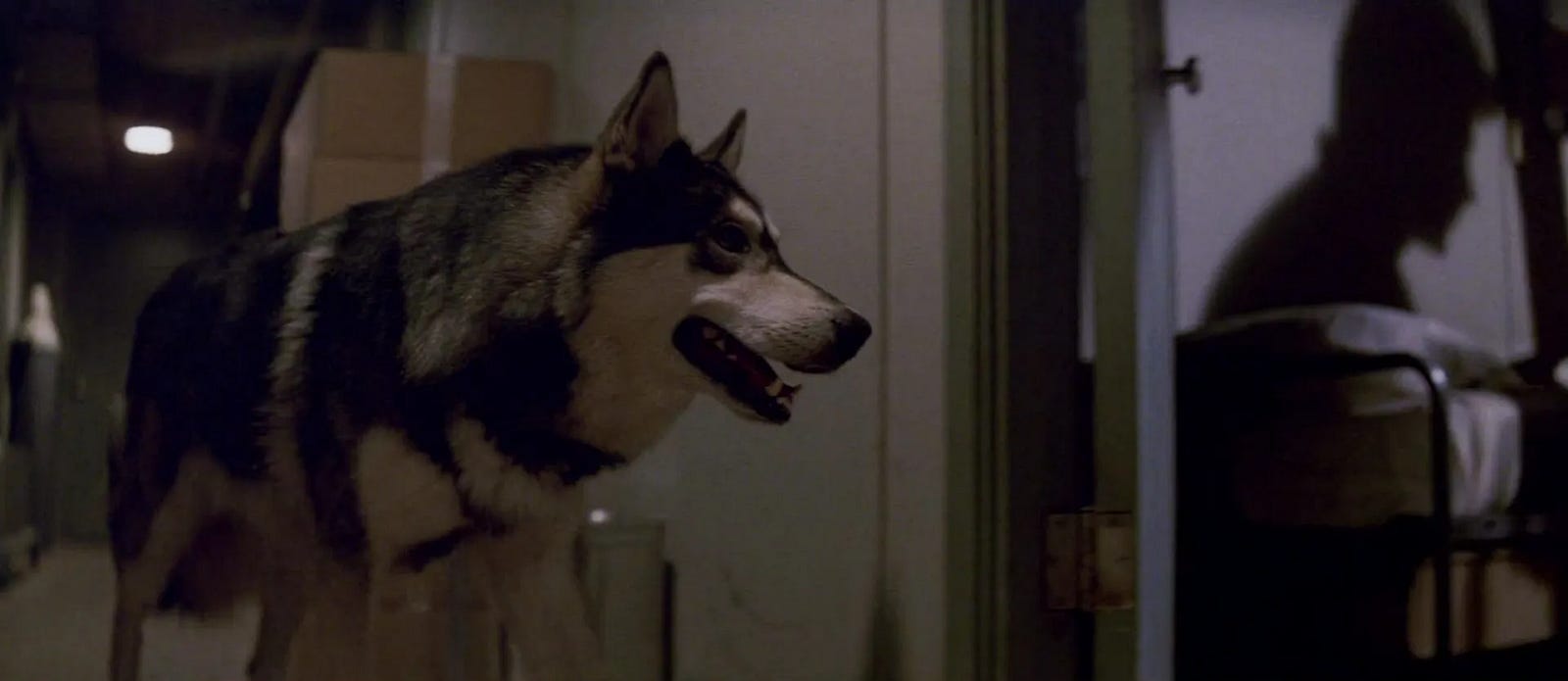
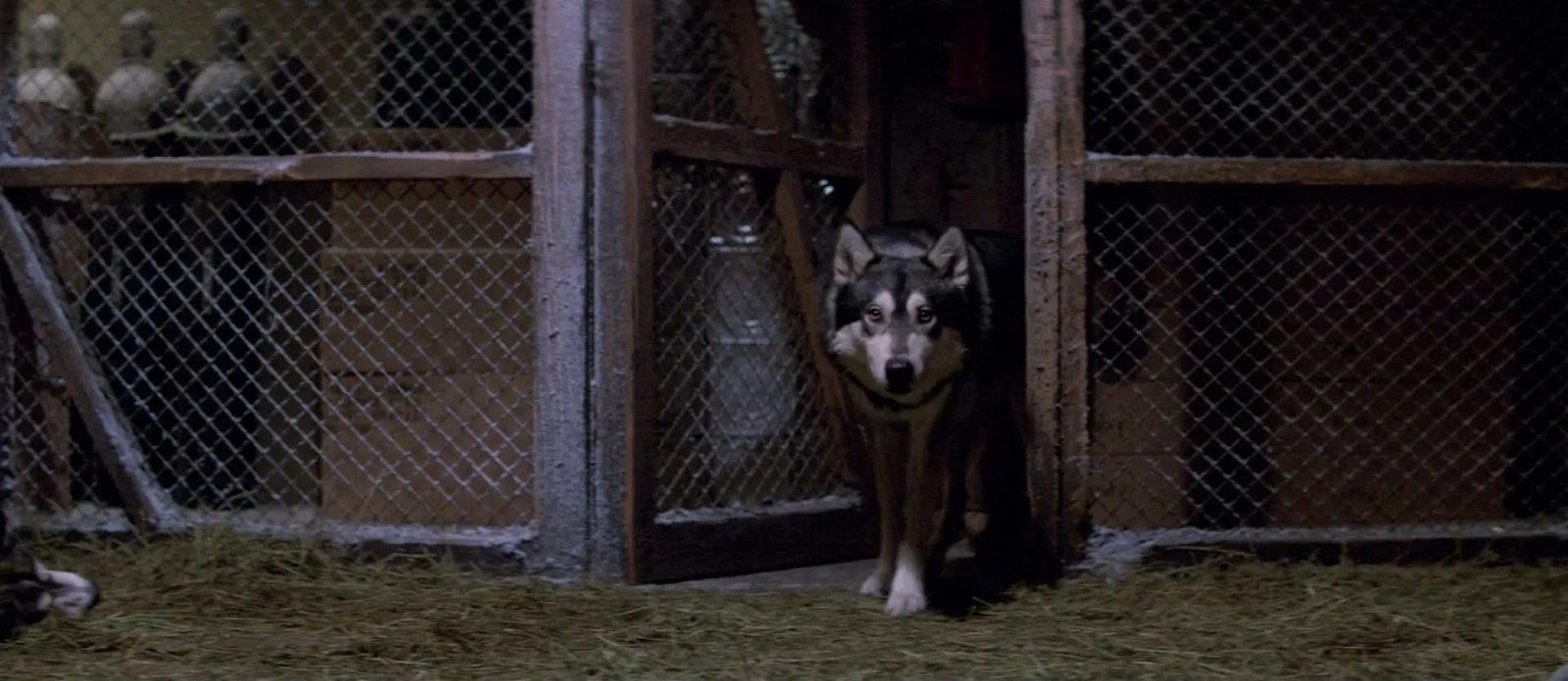
For Childs, the station mechanic, Cohen recalled, “John gave some initial consideration to Isaac Hayes, having just worked together in Escape from New York … Geoffrey Holder’s availability was checked very early on. Carl Weathers and Bernie Casey met and read, but it was Ernie Hudson who had the inside track until late in the process.” Carpenter cast Keith David, then working on the New York stage, as Childs, five years before his breakthrough in Platoon (1986). Universal was keen on placing a stand-up comic in the role of Palmer. Jay Leno read for the part. Charles Fleischer and Garry Shandling also met with the producers, who questioned whether a comic could handle the dramatic side of the role. Cohen recalled, “A veteran casting director, Lynn Stalmaster, had given me a great early piece of advice — ’When in doubt, always go for the actor’ — which is just what we did with David Clennon. David had recently appeared in Missing, the Costa-Gavras film for Universal, and was one of the first actors in the door — an early and enthusiastic selection by John and ourselves, and one we certainly never regretted.” Richard Masur came in to discuss the role of Bennings, the meteorologist, but voiced his preference for a part not yet cast: Clark, the dog handler. Masur got it, and Peter Maloney was cast as Bennings. T.K. Carter, Charles Hallahan, Joel Polis and Thomas G. Waites joined the human ensemble. Often overlooked in the cast of The Thing is Jed, a mix of Vancouver Island timber wolf and Alaskan Malamute trained by Clint Rowe. Carpenter recalled, “You could do a dolly shot with him and he would not look at the camera, or the director, or the crew. Amazing work for an animal. He was really, really good.”
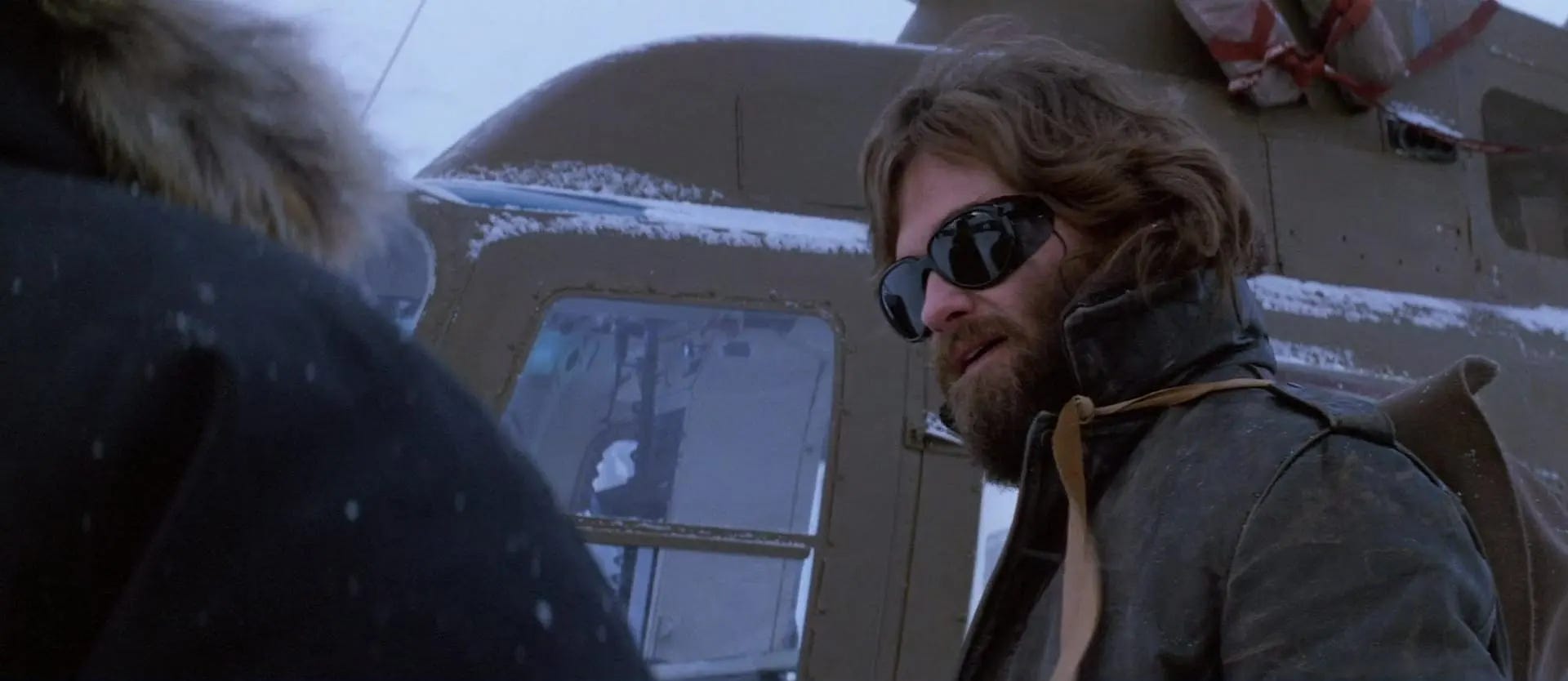
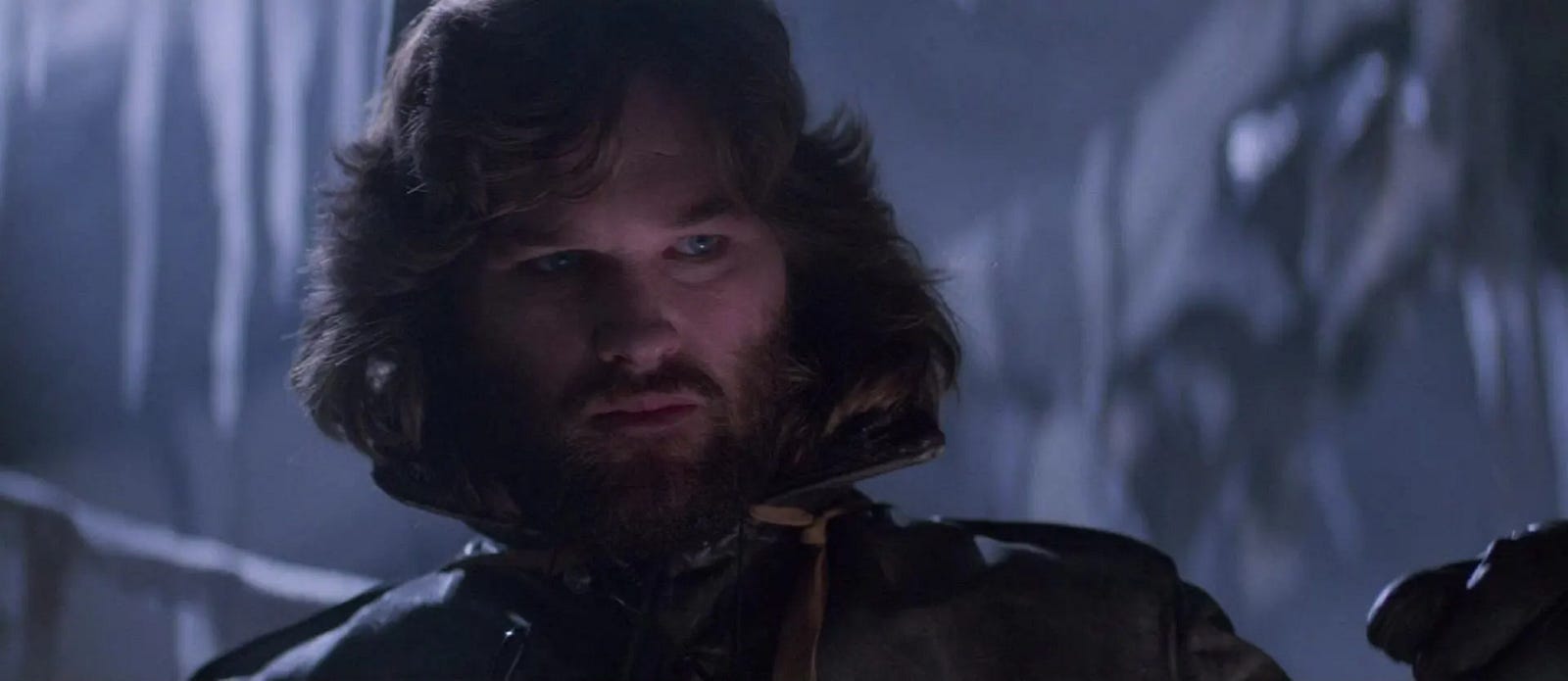
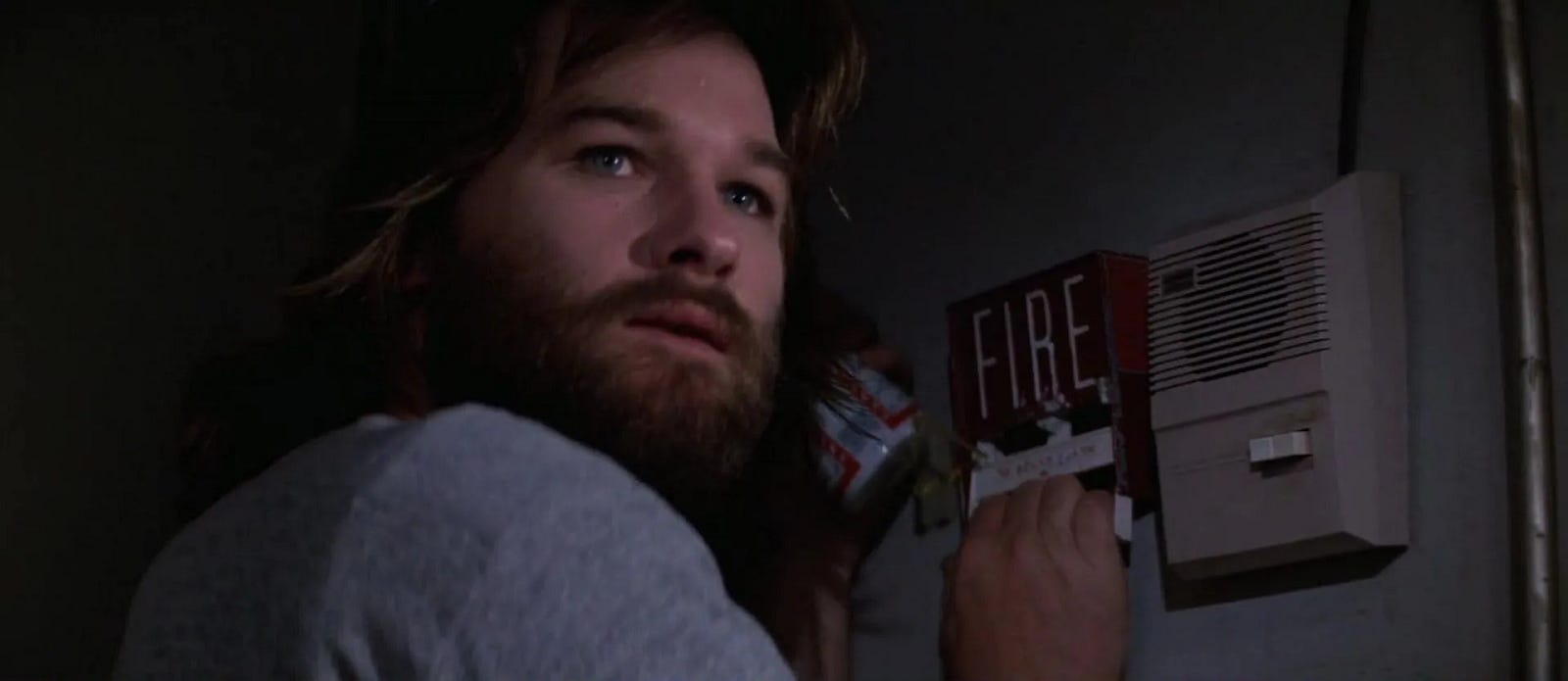
The last role to cast was MacReady. Lancaster introduced the character with a haiku: “35. Helicopter pilot. Likes chess. Hates the cold. Pay is good.” Cohen checked on Jeff Bridges, Nick Nolte and Christopher Walken, but none were available or interested. Cohen recalled, “We were intrigued with Sam Shepard, whom we were told liked the script, but things didn’t progress very far and no meeting was held.” Another Carpenter veteran, Tom Atkins, was an early favorite. Scott Glenn and Ed Harris met to discuss MacReady, and both passed. Peter Coyote and Tim McIntyre balked at appearing in a monster movie. Jack Thompson, featured in the Australian film Breaker Morant (1980), flew to L.A. and was a strong late contender. Carpenter recalled, “While we were casting, I went up to Juneau, Alaska for a week to shoot second unit footage … It made me realize how difficult making this film was going to be. It was going to be a ballbuster, so I didn’t want to get involved with some prima donna actor … I knew we’d have to move fast, or else the weather would kill us. So I immediately thought of Kurt.” In 1973, playing for the California Angels’ Double-A team in El Paso, Kurt Russell tore a rotator cuff turning a double play, ending his baseball career and returning him to acting full time. Since then, he’d worked for Carpenter twice as a leading man, and the former child actor approached moviemaking the same way the director did, all preparation and no pretension.
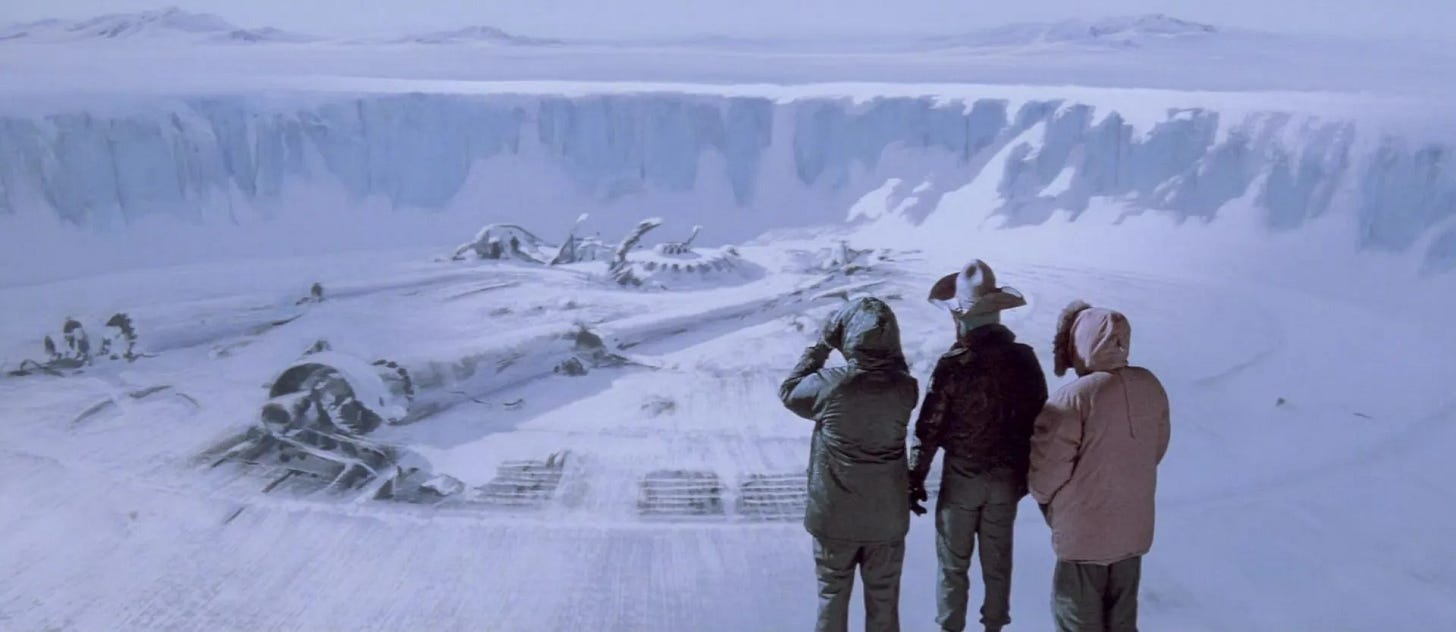
Production designer John J. Lloyd had been hired in January 1981, and the task of faking Antarctica fell to his department. He ruled out Colorado, Montana and Utah because forecasts predicted an uncommonly dry winter. Lloyd located a knoll overlooking a glacier near Stewart, British Columbia, where the exteriors of two research stations — U.S. Outpost 31 and a Norwegian camp — would be built. Stewart, a small mountain town, offered lodging for the cast and crew and access to the glacier by a twenty-seven-mile mining road, one lane wide. Cohen recalled, “As spectacular a solution to our problems as Stewart was … the one thing it didn’t offer was a concrete sense of scale — the immense ocean of ice effect that pushes man and beast alike into insignificance.” For the opening sequence, in which Norwegians hunt a dog by helicopter, Lloyd found his sea of ice farther north, at Camp Ten of the Juneau Icefield Research Program in Alaska.
Woody Allen, David Lynch and Martin Scorsese had recently made pictures in black and white, and cinematographer Dean Cundey wanted to shoot The Thing the same way. Major studios resisted black and white, Universal more than most, because a color film was easier to sell to television. Cundey recalled, “Instead, I suggested we take the color out of everything as much as possible. We ended up using the color selectively, with the Thing being probably the most colorful object in the entire movie. We painted the inside of the Arctic station in shades of gray … Even the wardrobe was coordinated to be in somber colors of dark blue, gray and brown.” To increase the feeling of claustrophobia, the cinematographer also suggested putting ceilings on the sets. Having worked mostly on location, Cundey knew how to light a room without a lighting rig overhead. Lloyd, who preferred ceilings anyway, embraced the idea. To make the actors’ breath visible for the cold scenes, Cundey sealed off stages on the Universal lot, installing as many portable air-conditioning units as the studio had and adding moisture to the air with misters. He recalled, “We refrigerated the stages down to about 40 degrees. That was very interesting, because we were shooting during a big hot spell. We went into these very wet and cold stages wearing heavy expeditionary clothing and during breaks, we stepped outside, where it was 90 degrees. Everybody else working on the lot wondered who these strange people were walking around in down jackets.”
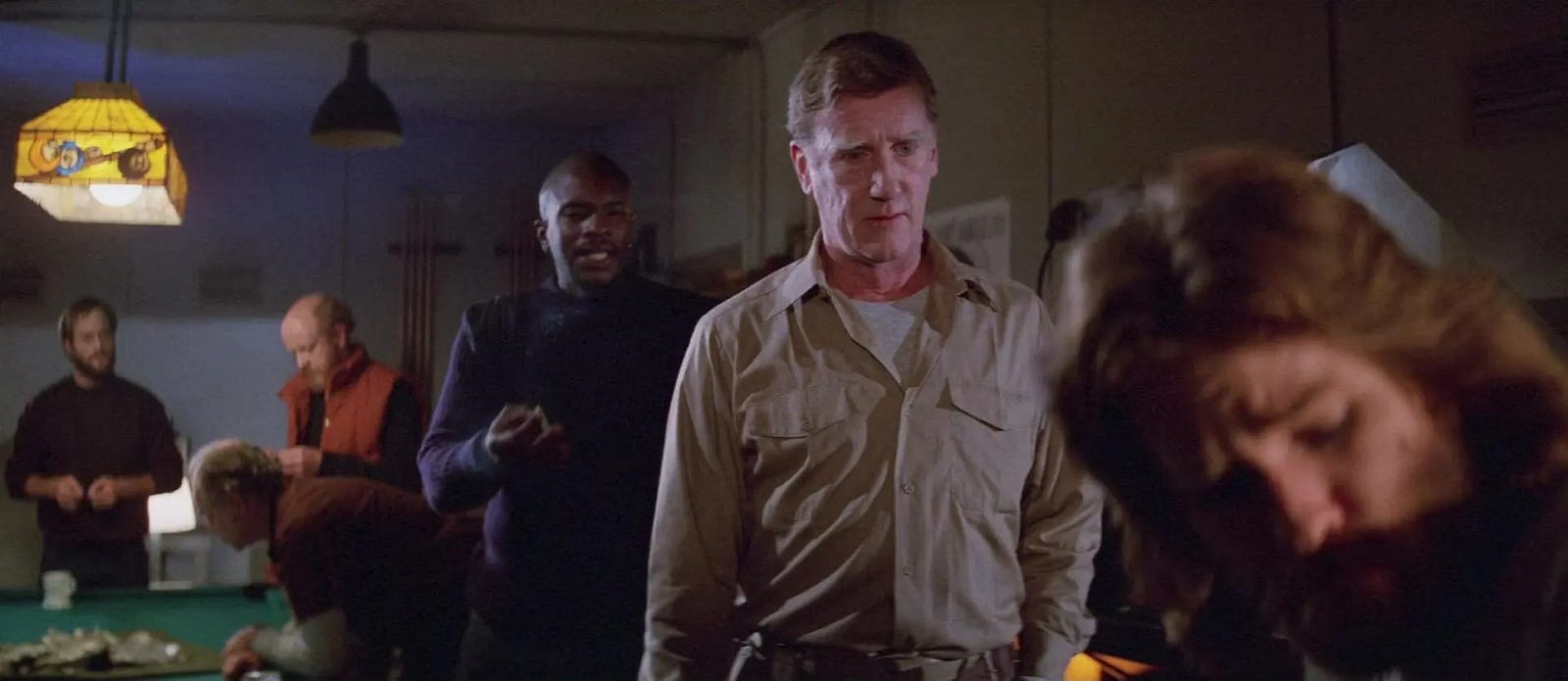
Back in Stewart, construction on Outpost 31 began in July 1981 while Mother Nature permitted. Concern over a possible labor strike compelled Universal to accelerate production of The Thing, which started shooting in August on the studio’s soundstages in Los Angeles. Universal gave Carpenter until mid-October to finish stage work with his principal cast. The early start ended up being a gift. Exterior filming couldn’t begin in British Columbia until enough snow had fallen, which opened a six-week hiatus in the production schedule. During the break, Carpenter screened a rough assembly of The Thing. He was despondent over what he saw. Carpenter recalled, “It probably was the way I directed it, but it seemed like it was going to be the dullest picture ever made unless we got a little bit more mood in there, a little more paranoia.” Cohen added, “The film felt formless and just seemed to drift along, with no one character breaking out of the pack to drive the action. Another big worry was the basic idea of assimilation that underpinned the film. The constant indirect allusions to the process were too subtle and confusing.”
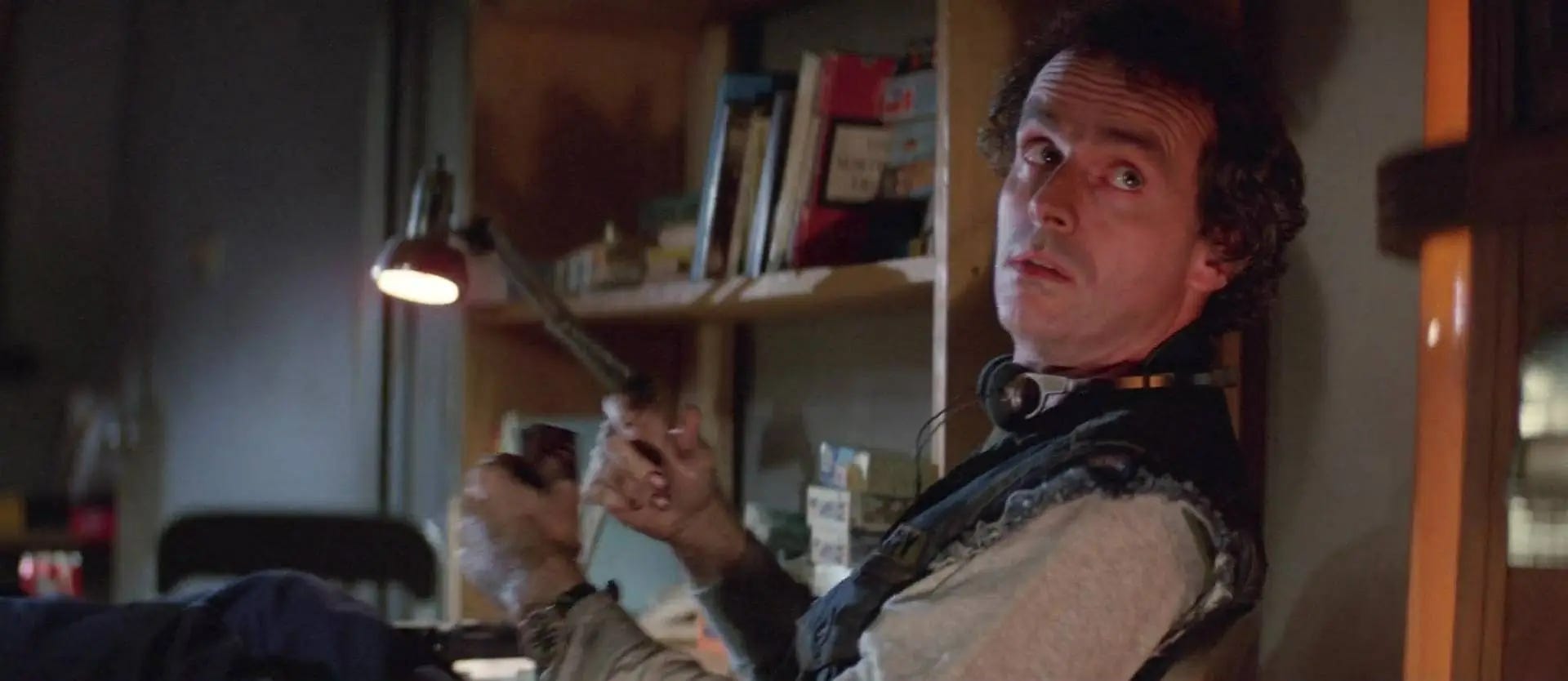
Carpenter started by cutting character moments — MacReady spending time with a blow-up doll, Childs tending a cannabis garden — and trimmed the bickering between the men. He also took aim at the deaths of two characters as scripted and shot. In the assembly, an unseen assailant knifes Bennings, like a moment out of Halloween, while Fuchs, a young biologist, turns up impaled to a door by a shovel as if he too had encountered Michael Myers. Over a weekend, Carpenter wrote several new scenes to dramatize how the Thing assimilates its victims. The new pages went to cast and crew only and do not appear in published versions of Bill Lancaster’s screenplay. To give the film momentum, Carpenter rethought the ensemble approach, moving MacReady to the front as a classic, if unlikely, hero. On a Monday morning, he called a meeting with Cohen, Foster, Lloyd, first assistant director Larry Franco and production manager Robert Brown. Cohen recalled, “What he described in that meeting was, with scant alteration, the film you have before you now.”
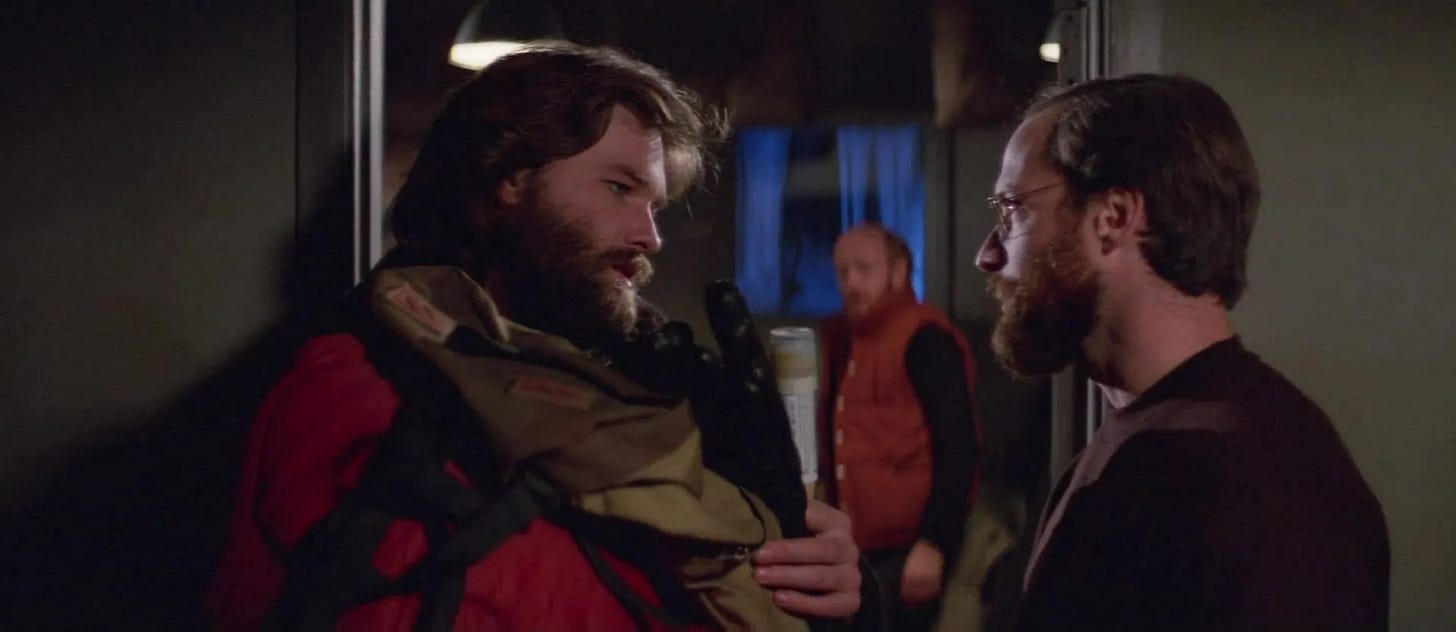
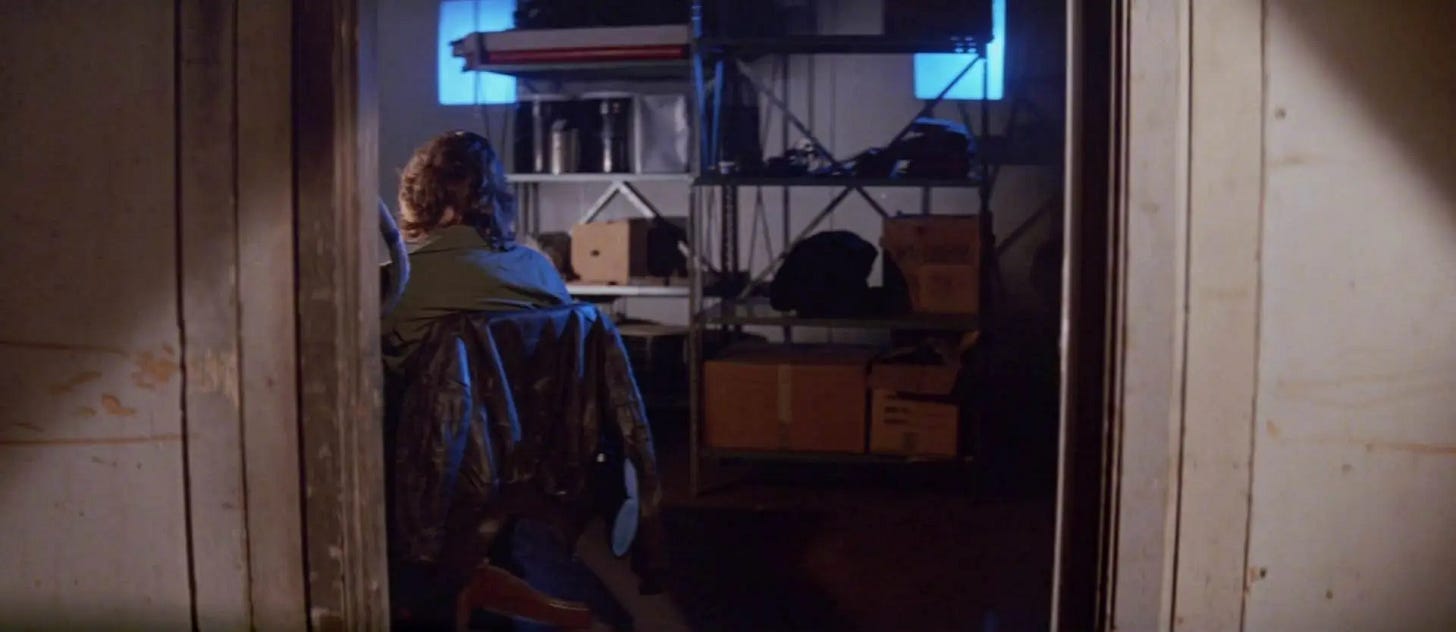
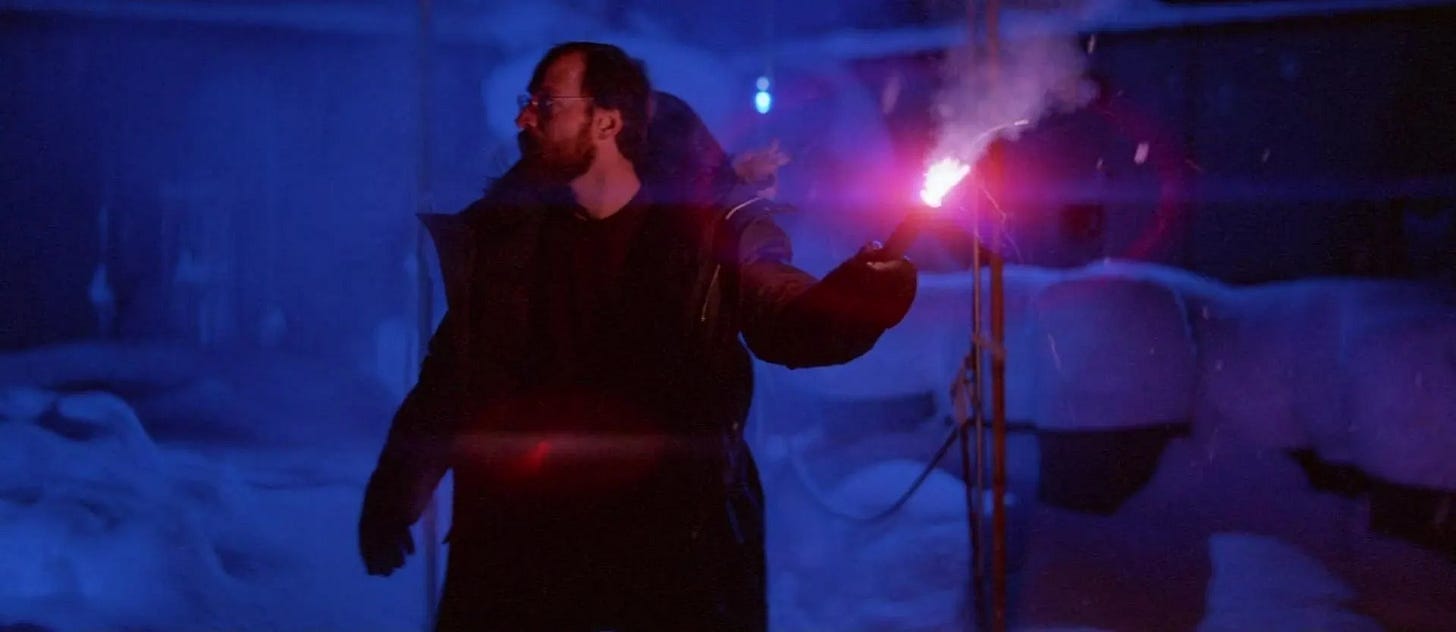
In one of Carpenter’s uncredited additions, Blair studies a computer simulation that demonstrates how the alien organism invades its host’s cells and assimilates them. Once Blair calculates how much time the invader would need to assimilate the human race if it reached a populated area, he retrieves a pistol from his desk. Carpenter’s friend John Wash animated the simulation, having rescued Escape from New York with an opening sequence showing how Manhattan became a prison. Carpenter also shot the assimilation of Bennings and its aftermath: the unfinished mutation bolting into the snow, where the men surround it with flares and MacReady sets it ablaze. In another eerie moment, MacReady, his back to the camera, records a testament on cassette tape, explaining how the Thing imitates its victims and mentioning its effect on morale (“Nobody trusts anybody now”). The scene put Russell’s character front and center. Franco carved out time in the Stewart schedule for Carpenter to restage the death of Fuchs in the snow, as long as the director could get the scene done in three hours. Carpenter did.
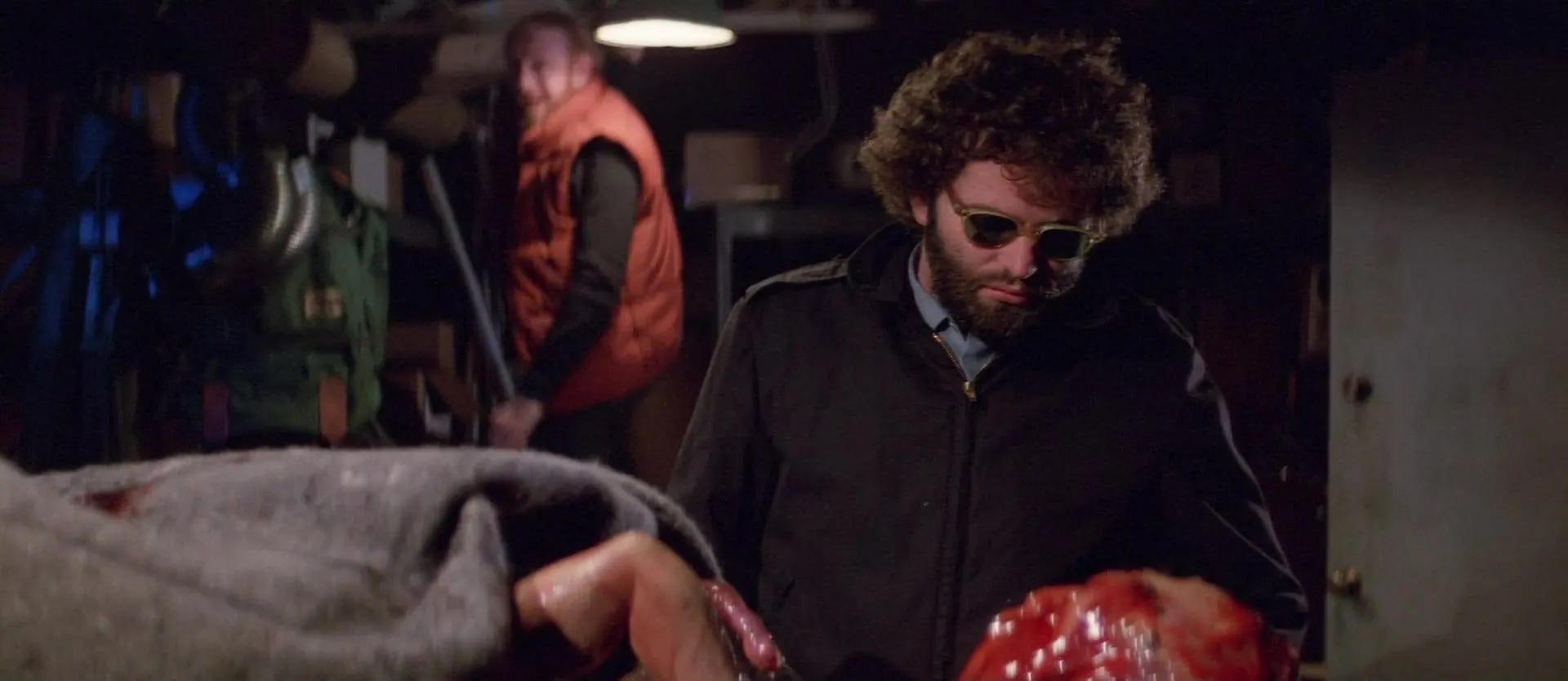
Once the Stewart shoot wrapped, effects work began in earnest at Hartland, which housed sets built to mirror those used months earlier on the Universal lot. With the exception of the autopsy scenes, the principal cast rarely shared the frame with the Thing. Bottin recalled, “I don’t think anyone should ever do the effects while they’re shooting live-action. It’s disruptive, and there’s a lot of actors on pay standing around waiting for you to get your gooey boogers right.” Bottin’s ingredients were anything but exotic: strawberry jelly, mayonnaise, creamed corn, heated Bubble Yum and melted crayons. He added, “We used cables, servos, pneumatics, hydraulics, hand puppets, wires, radio controls, marionettes, even a little reverse filming … Probably every effect known to man is in this movie.”
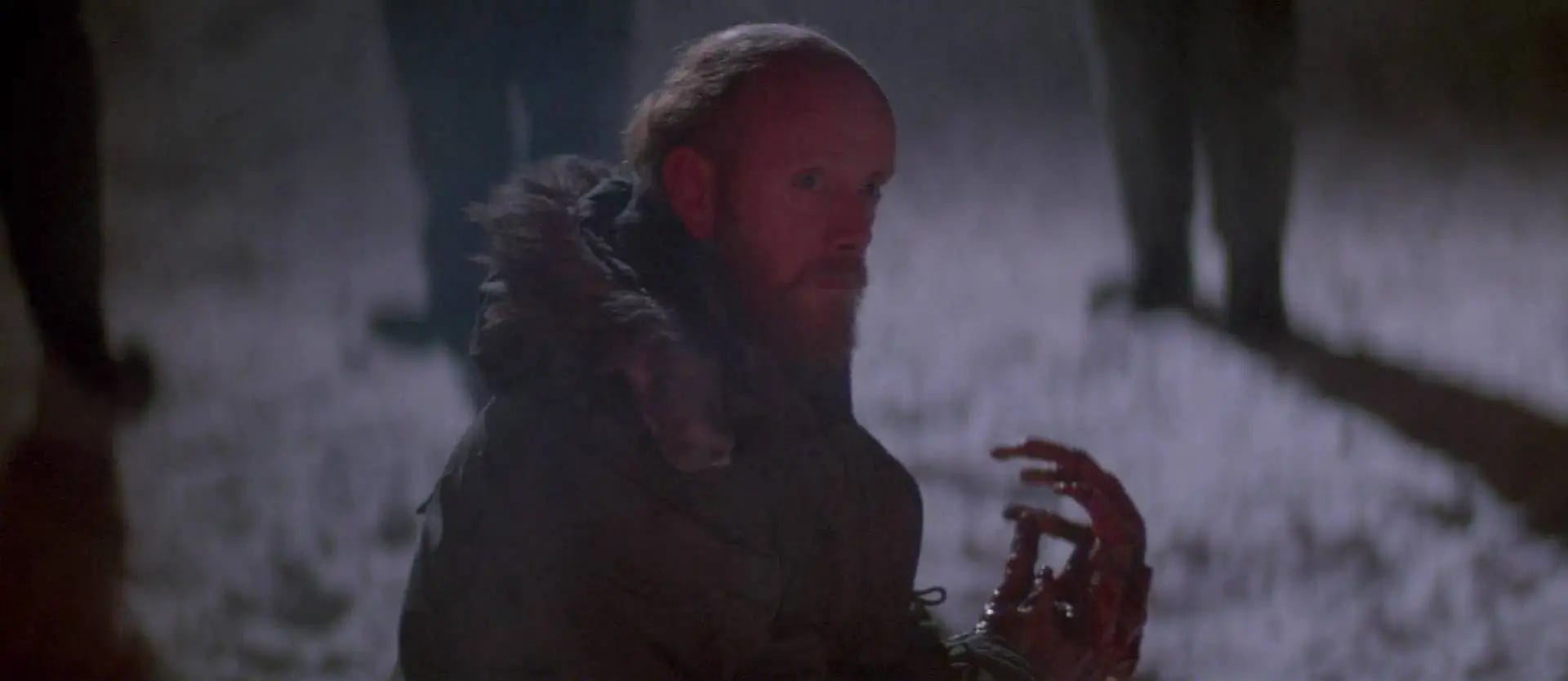
Anticipating his workload as far back as the spring of 1981, Bottin had reached out to makeup effects designer Stan Winston to gauge his availability. Winston was then best known for television, having won an Emmy Award for The Autobiography of Miss Jane Pittman (1974), aging Cicely Tyson to 110. Winston didn’t refer to what he did as makeup. He created characters, and would prove that in coming years with films like The Terminator (1984), Aliens (1986) and Predator (1987). Bottin had one job in particular for him. He recalled, “I’d already done The Howling, and I didn’t want to see another dog. I didn’t care if it was mutated. I didn’t care if it was riding a skateboard … No more dogs!” Winston’s crew spent seven weeks in Northridge creating the dog-Thing for the kennel sequence. Winston then supervised its two-day shoot at Hartland, with Bottin and Carpenter weighing in. Winston accepted a “special thanks” in the end credits. He recalled, “I didn’t want a credit because I don’t want to take away from Rob — it was his show.”
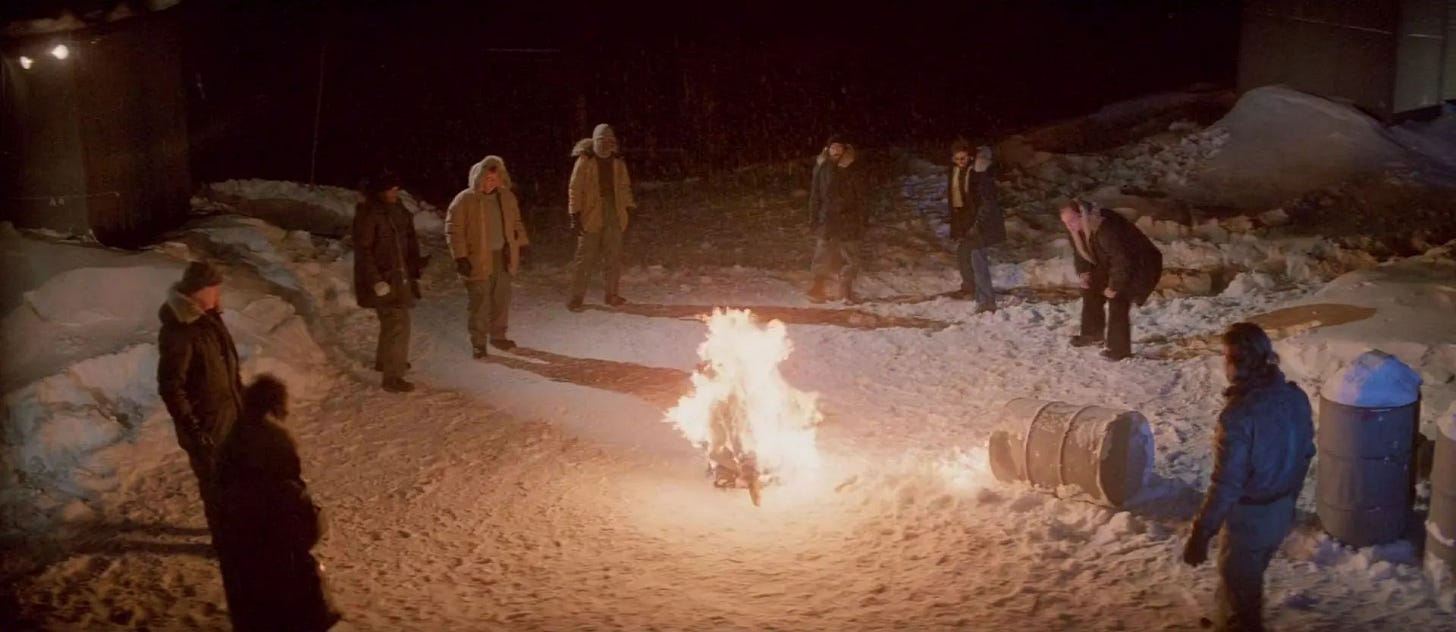
By Christmas 1981, the makeup effects had blown past Cohen’s $750,000 estimate. The final price tag came to $1.5 million. To get Tanen to release the last $100,000, Carpenter pitched a climax featuring a simplified version of the Thing. Cohen pegged the final budget with overages at $12.4 million, and with overhead added, “a shade under $15 million. And cheap at twice the price.” Bottin had been putting in eighteen-hour days, subsisting on “Hershey bars and RC Cola,” when he was hospitalized in March 1982 with symptoms of nervous exhaustion. Special makeup effects coordinator Ken Diaz recalled, “We were putting in so many hours toward the end that we’d have twenty-five percent of the crew out at any given time.” Not every effect survived the crunch. Ploog had storyboarded a sequence in which Nauls comes across what remains of Garry behind a box in the basement. Tentacles pop out of the box, grab Nauls by the head and pull him to his doom. Bottin recalled, “We had to do it in a rush. I didn’t really like it. Nobody really did.” Carpenter scrapped the sequence, leaving the character’s fate to the imagination of the viewer.
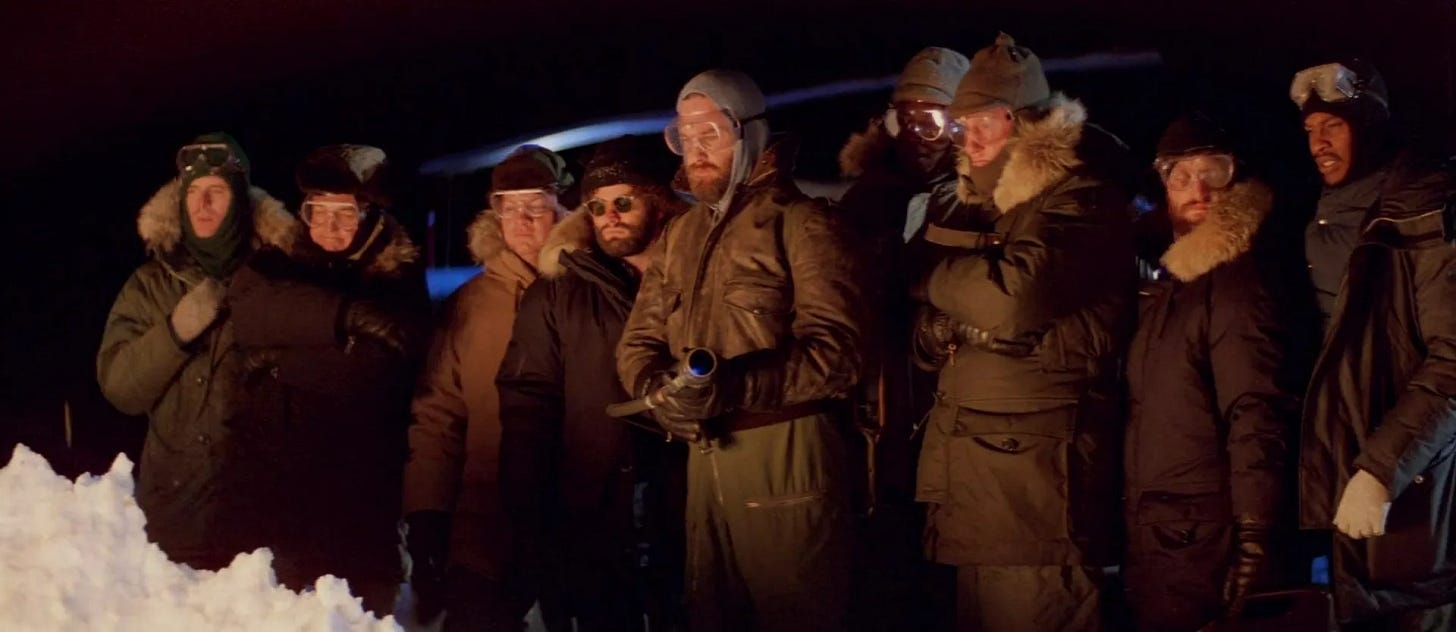
Carpenter had composed the music for his previous features, but post-production on a film of this size left him no time to score The Thing himself. Jerry Goldsmith was tied up with Poltergeist (1982), and Cohen believed there was just one composer Carpenter would trust with the music. Ennio Morricone had scored Sergio Leone’s spaghetti westerns, including The Good, the Bad and the Ugly (1966) and Once Upon a Time in the West (1968). The Italian composer was in Los Angeles finishing the score for White Dog (1982) and was not enjoying working in America. He initially turned down The Thing. The producers didn’t take no for an answer, arranging for the script to be translated into Italian and sent to Morricone’s suite at the Chateau Marmont in Hollywood along with a case of wine.
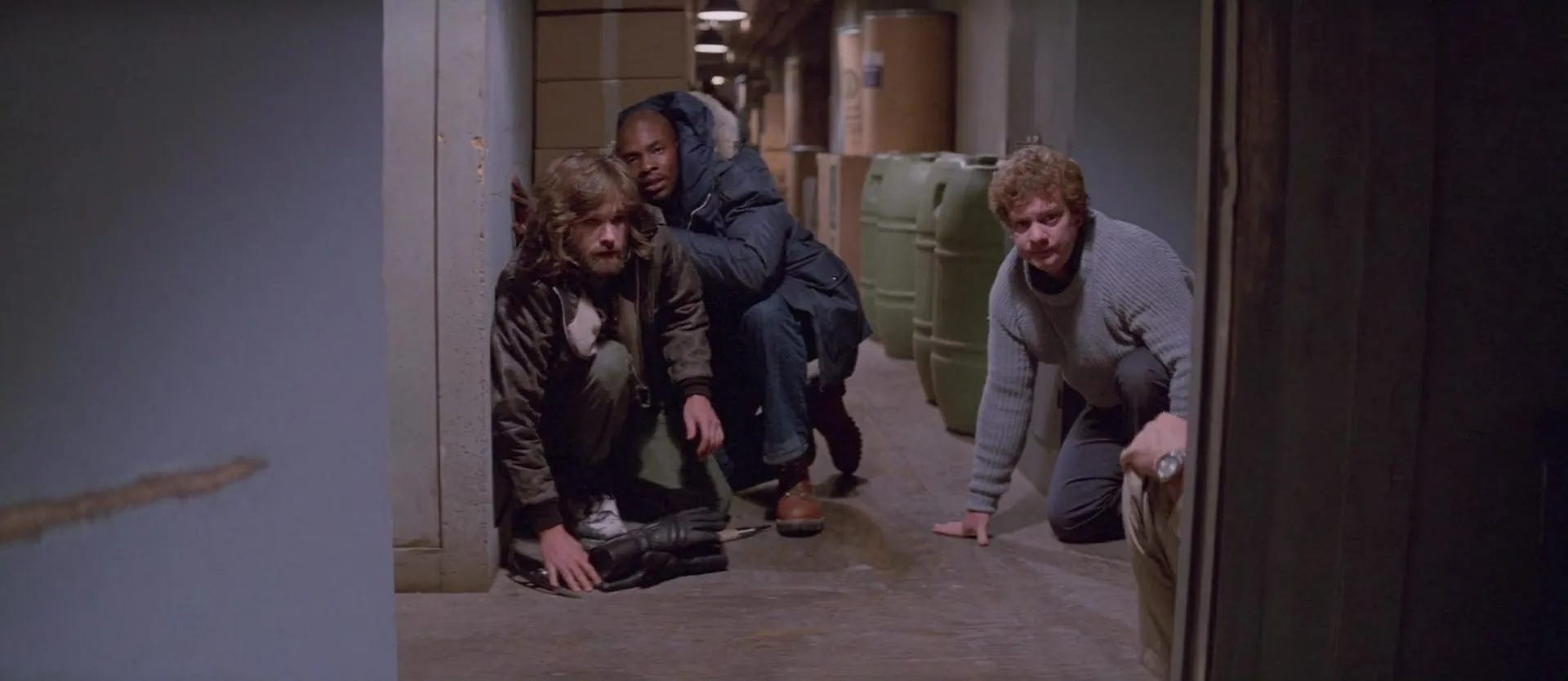
Late one evening in early December 1981, Morricone, whom Cohen recalled as “visibly tired,” watched the available footage from The Thing. Carpenter was still shooting exteriors in Stewart, and except for the kennel sequence, none of the effects were done. Morricone agreed to see what he could do. The following month, Carpenter and Cohen traveled to Rome to meet with the composer. Every exchange had to pass through a translator. Cohen recalled, “Matters improved slightly when John sat down at the piano and began tinkering, searching for a way of communicating the feeling of what he was after, with Morricone listening intently.” Running short on time to write a score and record it with an orchestra, Morricone agreed to provide a series of thematic suites, composing electronic elements in Rome and coming to L.A. to record the rest. Neither Carpenter nor anyone else knew what they’d be getting.
Cohen recalled, “Doubts were definitively dispelled two months later when Morricone opened up his tattered valise and removed a reel of two inch tape containing the now-emblematic ‘heartbeat’ theme. As we heard this for the first time in the recording booth at Universal, I looked over at John, whose expression was initially one of relief, followed by something close to wonder — it seemed that Morricone had understood John perfectly.” But the suites didn’t cover everything. Carpenter recalled, “I cut his music into the film and realized that there were places, mostly scenes of tension, in which his music would not work. Since we needed something, I secretly ran off and recorded in a couple of days a few pieces to use … I put them in there to glue together the film, but in no way was I trying to compete with Ennio’s score. The score is his.”
In early 1982, Universal asked Foster and Cohen to assemble a show reel of The Thing for exhibitors, sending each on a separate four-city tour with it. When Cohen returned from the road, he received a call from Robert Rehme, the studio’s head of distribution. Cohen recalled, “He told me the studio was really counting on The Thing to pull them through the summer. They had just had their first look at E.T. the Extra-Terrestrial and considered it, in his words ‘soft’, a movie ‘aimed at children.’ They thought it would be up to us to appeal to the demographic they most coveted, teenagers on up. We took this pep talk in stride, having no idea what was in store for us the next few months.”
Universal held the first test screening of The Thing in late May 1982 at Red Rock Theaters in Las Vegas, with Conan the Barbarian (1982) playing as a free second feature. Studio executives, who had yet to see the film, flew in on a private jet. Universal had advertised the preview in newspapers and on radio, but the 8:00 p.m. show didn’t sell out, a bad sign on a Friday. Cohen recalled, “As the film began, John took a seat on the aisle in the back and was handed a box with the master volume control for the theater (a little like handing a match to a pyromaniac) … The kennel sequence received loud, sustained applause, the most we were to receive that night. I looked over at Rob and caught him smiling, then followed a large crack! which made the crowd jump and sounded like a rifle shot, but was actually Blair breaking off a piece of the creature. I looked over at John who was laughing, having goosed the sound.” Cohen counted several walkouts during the alien autopsy. When the picture faded to black, applause was thin, and most of the audience headed up the aisle before the credits finished. Following the crowd into the lobby, Cohen could tell the film had unsettled people.
Gathering in a small conference room underneath Caesars Palace, the filmmakers and executives went over the preview cards. A few viewers rated The Thing excellent, many more very good or good and the majority average or fair. Nearly everyone praised the effects, but many were offended by the gore. Cohen recalled, “John was asked politely whether he would consider editing these scenes. He responded just as politely that the effects had to be that strong in order for the movie to work, and that was the last we heard from the studio on that particular topic.” A test screening in Denver the following evening played to a full house, but the results were the same. Across both screenings, most of the criticism targeted the ending. Many viewers expressed confusion, and in some cases, anger. Cohen recalled, “Were we deliberately keeping things open ended because we were planning a sequel? Or, to put more succinctly by a frustrated studio executive, ‘Does anybody in this movie win?’”
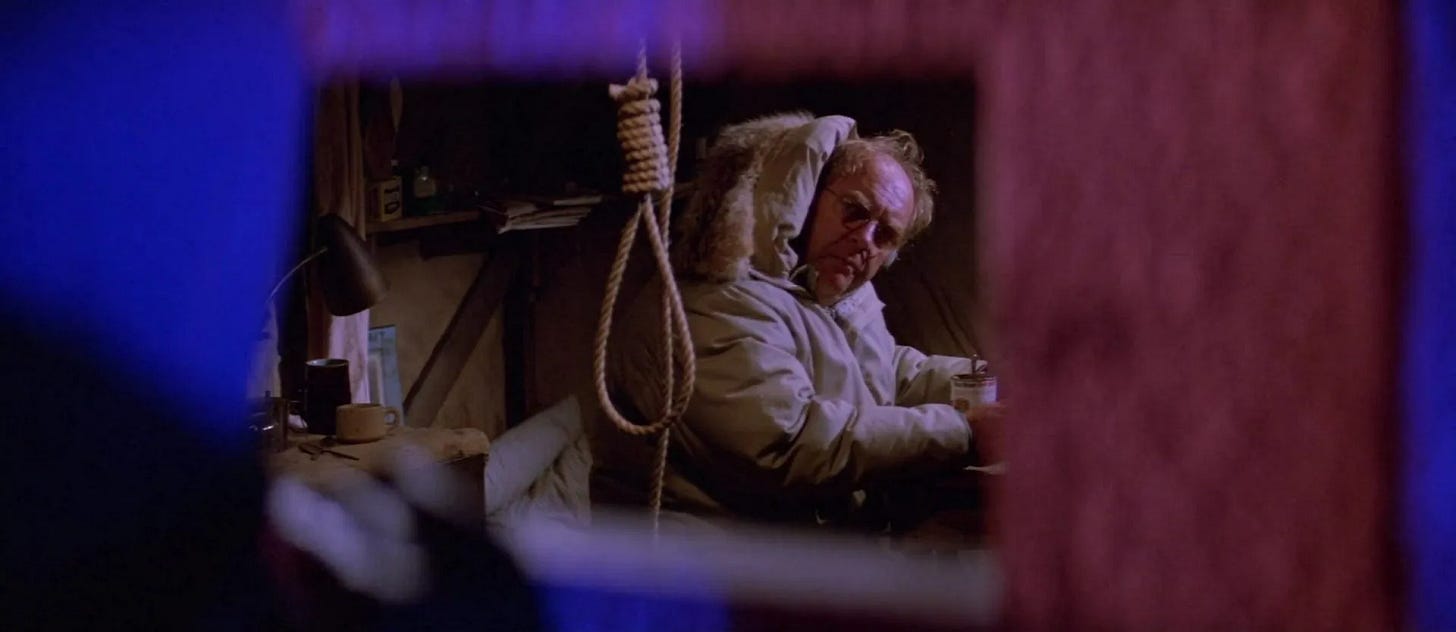
Carpenter knew they were in trouble. He recalled, “…after one I got up and talked to the audience about what they thought of the film. There was one young gal who asked, ‘Well what happened in the very end? Which one was the Thing, and which one was the good guy?’ And I said, ‘Well, you have to use your imagination.’ And she said, ‘Oh, god. I hate that.’” Carpenter was open to testing whether The Thing would play better with a less ambiguous ending. With the lab needing to start striking prints the following Tuesday, Verna Fields, the editor of Jaws and by then a Universal vice president of production, spent most of the week using alternate takes to give The Thing clarity. In her cut, Childs disappears and MacReady is left to ponder his fate. On Friday, Universal held two test screenings simultaneously in Los Angeles, one with the original ending and one with the new. By a margin of three or four percent, test audiences favored the new ending, and Carpenter chose to follow the numbers. Taking the weekend to weigh what their own eyes and ears told them, Cohen and Universal production executive Helena Hacker concluded that a neater ending undercut the film’s paranoia. Carpenter, scouting North Carolina for Universal’s adaptation of Stephen King’s Firestarter, agreed by phone, and Tanen approved restoring the original ending. As a concession, the filmmakers added a scream over the final explosion to signal that the creature MacReady faced in the basement had perished.
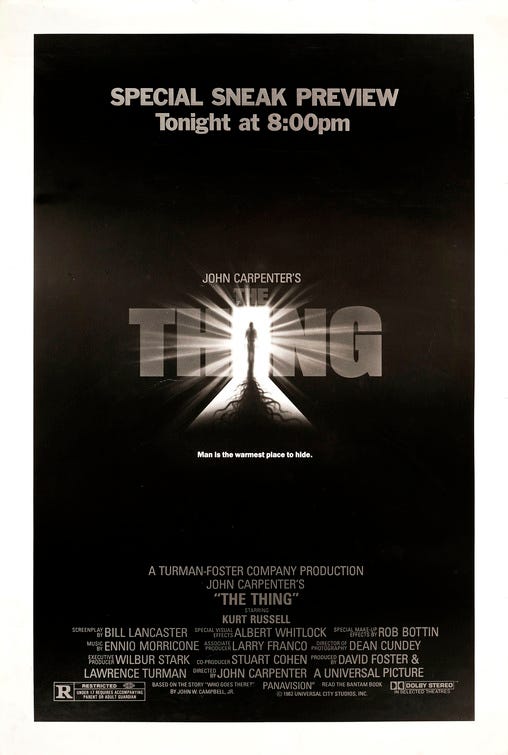
Universal planned to sell The Thing as a gothic thriller, with men pitted against nature while one of them isn’t what he appears to be. The studio retained Stephen Frankfurt, an advertising executive credited with the classic tagline for Alien: “In Space, No One Can Hear You Scream.” He coined a grabber for The Thing: “Man Is the Warmest Place to Hide.” As the release drew nearer, Universal switched gears and hired illustrator Drew Struzan for a new design. Given twenty-four hours to conceive, paint and deliver a poster without seeing the film, Struzan rendered a humanoid shape in a parka with light exploding from its blank face. Cohen blamed Sid Sheinberg, president of Universal’s parent company MCA, for replacing Frankfurt’s tagline with one of his own: “The Ultimate in Alien Terror.” Cohen recalled, “Despite its now iconic status among fans, we were unenthusiastic about Drew’s work when it was dropped unceremoniously on our desks the week after the first preview with a note attached saying, ‘This is IT.’ We thought it evidence the studio had panicked … And two years after assiduously avoiding the man-in-the-suit idea for the monster, what did we have? A man in a suit.” Carpenter put it more bluntly: “They might as well have painted a bloody knife in the guy’s hand.”
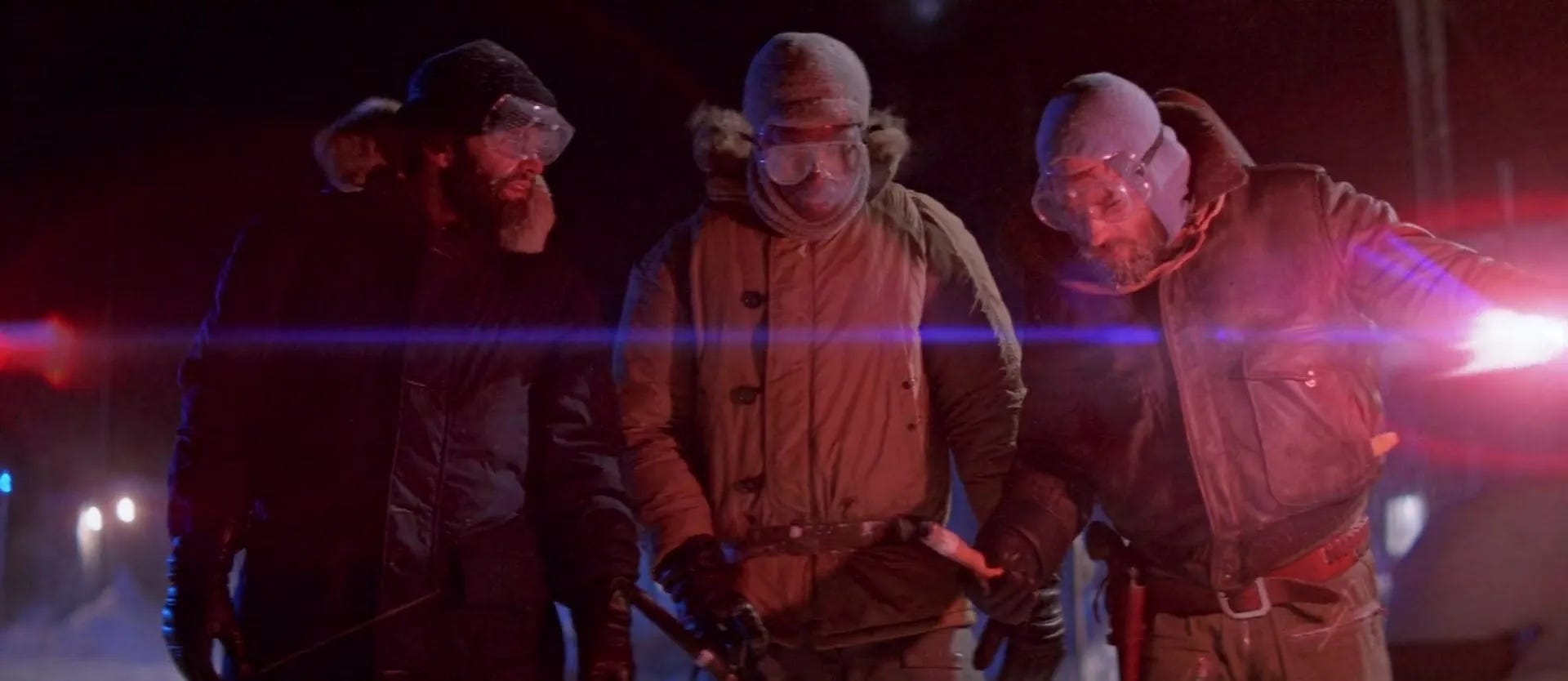
On the evening of June 11, 1982, Universal held a screening of The Thing for cast and crew at the Alfred Hitchcock Theatre, a state-of-the-art mixing stage at Universal Studios. Booking the Hitchcock took some doing. Another Universal picture, E.T. the Extra-Terrestrial, was opening across the country that night. Anticipation was so feverish that the studio had been using the theater nightly to accommodate guests turned away from advance screenings. Within two weeks, Universal would introduce moviegoers to two radically different alien visitors, one greeted like a lost dog, the other a rabid one. Earlier that day, Foster had caught E.T. at the Cinerama Dome. The children and grandparents packing the theater received the trailer for The Thing with what he described as “icy silence.” His prediction was grim: “We’re dead.”
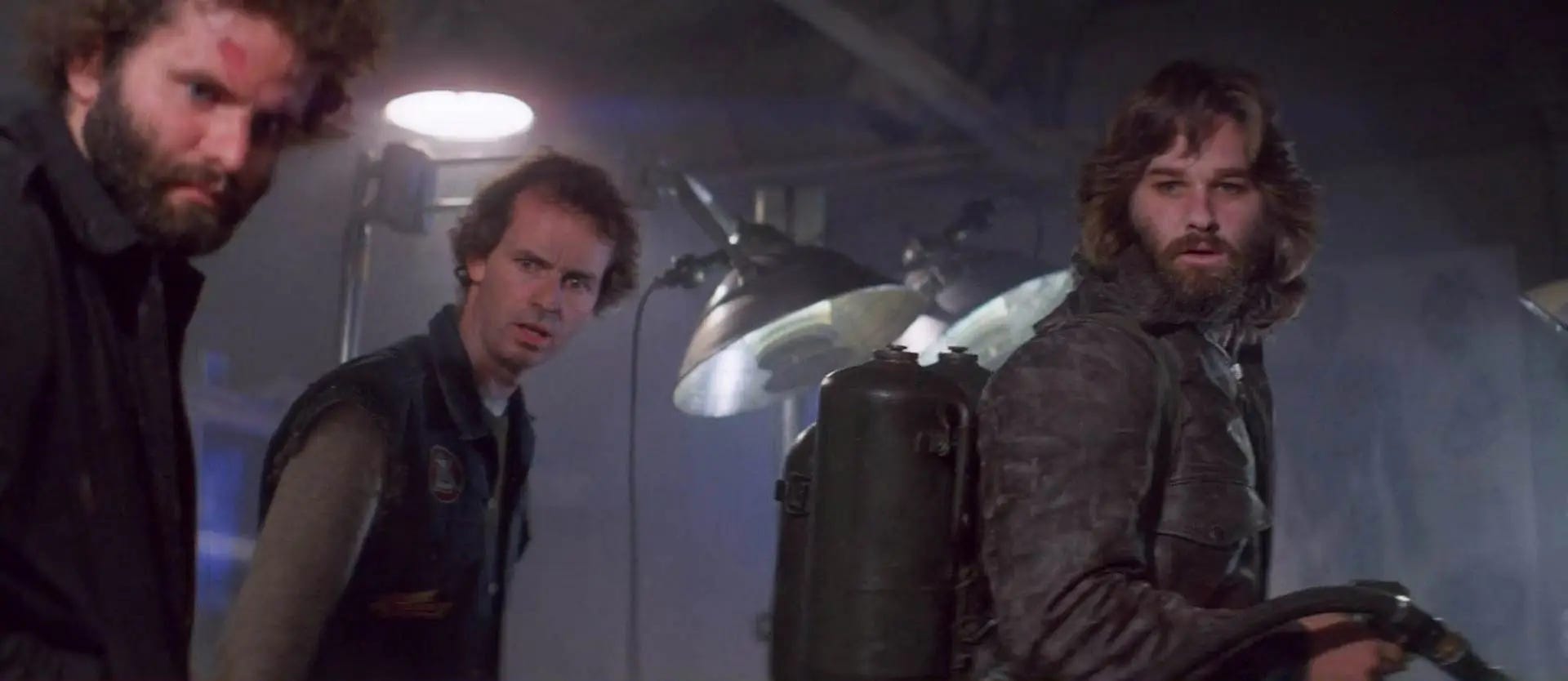
At the Hitchcock, the warmest response came from Rob Bottin’s effects crew and David Yewdall’s sound team, who saw and heard a year of their work pay off in 70mm. Elsewhere, Cohen thought, opinion split largely along generational lines. In the lobby after the screening, he was confronted by Albert Whitlock, the pioneering matte artist of The Birds (1963), who’d been commissioned to paint a crater with the wreckage of the alien spacecraft. Whitlock felt The Thing subordinated everything to violence and gore, and shared that his wife had walked out during the kennel scene, never to return. For the first time, Cohen heard someone from the crew call the movie “offensive.” Nor had the film’s star been won over. A few weeks earlier, Russell had watched a cut and come away disappointed. In his view, the film had traded the cast’s hard-won chemistry for what he called the “ick factor.” The cast largely sided with him. In their eyes, Bottin’s work had overpowered the film, and one called the actors “pawns.” Cohen recalled, “But the dominant storyline of the night was typified by the reaction of a close professional colleague, a producer of note, who … shrugged with his palms up and said, ‘Well, it isn’t E.T.’”
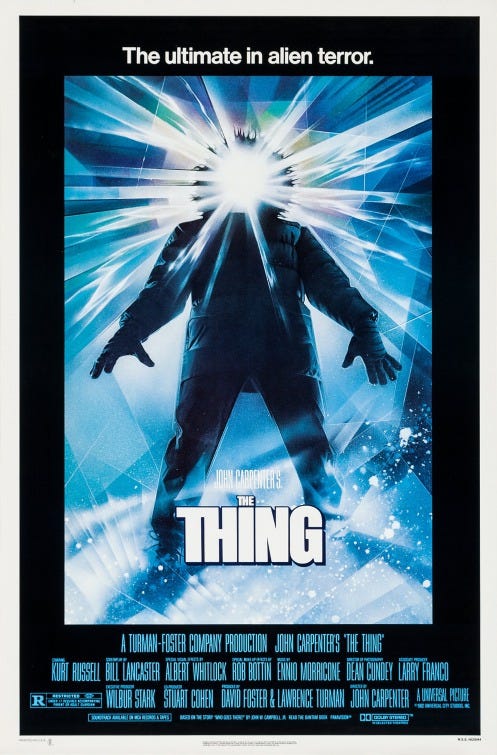
The Thing opened on June 25, 1982, on 840 screens in the U.S. Critics leaned negative. Even Gene Siskel and Roger Ebert, who that spring had praised Universal’s graphic remake of another RKO horror film, Cat People, couldn’t agree. Reviewing Carpenter’s film in the Chicago Sun-Times, Ebert wrote, “The Thing is basically, then, just a geek show, a gross-out movie in which teenagers can dare one another to watch the screen. There’s nothing wrong with that; I like being scared and I was scared by many scenes in The Thing. But it seems clear that Carpenter made his choice early on to concentrate on the special effects and the technology and to allow the story and people to become secondary.” Writing in the Chicago Tribune about the film’s barrage of effects, Siskel admitted, “For sure, the third time this happens it’s a bit much, and you do sit there not following the story but thinking, ‘How did they do that?’ And yet (and this is a rather large ‘and yet’) I cannot deny a certain fondness for this picture because its submerged theme of suspicion of one’s fellow man. Quite clearly, The Thing is a metaphor for the way people can mistrust strangers, go on witchhunts and require loyalty oaths.” On their PBS show, Sneak Previews, they split: Siskel voted yes, Ebert no.
On its opening weekend, The Thing faced a murderers’ row of competition at the U.S. box office, including E.T., Rocky III, Star Trek II, Poltergeist, Firefox and Blade Runner. Cohen hopped from theater to theater in L.A., gauging attendance and reaction. Grease 2 had opened to harsh reviews, but at theaters where it shared a marquee with Carpenter’s film, the musical, whose casting Ebert had panned as “too old, too innocent, too safe,” was drawing larger crowds. The Thing finished the weekend at №8, like the Bad News Bears at the start of the season. For the Fourth of July weekend, Universal expanded the release to 910 screens, but heading into the film’s third weekend, exhibitors used the lackluster turnout to drop The Thing from nearly half its theaters. When Carpenter returned to Los Angeles a few days after the opening, Cohen recalled visiting him: “When he opened the door he looked stricken, as if he had physically been punched in the gut. The financial failure of the film was one thing, but another was the amount of vitriolic slop that was thrown in his face for good measure.”
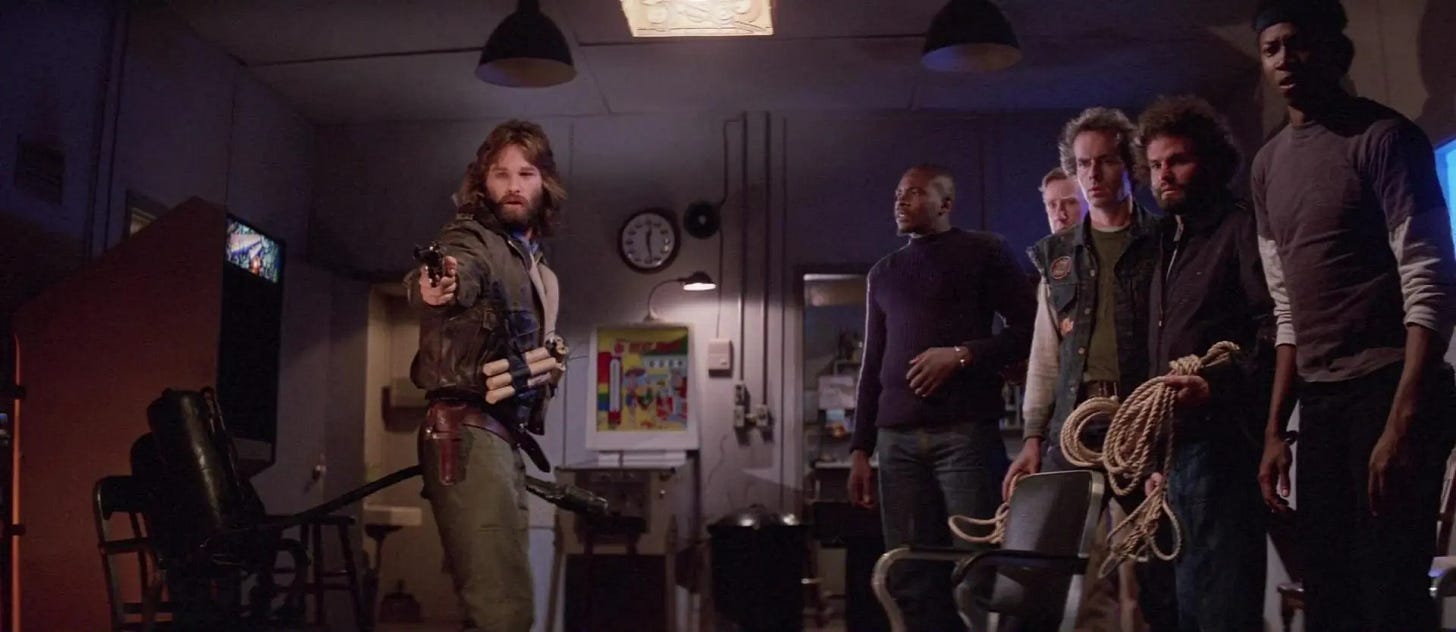
Carpenter recalled, “I mean, the whole point of the monster is to be monstrous, to be repellent. That’s what makes you side with the human beings. I didn’t have a problem with that. The critics thought the movie was boring and didn’t allow for any hope. That was the part they really hammered on. The lack of hope is built into the story. There is an inevitability to it, but that’s not necessarily a negative.” To Carpenter, two men freezing to death to save humanity was “the ultimate heroic act,” but he admitted audiences in the summer of 1982 didn’t buy it. As for the beating he took in the press, Carpenter recalled, “I was just a skinny kid from Kentucky who came to Hollywood, and I got real lucky in my life. If you want to play in the big leagues you’ve got to be ready for the hits. So that was my first big one. I’d gotten bad reviews before, but I had had some success, I’d been built up a little bit in the eyes of the critics and now they needed to swat me back. And I don’t blame them. Whatever they want to do is fine.”
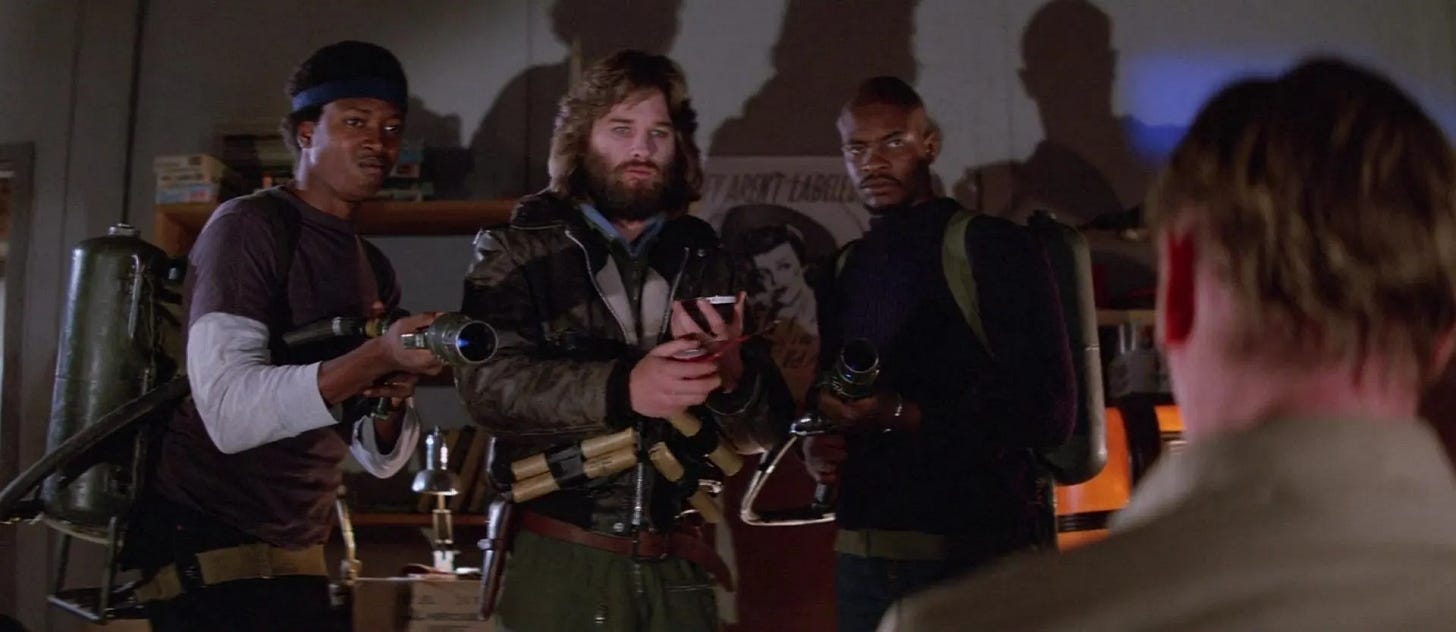
That summer, Cohen did hear one dissenting opinion. He recalled, “Several weeks after the film opened, I was approached in a bar by writer-actor Buck Henry (creator of Get Smart, writer of The Graduate) who told me The Thing was ‘twenty-five years ahead of its time.’ Alone in his sentiments then, it now seems he was pretty much on the money.” Carpenter didn’t live in the future, though, and the fallout was immediate. His deal for Firestarter was pay-or-play, guaranteeing his salary even if Universal never made the film with him. Bill Phillips, who scripted Carpenter’s next picture, Christine (1983), recalled, “They decided that since John is very good at delivering low-budget films, they would cut the budget from $27 million to $15 million … Since John didn’t have to agree to that, he didn’t.” Instead of John Carpenter’s Firestarter exploding across screens for the summer of 1983, it arrived the following spring as a Dino De Laurentiis production with a journeyman director, one of several King properties the producer was cranking out. Carpenter, a helicopter enthusiast who held a pilot’s license, spent his $1 million buyout on a Bell LongRanger.
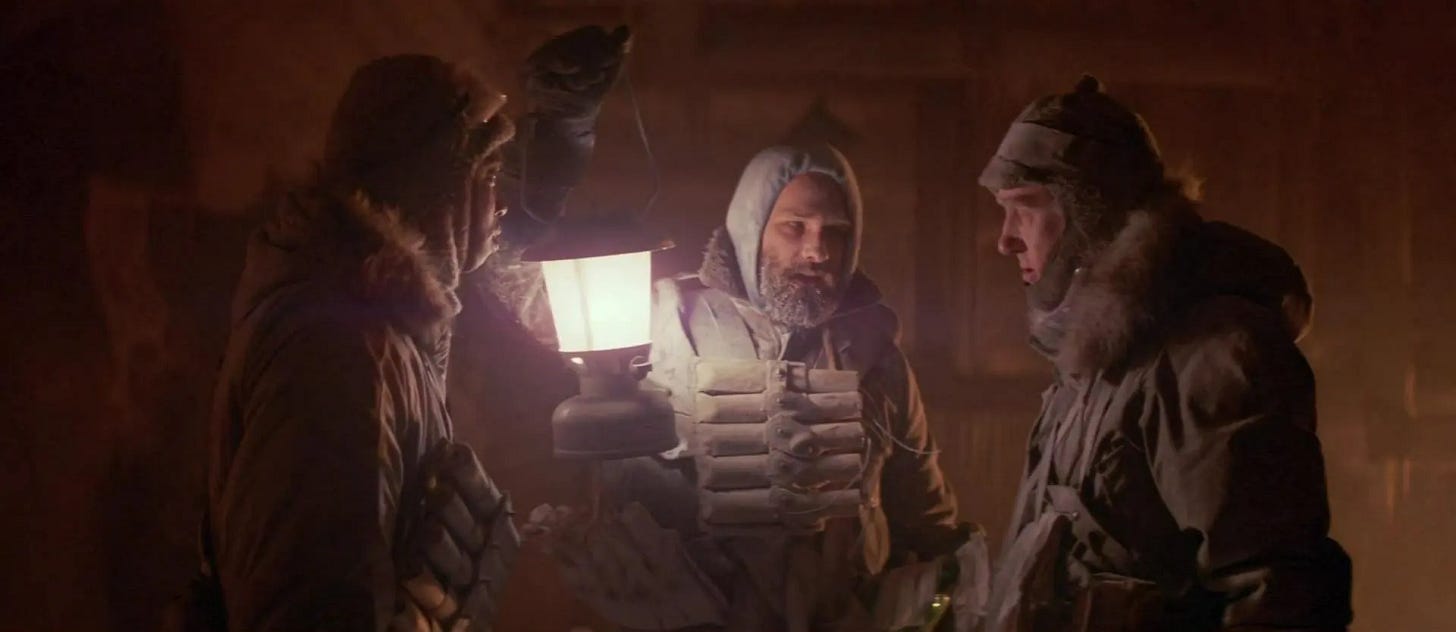
The Thing found its audience on VHS. By 1998, its reputation had grown enough that Universal released a laserdisc as part of its Signature Collection, the same deluxe treatment the studio had given E.T. Extras included a freewheeling audio commentary by Carpenter and Russell. In late 2014, Quentin Tarantino cast Russell in The Hateful Eight (2015), a locked-door murder mystery in which eight travelers trapped by a blizzard realize one or more of them isn’t who he appears to be. Tarantino commissioned Morricone to score the picture and included unused synthesizer and orchestral compositions the maestro had made for The Thing. Morricone, nominated for a Golden Raspberry Award for Worst Musical Score for The Thing, won his first competitive Academy Award for The Hateful Eight. Russell, who’d left early screenings disappointed by the “ick factor,” came to see The Thing differently: “I love that, over the years, that movie has gotten its due because people were able to get past the horrificness of the monster — because it was a horror movie — but to see what the movie was about, which was paranoia.”
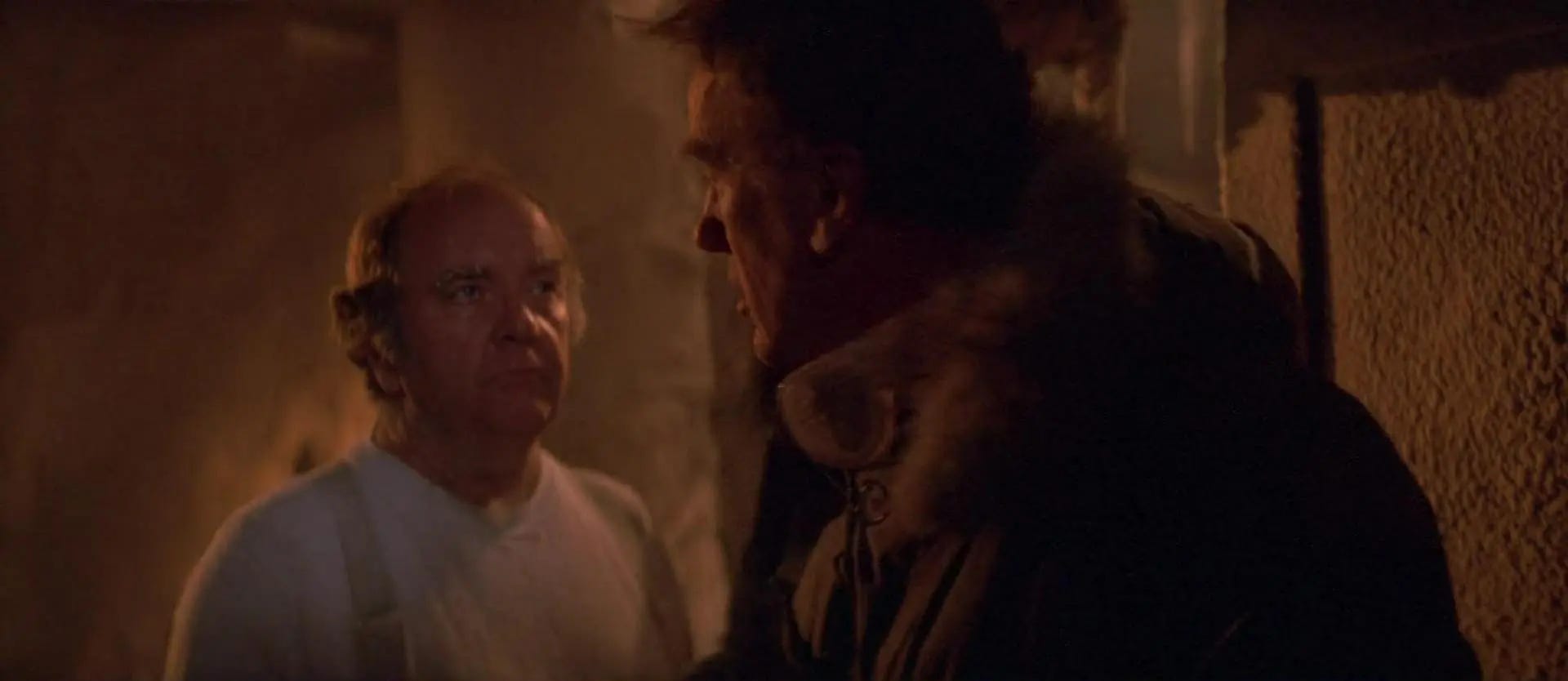
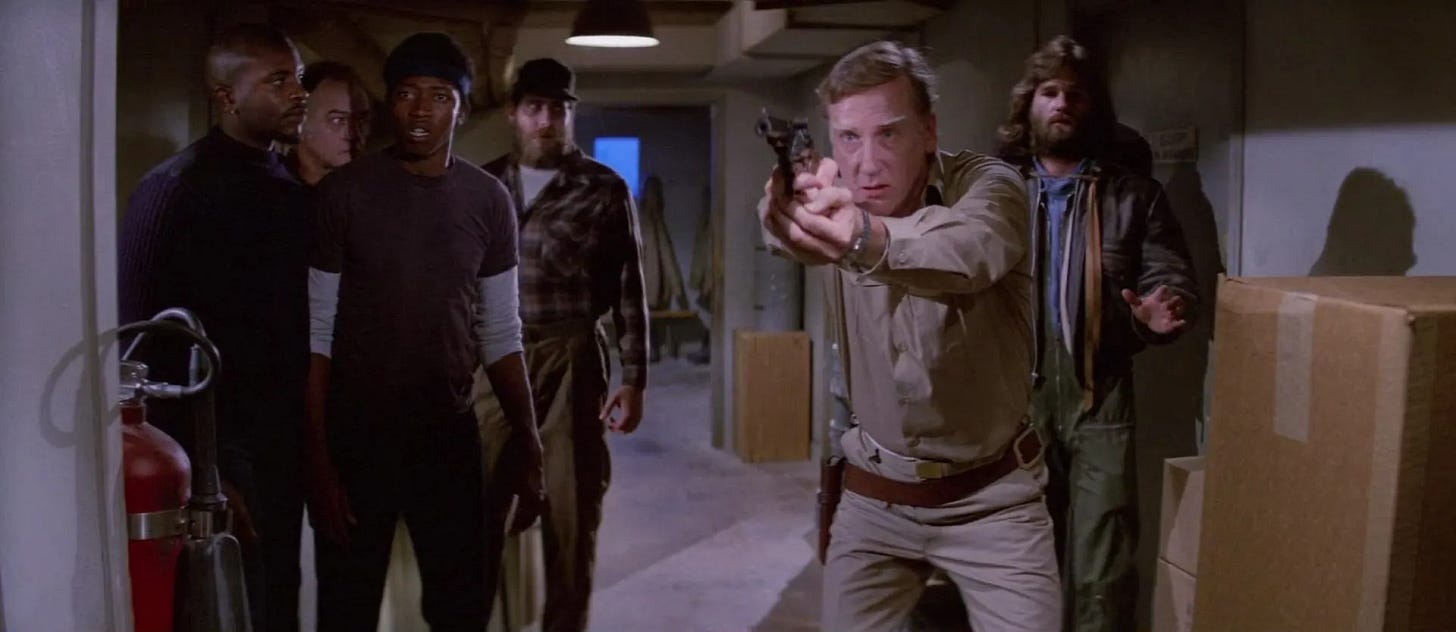
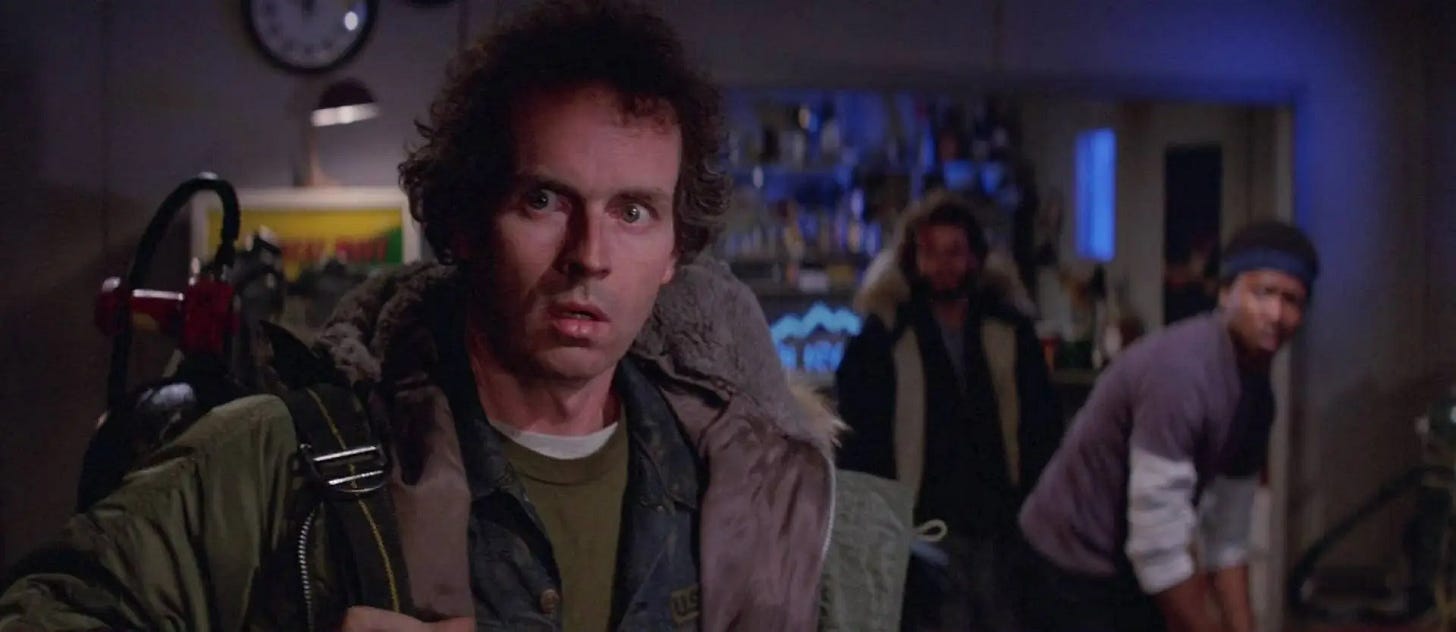
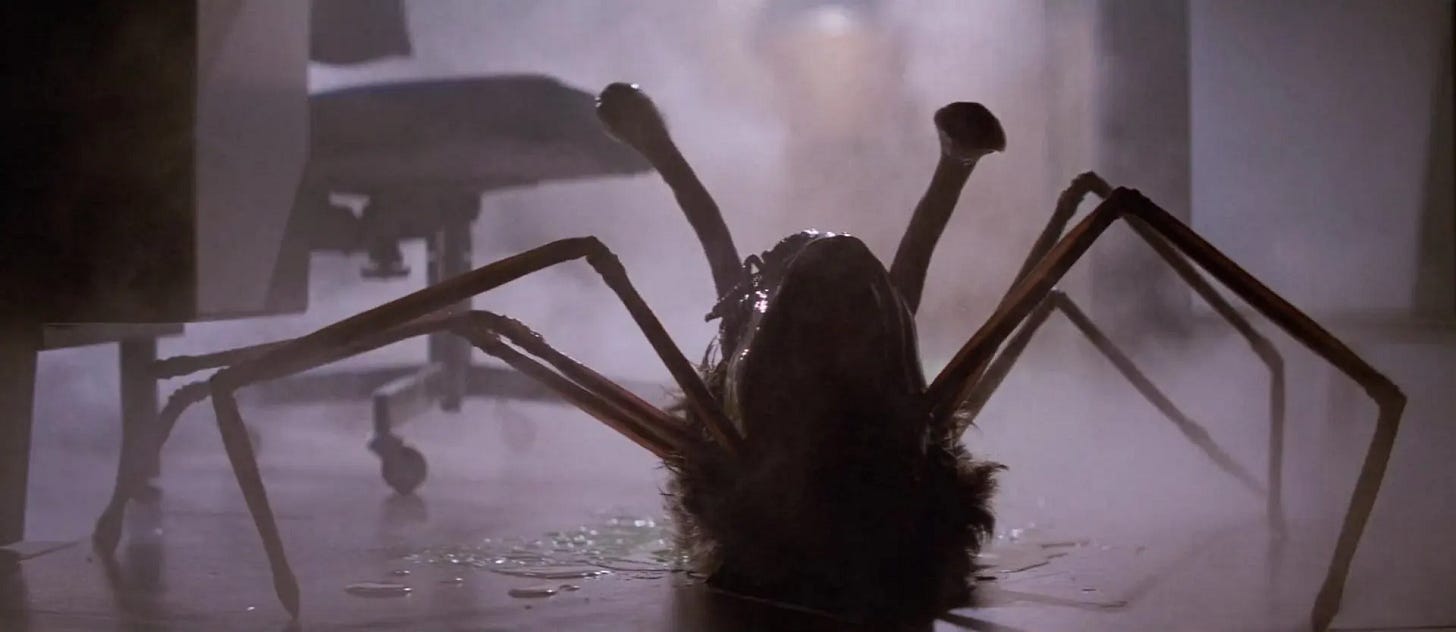
There’s a sequence in The Thing that’s a wondrous illustration of the film as pulp magazine cover art come to life. Norris, the sturdy geophysicist, has suffered cardiac arrest, but efforts to resuscitate him reveal that he is the Thing, playing dead. What has been passing as Norris opens up at the chest into jaws that sever Dr. Copper’s arms. This is no jump scare, but chaos that builds and pays off, throwing us out of our seats. Norris’s head tries to escape in the confusion, sprouting spider legs and scurrying off from underneath a desk. Palmer, the burnt-out pilot, supplies the color commentary: “You gotta be fucking kidding.” Scenes like this are why Universal, Hollywood’s monster studio, deserves more credit for supporting a film as lurid as The Thing for as long as it did. It gambled on giving John Carpenter his first major studio feature, signed off on Bill Lancaster’s script — unresolved ending and all — and approved an effects budget for Rob Bottin beyond that of any monster movie in its library. Up to the test screenings, the studio was confident it had a hit. The screenwriter’s old man, Burt, had dismissed science fiction as a children’s playground. That summer, E.T. appeared to prove him right.
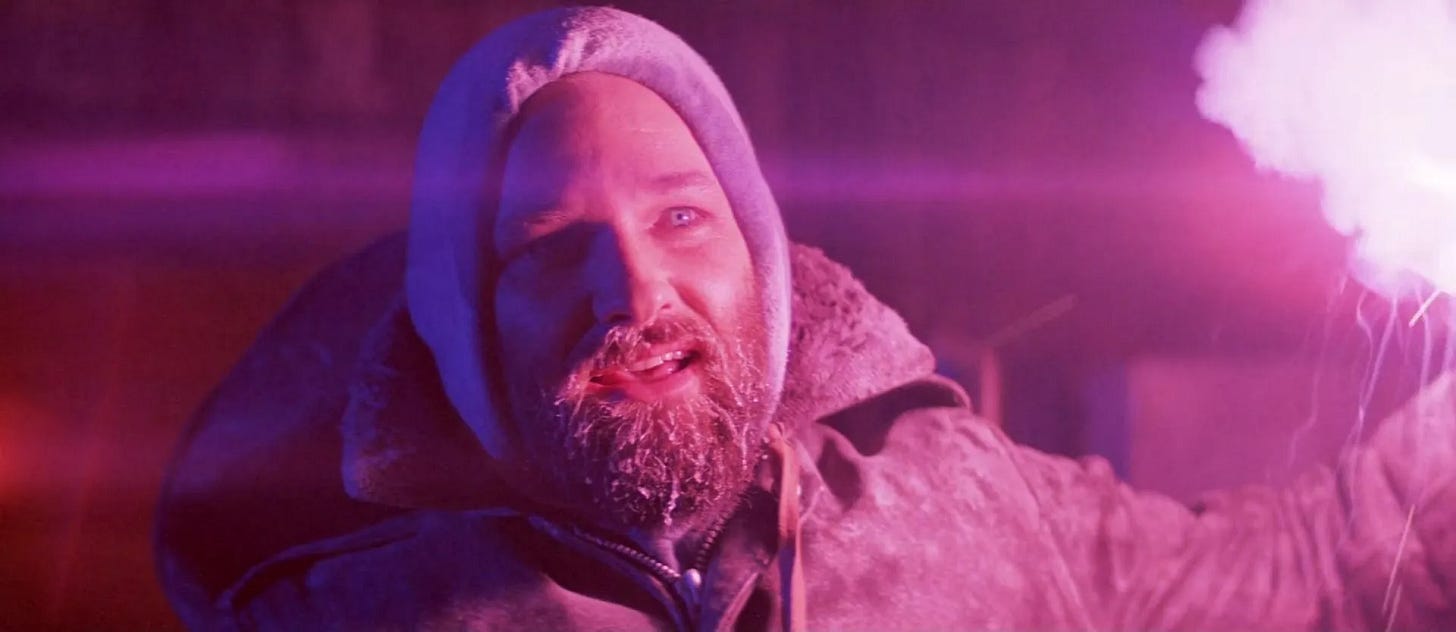
Carpenter’s enthusiasm for The Thing from Another World and “Who Goes There?” made him the right director to tackle a reimagining of both. He married the external threats present in Hawks’s version with the deeper, more unsettling paranoia of Campbell’s story, and the marriage has lasted more than forty years. Unlike Alien, The Thing plays a shell game with who’s human and who’s alien. It’s much closer in sensibility to Blade Runner, where humans display the most dissociated behavior, while the carbon copies convey the most humanity. In The Thing, as in Blade Runner, the human race appears to be on its way out. In the film’s standout scene, MacReady devises a blood test to settle once and for all which of the remaining men is the Thing. Each man fears the person next to him is infected, and that he might be as well. With a blizzard howling outside, the sequence is a prime locked-door mystery. Lancaster takes And Then There Were None one step further by refusing to unmask the killer. Apart from The Empire Strikes Back (1980), which openly set up a sequel, the blockbusters of that era tied up their loose ends and left no doubt who won. The questions The Thing refuses to answer are part of what makes it so rewatchable. Who did the Thing infect first? Who sabotaged the blood supply? Who’s the Thing: MacReady, Childs, neither or both?
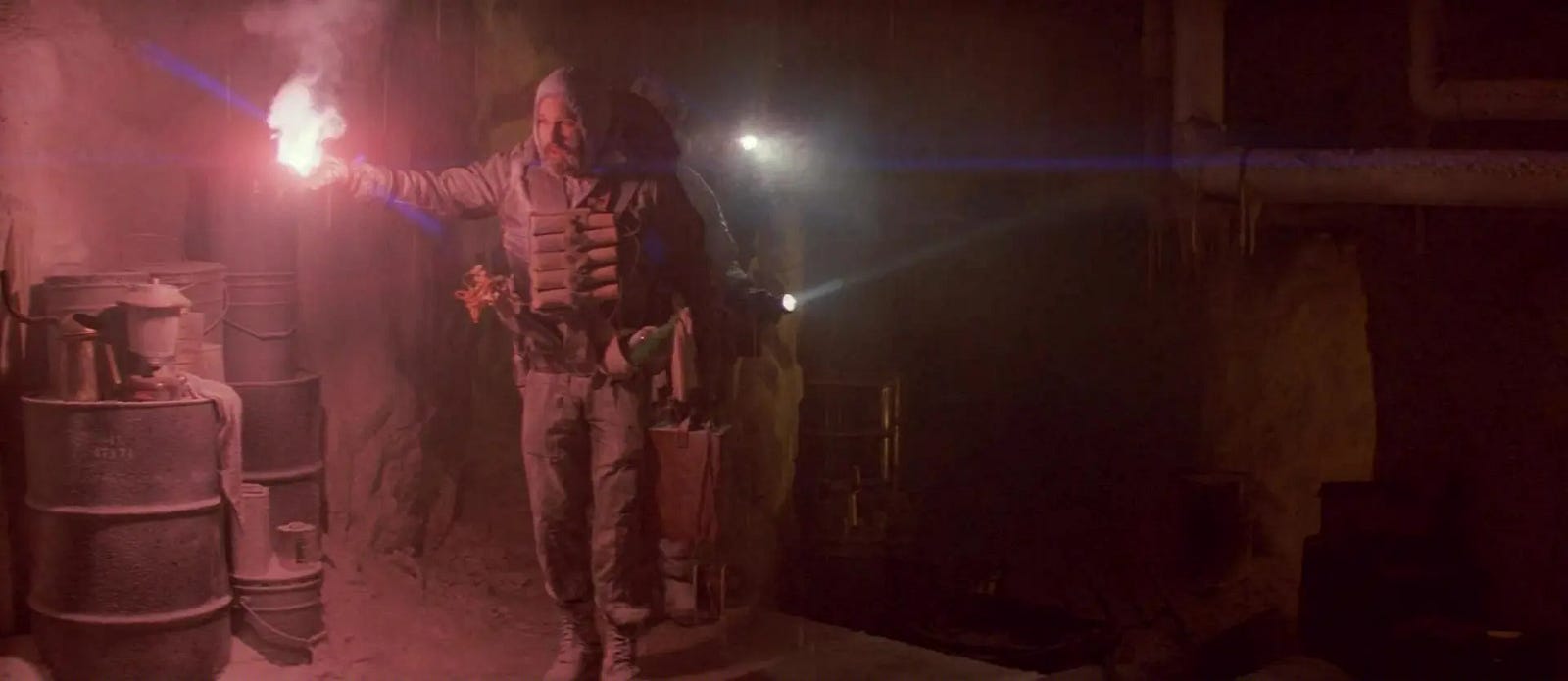
A student of Hawks who’s watched Rio Bravo (1959) countless times, Carpenter took as many notes on how to direct an ensemble as Christian Nyby did. Despite ample character moments contributed by Lancaster and the cast, the men in Carpenter’s final cut aren’t defined by who they are but by how they manage a crisis. (In a twist on Hawks, Carpenter’s siege picture isn’t about men learning to trust each other, but realizing they no longer can.) The lived-in ensemble extends to the dog. Jed gives the best animal performance ever put on film. Instead of doing tricks, Jed performs a character, as if his trainer or Carpenter had explained that he needed to play buried trauma. Neither Russell nor Brimley appears to be acting, playing exactly the type of reluctant leader or plainspoken authority they’d be in real life.
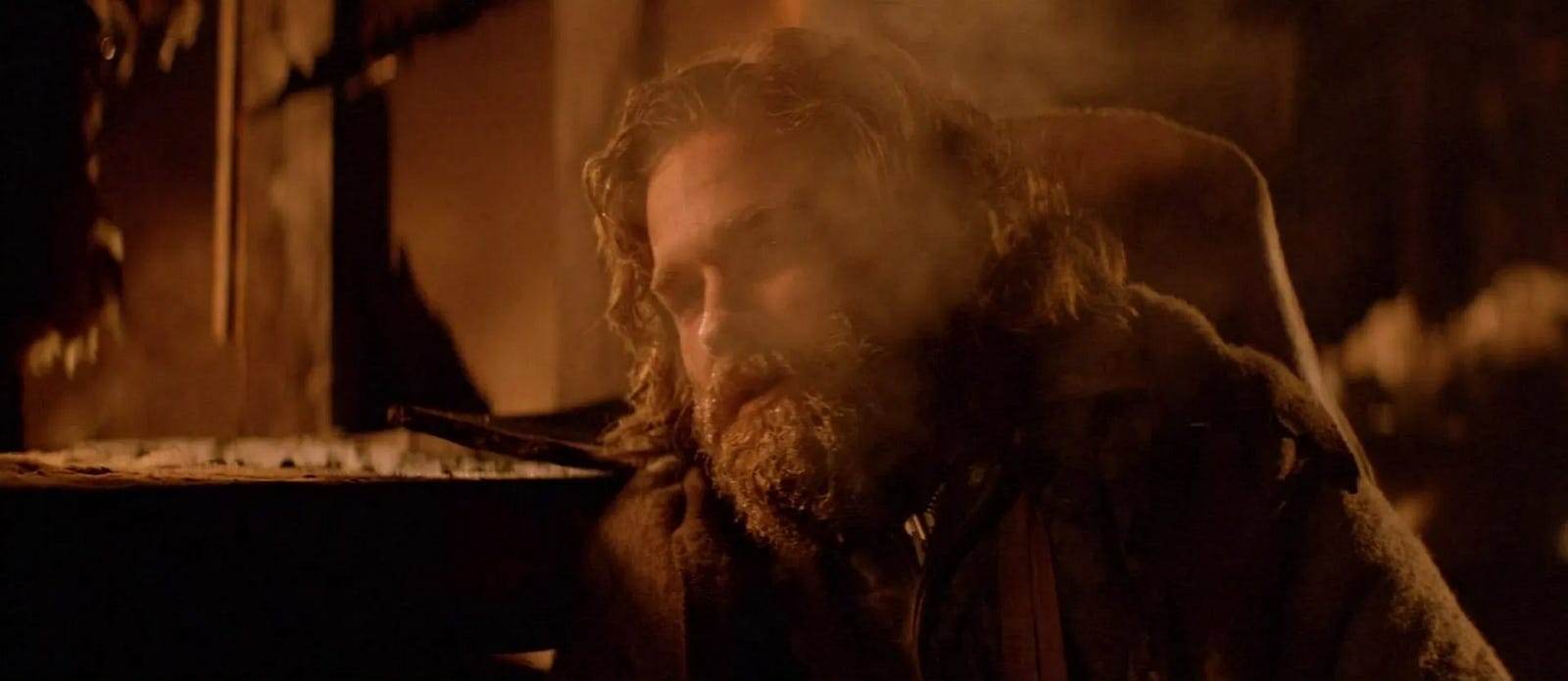
Elsewhere, the casting could’ve been stronger. Richard Mulligan and Brian Dennehy would’ve been noticeable upgrades as Garry and Norris, while Ernie Hudson, who nearly had the role of Childs, would’ve been an asset as Nauls, a capable everyman we’d believe could run a kitchen anywhere in the world. The scale of the film gets away from Carpenter at least twice. The blood test sequence is nearly derailed by a character’s death playing out with a dummy being flung around. A crunch on time and money also makes the Thing’s climactic reveal less than terrifying. None of that is what sank the film. Viewers who could stomach the monster still had to accept the ambiguous ending, and in 1982, few did.
Video rental category: Horror
Special interest: Staff Picks
This production history draws on Stuart Cohen’s blog The Original Fan (2011–2013), David J. Hogan’s “The Making of The Thing” (Cinefantastique, November–December 1982), Hogan’s “Things You Never Saw” (Cinefantastique, November–December 1982), Josh Weiss’s “The Thing Oral History: Cast and Crew Reveal Secrets of John Carpenter’s Sci-Fi Horror Masterpiece” (SyFy Wire, 9–23–2024) and Gilles Boulenger’s John Carpenter: The Prince of Darkness (Silman-James Press, 2003). Also cited are George Turner’s “Howard Hawks’ The Thing” (Cinefantastique, July–August 1982), Bob Martin’s “Carpenter, The Thing, & Other Things” (Fangoria, April 1982), Steve Swires’s “Bill Lancaster on Scripting The Thing — or — The Bad News Beast” (Starlog, May 1982), “An Interview with Cinematographer Dean Cundey” (Starlog, June 1982) and “John Carpenter, Directing The Thing” (Starlog, July 1982), Erik Bauer’s “Things That Go Bump in the Night: An Interview with John Carpenter” (Creative Screenwriting, January–February 1999), Bill Bradley’s “Kurt Russell Basically Shoots Down That Theory on The Thing” (HuffPost UK, 1–5–2016), Matt Benoit’s “The Legend of Jed the Wolfdog, Animal Movie Star” (Whatcom Talk, 3–19–2024) and Scott Campbell’s “The 1984 Movie John Carpenter Got Paid for Not Making” (Far Out, 5–13–2026).