
Standup comic/ actor/ writer/ director Woody Allen was born on November 30, 1935 in the Bronx, NY. To celebrate his 90th birthday, Video Days returns to his third decade of work this month with ten films from the master filmmaker.
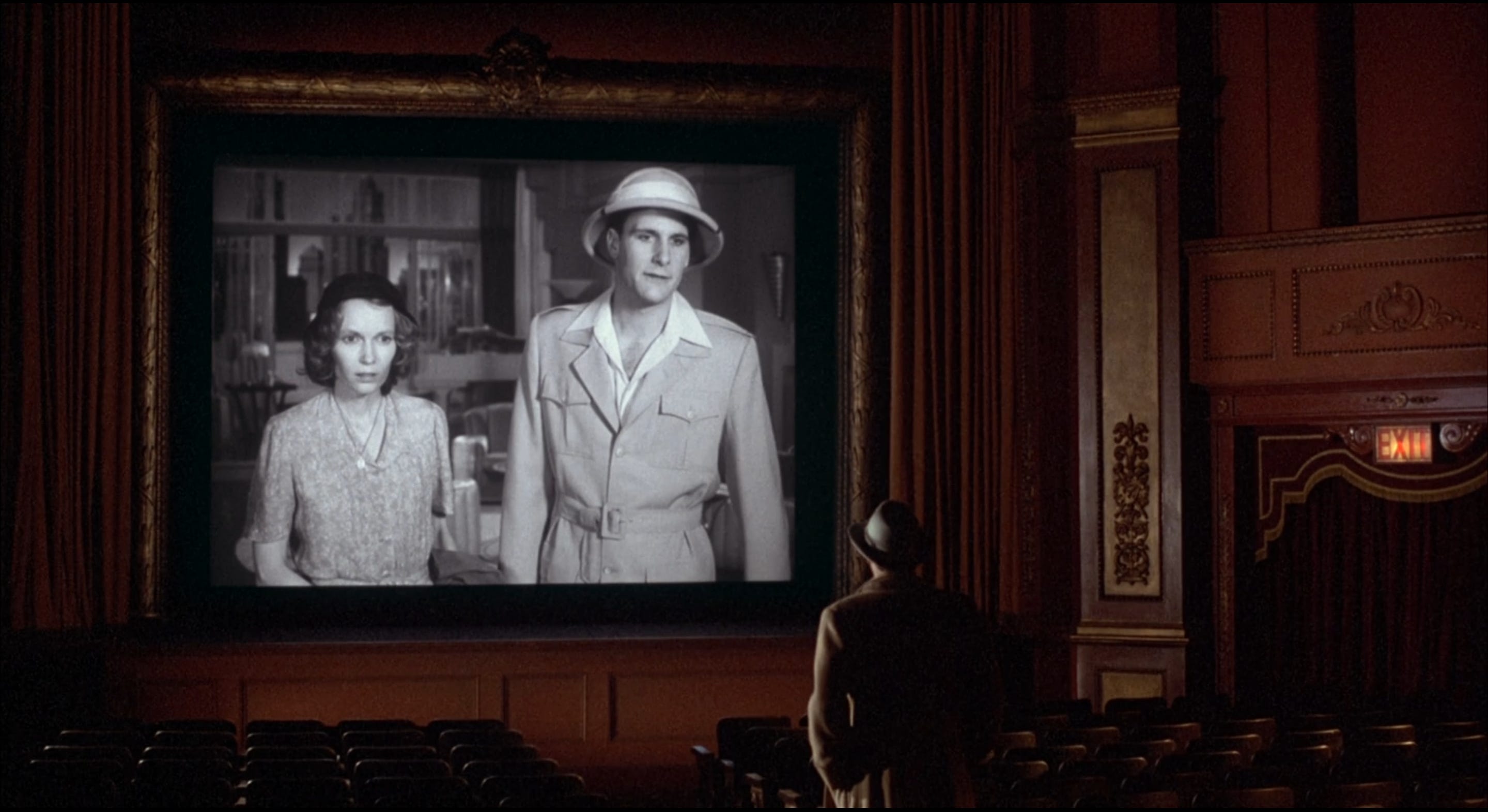
THE PURPLE ROSE OF CAIRO (1985) employs fantasy and splashes of comedy to fashion one of the most delightful films about the Great Depression, “delight” and “depression” normally exclusive from each other. Written and directed by Woody Allen, the filmmaker uses the magic of movies to lift his characters out of their misery, and us along with them, illustrating the role the arts play in holding a society together.
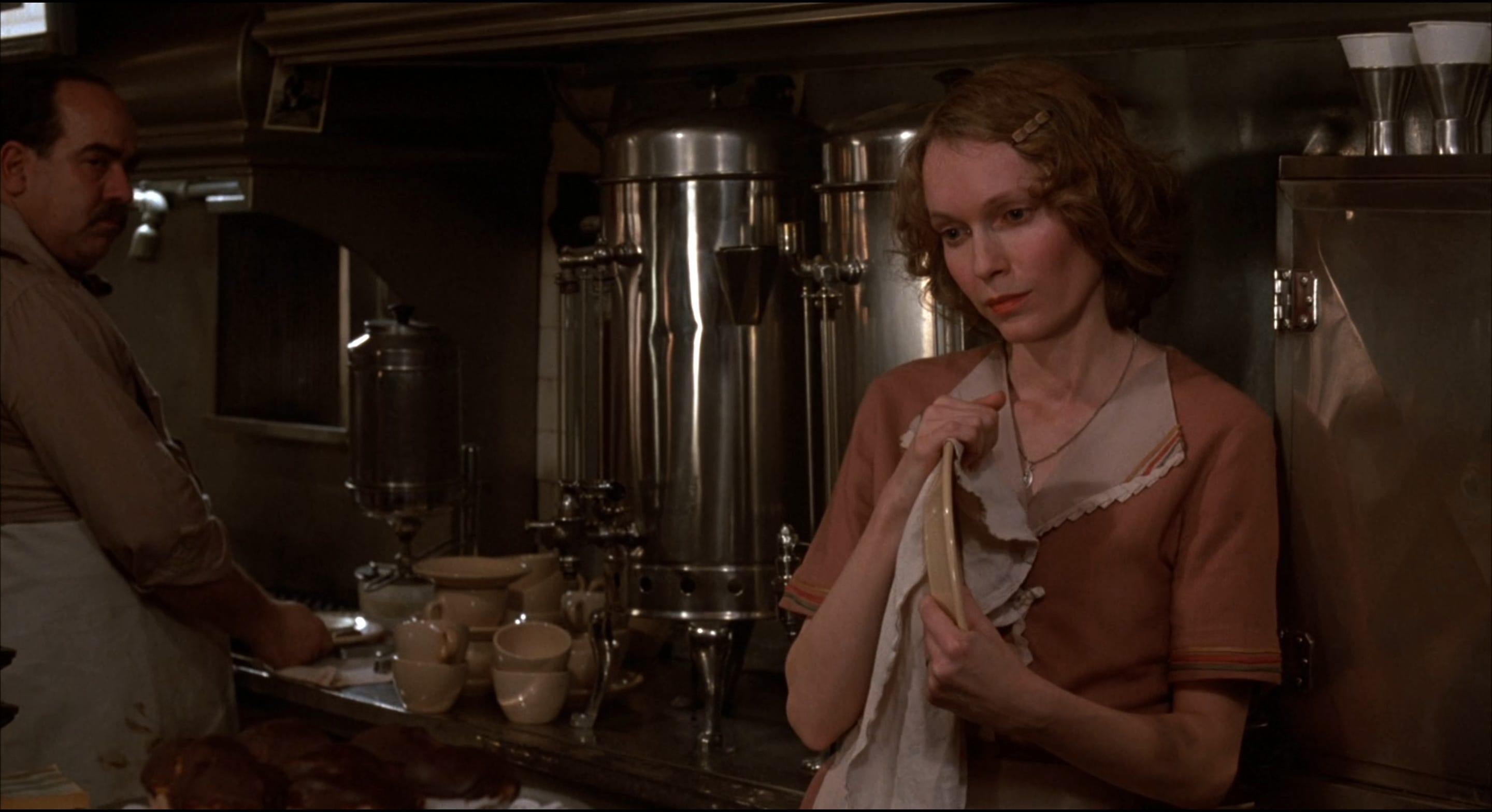
Allen conceived what became his fourteenth film—including What’s Up, Tiger Lily? (1966), which consisted of footage from a Japanese spy movie Allen dubbed with dialogue of his own making—as a comedy about out-of-work actors befriending a fictional character who steps off a movie screen into the world of 1935, taking a holiday from the exotic romance he’s stuck in titled The Purple Rose of Cairo. Allen scaled the acting troupe back to one woman, Cecilia, escaping a marriage without love and a waitressing job without joy at the movies, where she watches The Purple Rose of Cairo enough times to lure a supporting character named Tom Baxter (“ … poet, adventurer, of the Chicago Baxters”) off the screen. Mia Farrow, the leading lady of Allen’s previous three pictures, was cast as Cecilia and Michael Keaton as Tom Baxter, as well as Baxter’s real life counterpart, actor Gil Shepherd. Allen had struggled to complete fifty pages of the script when it was about Tom’s hijinks in the real world, but found a second gear when he introduced Gil, the Hollywood star alarmed that his fictional creation is running amok in New Jersey. Cecilia finds herself romanced by two men who are the same man.
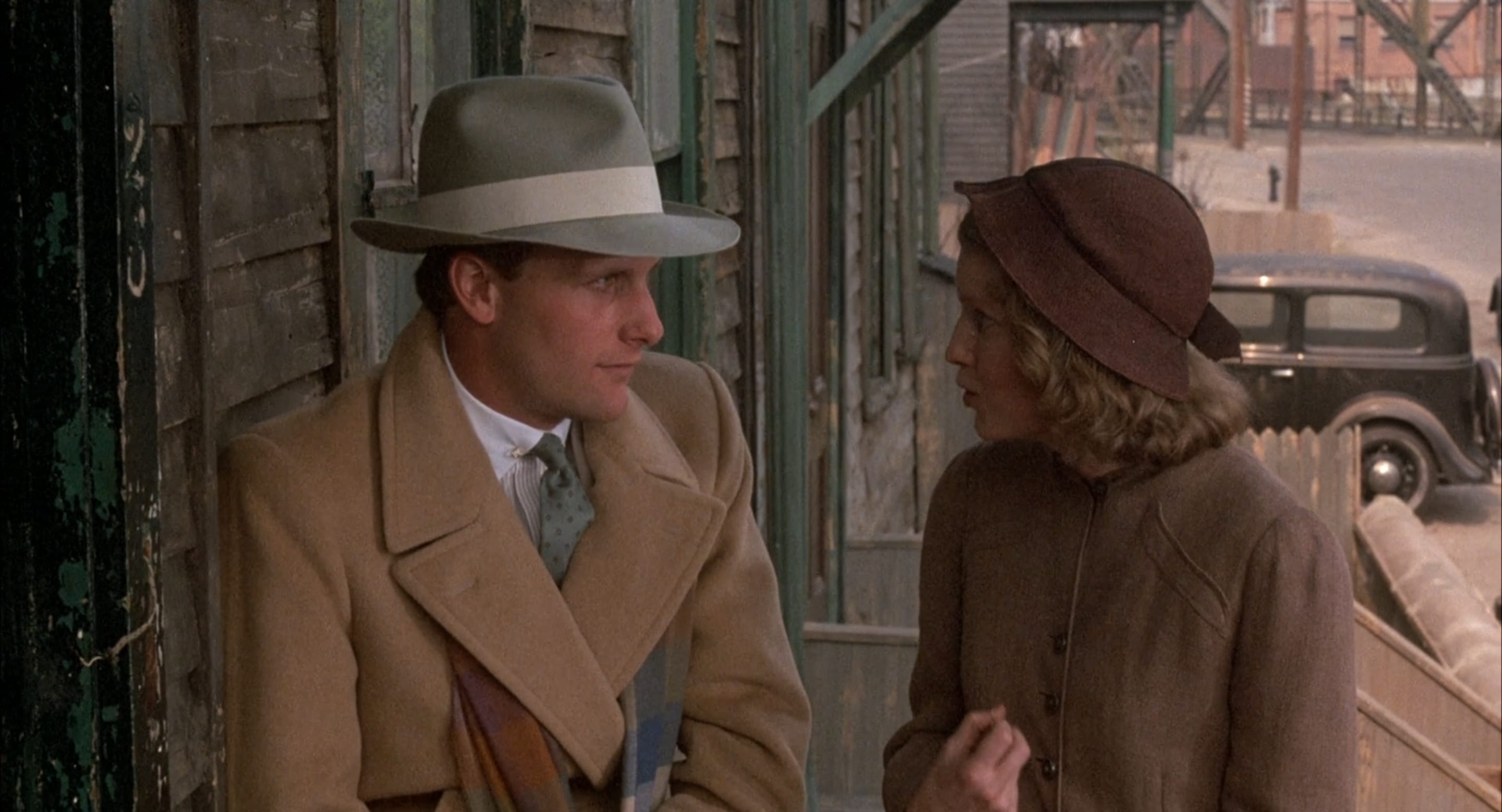
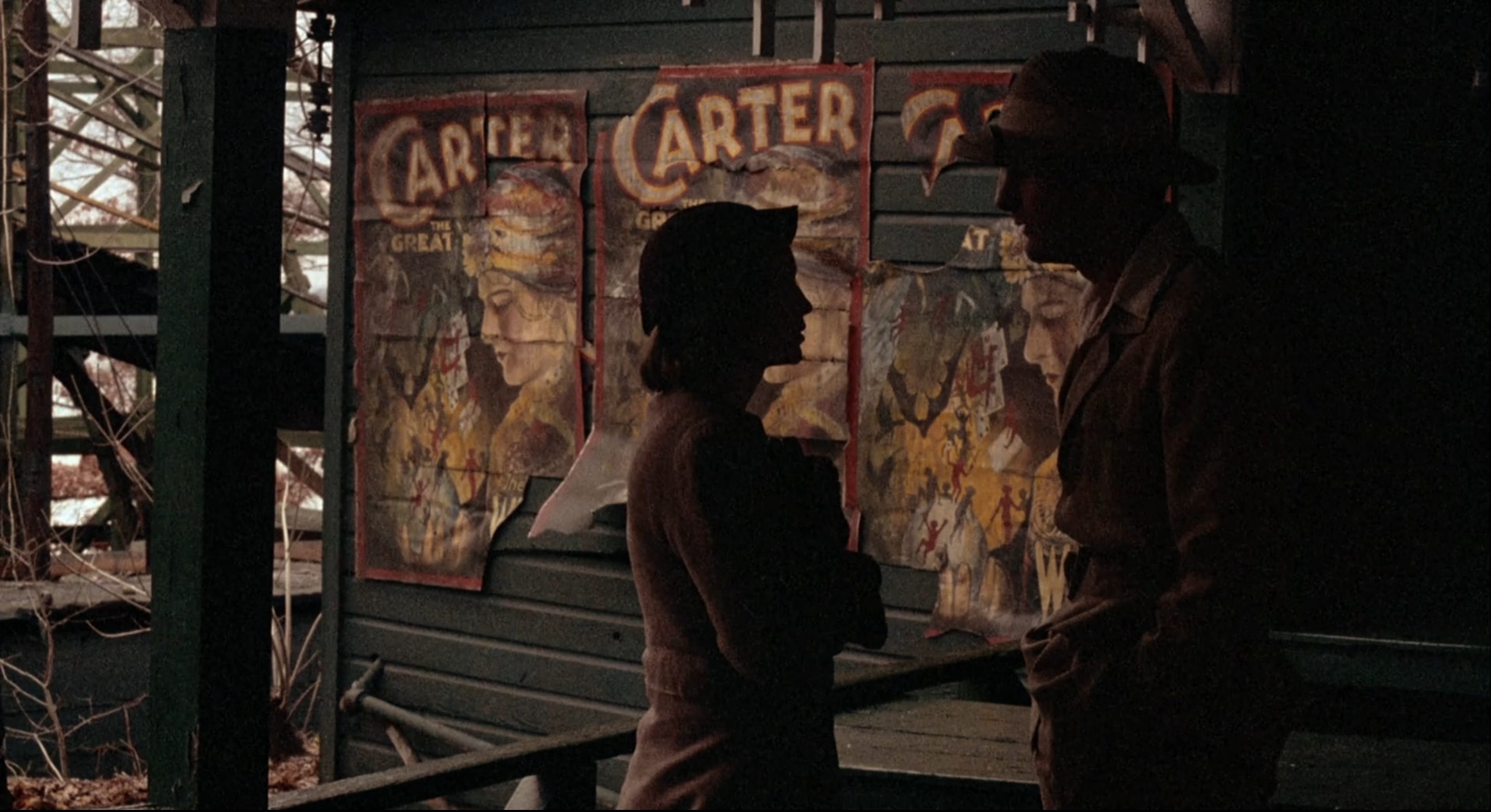
Allen was a fan of Michael Keaton’s breakout performance in the comedy Night Shift (1982), but after ten days of filming, realized the actor was too “hip” to be credible as a 1930s film star. Keaton was replaced immediately by Jeff Daniels, who had even less film experience, but had broken out as the philandering college professor married to Debra Winger’s character in Terms of Endearment (1983). Danny Aiello completed the main cast as Cecilia’s boorish husband, with Dianne Wiest making her first appearance in a Woody Allen film with three scenes as a sporting lady. Edward Herrmann, Deborah Rush, John Wood, Van Johnson, Zoe Caldwell, Annie Joe Edwards, Milo O’Shea and Karen Akers played the cast members of The Purple Rose of Cairo, stranded on a screen in the Garden State with little else to do but bicker while they wait for Tom to return. In a role that Allen tinkered with offering to Diane Keaton, Mia Farrow’s sister Stephanie played Cecilia’s sister and co-worker. Shooting commenced in November 1983, with Bertrand Amusement Park on Lake Hopatcong, New Jersey and Rye Playland in Rye, New York as the off-season fun fair where Cecilia stashes Tom. Picture show interiors were shot in Kent Theater, a small venue in Brooklyn that opened in 1939.
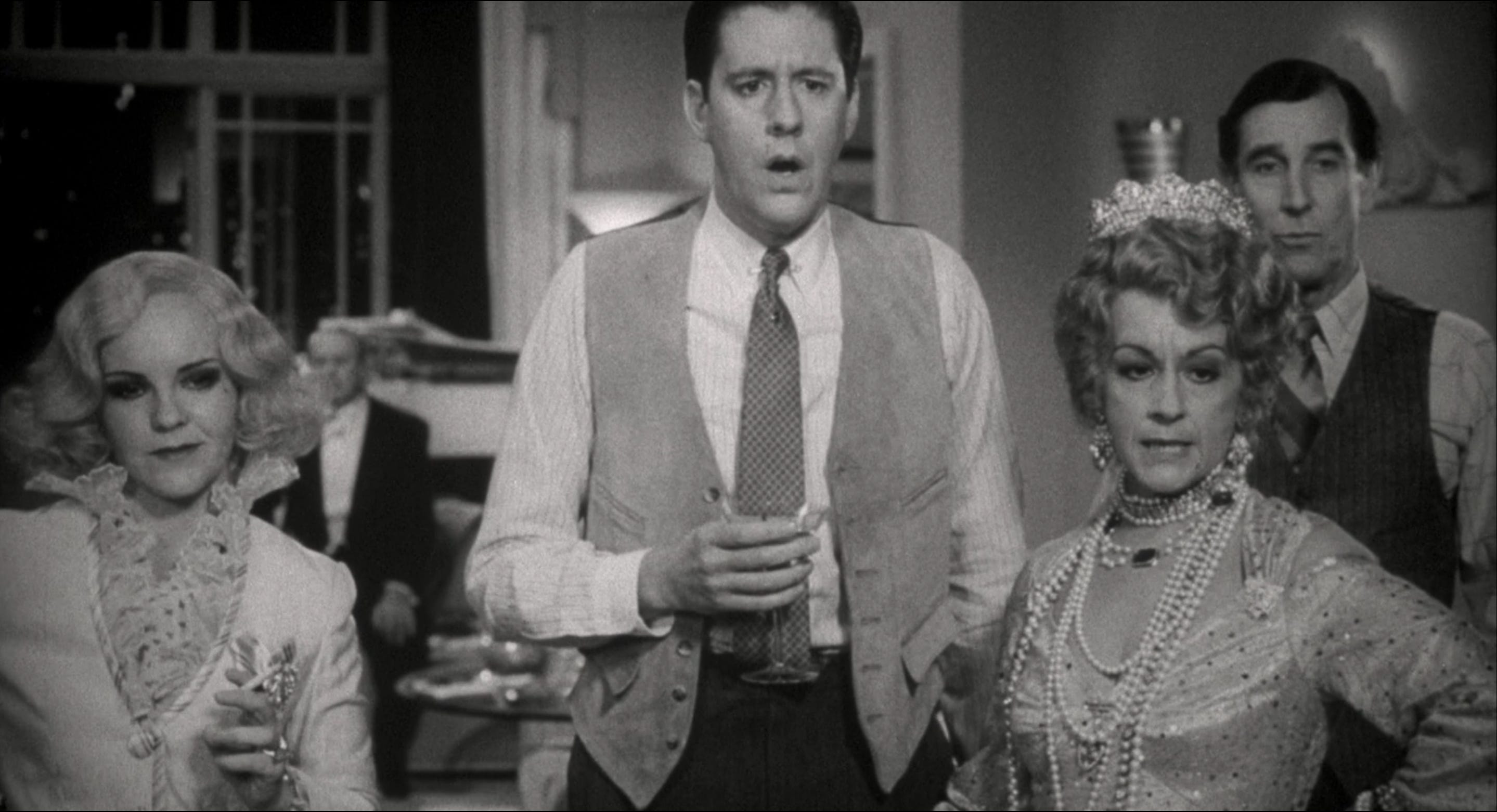
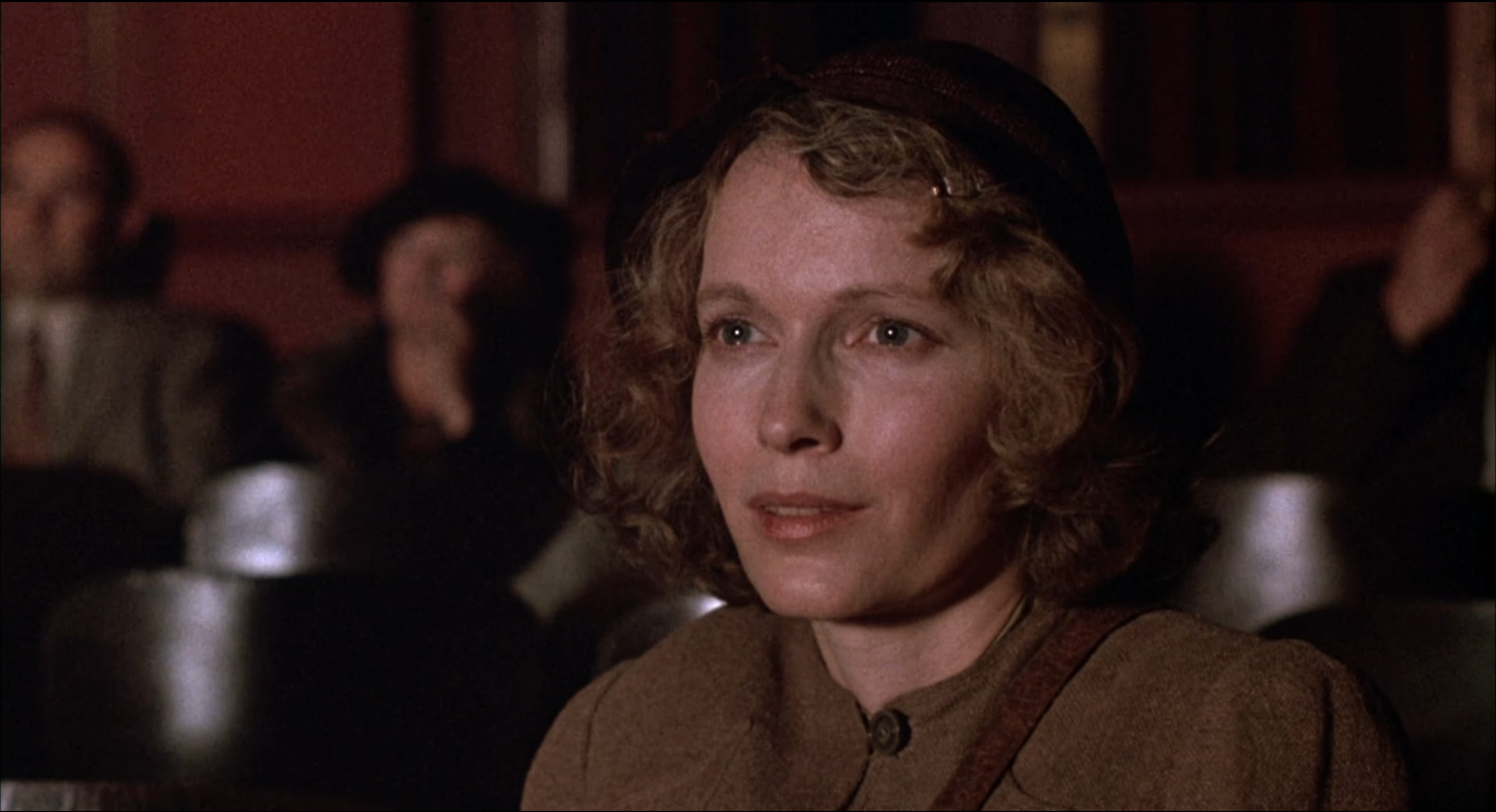
Cecilia doesn’t exhibit much pluck in Allen’s script, but as a director, he uses Mia Farrow’s ability to portray fragility very well, particularly in a beautiful final scene. Jeff Daniels, so underrated as a comic actor, is wonderful in dual roles: a fictional supporting character with a main character complex, and a star who thinks he could be a bigger star. Gordon Willis, the cinematographer of Klute (1971), The Godfather (1972), The Godfather Part II (1974), and All the President’s Men (1976) lighting a comedy set mostly in a darkened theater delivers us from the shadows in The Purple Rose of Cairo, illuminating a world that’s impoverished, but not without its small wonders. Exploring the magical power that movies held over the public in an age before television, Allen makes a compelling film that comments on the lacks and wants of people in those times. Running 82 minutes, once the plot gets roaring, the laughs are consistent (per the self-censorship guidelines of the time, as a movie character, Tom cannot curse or bleed in Cecilia’s world, and is confounded that when he kisses her, they don’t have a fade-out). Other than jokes that broke the fourth wall in Annie Hall (1977), The Purple Rose of Cairo was Allen’s first mingling of magic with the everyday, and the results are as charming as they are fascinating. He received an Academy Award nomination for Best Original Screenplay, having won Best Director and (with Marshall Brickman) Best Original Screenplay for Annie Hall.
Woody’s cast (from most to least screen time): Mia Farrow, Jeff Daniels, Danny Aiello, Dianne Wiest, Stephanie Farrow, Edward Herrmann, Deborah Rush, John Wood, Van Johnson, Zoe Caldwell, Annie Joe Edwards, Milo O’Shea, Karen Akers, Irving Metzman, Juliana Donald, Glenne Headly, John Rothman, Michael Tucker
Woody’s opening credits music: “Cheek to Cheek,” Fred Astaire with Leo Reisman’s Orchestra, written by Irving Berlin for the motion picture Top Hat (1935)
Woody’s closing credits music: “Hollywood Fun,” composed and conducted by Dick Hyman (1985)
Video rental category: Romantic Comedy
Special interest: Movie Within A Movie