


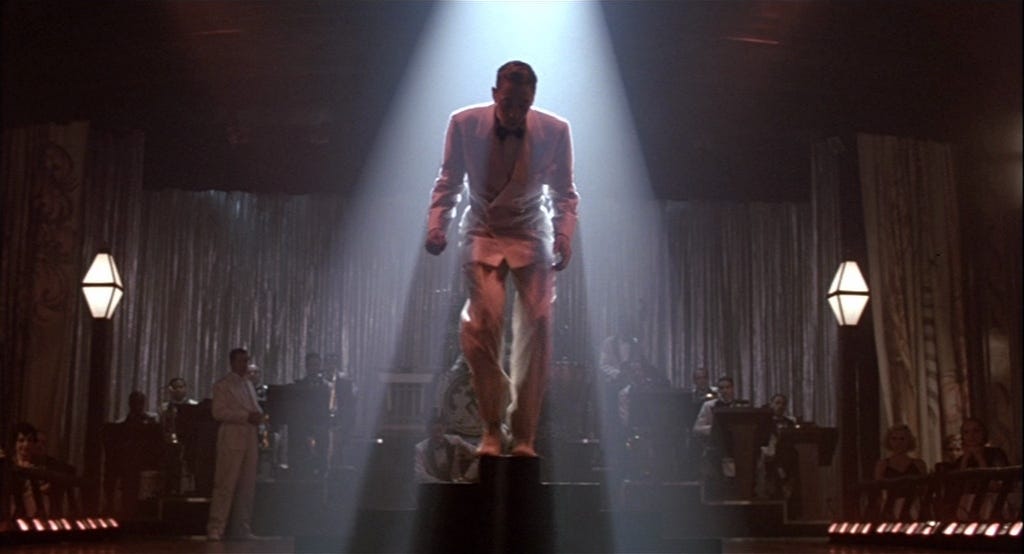
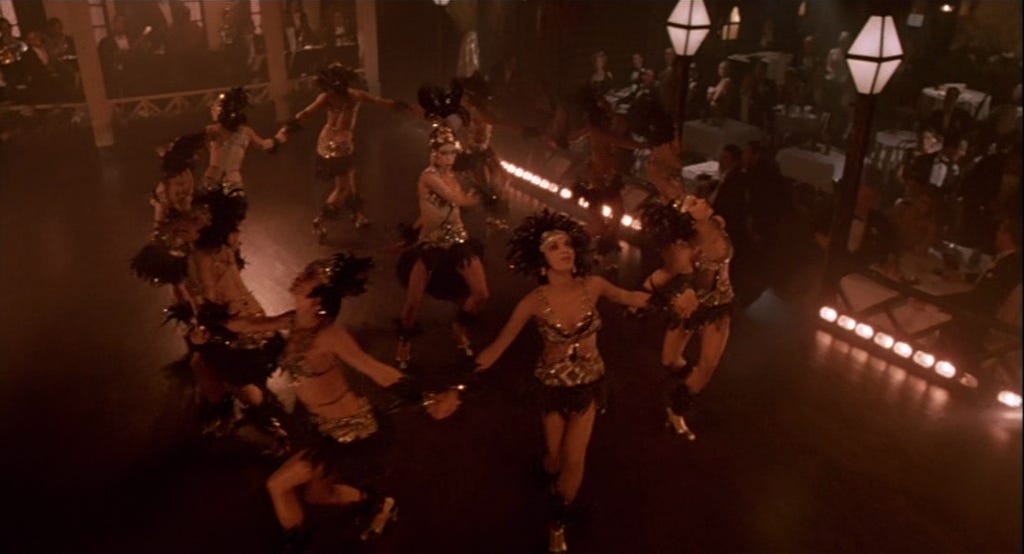
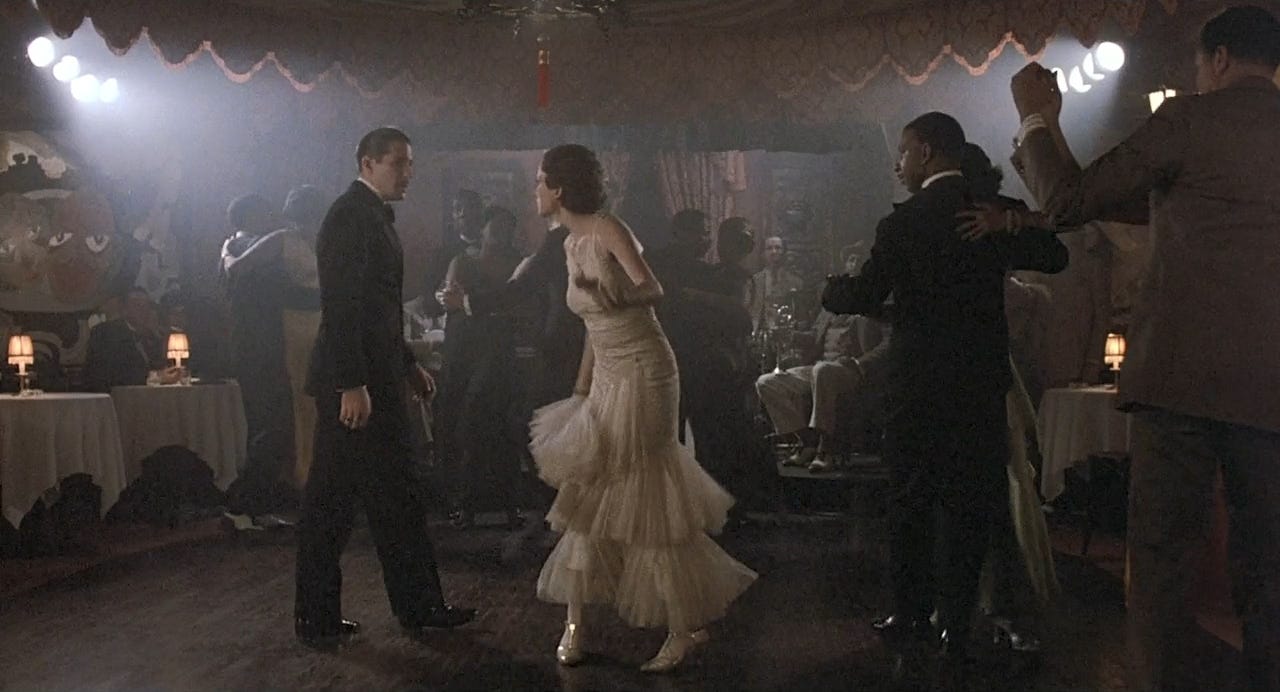
THE COTTON CLUB: ENCORE (2019), as THE COTTON CLUB (1984) was subtitled after it was brushed up for a theatrical re-release in 2019, is the cinematic version of a big sporting event or awards pageant. The filmmakers behind it succeed in capturing the free-wheeling, tension-filled and sometimes surprising moments of live television, with a director switching camera angles or cutting to different spots in the theater to seize on something new. Unlike most sporting events or awards shows, this musical drama squeezes at least three hours of entertainment into a lightning fast 139 minutes, and to its detriment, rarely pauses to linger on matters of substance any longer than it absolutely has to.
Robert Evans was a young film actor who got his start as a film producer by acquiring the movie rights to the 1966 novel The Detective by Roderick Thorp, produced in 1968 with a tired Frank Sinatra in the title role. The publicity Evans fanned for himself was timed well, as a counterculture bomb went off and the motion picture industry was incentivized to empower relatively young men. Evans was 36 when he accepted a job as executive VP of production at Paramount Pictures. Considering how few films Evans had developed in relation to magazine articles, many in Hollywood considered the hire to be a debacle. But with Evans in office, Paramount went from a banana republic to a superpower. Barefoot in the Park (1967), Rosemary’s Baby (1968), The Odd Couple (1968), True Grit (1969), Downhill Racer (1969), Love Story (1970), A New Leaf (1971), Harold and Maude (1971), Lady Sings the Blues (1972), Paper Moon (1973), Serpico (1973), The Conversation (1974), The Parallax View (1974), The Longest Yard (1974), Nashville (1975) and Three Days of the Condor (1975) were among the successes of Evans’ regime. As an executive, he was involved in what some consider the greatest film ever made, The Godfather (1972) and less involved with its superior sequel, The Godfather, Part II (1974). Both were blockbusters for Paramount and won Oscars for Best Picture.
Per accounting by Peter Biskind in his book Easy Riders, Raging Bulls: How the Sex-Drugs-And-Rock ‘N Roll Generation Saved Hollywood, Evans not only concocted a narrative that he’d produced The Godfather, but had salvaged it from disaster. These tall tales made it back to co-writer/ director Francis Coppola, and angered him. In 1983, the filmmaker would send Evans a telegram that read, in part: Dear Bob Evans, I’ve been a real gentleman regarding your claims of involvement in The Godfather. I’ve never talked about you throwing out the Nino Rota music, your barring the casting of Pacino and Brando, etc., but continually your stupid blabbing about cutting The Godfather comes back to me and angers me for its ridiculous pomposity. You did nothing on The Godfather other than annoy me and slow it down. Evans had the telegram framed and hung in his bathroom. In a decade when directors like Coppola now had the power, Evans wanted to be a filmmaker too, with his name on the screen at the very least. He got his wish as sole producer of an original screenplay by Robert Towne titled Chinatown (1974), a picture set in the 1930s that is perhaps the best film of the 1970s. It was another masterpiece Paramount made while Evans was on their payroll.
As an independent producer, Evans’ track record would have diminishing returns: Marathon Man (1976), Black Sunday (1977), Players (1978). In 1979, he was angling to get back on top with Urban Cowboy (1980) when a literary agent named George Weiser — who’d brought Evans a sixty-page treatment by author Mario Puzo titled simply Mafia before Puzo expanded it into his novel The Godfather — handed Evans a book titled The Cotton Club: A Pictorial and Social History of the Most Famous Symbol of the Jazz Era by Jim Haskins. The Harlem nightclub was strictly segregated, with Black musicians, dancers and comics performing for more or less a whites-only audience. Owned and operated by Owney “The Killer” Madden, an Irishman from Liverpool, and George “Big Frenchy” DeMange, the club became a prize in the war between Black gangster “Bumpy” Johnson and white hoodlum Dutch Schultz for control of the Harlem numbers rackets. An executive at Union Carbide named Charles Childs had discovered the book in a Manhattan bookstore in 1977 and acquired the film rights, but when it came to producing a stage musical or motion picture, lacked connections. Robert Evans had those connections.
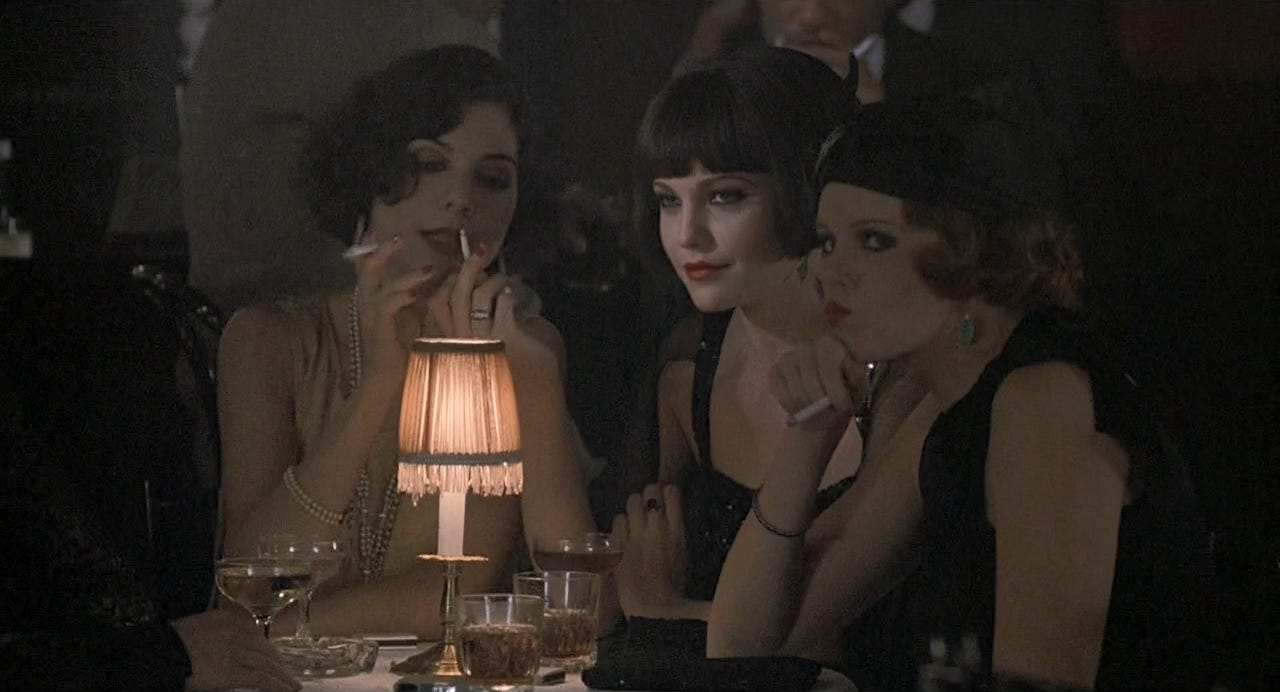
In reporting by Dale Pollock for the Los Angeles Times on December 4, 1983, Evans stated, “The second I saw it, I said, ‘That’s going to be my movie.’” His timing couldn’t have been worse. The commercial failure of The Wiz (1978) was all the proof some in the film industry needed that movies with Black casts were too risky, despite plenty of modestly budgeted pictures like Lady Sings the Blues that suggested otherwise. In July 1980, a month after Urban Cowboy opened as neither a hit or a miss, Evans pleaded guilty to a misdemeanor charge of possessing five ounces of cocaine. He’d been caught carrying at the Frankfurt Airport while working on his next picture, the lavish musical fantasy Popeye (1980), which like Urban Cowboy, debuted without the success Evans was hoping could put him back on top. The weekend Popeye opened, he was promoting his next picture. An article by Aljean Harmetz for the New York Times on December 14, 1980 claimed Evans had completed seven months of negotiations to acquire the rights to the story of the Cotton Club, with Popeye director Robert Altman set to direct.
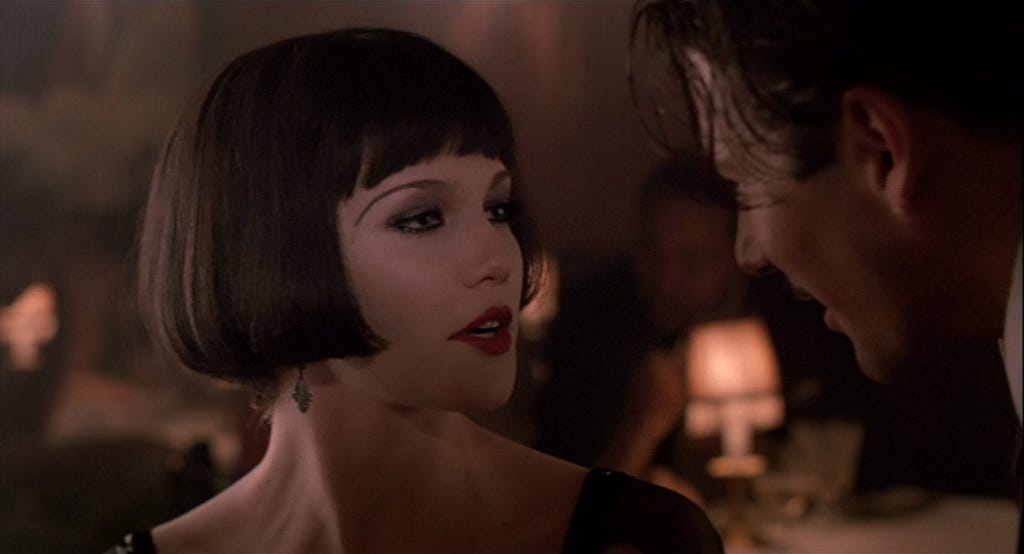
Evans announced that his film would blend of fact and fiction, with artists like Duke Ellington, Ella Fitzgerald, and Cab Calloway played by unknowns. “There won’t be any $3 million actors in the movie,” Evans said, “because the stars of the picture are the Cotton Club and the era and the history it tells about the exploitation of Blacks at the same time it made them famous. Lena Horne was discovered there, but her mother and father weren’t allowed to see her perform.” Rather than bring The Cotton Club to a major studio, Evans had the same dream as Francis Coppola: he wanted to self-finance his pictures, giving him ownership. Evans explained his position to Dale Pollock. “Everyone in Hollywood is overpaid, including myself, for one good reason. The studio owns the negative that becomes a part of its library. Nothing is more valuable than these libraries. Well, I want to build my own library. It’s not easy, let me tell you. To go out on your own against the big boys, you find out just how small you are.”
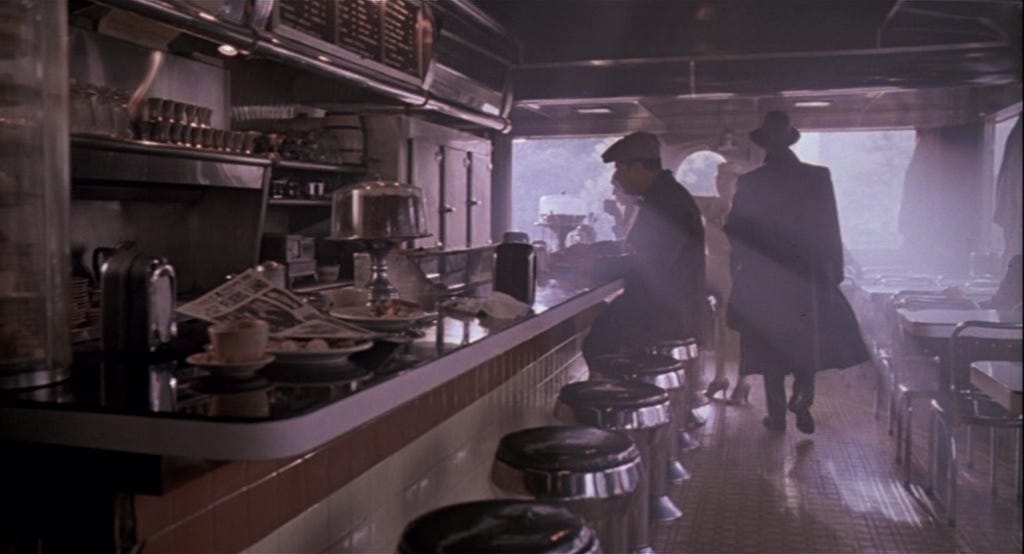
In March 1981, a former Miss California who’d appeared in Players named Melissa Prophet responded to Evans’ mission statement. She offered to introduce the producer to Adnan Khashoggi, a Saudi Arabian businessman who’d become one of the world’s wealthiest men, largely by brokering arms deals. Khashoggi’s lavish lifestyle had brought him to Las Vegas, where according to Prophet, he’d met her father Johnny, an entertainer. Khashoggi had offered to finance a motion picture for Melissa Prophet to produce, and when Robert Evans told her about The Cotton Club, she set up a meeting between the men in Vegas. In late April 1981, Khashoggi agreed to put up $2.5 million in development costs, with another $12 million in financing on the line. These funds allowed Robert Evans to hire a screenwriter, and the producer made a splash in August 1981 when the New York Times announced that Mario Puzo had been commissioned to write The Cotton Club, the Godfather author’s work to take place over the next six or seven months. Aljean Harmetz reported that the film would span Prohibition, the stock market crash, and the Depression. Evans planned to raise financing from European exhibitors. Given that Popeye had not lived up to expectations, Robert Altman was no longer involved, and Evans took an austere position, promising that his new picture would be budgeted in the $18–20 million range. This is what Raiders of the Lost Ark (1981) had cost to produce, self-financed by Coppola’s protégé George Lucas with acute attention to exactly where and how the money he’d borrowed was spent.
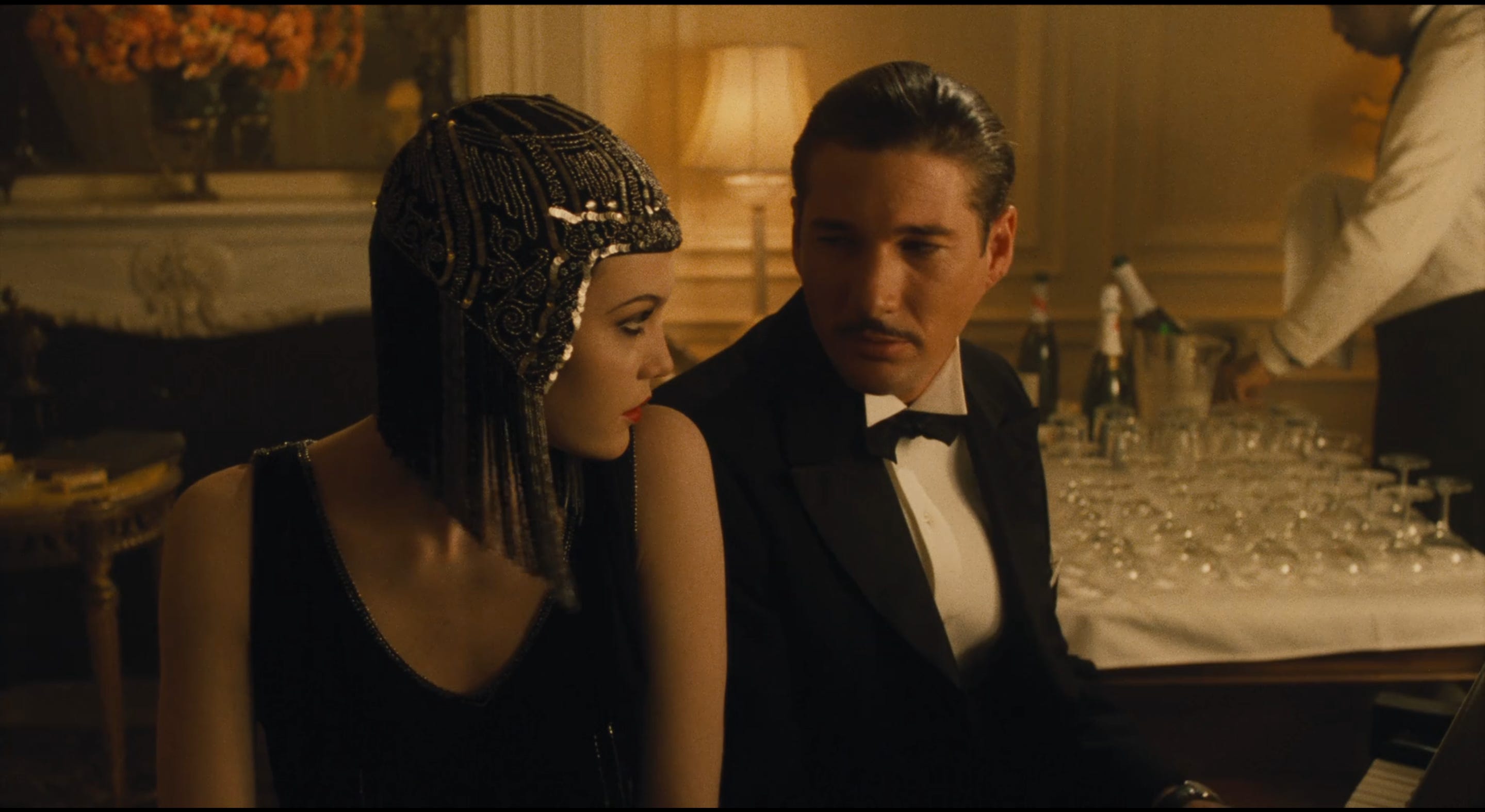
Mario Puzo’s deal was exorbitant for a scribe who hadn’t written a word yet. According to Pollock, he was to receive $1 million, $600,000 for scripting and $400,000 if and when the picture was released. Puzo generated a script in which a white gangster and Black maître d' become involved in the intrigue of the Cotton Club. Khashoggi drove a hard bargain with Evans, pressuring him to make a co-financing deal with Paramount, which Evans was negotiating distribution with, reducing the risk for Khashoggi. He also wanted more of an ownership stake in the picture, hardly what Evans had in mind when it came to owning his own film library. He continued the search for money. In May 1982, Evans made another splash, Aljean Harmetz reporting that Sylvester Stallone had agreed to star in The Cotton Club, with Robert Evans to direct. In the era of several runaway film productions, Evans continued to preach austerity, announcing that Stallone and cinematographer Sven Nykvist would receive bonuses of 25% of any budget surplus, with the other 50% of those savings shared with department heads in art and costume design.
As Rocky III (1982), which Stallone had written and directed, hit theaters, the star wavered over whether to star in The Cotton Club. He was certain that a picture he’d wrapped, shot in British Columbia with independent financing, would be a disaster, maybe bad enough to end his career as film leading man. Rather than wait until First Blood (1982) might be playing in empty theaters, Stallone decided to diversify, and chose to direct John Travolta in Staying Alive (1983), the sequel to Saturday Night Fever (1977). Evans turned his attention to another major star. He courted Richard Pryor, going as far to help the comedian arrange a reconciliatory dinner with his fourth ex-wife, Jennifer Lee. Pryor’s loyalty to Evans inched him closer to The Cotton Club. The superstar’s reps apparently convinced him that Evans would be a disaster as a first-time director. In a stroke of good fortune, the producer won the commitment of Richard Gere to star and closed financial terms before An Officer and a Gentleman opened in late July 1982 on its way to becoming a blockbuster. Gregory Hines, a stage and screen actor who didn’t yet have Gere’s prestige, saw a copy of Mario Puzo’s script for The Cotton Club in his agent’s office, and disappearing into the men’s room to read it, became obsessed with landing the other leading role. A Harlem native and world-class tap dancer, Hines campaigned Evans personally, and in September 1982, Gere and Hines were announced as the stars of The Cotton Club.
Whether he wanted to make his dream project more attractive to investors, or because he was thinking big, Evans proposed a fully integrated cast and crew, with work for seventy-five Black actors and seventy-five white actors, and a similar 50/50 split among the crew. Richard Gere, however, was not happy with the script. Seeking constructive criticism, Evans shared a copy of Mario Puzo’s draft with Richard Sylbert, the production designer of Rosemary’s Baby and Chinatown. “I said, ‘Bob, you’ve got a lot of problems.’ I said, ‘It’s a coffee-table idea. You haven’t got anything, Bob.’ Bob said, ‘Promise you won’t tell anybody what you think. I’m trying to raise new money.’” Melissa Prophet, now an associate producer tasked with raising money, reached out to Los Angeles Lakers owner Jerry Buss, who was also looking for financing and who Prophet put in touch with Khashoggi. In exchange, Buss invited Evans to a Lakers game, where he met Buss’s friend, Beverly Hills restaurateur John Rockwell, who introduced Evans to Ed and Fred Doumani. In Las Vegas, the Doumani brothers had erected the El Morocco Casino, as well as the Tropicana Hotel, but what put them on Evans’ radar was their partner, an investor from Denver named Victor Sayyah whose credit would make it possible for the brothers to break into the movie business.
Fred Doumani was under investigation by the Nevada Gaming Control Board for loans he’d made to Joe Agosto, the federal government’s star witness in their case against organized crime figures based in Kansas City who’d skimmed profits from the Tropicana, events to be dramatized in the Martin Scorsese picture Casino (1995). In October 1982, Ed and Fred Doumani flew to Los Angeles to meet Evans. Within three months, they struck a deal to finance The Cotton Club, contingent on their approval of the script. Evans had landed distribution with Orion Pictures, putting up $10 million for prints and advertising, with Evans and the Doumani brothers to inherit distribution rights after ten years. “All the money for Cotton Club is coming from Ed and Fred Doumani,” Evans trumpeted to Dale Pollock for the Los Angeles Times in December 1983. “Every dollar. They stood up for this film when other guys wouldn’t. They did it without a contract, just a shake of the hand. My own family wouldn’t do that.” Richard Gere had committed to star in The Story of David for Paramount, set to start production by year end, and the star still had misgivings about The Cotton Club. Needing a script doctor, Robert Evans put in a call to Francis Coppola in late February 1983.
Coppola would later recall, “He described his project as a ‘sick child’ who needed a doctor. I offered to read his script and to give him any help that I could. For about a week. For free.” In early March, Evans flew to San Francisco to meet with Coppola, who had two pictures set for release in the coming weeks, both based on young adult novels by S.E. Hinton: The Outsiders and Rumble Fish. Coppola delivered his assessment to Evans that the producer’s script was unworkable. Evans asked the three-time Academy Award winning screenwriter if he’d rewrite it. Coppola had lined up a directing job, an adaptation of the Vincent Patrick novel The Pope of Greenwich Village for MGM, with Al Pacino and James Caan to reunite. When Caan demanded pay commensurate with what Pacino was set to receive, the cast fell apart, and Coppola was headed for the door as well. No longer working for free, he dashed off a draft of The Cotton Club, turning in his work on April 5. Evans’ assessment was not favorable. “Suddenly, we had a history lesson that read like a PBS documentary. I hated it. Richard Gere hated it. Francis loved it. And the more everybody hated it, the more Francis loved it.”
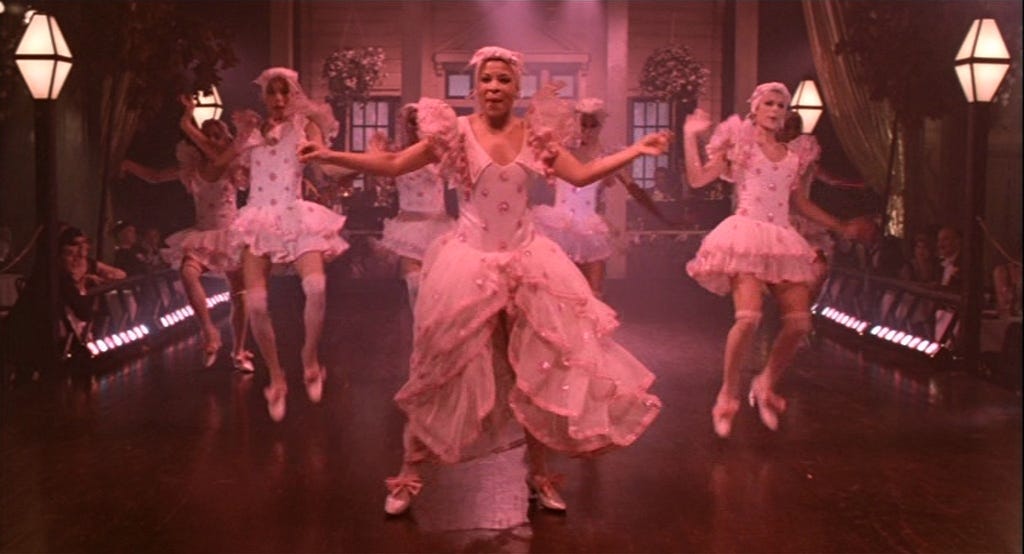
Meanwhile, Robert Evans continued to canvas for money. His payroll had expanded to include Richard Sylbert, designing a million-dollar recreation of the Cotton Club. Milena Canonero was an Italian costume designer who’d won Academy Awards for Barry Lyndon (1975) and Chariots of Fire (1981). Jerry Wexler, a white record producer who’d helped popularize R&B with his associations with Stax Records and Muscle Shoals Sound Studios, was hired as music supervisor. Dyson Lovell was recruiting dancers. All without a script. Without the Doumani brothers’ money, Evans was reportedly financing pre-production costs of $140,000 a week out of his own pocket with the liquidation of his stock in Paramount. The search for investors led him into the world of Karen Greenberger, alias Elaine Jacobs. It hasn’t been documented where Evans met her or under what circumstances, though it has been suggested that her access to cocaine and Evans’ drug use made her his dealer. Like many drug traffickers, Greenberger knew people in show business. These included Roy Radin, who’d made a good deal of money producing vaudeville revivals and benefits for policeman’s unions, mostly in the Midwest.
In a meeting at Evans’ mansion in Beverly Hills that ran nonstop from Friday to Tuesday, the producer worked out a financing scheme that would utilize Radin’s banking connections in San Juan to set up a company in Puerto Rico for the purpose of financing not only The Cotton Club, but two more Evans productions, an adaptation of Mario Puzo’s novel The Sicilian and the sequel to Chinatown, to be titled The Two Jakes. This would be the foundation of Evans’ film library, with Evans and Radin splitting 45% ownership and their banker in San Juan the remaining 10%. Their $35 million loan proposal advanced further than a pipe dream, but once again, Evans bristled at the controls his business partner was putting on him. In April 1982, Karen Greenberger, who was in line for a finder’s fee, resurfaced to demand 10% of Radin’s 45% of the company. She accused Radin of having something to do with the theft of $225,000 in cash and $800,000 in cocaine from a safe in the back of her garage in Sherman Oaks. Radin denied any involvement, but took the accusation seriously enough to fly to Los Angeles to sort everything with Greenberger out. He was never heard from again. A month later, a beekeeper hiking atop the canyons near the town of Gorman discovered what detectives concluded were Radin’s remains. He’d died from a shotgun blast to the head. Evans was questioned by detectives, who concluded the producer had no role in Radin’s death. (In 1991, Karen Greenberger was convicted of the second-degree murder and kidnapping of Roy Radin. Two hitmen she’d conspired with received first-degree murder and kidnapping convictions and another a second-degree conviction, all sentenced to life in prison without parole).
While all this skullduggery was going on, Robert Evans was trying to steer Francis Coppola into writing a coherent script, one with action, romance, and a story. He dispatched an actor named Marilyn Matthews to Coppola’s apartment at the Sherry-Netherland Hotel in New York to do what Evans wasn’t allowed: give Coppola notes. Matthews compelled upon the filmmaker what a major opportunity this would be for Black actors like herself, and that Coppola was blowing it, the Doumani brothers having only given a yellow light to bankrolling The Cotton Club. Several days later, Coppola returned to his home in Napa, California, with Evans, Matthews, Gere and Hines joining him as guests. When it came to a script, Coppola had painted the background. They started working on the foreground. Richard Gere, who’d played cornet in high school, wanted his character to be a cornet player. Coppola made that so. He took notes and incorporated many of the suggestions lobbed his way into a new draft. Whether exhausted by his near-death efforts to raise money, or aware of how out of his depth he was as a director around Francis Coppola — who could also write, and relished assembling a company of actors, rehearsing a show and filming it — Evans decided to fire himself as director of The Cotton Club. In Napa, he went about pitching his host that Coppola should direct.
Evans held at least one ace: Coppola was digging his way out of bankruptcy after the collapse of his Zoetrope Studios facility in Los Angeles. In ten days of work in Napa, Coppola had generated a new script for The Cotton Club and agreed to direct it. Evans immediately went to meet with Ed and Fred Doumani and Victor Sayyah. Initially, they were unimpressed by Coppola’s script, though it’s unclear if they’d ever read one. With Evans continuing to sell them, the financiers reached a more positive assessment after a reread the next day, but did have concerns about bankrolling a film from the director of Apocalypse Now (1979) and One From the Heart (1982), which had run up costs as if Coppola was scripting money. Evans reassured his investors he could control Coppola. In reporting for the Los Angeles Times on June 10, 1983, Deborah Caulfield announced the co-writers, director and (as Evans preferred it be known) producer of The Godfather were reuniting for The Cotton Club. Coppola told Caulfield that he’d tried to convince Evans to continue as director. Of his producer, he said, “He has the passion to get involved in a project, to say, ‘Make this better.’ That involvement is a wonderful thing to have when you’re directing.” The love affair continued with Evans declaring Coppola initially came aboard “as a friend for nothing, at a time when he was in trouble. Human relationships are a rare commodity in this industry, and his toward me is something I will long remember.”
Coppola ironed out the terms of his compensation with Evans. The writer/ director wanted $2.5 million, a piece of the gross profits, and most importantly, creative control. “I told Evans that as a writer I would do it any way my director instructed me to, but if I became the director, I would need to have total control and final cut. I was very clear on this point, because Bob Evans is a known backseat driver, a man who tends to fool with other people’s work from his office or apartment.” By June 20, Evans had verbally agreed to Coppola’s terms. They had six weeks to prepare before shooting needed to get underway in New York. Coppola kept most of Robert Evans’ hires. An exception was John Alonzo, director of photography of Chinatown. Coppola wanted Stephen H. Burum, director of photography of The Outsiders and Rumble Fish. Evans screened the latter, set for release in August, and had serious concerns about The Cotton Club turning into an art movie. They compromised with Stephen Goldblatt, who’d lit The Hunger (1983) with a great deal of nocturnal glamour. In July, Diane Lane, the leading lady of The Outsiders and Rumble Fish at eighteen years of age, flew to New York two days after wrapping Streets of Fire (1984) to test for the role of Gere’s love interest, a gangster’s moll owned by Dutch Schultz. Coppola and Evans agreed she was right for the part.
Robert Evans kept away from the production offices at Kaufman Astoria Studios in Queens, where sets were being constructed. From his townhouse on the Upper East Side, the producer focused on running Victor Sayyah, who was representing the Doumani brothers in New York. Coppola turned his attention to the script. Mickey Rourke had sent his Rumble Fish director the novel Legs, about gangster Legs Diamond. The author was William Kennedy, who’d soon win the Pulitzer Prize for his Depression-set novel Ironweed. In mid-July, Coppola invited Kennedy down from his home in Albany to consult with him on dialogue for The Cotton Club. In an account by Kennedy published in Vanity Fair magazine in November 1984, the author spent two days talking with Coppola about the story. Irked by how often the director was interrupted and how little work they were getting done, Kennedy stepped into the next room to start writing a script. Ten days later, he’d generated an unfinished 82-page document Kennedy & Coppola referred to as the Rehearsal Draft, intended to give the cast something to work from when three weeks of rehearsals commenced.
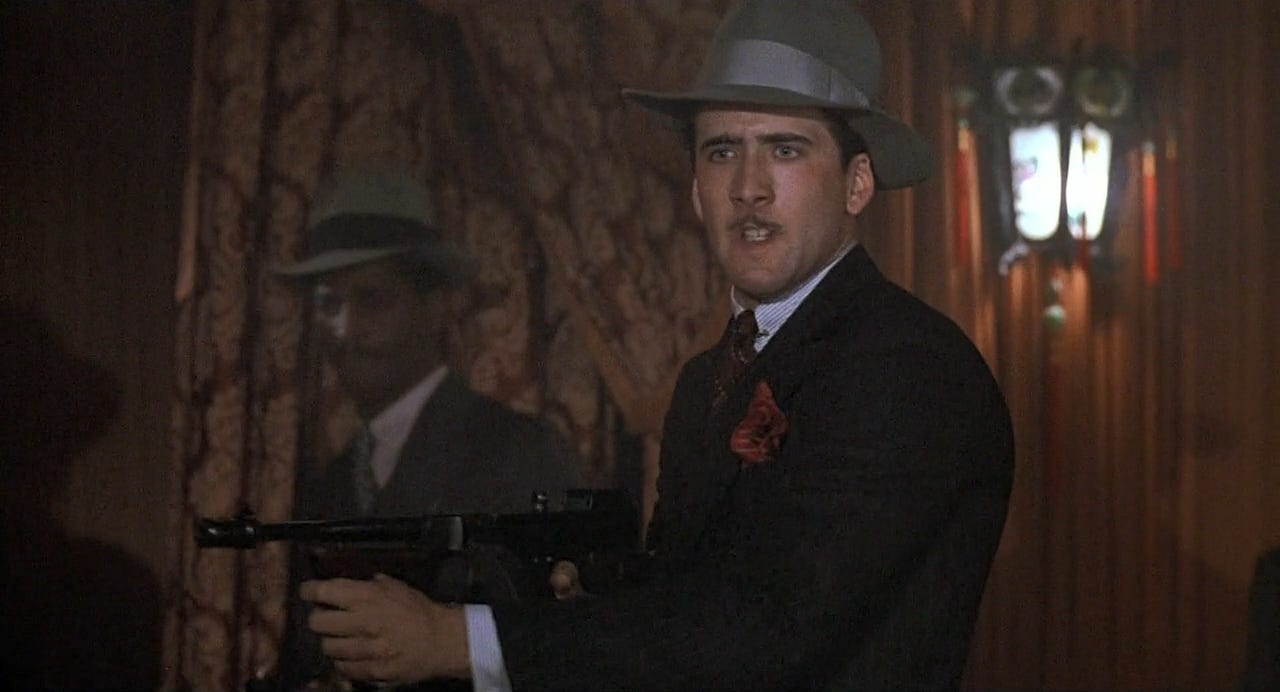
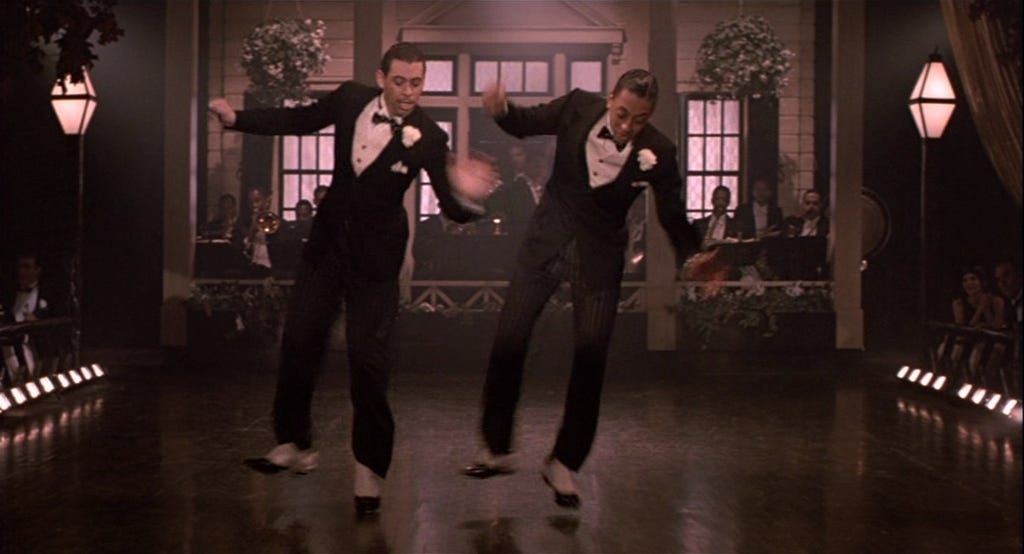
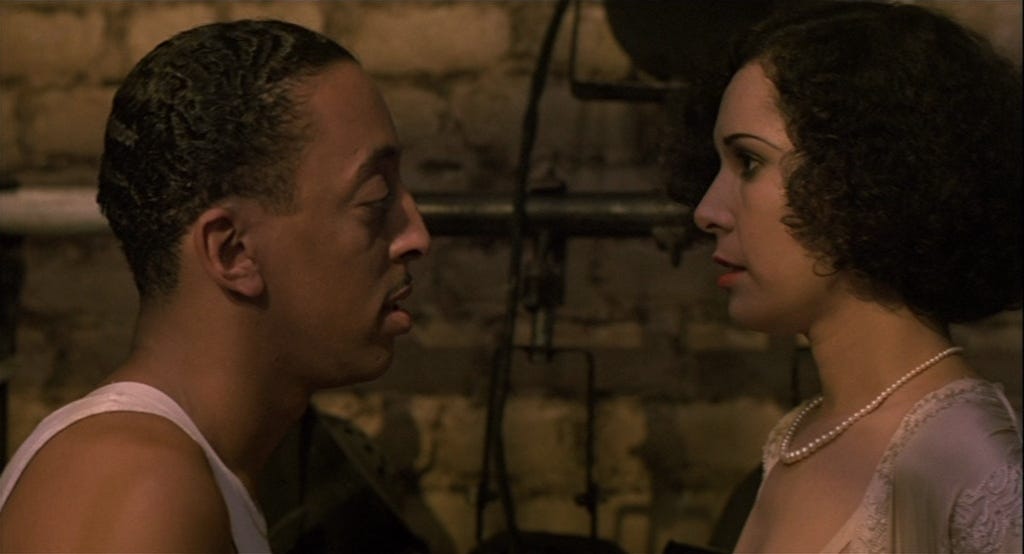
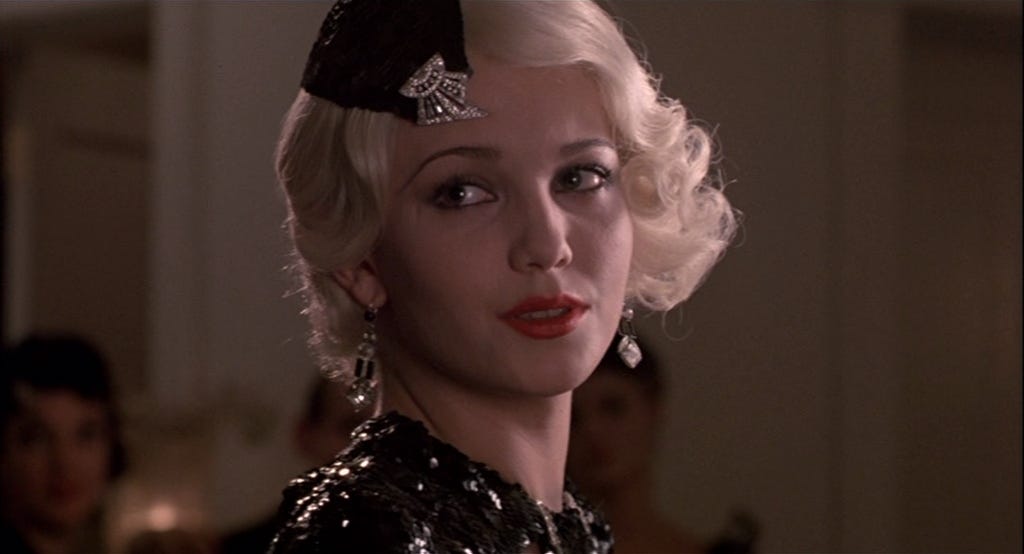
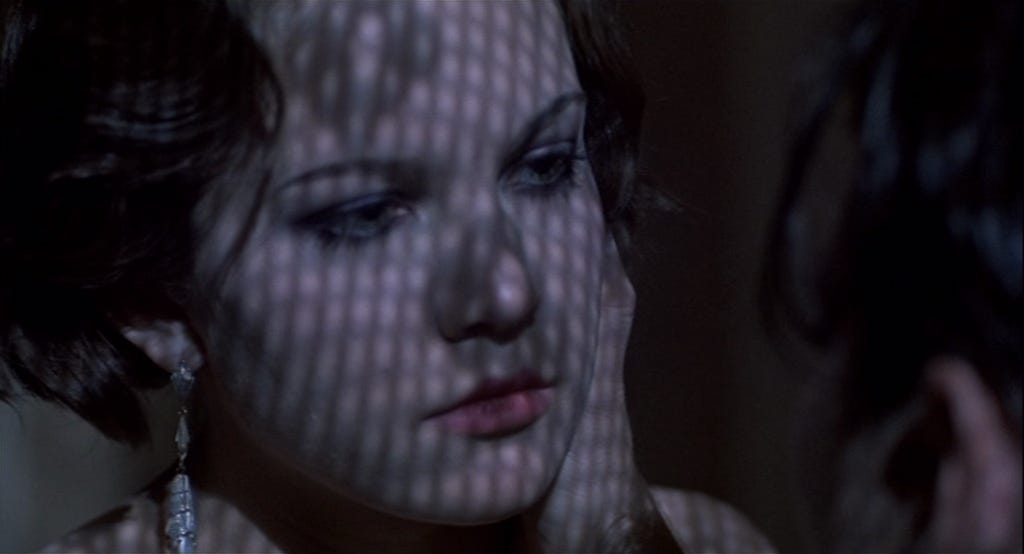
The Cotton Club told two stories. A pair of Irish American brothers (played by Richard Gere and Nicolas Cage) work for Dutch Schultz (James Remar of The Warriors and 48 HRS). One brother wants out of the gangster’s orbit while the other gets pulled deeper into it. This thread was woven into the relationship between two African American brothers (Gregory Hines and his brother Maurice Hines), tap dancers who get their break at the Cotton Club. Gregory Hines’ character, Sandman Williams, falls in love with a singer and dancer named Lila Rose Oliver (Lonette McKee) while Gere’s cornet player Dixie Dwyer is entwined in a love-hate relationship with an aspiring songstress (Diane Lane) named Vera Cicero, kept woman of Dutch Schultz. Kennedy wrote for Vanity Fair, “What we created was a gangster story about race and subjugation, about rising in the world through show business, all this pervaded by music and dancing. What we also had was six hundred people building sets, creating costumes, arranging music, rehearsing dancers, or just waiting for the script – at a cost of $250,000 a day, a throbbing condition that can put a certain stress on a writer.”
Between July 15 and (when filming commenced) August 22, Kennedy calculated he and Coppola wrote twelve scripts, including five during one nonstop 48-hour weekend. Their total was between thirty and forty drafts. “A new script, by my definition, is one with major new dynamics, and we had more of those than any writer needs.” Evans’ sales pitch to investors was that The Cotton Club was a Godfather reunion with Puzo, Coppola and Evans at the table. While Kennedy was publicly referred to as a script consultant, the Writer’s Guild of America would award screenplay credit to William Kennedy & Francis Coppola, story to Kennedy & Coppola and Mario Puzo, suggested from the pictorial history by Jim Haskins. Kennedy had a front row seat for the tempest unleashed during production of The Cotton Club. “We constantly heard, ‘This is going to cost too much.’ And every time we changed something, we’d have to change something else … We would create new scenes and throw out old ones, and in a subsequent draft, put it all back in. It was absolute chaos all the time.” Department heads finally received a script 28 days before shooting was to begin. Sylbert was stunned that six of the seven locations he’d shown Coppola in New York had been cut, while ten sets he’d designed were no longer being used.
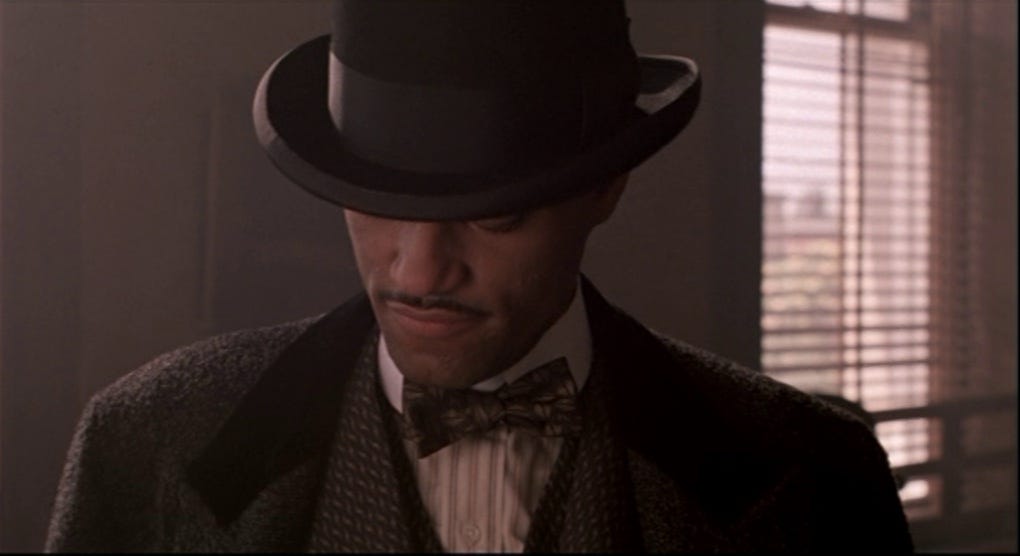
Regardless of how often he was asked, Coppola resisted giving his cast or crew answers. Sylbert stated, “Nobody knew what was going on from one minute to the next, and that can get you crazy. Once, I asked him, ‘Why do you make all this chaos?’ and he said, ‘If nobody knows what’s going on, nobody can discuss it with you.’” While Lonette McKee was game – she took advantage of the 12-hour rehearsals to build her character and make suggestions to Coppola, who respected actors and more often than not, incorporated their ideas – Richard Gere resisted. After months, he was still unhappy with the script, for starters. McKee recalled, “We didn’t know if Richard was going to stay or not. He wanted it all down on paper for him. He wanted it right there written the way he wanted it. He didn’t realize that he had to make it the way he wanted it to be.” When it came to money, Gere wasn’t the only above-the-line talent who hadn’t been paid, but when filming for The Cotton Club got underway in mid-August, the star was a no-show for the first week. Evans, who’d already agreed to pay his leading man $1.5 million, plus $125,000 for each week of shooting past October 29, bought the actor’s 10% stake of the gross profits for $1.5 million, putting the actor’s payday at $3 million. Gere reported for work.
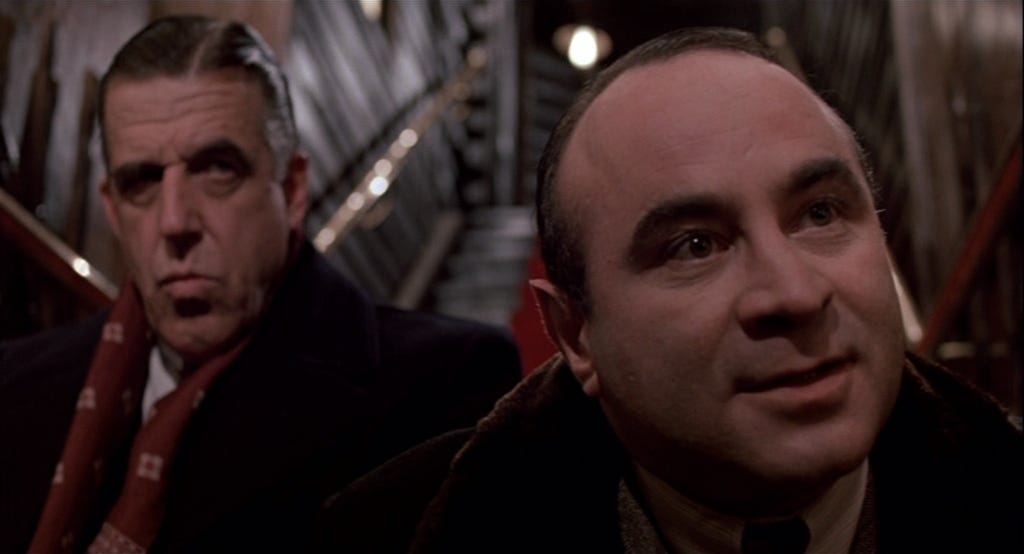
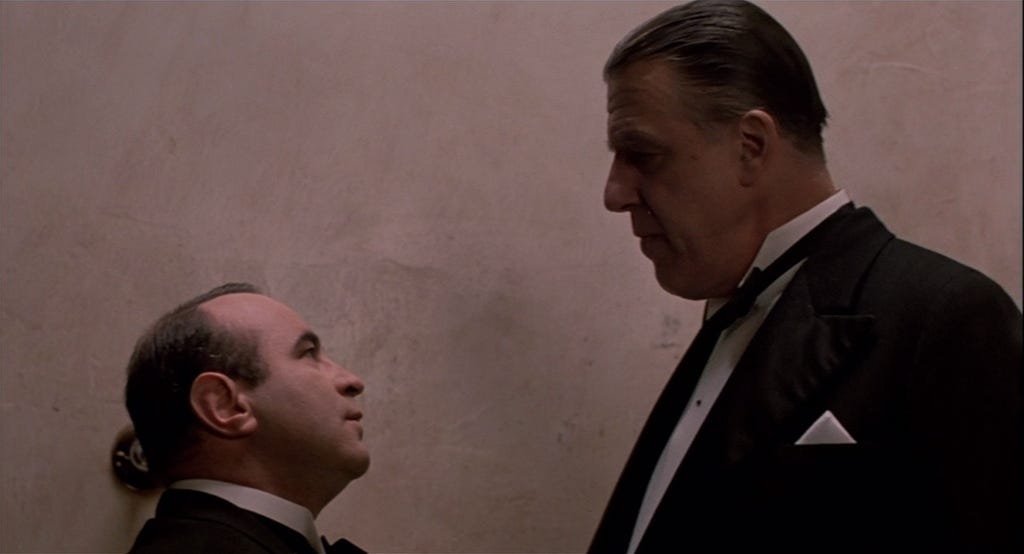
To serve as his agent on the set, Ed Doumani employed a producer of Lebanese B-movies named Sylvio Tabet, paying him $200,000 and a credit as associate producer (which would be shared by Coppola’s producing partner Fred Roos). Tabet must have felt like Alice in Wonderland. The cast seldom knew when they’d be called to the set, or in some cases, what Coppola expected. Bob Hoskins, cast as Owney Madden, recalled of his director, “He would just toss things out in the air … I could never figure Francis out at all. I just did what he told me. It’s into Aladdin’s cave with him.” In five weeks, Coppola had wrapped most of the location work around New York and was due to start the dance sequences at Kaufman Astoria Studios. The director was unhappy with the choreography Dyson Lovell had worked out, concluding that Lovell was either unwilling or unable to deliver the authenticity Coppola had asked for. He’d later clarify, “I thought it looked more like the Ice Follies than anything else.” Late Sunday night, Coppola dismissed Lovell and his entire team. Furthermore, Coppola decided he no longer required the services of Jerry Wexler. On William Kennedy’s recommendation, the director contacted Bob Wilber, an American clarinetist and bandleader, to take over for Wexler as music coordinator. Booked to a five day a week gig playing clarinet in Bern, Switzerland, Wilber was flown to New York for two days, flown back to London on the Concorde, boarded a connecting flight to Geneva and finally hopped a train to Bern, where his gig was across the street from the train station and according to Wilber, he often walked right onto stage to play after traveling halfway around the world.
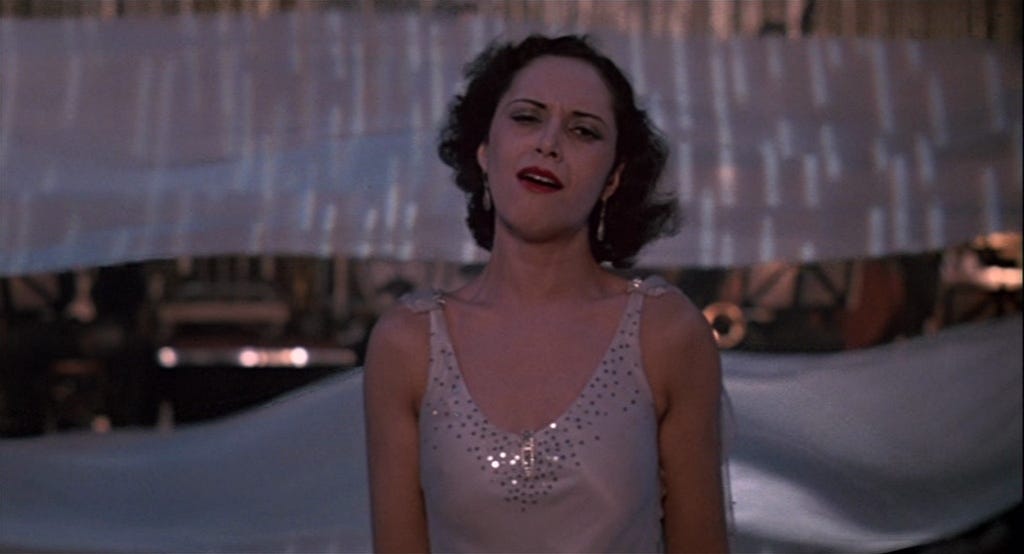
Back in the States, Ed Doumani was running extremely low on cash. He’d recount, “I’d go to banks in New York and they’d say, ‘Why not go to the banks in Las Vegas that know you?’ I’d go to the banks in Las Vegas and they’d say, ‘Why not go to the banks in New York that handle motion pictures?’” By the end of the sixth week, Coppola had yet to be paid. Doumani wanted to renegotiate the director’s contract, enforcing penalties if Coppola ran over schedule, and reducing the director’s share of the gross profits. On Monday morning, rather than have his driver take him to the set, Coppola asked to go to the airport, where he boarded the Concorde for London. “I left the picture, and began to see what other work I could get, having wasted all that time. I am very much under the gun to pay back millions of dollars; I cannot afford to lose that much time. They knew my situation.” Over the next 48 hours, Doumani backed off his penalty clause. As Evans had done with Gere, Doumani offered to buy some of Coppola’s stake in the gross profits and start paying him his $2.5 million fee. When Coppola returned to the set on Wednesday morning, though, he discovered Evans and Doumani hadn’t made payroll, and in accordance with union regulations, cast and crew had stopped working. By 11 AM, Doumani had arranged for cash to be delivered to the studio by armored car. Work continued.
By this time, with Robert Evans’ once austere $17 million production budget climbing past $40 million, Ed Doumani concluded that Sylvio Tabet had little to no influence on Coppola. He asked a man from Las Vegas he’d known for fifteen years for help. A native of Spanish Harlem, Joey Cusumano was alleged to have ties to Anthony Spilotro, who the FBI believed to be running Vegas for the mob in the early eighties. The government had spent at least ten years of taxpayer money investigating Cusumano and found nothing to indict him with. (This would change in 1987, when Cusumano was sentenced to eighteen months in federal prison on conspiracy to embezzle $315,000 from the life insurance fund of Nevada’s biggest labor union, the Culinary Union, with the brotherhood’s former chief as his partner. The activity had occurred between 1980 and 1981). It’s impossible to ignore the similarities between Joey Cusumano and the fictitious Chili Palmer, loan shark turned movie producer of two Elmore Leonard novels, Get Shorty and Be Cool, both adapted to film with John Travolta playing Chili. Cusumano arrived on the set of The Cotton Club in mid-October 1983, eight weeks into filming. In contrast to a salesman like Evans, Cusumano was quiet. He mostly stood in a corner and observed. “Before I open my mouth, I want to know something. My father said, ‘Fishes only get caught when they open their mouth.’”
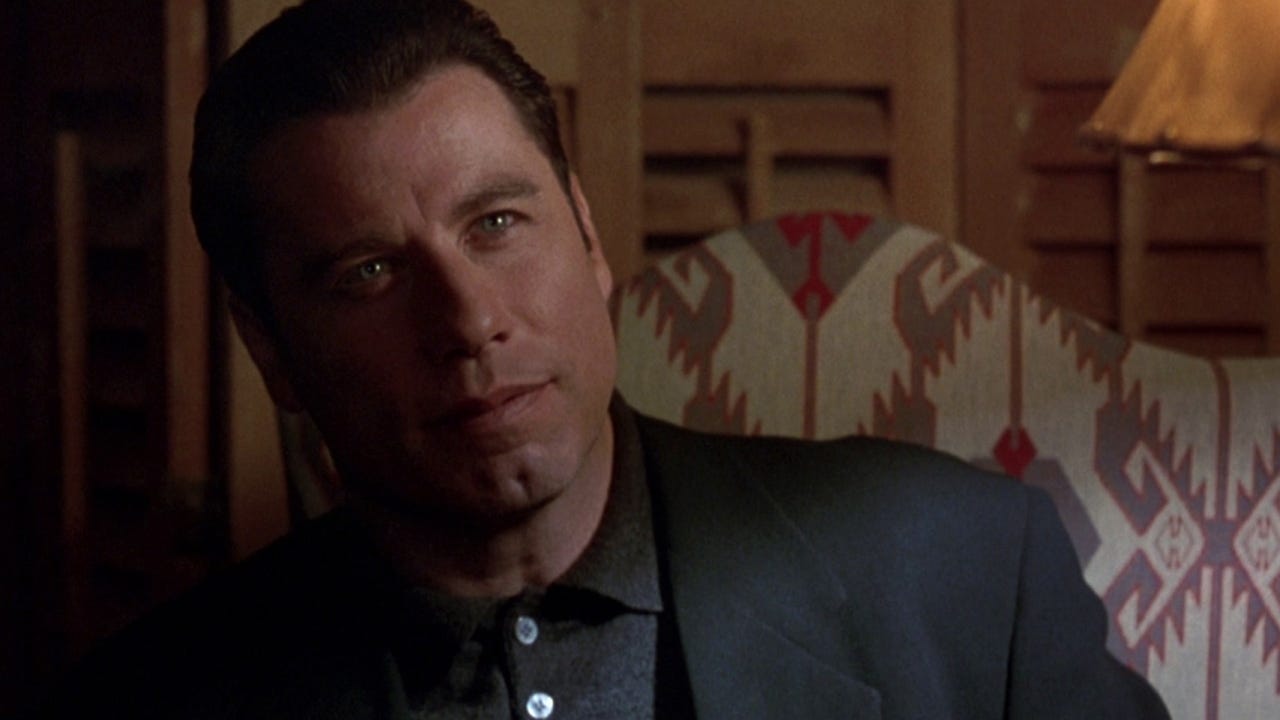
Arriving for his third week at Kaufman Astoria Studios, Joey Cusumano was greeted by a chair with his name taped to the back. The chair had been placed right next to Coppola’s. “Francis said, ‘I’m glad you’re sticking around.’ I guess he figured that anybody crazy enough to stand there for fifteen hours was trying to help him.” Coppola began inviting Cusumano to view dailies. The organized crime figure turned movie producer reported back to Ed Doumani that it was necessary for the financier and his business associates to do as Evans had and stay away from the set. “Francis doesn’t want to hear about budgets. He just wants to create. I told Doumani, ‘I don’t want anybody near Francis,’ and he said, ‘Do what you have to do.’” Cusumano started arriving to work by 6 AM to make sure the people who ran the set – the assistant directors – were prepped. Several weeks later, when Bob Hoskins was summoned back to New York to participate in reshoots and hadn’t responded, Cusumano showed up in London to invite Hoskins and his wife to dinner. Interviewed by the Los Angeles Times for what became his star-making role in Mona Lisa (1986), Hoskins maintained Cusumano hadn’t come all that way to threaten him. He didn’t have to. “I knew who he represented and why he was there.” Hoskins packed his bags for New York.
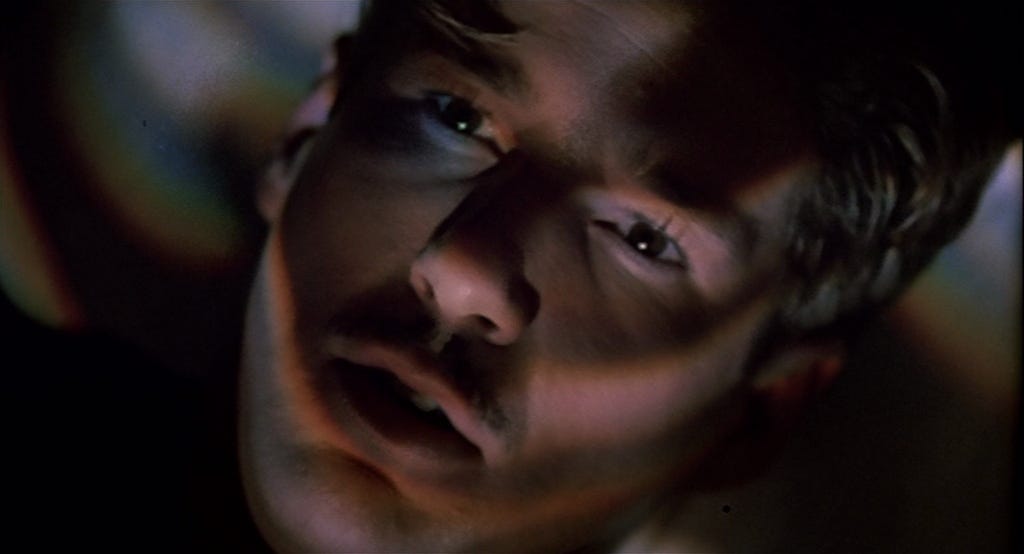
Billed as “Joseph Cusumano,” the man from Vegas would share a credit for line producer on The Cotton Club with Barrie M. Osborne. When he was indicted, one of Cusumano’s good character references was written by Francis Coppola. Cusumano finally imposed on his director a deadline: December 23. Wrapping the essential scenes by this date would spare the production the cost of paying holiday overtime. Coppola stopped reworking the script and committed to getting the rest of the major scenes in the can in three weeks. To find the money for payroll, Evans traded away his control of the film’s advertising campaign to Orion Pictures in exchange for more money. After four long years, Robert Evans, the solely credited producer of The Cotton Club, was for all practical purposes off the picture. Coppola finished shooting under the deadline Cusumano had given him, leaving the line producer with $1.5 million for two weeks of additional shooting after the holidays. A few days before filming resumed, Coppola screened a 140-minute work print of their film to cast and crew. Cusumano recalled, “I said, ‘I’m the new guy on the block, but that’s wonderful.’”
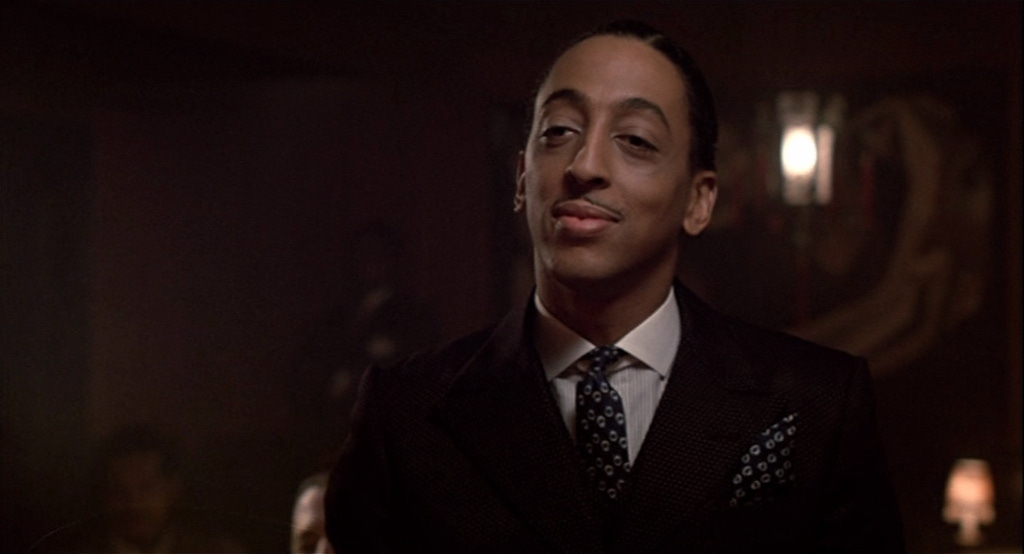
William Kennedy recounted the reaction to The Cotton Club as it was finally screened in its entirety. “Then came our cut of the film: stunning, but draggy. At the second, much tighter cut, cheers went up. Coppola went west and showed the film to George Lucas (who liked it). In New York he showed it to the Doumanis and the executives at Orion Pictures, the studio distributing the film. Coppola had cut it two hours flat for the Orion screening, and when it ended, the Orion moguls and the Doumanis smiled, nodded, and walked away. Coppola, confused, furious, took this as high ungraciousness.” Kennedy continued, “A meeting followed immediately in the Orion boardroom, and the moguls by then had the chance to construct a response to this nonpareil artifact: Too much tap dancing. It goes too fast. Needs some air. Love Gere, love Diane Lane. Let’s have more love scenes. Where’s these scenes I loved in the rushes? What the hell are you gonna do about that crazy ending?” According to Kennedy, film editor Barry Malkin (who’d cut The Rain People, The Godfather, Part II, and Rumble Fish, arguably Coppola’s three more unconventional pictures), Malkin’s assistant Bob Lovett, Kennedy and Coppola spent the next day putting 11 minutes back in the film. The second Orion screening went better, an “up” reaction. The theatrical version would clock in at 128 minutes.
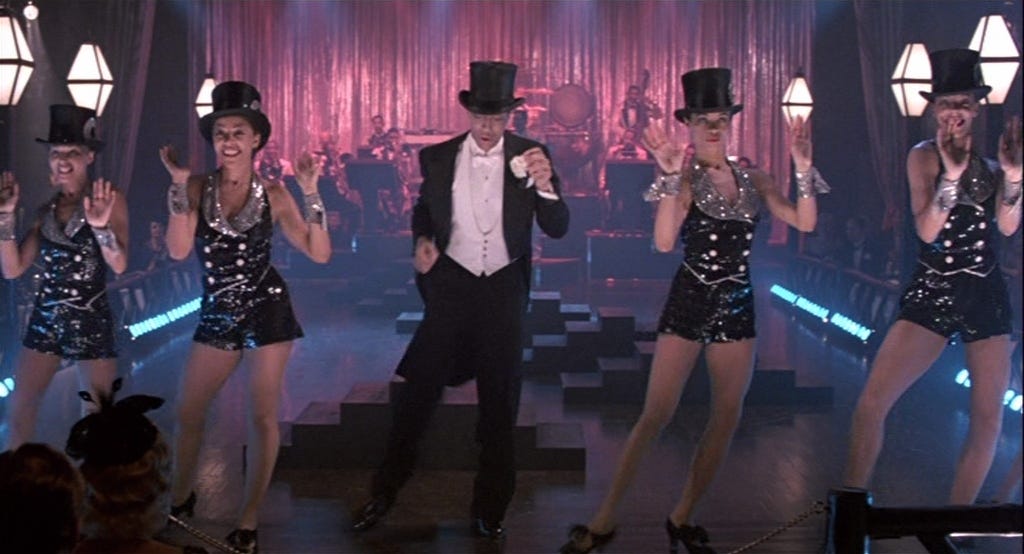
The Cotton Club opened December 14, 1984 in 808 theaters in the U.S. While hardly universal, praise from several major critics was ecstatic. Gene Siskel’s review in the Chicago Tribune began: “The leading star is a stiff, the first hour is a jumble of song and gunfire, and yet by its end, The Cotton Club turns into a surprisingly emotional and thoughtful commentary on racism and class struggle in America.” He closed his rave review with, “At just over two hours, the film almost plays like highlights from a more epic version of The Cotton Club. So here’s hoping that a longer version of this occasionally very fine film is released sometime in the future.” Siskel gave the film 3 stars out of 4. Posting for the Chicago Sun-Times, Roger Ebert opened his review with more excitement. “After all the rumors, all the negative publicity, all the stories of fights on the set and backstage intrigue and imminent bankruptcy, Francis Ford Coppola’s The Cotton Club is, quite simply, a wonderful movie. It has the confidence and momentum of a movie where every shot was premeditated – and even if we know that wasn’t the case, and this was one of the most troubled productions in recent movie history, what difference does that make when the result is so entertaining?” Ebert’s score: 4 stars out of 4. On their lists of the year’s ten best films, Siskel ranked The Cotton Club #3, while Ebert put it at #5.
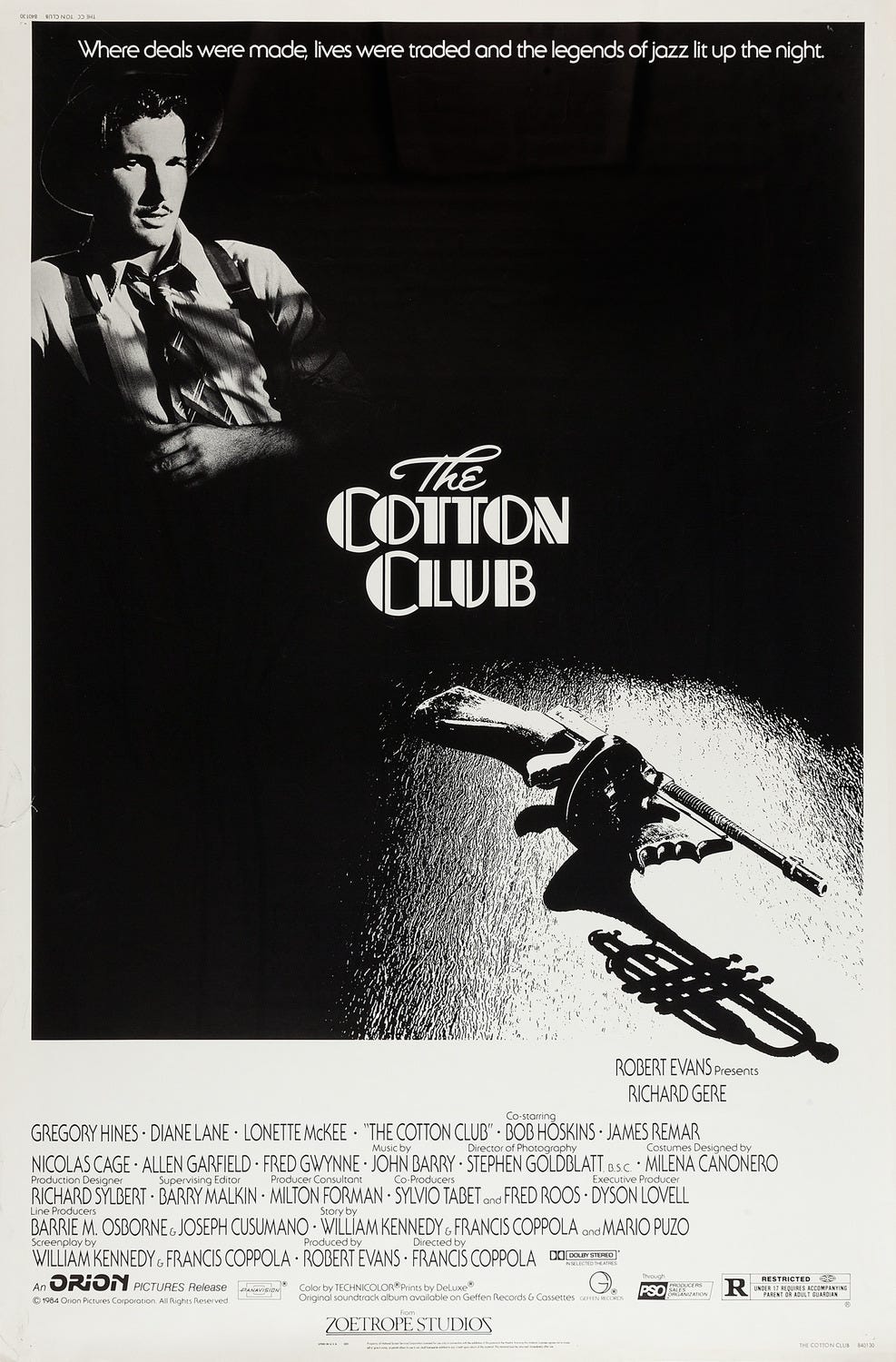
In LA Weekly, Michael Ventura added, “I’ll have to settle for piling up hyperboles, but what I really want to do is take you by the hand and say, ‘Hey! Let’s go! You gotta see this movie!’ For The Cotton Club is Coppola’s masterpiece — his most stylish, most multi-layered, happiest, wildest, most daring and, yes, even most profound film. A better picture than The Godfather because it sees the gangster mystique as part of a wider vision. It’s a better musical than anything we’ve had since Bandwagon and Singin’ in the Rain, and has not a cast ut a gallery of characters, each distinctive, each placed perfectly within the wider context, each played to the hilt in an overall blend of acting tones that would, by itself, have been a major directorial achievement.” The Cotton Club had a lot going for it commercially. It opened the same weekend as three science fiction films — Dune, Starman, Runaway — with another, 2010, in its second weekend of release and yet another, the sleeper hit of the year in The Terminator, doing business in its eighth weekend in release. Coppola hoped his picture was so unique, so unlike anything in theaters, including Amadeus, that audiences would line up. Joey Cusumano tallied the final production budget at $47 million. Adjusted for inflation, Cleopatra (1963) was the most expensive motion picture ever made. The Cotton Club wasn’t far behind.
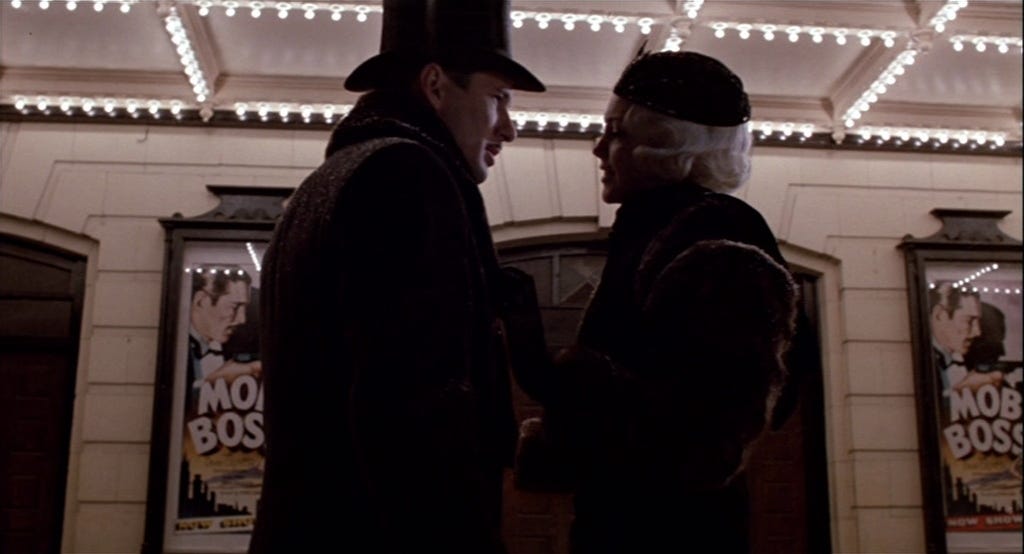
As it turned out, audiences were ready for something fresh. They propelled Eddie Murphy’s first starring vehicle Beverly Hills Cop to the #1 spot at the box office for fourteen of its first fifteen weekends in release. The Cotton Club barely spent six weekends among the top ten. The returns were dismal, and in spite of the avid critical notices, Coppola felt his film “ … came out to a qualified reaction and that was the end of it.” The director had begun archiving the different cuts of his films on Betamax videocassette, and many years later, watching the cut of The Cotton Club that he’d shared with cast and crew, Coppola saw something that general audiences had not: a movie that moved faster and played better. Interviewed by Robert Koehler of DGA Quarterly for the Fall 2019 issue, Coppola stated, “Final cut is a legal term, but then there’s the reality, especially like here, where everybody was battling each other. Barry always felt that I had been too appeasing to the producers, but in the spirit of wanting to make the best possible movie and also keep everyone happy, I was willing to experiment and see if we could trim things here and there. But what happened is that we went down a road that led to cutting 40 minutes out of the movie.”
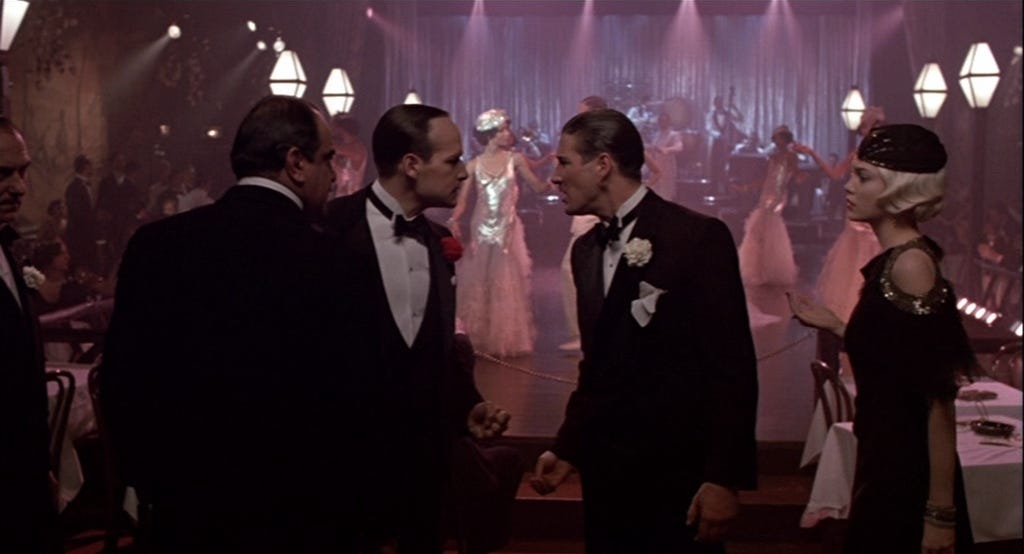
In December 2012, MGM, which had inherited the film rights to The Cotton Club from Orion, allowed Coppola access to the negative, and using the Betamax tape as a reference, his researchers went in search of the missing footage. Stephen Goldblatt pointed them in the right direction, and researchers located nearly all of the negatives, dailies and sound at Deluxe Archive Solutions in Seattle. Barry Malkin had logged meticulous records which enabled Coppola’s team to assemble a restored cut of The Cotton Club. Digital restoration began in early 2014 at Technicolor. Coppola continued, “Technicolor is the hero of this story. Without them, money, and Steve’s talent – plus, the big advances in digital technology in the past five years – we wouldn’t have been able to do this.” Coppola had to obtain musical clearances for the songs he’d cut from the theatrical version. Some pieces of the restoration had to be re-recorded, including a quartet backing Lonette McKee in her performance of “Stormy Monday,” which was now back in the picture. Gregory Hines had passed away in 2003, so his son Zachary dubbed some of Sandman’s dialogue.
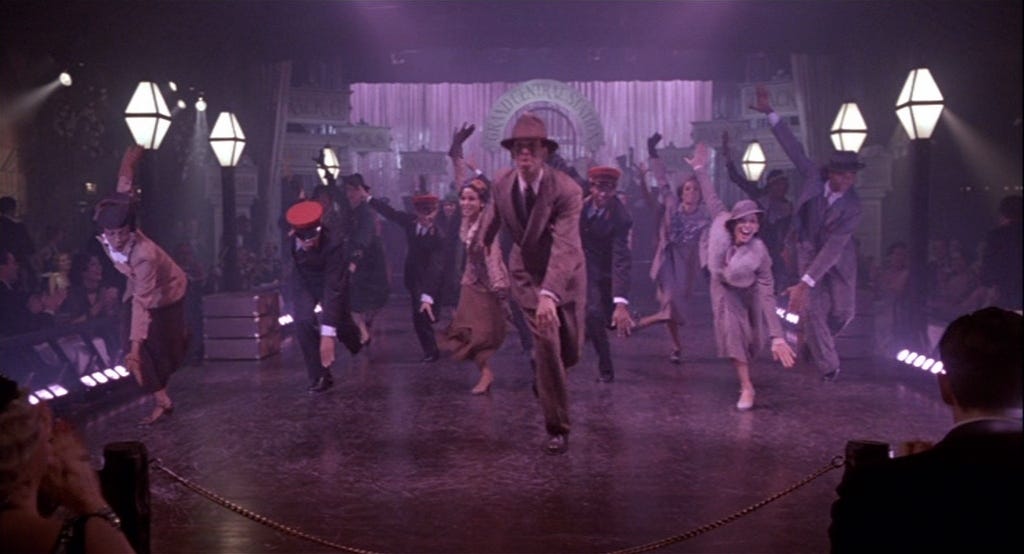
In 2017, The Cotton Club: Encore screened at the Telluride Film Festival. This new version restored 24 minutes of footage while trimming 13 minutes from the theatrical cut for a new running time of 139 minutes. Lionsgate distributed this version theatrically in 2019, followed by a release on DVD and BluRay. Most of the restored footage consists of performances by the Black cast members that had been lost. In addition to McKee belting “Stormy Weather,” Smokey Stevens and Jackée Harry perform a ribald comedy routine. Robert Evans would pass away in 2019 and perhaps due to health, was not present when The Cotton Club: Encore played at Telluride, nor did the producer surface to reminisce to journalists about his dream movie, one of the most contentious ever produced. This left Coppola to speak, which he did, for an article by Anne Thompson with IndieWire published September 1, 2017. “Bob Evans made a career of his book and telling stories about The Godfather and would always leave out some important facts. You couldn’t win with him and his behavior. He’s not a man without talent, but he was mercurial and he had stuff going on in his life that kept depleting him. I have had enough of him in my life. He’s not a guy who tells the truth.”
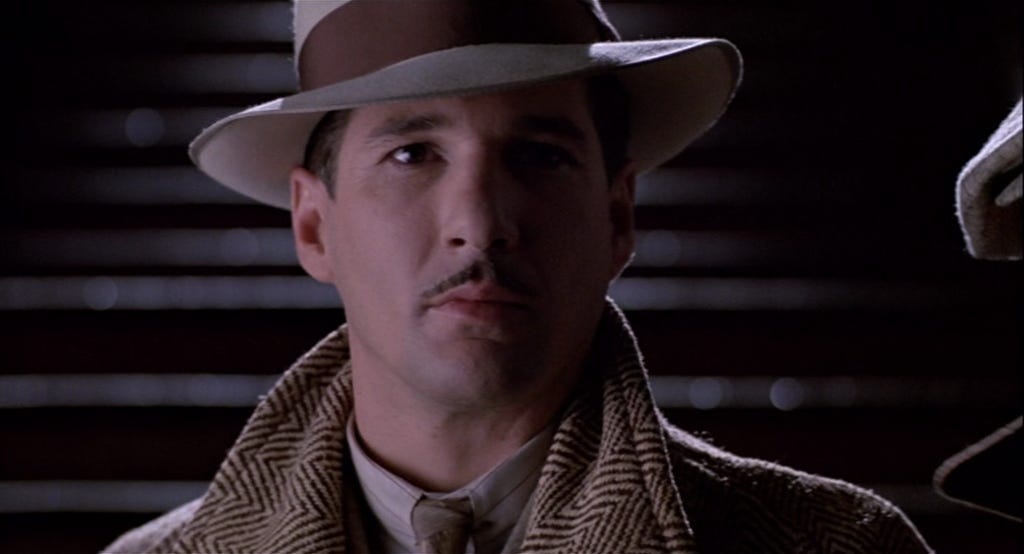
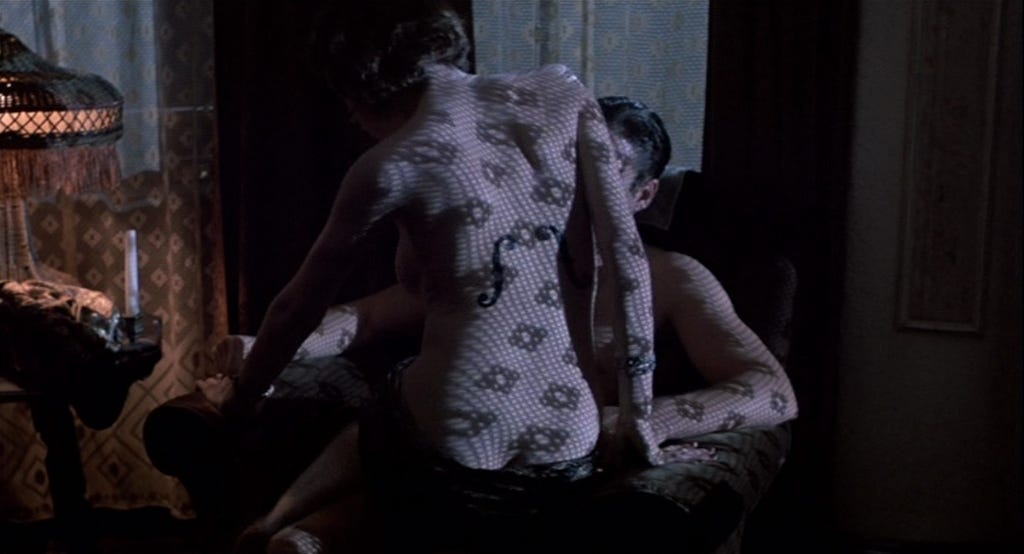
Like each of the pictures Francis Coppola has recut – Apocalypse Now, One From the Heart, The Outsiders, The Cotton Club, The Godfather, Part III – the best and perhaps only way to watch The Cotton Club is its newer, longer encore. The biggest flaw with either version is how fast paced it is. Coppola badly needed to downshift into a lower gear, peeking behind the scenes of a show as opposed to replicating the often superficial experience of sitting in the front row of one, with dancers leaping in front of us and powerful figures whispering in the tables behind us, and live accompaniment from a band. Encore does give the viewer a chance to catch our breath and be seduced by the spirit of the Roaring Twenties. Lonette McKee, who was so often cast as women chiseled of marble, is the main beneficiary of more screen time. Her “Stormy Weather” number is the most memorable performance in the movie, while her character is complex, sensual and thoroughly modern. Both McKee and Diane Lane bring superb characters, depicting them with so much ambition, sexual charisma and confidence that the men played by Gregory Hines and Richard Gere, and we the viewer as well, can’t help but wilt under their radiance. Coppola rarely populated his pictures with compelling women, but whether his co-writer William Kennedy or his actors were what made a difference here, The Cotton Club has the strongest female characters of any Coppola film. The filmmaker is more confident staging theater punctuated by bursts of violence — exciting groundwork for a big movie – but gets his hands dirty digging through sexual liberation in the Jazz Age.
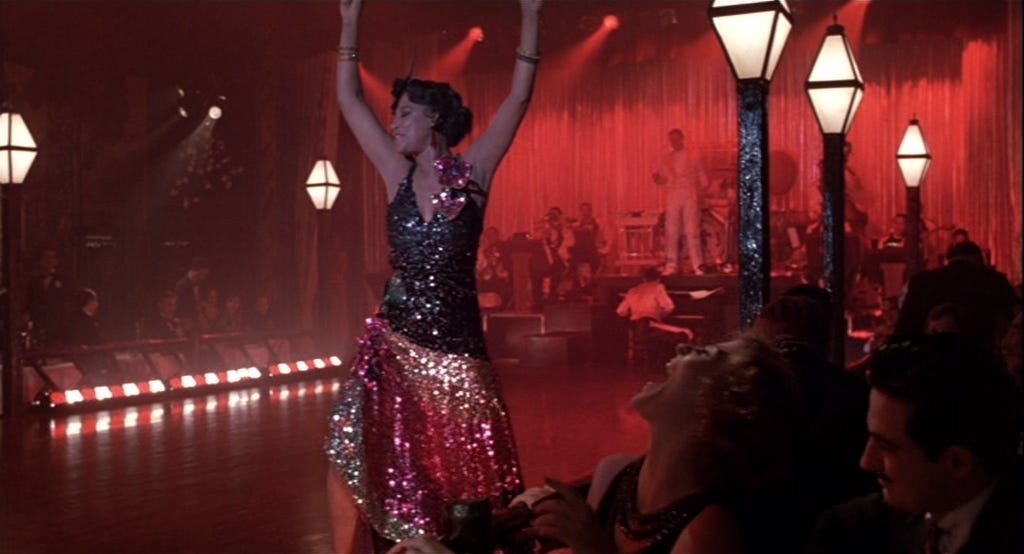
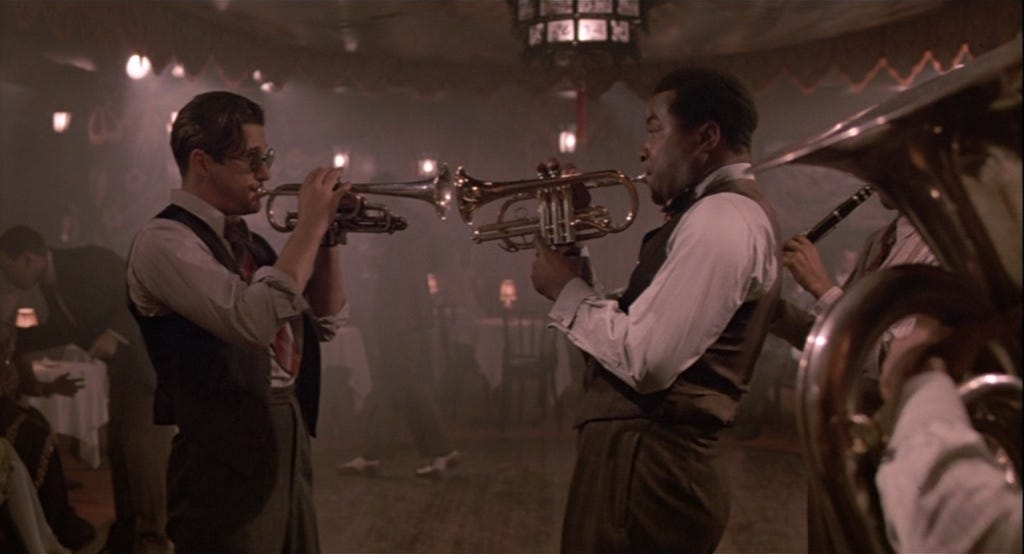
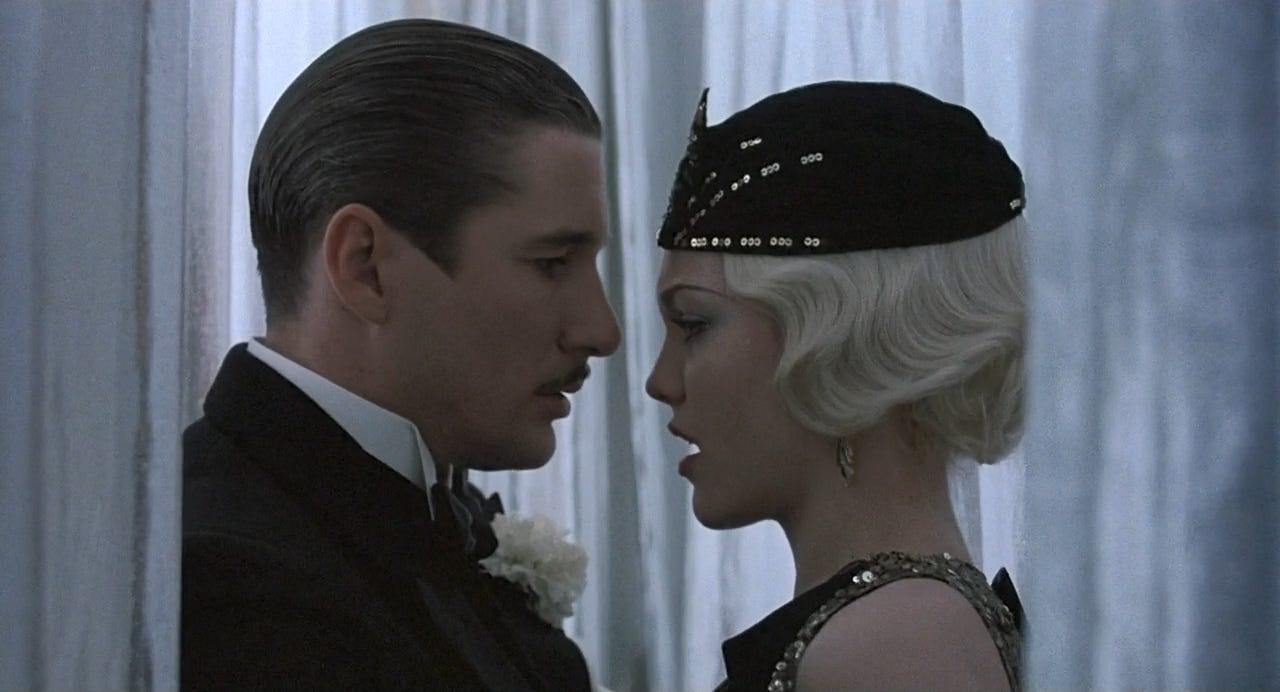
As far as race, blink and it’s possible to pretend that Gregory & Maurice Hines and McKee are the stars of Encore, with the power struggle taking place among white men for control of a Black neighborhood serving as a powder keg they’re dancing on. Of Richard Gere it can be said that he has strong chemistry with Diane Lane in their first of three pictures together, the thriller Unfaithful (2002) and romance Nights In Rodanthe (2009) to follow. Gere and Lane never had bad chemistry with anyone, though. As if he didn’t trust Evans or Coppola or either, Gere tries really hard to be a cool white guy in The Cotton Club, and all the rough edges that made his derelict in An Officer and a Gentleman so compelling are wallpapered over here. He’s protecting his image with this show, not digging as deep as his collaborators. As easy as it is to ignore Gere, Gregory Hines is as charismatic in the tap dancing sequences. The best relationship is the one between the club owners played by Bob Hoskins and Fred Gwynne, who are wonderfully cast. Coppola keeps us guessing which character is more dangerous – the one who’d play Super Mario or the one who played Herman Munster – or what their relationship is, and in not spelling it all out, the director keeps the tension humming. The soundtrack leans heavily into Duke Ellington, crackling off with “The Mooche,” which is to Prohibition gangster movies what “Have You Seen the Rain” by Creedence Clearwater Revival is to films set in the sixties – legally required – and while the commercial failure of The Cotton Club didn’t popularize Ellington, Kennedy & Coppola deserve credit for the attempt, even including the bandleader as a minor character.
Video rental category: Musical Drama
Special interest: Candy Cinema
Unless otherwise noted, much of the production history was sourced from Michael Daly’s superlative reporting in “The Cotton Club: A True Tale of Hollywood,” published in New York Magazine on May 7, 1984.
Welcome! I just watched The Cotton Club or rewatched for first time in a long. I work in the film industry. Here I write about creative decision making in film development and production. I subbed you