


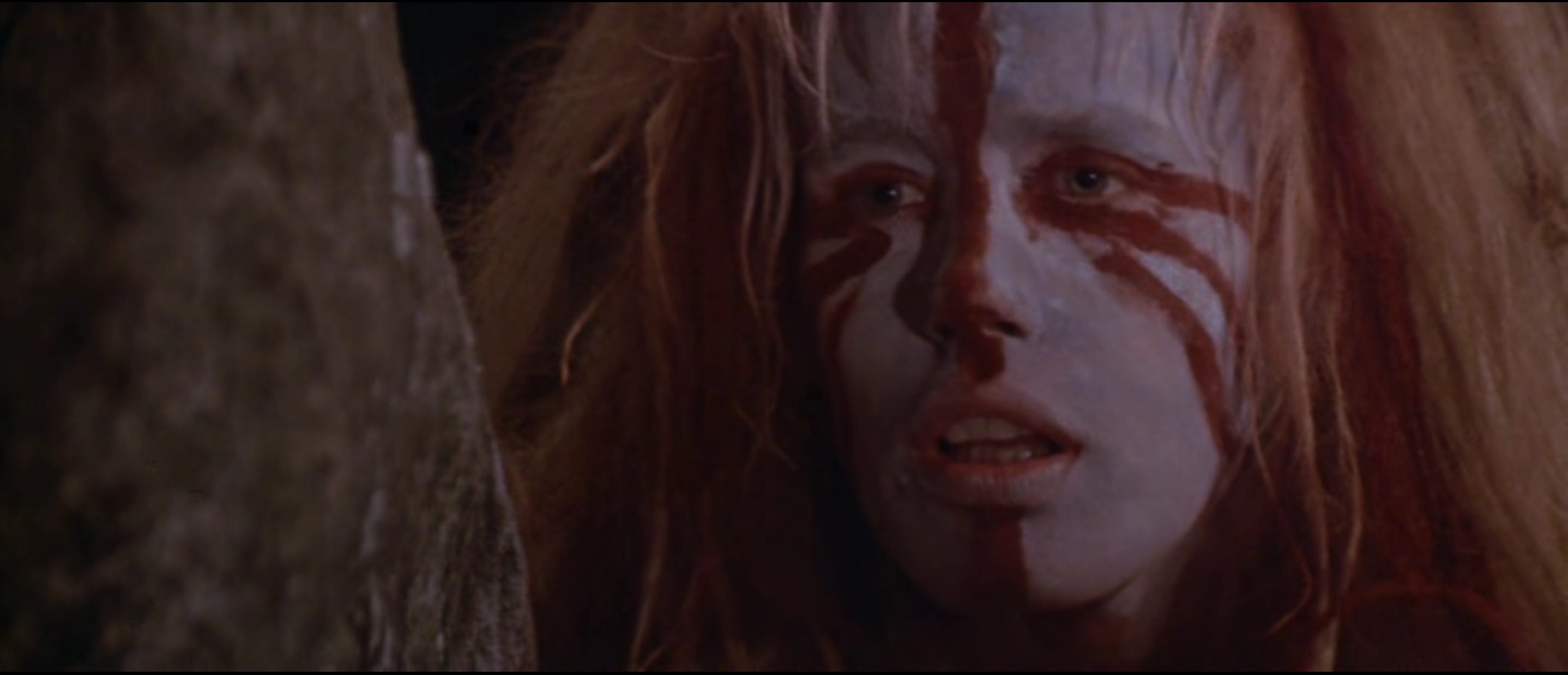
THE CLAN OF THE CAVE BEAR (1986) is like a restaurant that opens without tables. It begs the question whether the minds behind this were smarter than their diners, or dumber. Based on the first of what would become a series of six hugely successful novels published in the 1980s and ‘90s, this tale of prehistoric feminism landed a talented cast and features some gorgeous locations and visual sheen, but comes off as a muddle. At its lower points, it’s a puzzling bore, jaunting along without drama, or creative decisions that seem very well thought out.
Jean Auel grew up on the north side of Chicago to parents who’d been raised on farms in northern Michigan. Intelligent and hard working, they didn’t stress education, and though Auel was a bookworm who graduated high school able to type and do shorthand, her family expected her to get married, which she did at 18. Auel’s husband was in the U.S. Air Force stationed in New Mexico, and when he was discharged in 1956, the couple moved west, with one child and the second of five on the way. Auel’s husband would go to work at Tektronix, a manufacturer of electronic testing and measuring equipment in Eugene, Oregon. Seeking intellectual stimulation while raising their children, Auel began to shift her reading from fiction to subjects like psychology, history and philosophy. By 1964, she discovered The Feminine Mystique by Betty Friedan and decided that it was her turn to get an education. Working at Tektronix–where she started as a keypunch operator–Auel applied for a graduate program at the University of Portland that enabled her and her husband to work toward master’s degrees in business administration. In 1976, Auel was a credit manager at Tektronix, but six months after earning her MBA, she quit.
While searching for a job, Auel had an idea for a story about a girl living in a primitive culture. She stayed up all night drafting a ten-page short story. With no inkling of how such a culture might function, Auel turned to the Portland Public Library. Ralph Solecki’s book Shanidar: The Humanity of Neanderthal Man made an impact on her, particularly the anthropologist’s discovery of a fossil belonging to a male Neanderthal in northern Iraq had both arms amputated with no sign of trauma or infection. The question was, how? Research enabled Auel to expand her manuscript to 450,000 words, including an outline for an entire series. As her dramatization of life 35,000 years ago began to take shape on the page, Auel realized she didn’t really know how to write, turning to fiction and to books on the craft of writing to learn. Submitting her manuscript to four major publishing houses in New York, Auel was rejected by each. The author had met a New York literary agent at the Willamette Writers Conference named Jean Naggar, and when Naggar agreed to read Auel’s manuscript, she enthusiastically agreed to represent Auel. Submitting the manuscript for auction, Naggar found a buyer in Carole Baron, an editor at Crown Publishers. The Clan of the Cave Bear was taken off the market with what was then reported to be the largest offer to a debut novelist: $130,000.
The Clan of the Cave Bear debuted in hardcover print in September 1980. This was only two months after an exotic teenage love story titled The Blue Lagoon starring Brooke Shields hit theaters on the Fourth of July weekend and became a blockbuster, selling more tickets than Caddyshack or The Shining that summer. Though embedded in anthropology as opposed to young love, The Clan of the Cave Bear was divested of civilization, and like The Blue Lagoon, centered on a teenager seeking empowerment, as well as answers to questions about the human reproductive cycle. For teenage girls banned from R-rated movies in the eighties, The Clan of the Cave Bear and its sequel The Valley of the Horses (published in April 1982) were passed from locker to locker as viable alternatives to sex education. Hollywood was due to come calling. Gerald Isenberg and his associate Stan Rogow–among the producers of Fame when it jumped from the big screen to syndicated television in 1982–optioned film rights to The Clan of the Cave Bear and The Valley of the Horses. In the era of the TV mini-series–in which The Winds of War and The Thorn Birds would draw large audiences over multiple nights in February and March 1983–Isenberg and Rogow saw Jean Auel’s books as a television event.
To adapt a teleplay, the producers commissioned Clair Noto, author of the Marvel Comics book Red Sonja. Noto had written what would forever be considered one of the best spec scripts never made, a science fiction titled The Tourist, which chronicled an exiled extraterrestrial passing itself off in New York as a female business executive (production got as far as Brian Gibson being lined up to direct for Universal Pictures and H.R. Giger sketching aliens, but Noto’s unwieldy script would never be tamed, and Gibson and Giger would move on to Poltergeist II: The Other Side). In early 1984, John Sayles–who as a screenwriter-for-hire had penned a number of now classic genre pictures, like The Lady In Red (1979), Alligator (1980) and The Howling (1981)--was hired to adapt both of Auel’s novels for television in what would become his career model, using writing commissions to fund his own films as a writer/ director, his next dealing with an extraterrestrial passing for a man visiting Harlem, The Brother From Another Planet (1984). Lewis Teague, director of The Lady In Red and Alligator, was engaged to direct Sayles’ teleplay when it was intended as a mini-series, but cited the logistical obstacles of adapting both books, The Valley of the Horses failing to offer what he considered good film material.
When NBC finally balked at producing the books as a mini-series, Gerald Isenberg partnered with Peter Guber and Jon Peters, whose dealmaking had helped get Flashdance (1983) produced, though it was acknowledged in the industry that Guber & Peters hadn’t had much if anything creative to do with the blockbuster. What Guber & Peters did was propose a theatrical feature based on The Clan of the Cave Bear, with The Valley of the Horses waiting in the wings should the first prove successful. They initially set the project up at Universal Pictures, but studio regime change–Frank Price installed as chairman of MCA Motion Picture Group in November 1983, overseeing production and distribution at Universal–left The Clan of the Cave Bear without a home again. Within a handful of days, Guber had roped in producers Mark Damon and John W. Hyde, co-founders of Producers Sales Organization. PSO had transitioned from selling American films overseas to financing their own slate, which would include 8 Million Ways To Die (1986), Short Circuit (1986) and Flight of the Navigator (1986).
Damon & Hyde’s financier was Sidney Kimmel, who’d started as an inventory clerk in the garment industry before founding Jones New York, a clothing line catering to fashion-savvy professional women. Kimmel’s first roll of the dice as a movie producer–with Damon on the independently financed 9 ½ Weeks (1986)--was headed into production in the spring of 1984 with Adrian Lyne directing Mickey Rourke and Kim Basinger. A production budget of $16 million for The Clan of the Cave Bear was contingent on it going into production shortly thereafter. The producing corps for the film version of Jean Auel’s debut novel would credit Gerald Isenberg as the film’s producer, Mark Damon & John W. Hyde, Peter Guber & Jon Peters and Peters’ girlfriend Christne Peters as executive producers, Stan Rogow as co-producer and Sidney Kimmel as co-executive producer. To direct, Michael Chapman was hired. Chapman had an impressive CV, first as a camera operator on The Godfather (1972) and Jaws (1975), then director of photography on Taxi Driver (1976) and Raging Bull (1980). Chapman’s star kept rising with his directorial debut, the gritty high school football drama All The Right Moves (1983), Chapman coaching good performances from Tom Cruise, Craig T. Nelson and Lea Thompson.
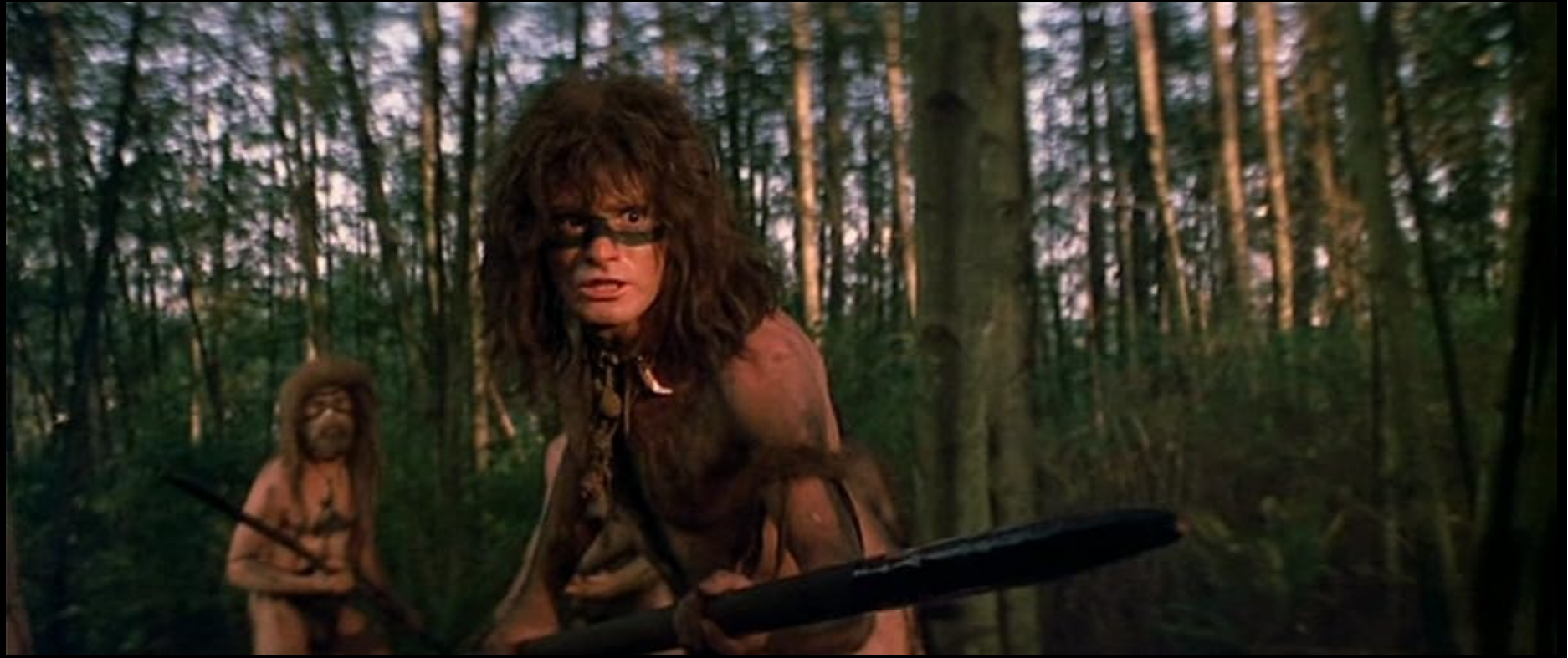
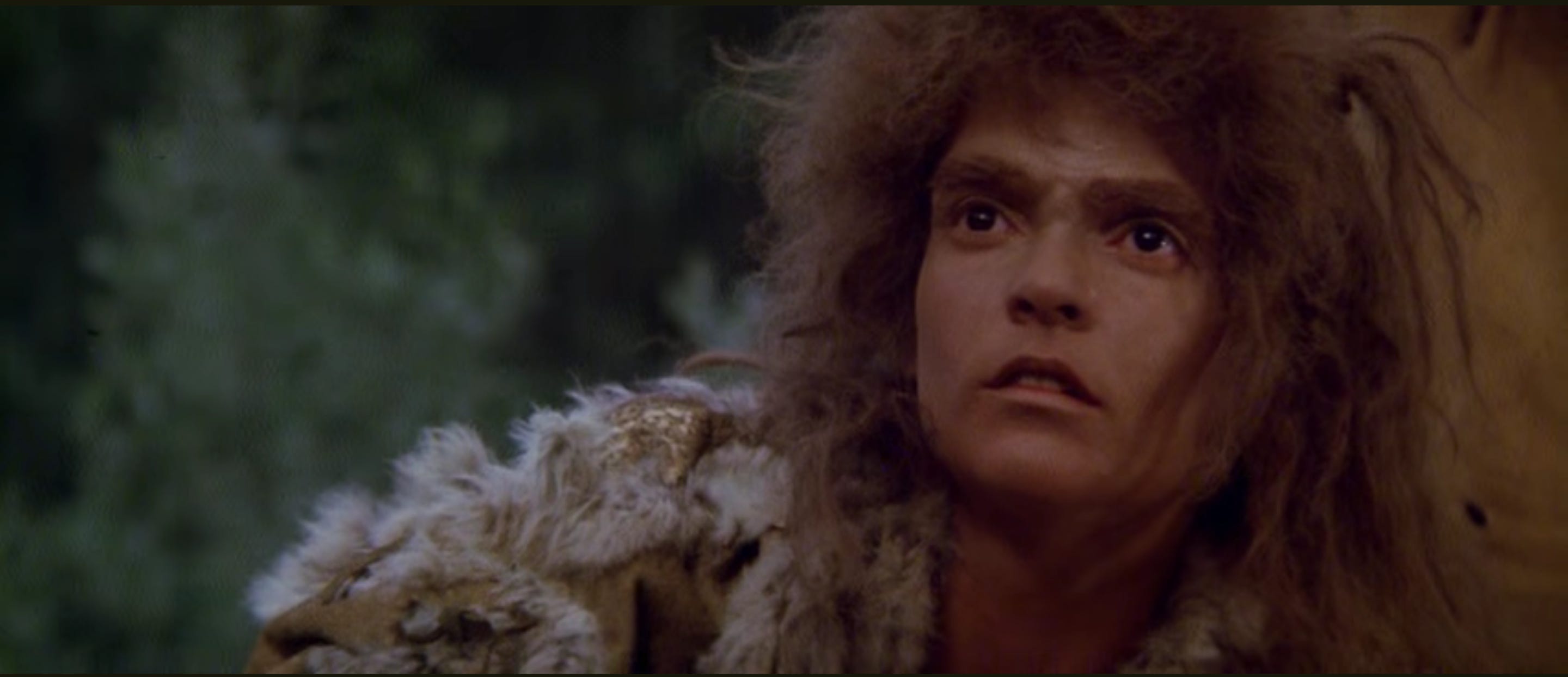
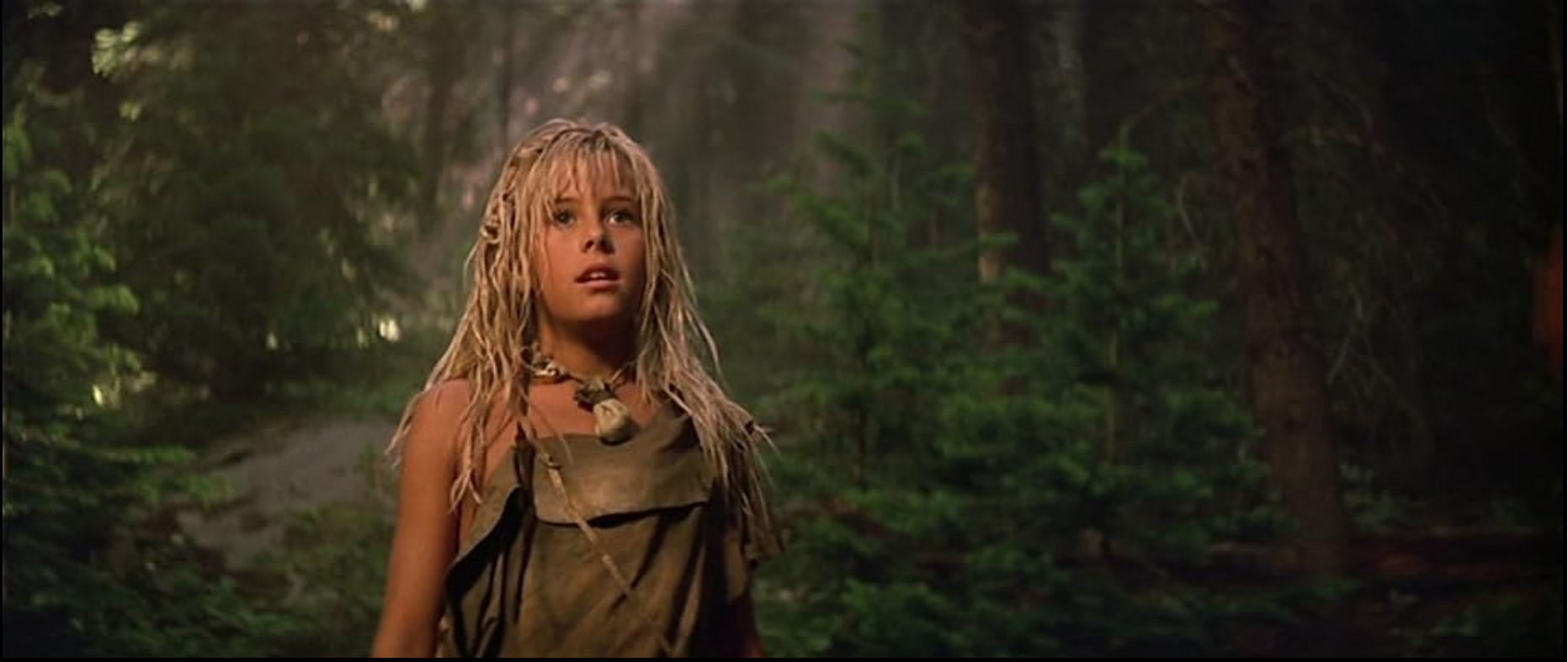
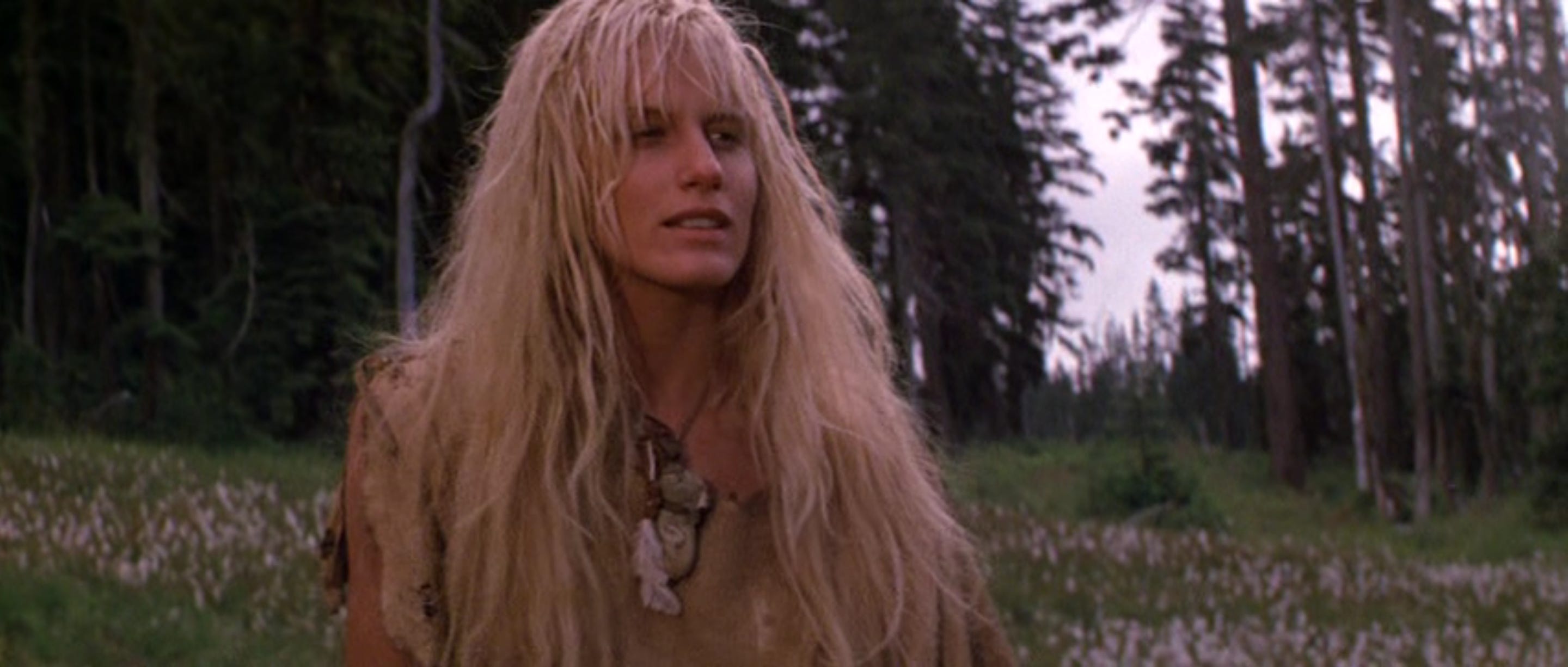
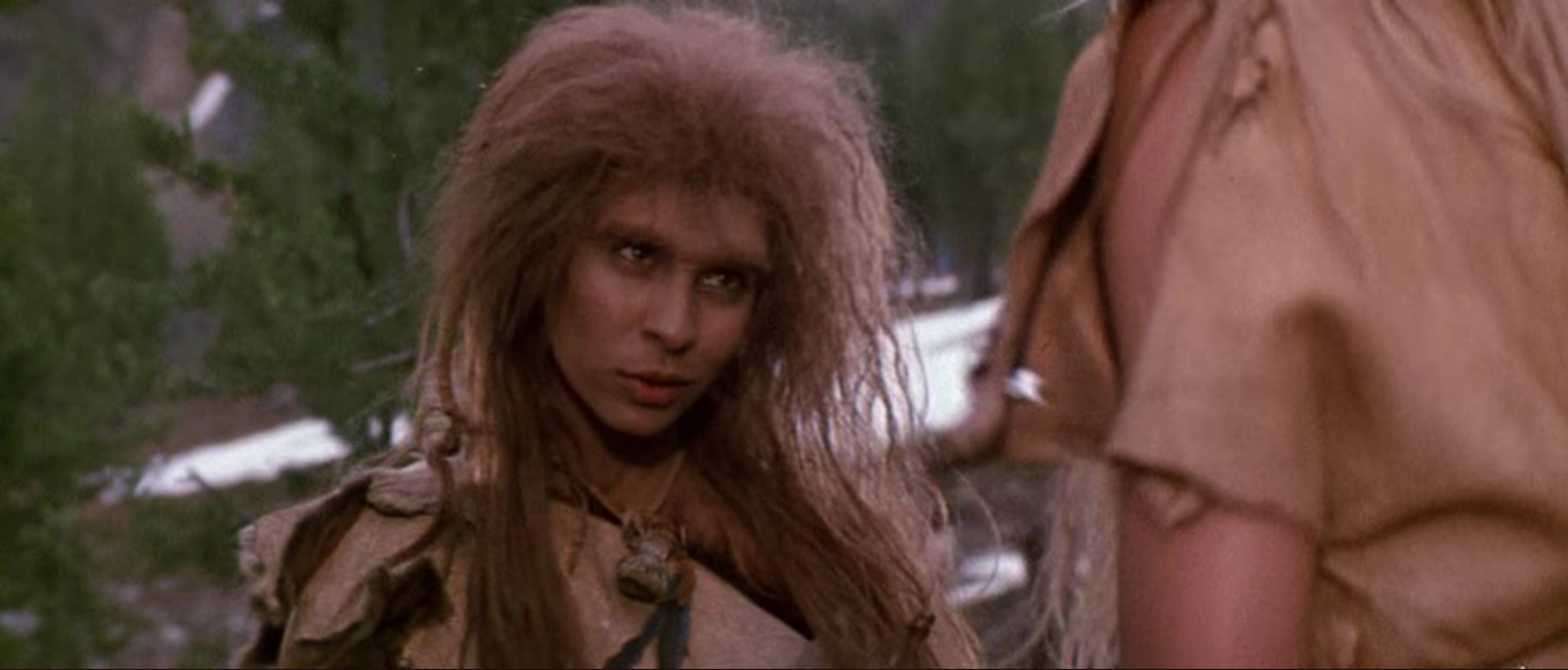
The cast of The Clan of the Cave Bear was strong. Daryl Hannah, who played Pris in Blade Runner (1982) and the mermaid “Madison” in Splash (1984), took on another alien role as Ayla, the Cro-Magnon heroine of Auel’s books. As the Neanderthal tribe who adopts her, Pamela Reed, James Remar, Thomas G. Waites, Lycia Naff and Curtis Armstrong were among those cast. The producers didn’t reach far to assemble a crew familiar with prehistoric humans, retaining Michele Burke, who’d won an Academy Award for Best Makeup on Quest For Fire (1981) and created John Lone’s makeup on Iceman (1984). Michael Westmore, who’d done makeup for Iceman as well as the Rocky films, came aboard as Burke’s makeup department co-head. One of the larger logistical challenges on The Clan of the Cave Bear was how the actors were going to deliver their “dialogue.” In her books, Auel simply conveyed everything Ayla was thinking or feeling to the reader in prose easily translated to the language of whatever country it was published in. John Sayles (awarded sole screenwriting credit by the Writers Guild of America) had written his adaptation in colloquial English, assuming the filmmakers would put that through a prehistoric filter similar to the one in Quest For Fire, in which novelist Anthony Burgess had written special language and anthropologists had developed body movement and sign language for the characters.
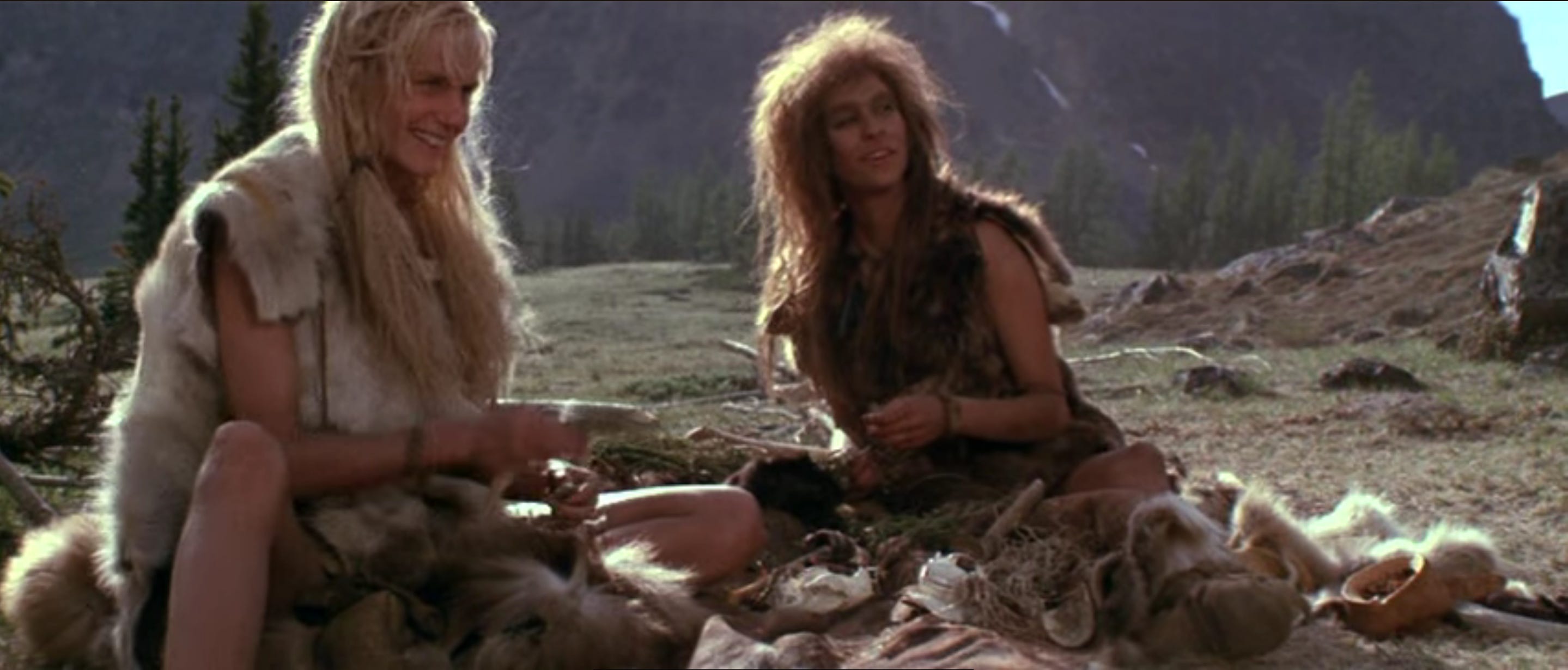
According to Daryl Hannah, when rehearsals for The Clan of the Cave Bear commenced a month before shooting, there were no anthropologists on the payroll. It was assumed the actors could work out how to act prehistoric and deliver their “lines.” When the implausibility of this became apparent, a call was put in to another Quest For Fire alumni, body movement coach Peter Elliott, who worked with Reed, Remar and the other Neanderthal players (Hannah, playing a Cro-Magnon human, would move much like the actor did in modernity). In addition, Lou Fant, a pioneering interpreter of American Sign Language, was hired as a sign language coach. Fant developed a two-hundred word sign vocabulary for the cast and when shooting began in June 1984, the filmmakers floated doing the entire film in sign, with English subtitles. The monotony of this set in and after three or four days, the decision was made for the actors to incorporate vocal gestures or words, when Chapman or others felt they were necessary. Hannah compared it to speaking Italian in reverse: talking with her hands and gesturing with her vocal chords.
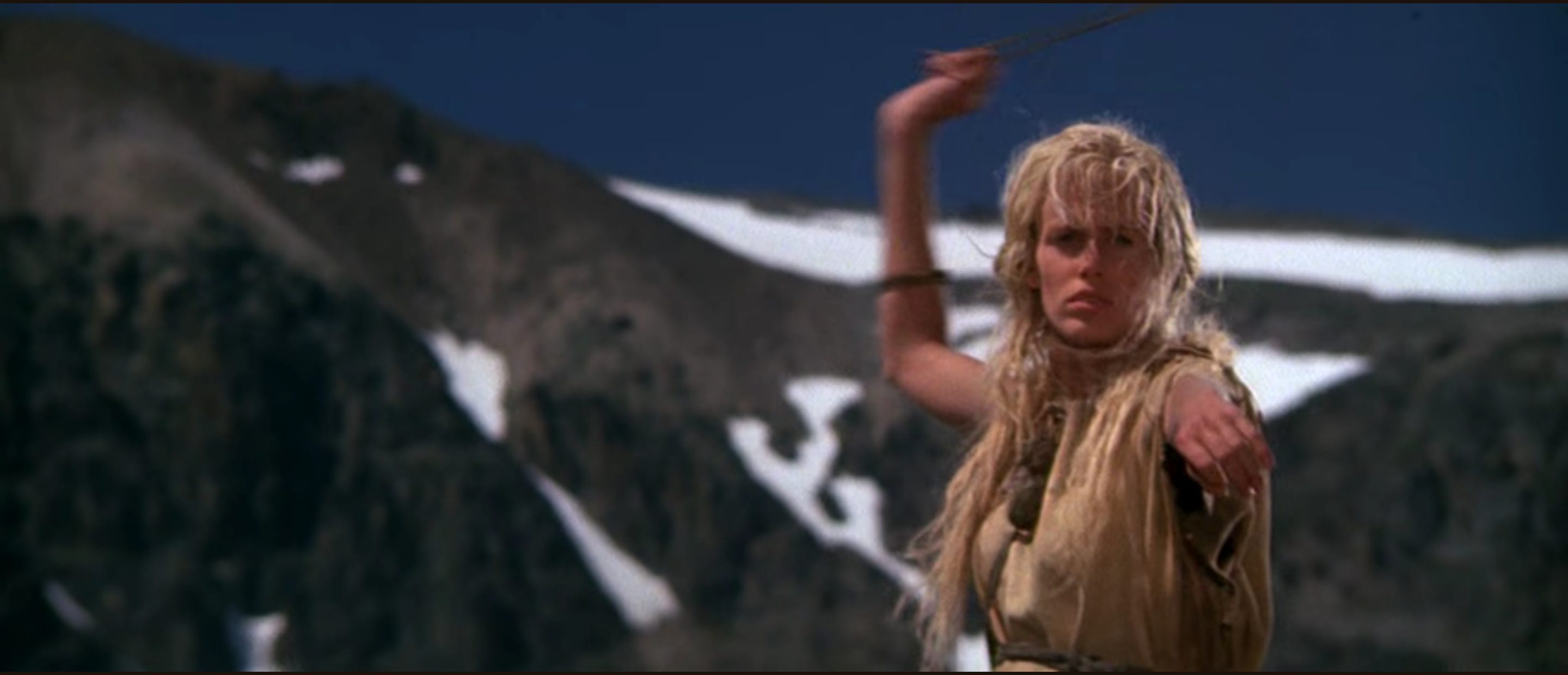
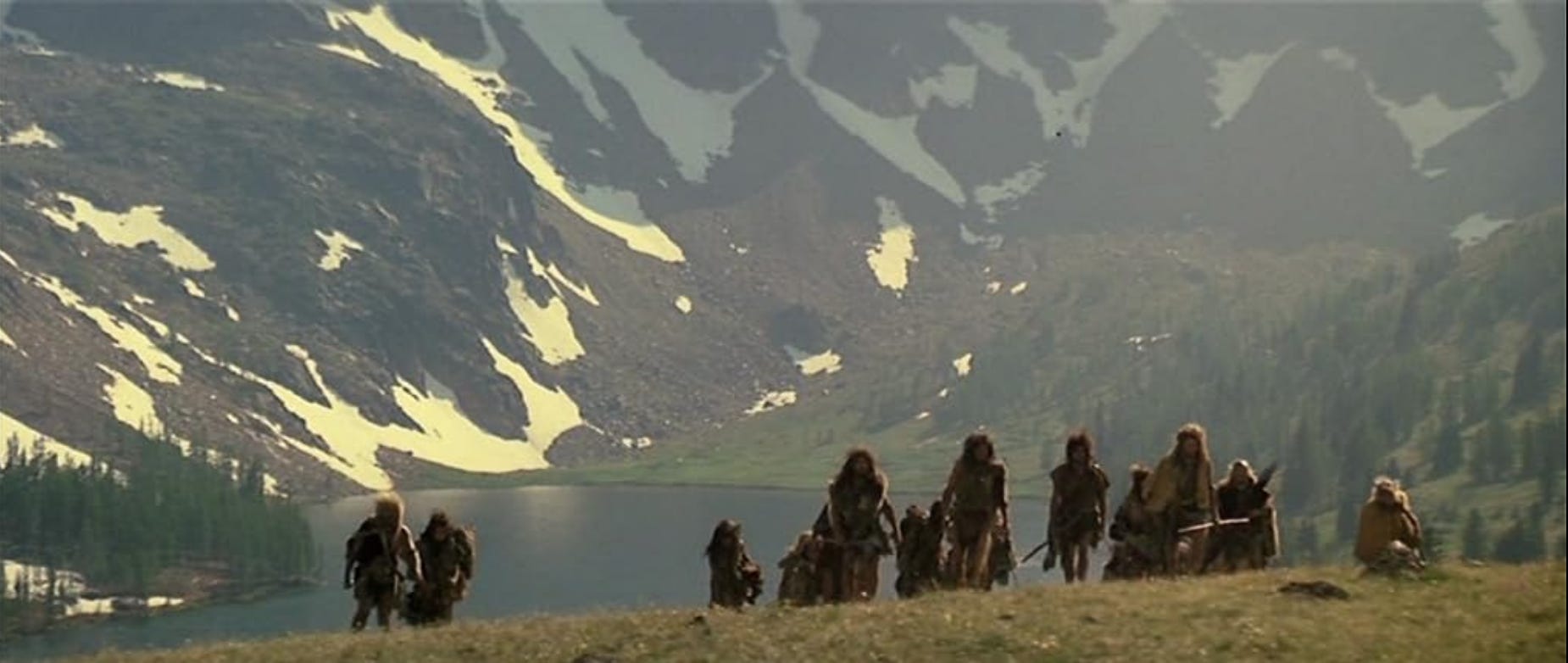
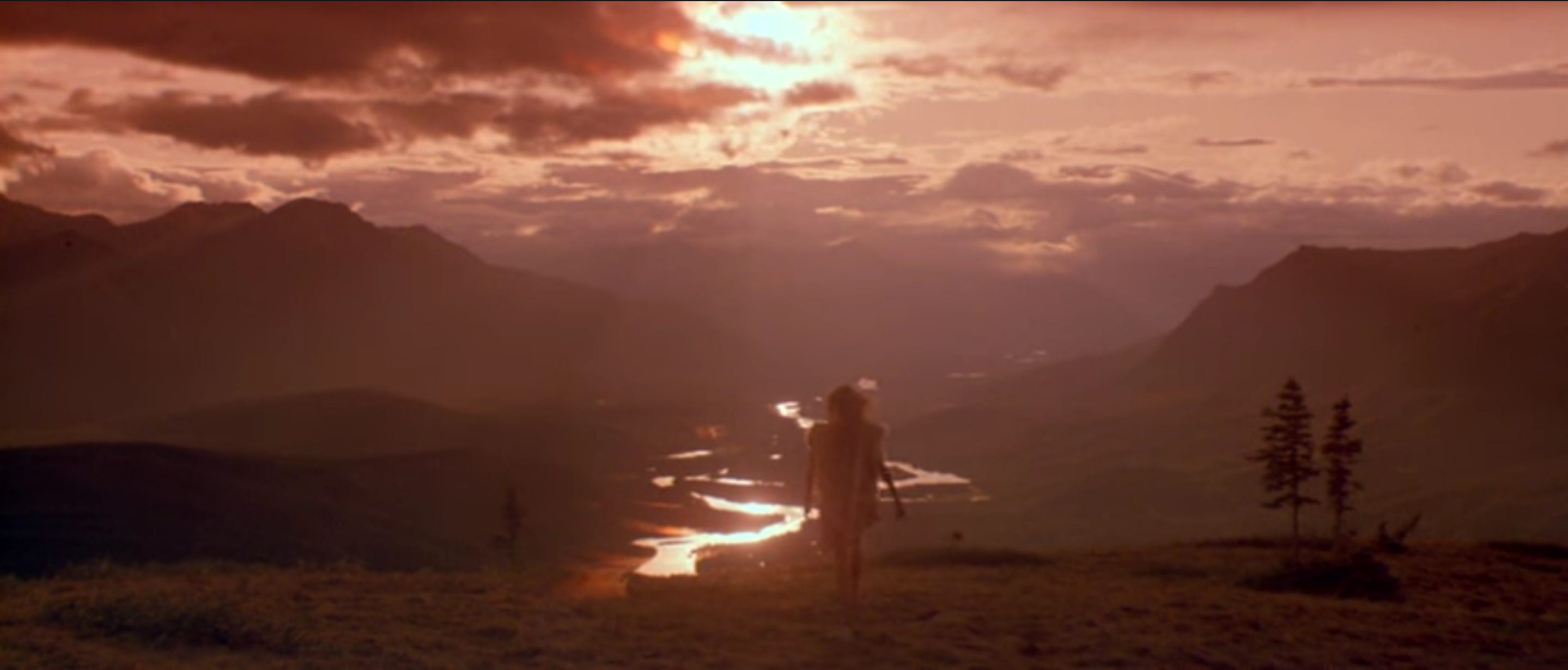
Shooting took place primarily in British Columbia. Cathedral Grove in MacMillan Park was used for the scenes set amid an old-growth forest. Cave interiors were filmed at Panorama Film Studios in Vancouver. The most daunting scenes required a fabricated cave facade being airlifted to a remote section of Nahanni Park Reserve, a series of 200-mile long gorges in the Northwest Territories, and airlifting cast and crew there as well, sheltering them in tents between setups. Weather proved formidable, fog rendering the exotic location indistinguishable from a studio backlot on some days and requiring the crew to wait for the bad weather to lift. Bad luck continued when Jean Auel filed a lawsuit against The Jozak Companies/ Decade Productions (which was producer Gerald Isenberg) in May 1985 for failure to grant her contractual right of story approval or to pay her according to the terms of her contract. The author also took offense to inconsistencies — ”historical and otherwise” — in the cut of the movie she’d been screened. Penciled for a release in the summer of 1985, then fall, dialing in a film deemed palatable to American tastes persisted for months.
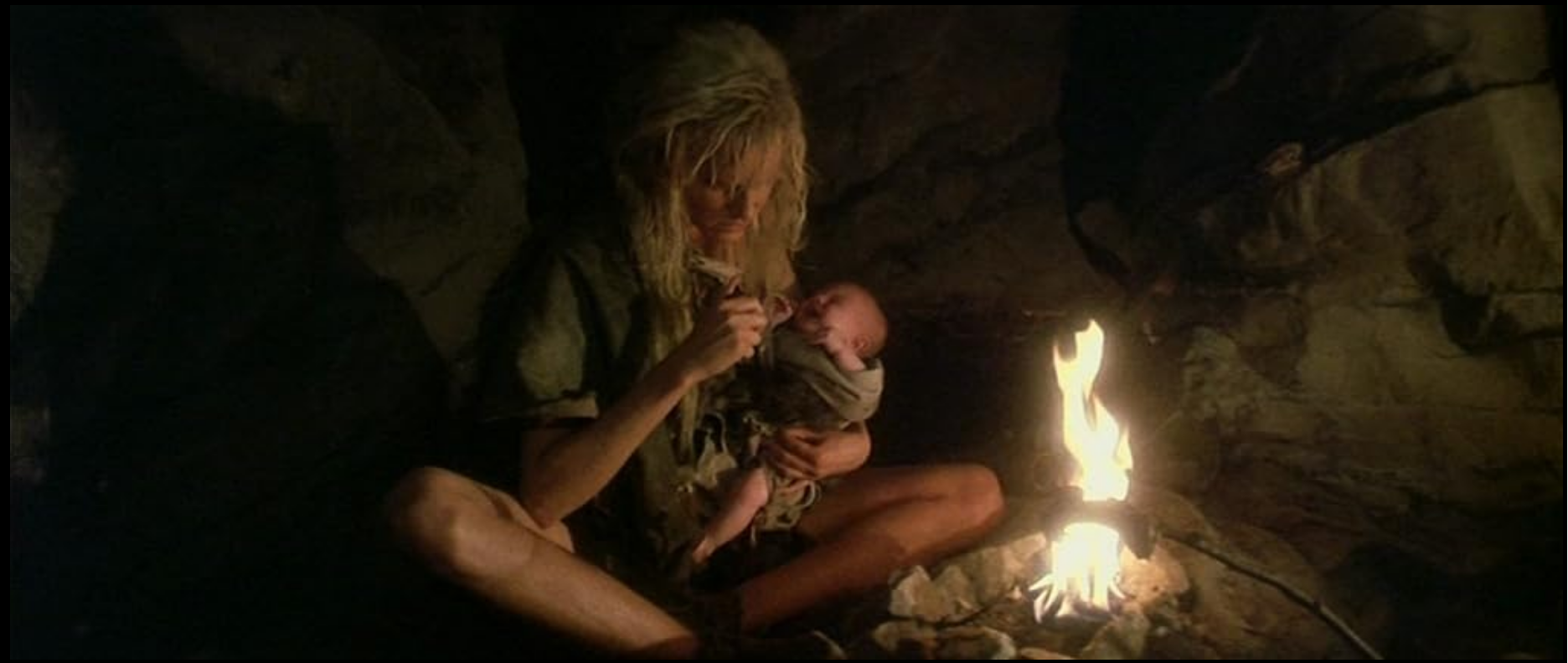
In spite of the massive popularity of Jean Auel’s novels–a third installment, The Mammoth Hunters, was set for publication in December 1985–there were few if any American films produced in a language other than English. Though its cast had included Americans like Everett McGill, Ron Perlman and Rae Dawn Chong, Quest For Fire had been a French-Canadian production distributed by Twentieth Century Fox in the U.S. The only recent comparable to The Clan of the Cave Bear was Windwalker (1981), which featured James Remar as the title character and was filmed in Native Indian (Cheyenne and Crow) languages, English subtitles added so everyone else could understand it. For The Clan of the Cave Bear, veteran American stage and television actor Salomé Jens was employed to provide voiceover narration at critical junctures. The film tested so poorly with recruited audiences who were unfamiliar with Jean Auel’s books that Warner Bros. made the decision to unceremoniously exile The Clan of the Cave Bear to a limited release in January. This was a month in which distributors typically dumped surplus product with the least fanfare, or shame. February, August and September saw their share of dumping as well, but not to the degree of January, which was considered a dismal month to release a movie without awards prestige, for several reasons. Moviegoers were watching their wallets following Christmas. Students were back in school. Inclement weather often depressed attendance in many markets. The Clan of the Cave Bear ran 98 minutes, suggesting a longer and more complex picture had been left on the cutting room floor, something Curtis Armstrong–featured in Risky Business (1983), Revenge of the Nerds (1984), Better Off Dead (1985) and unrecognizable in The Clan of the Cave Bear–later confirmed.
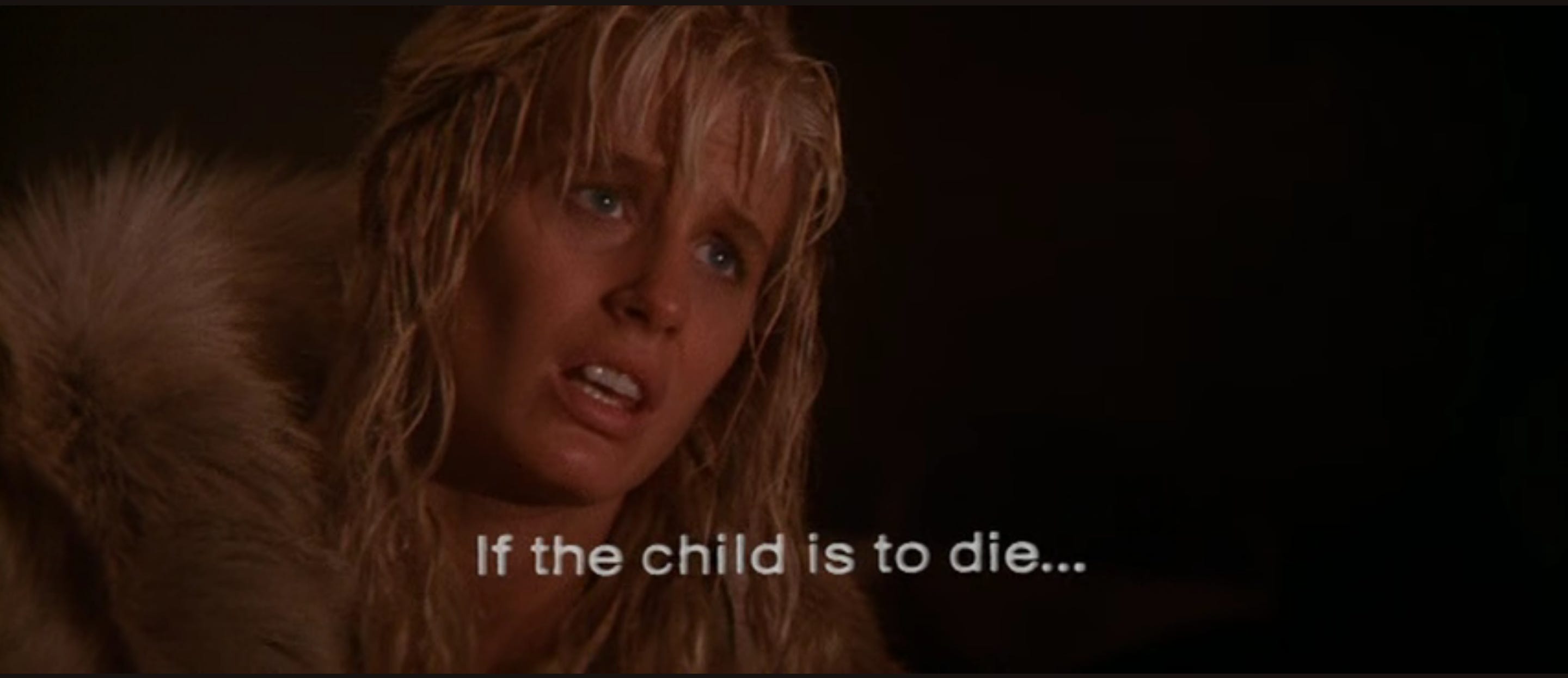
As if they thought the footage would only repel audiences further, Warner Bros. did not provide the media with clips from the film, supplying television programs a mere 57 second trailer to share with viewers. Critical response was abominable. On At the Movies, Gene Siskel & Roger Ebert not only turned two thumbs down but delighted in ridiculing the film. Ebert joked, “I did not for one moment believe that I was actually looking at prehistoric men or women in this movie. What I saw on the screen were recycled stunts from old Tarzan movies and a lot of pseudo-scientific anthropology in which the early Neanderthals develop into a caveman version of Eagle Scouts. First they invent facepainting, then they invent sitting in caves. It’s really thrilling.” Siskel added, “One of the shockers to me was this could’ve been a film which young men and young women–girls, teenage boys and girls–actually got involved in. Will this young warrior, this blonde young blonde warrior played by Daryl Hannah triumph and all that kind of thing. Then suddenly there’s this very explicit and brutal sexual scene, then another scene with bearbaiting and a bear-killing that is absolutely cruel and horrible. And suddenly, we’ve got an R-rated movie. Where was the mentality to make this picture?” Writing for the New York Times, Janet Maslin added: “One of the attractions of this sort of story ought to be its sense of how primitive culture anticipated the modern world, but Miss Auel’s book has more of this than the film does. Much of what happens on screen seems all too current and familiar, as when the young Ayla clutches at a Neanderthal woman and the camera glimpses a nicely manicured adult hand.” Opening January 17, 1986, Warner Bros. limited The Clan of the Cave Bear to a release in 106 theaters in the U.S., where it vanished without cracking the top ten grossing films of the week.
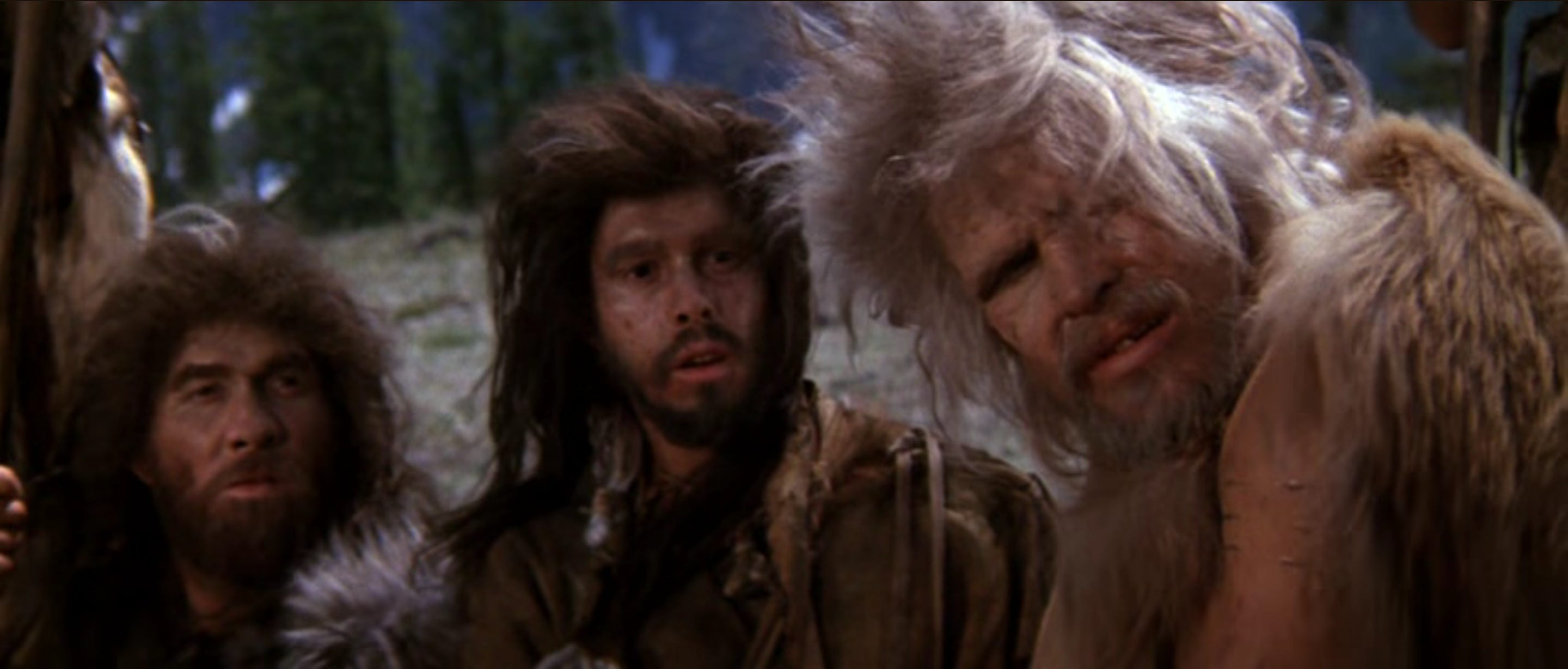
Michael Chapman and his director of photography, the illustrious Jan de Bont–who’d light Die Hard (1988) and The Hunt For Red October (1990) and direct double the number of movies Chapman would be allowed to–location scout and light The Clan of the Cave Bear so well that their film demands a more deliberate pace, one that might have used the prehistoric ecology as an asset. The final cut of the film doesn’t spend nearly as much time as The Blue Lagoon, in all its tawdriness, dramatizing how women and men cut off from modern conveniences would survive or what worlds they might create. The movie isn’t inquisitive. Moments such as one in which the holy man played by James Remar suffers from a toothache have quick and relatively painless remedies, while the inherent dangers of child birth are also skipped over, begging the question why scenes like this were included in the first place. The filmmakers place their faith in adapting Jean Auel’s bestseller as faithfully as possible, and her debut novel does at least two things well. The story defies categorization, an action/ adventure by default, it involves an interior quest for self-identity, not an exterior pursuit for objects. And it does offer an antagonist in the character of Broud, heir to the clan’s leadership who holds Ayla in fear and contempt. He represents tradition, which Ayla challenges by her very appearance, a blue-eyed and blonde-haired Cro-Magnon whose strange people the Neanderthal tolerate because they can only process threats to their existence by the number of days their fingers allow them to.
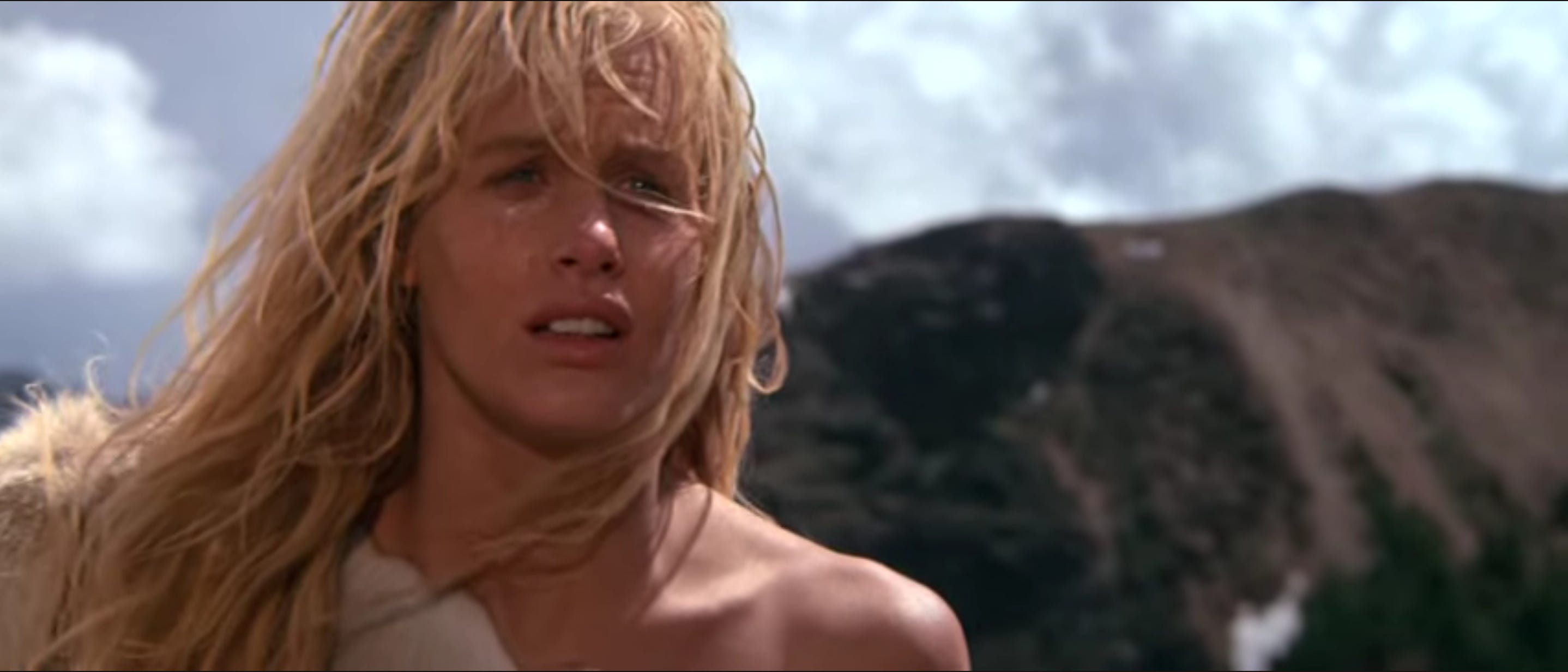
What Auel’s source material doesn’t provide outside of a few scenes in which Broud menaces Ayla is much conflict. The clan isn’t going anywhere or searching for anything. Beasts like the lion that mauls young Ayla pose no threat to adults. Ayla overcomes obstacles with ease. Auel does spare the viewer a romance, and the best scenes of the film are those in which Ayla teaches herself how to operate a sling, without a barbarian love interest to help her. Daryl Hannah, an athlete and performing artist gifted at crafting otherworldly characters, plays Ayla with grace, intelligence and feminine power, and with less flattering makeup, might have passed for a prehistoric woman. The female empowerment which made the novel compelling comes off as superficial on camera, as if surviving the elements and getting a film in the can was the ceiling the filmmakers were operating under. No one makes a strong case–other than money–for why The Clan of the Cave Bear needed to be a film. It’s unclear who the narrator is or what vantage she has to provide color commentary on the clan, while their communication comes down to a Tarzan-like hodgepodge. James Remar, who played hot-tempered warriors in The Warriors (1979) and–opposite Pamela Reed–The Long Riders (1980), is miscast as a wizened old man. Reed is an asset as Ayla’s adopted mother who, as in most of her performances, beautifully soothes the roughness of the story’s action. None of the actors are in the position to pull the film from the muddle it is stuck in.
Video rental category: Action/ Adventure
Special interest: East Meets West
Fantastic deep dive into the production chaos. The sign language switcharoo mid-shoot is the kinda stuff that gets glossed over in retrospectives but it really explains why the final product feels so disjointed. Ran into something similiar once where we tried bilingual subtitles halfway thru editing, dunno if its ever really workable.
Hey Joe, good morning! I’m not a real big fan of critics per se… Siskle and Ebert for movies, and Hilburn for music… Always thought they were full of themselves, but use them as a reverse barometer (as Custer said of Little Big Man 🤣) anyway, loved Jean Auel’s first book, started to lose interest in the second book, by the third book it kind of felt like it became a soap opera… the movie, to me, just felt flat… anyway, as always, your background information and analysis is very entertaining… Great job, thanks! CPZ