

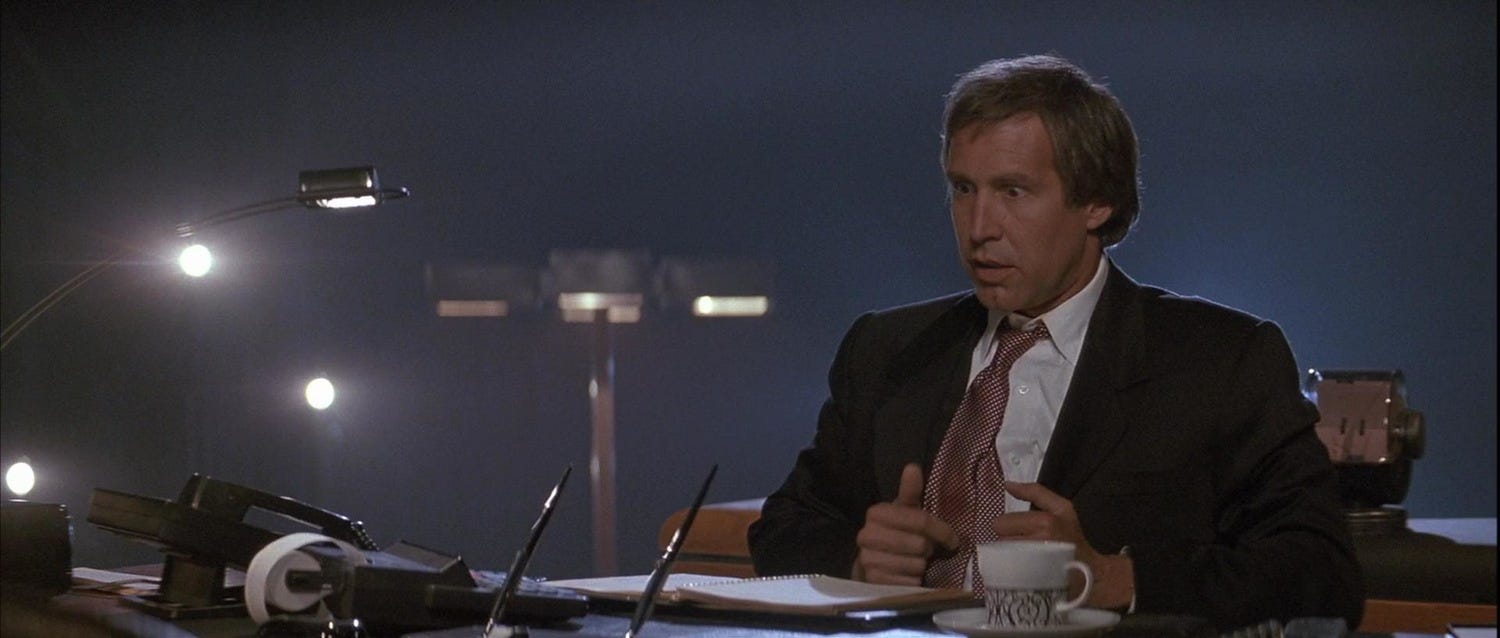
MEMOIRS OF AN INVISIBLE MAN (1992) goes to considerable expense to excavate a existential mood piece out of what is by its nature a ridiculous, old-fashioned romantic thriller—like To Catch a Thief (1955) or North By Northwest (1959)—by way of Industrial Light & Magic. There are moments given to visual splendor, but far from being a fantasy thriller that works, like The Lost Boys (1987), no two people involved in this one seem to have been able to agree on what the movie was about.
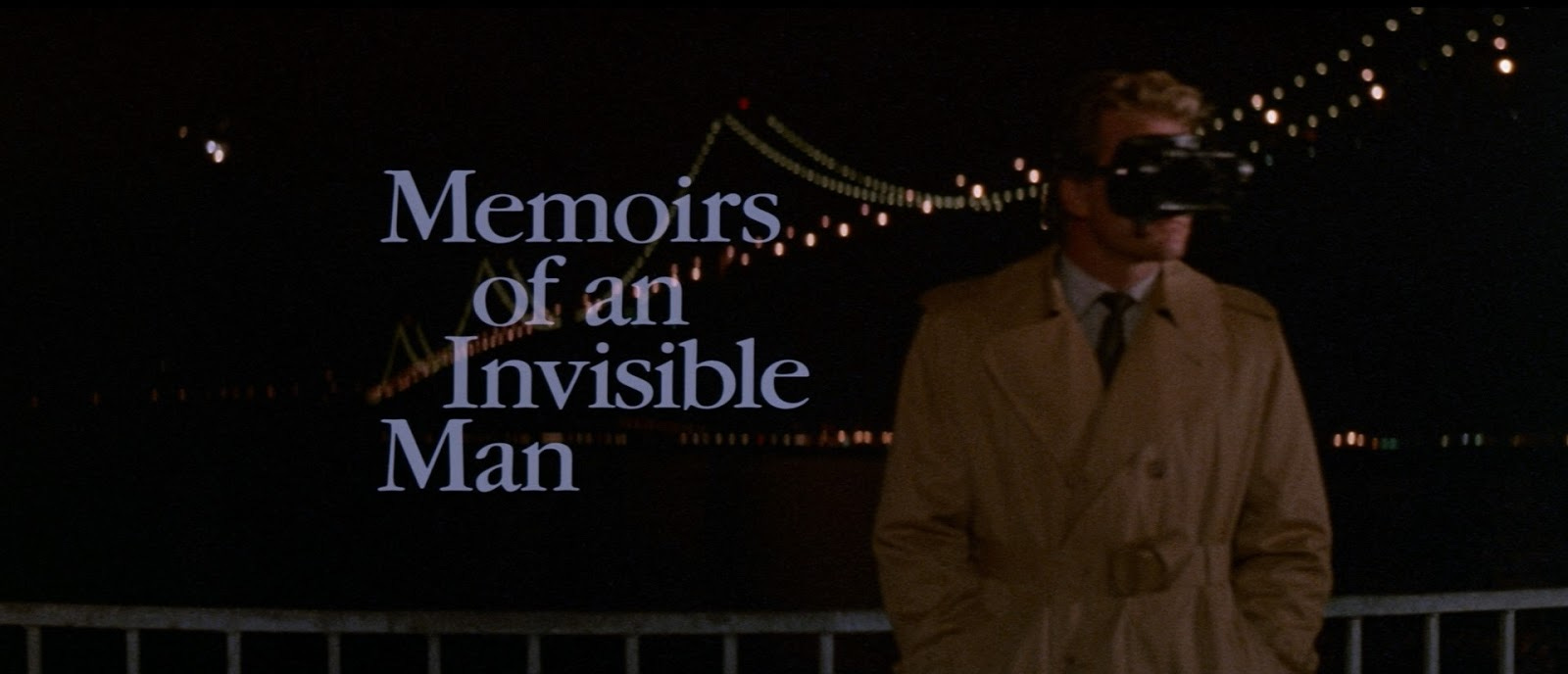
Harry Freeman Saint grew up in Pennsylvania. He graduated from a local liberal arts school, Haverford College, in the mid-1960s. Saint’s ambition was to be a writer, and on the press tour for his debut novel twenty years later, he claimed he sold a piece of fiction to Esquire magazine in 1967. After the death of his father, Saint returned to the Keystone State to oversee his family’s real estate interests. A squash player, he bet that the sport was primed to take off in popularity. In 1973, Saint founded St. John Squash Racket. In the intervening years, he opened squash clubs in New York and Washington D.C., changing his company’s name to Town Squash, Inc. The company was owned by his wife’s family, and by 1982, when squash failed to take off, Saint cashed in his shares of Town Squash to pursue his passion. Appearing on NPR’s Fresh Air with guest host Liane Hansen on August 10, 1987, Saint discussed the genesis of his debut novel. “Yes, I think that when I was looking for something to use in this book–having abandoned my business career in order to become a writer–the image came into my mind of a woman embracing a completely invisible man, and the image was so ridiculous and appealing at the same time that I was sure that I had a good idea.”
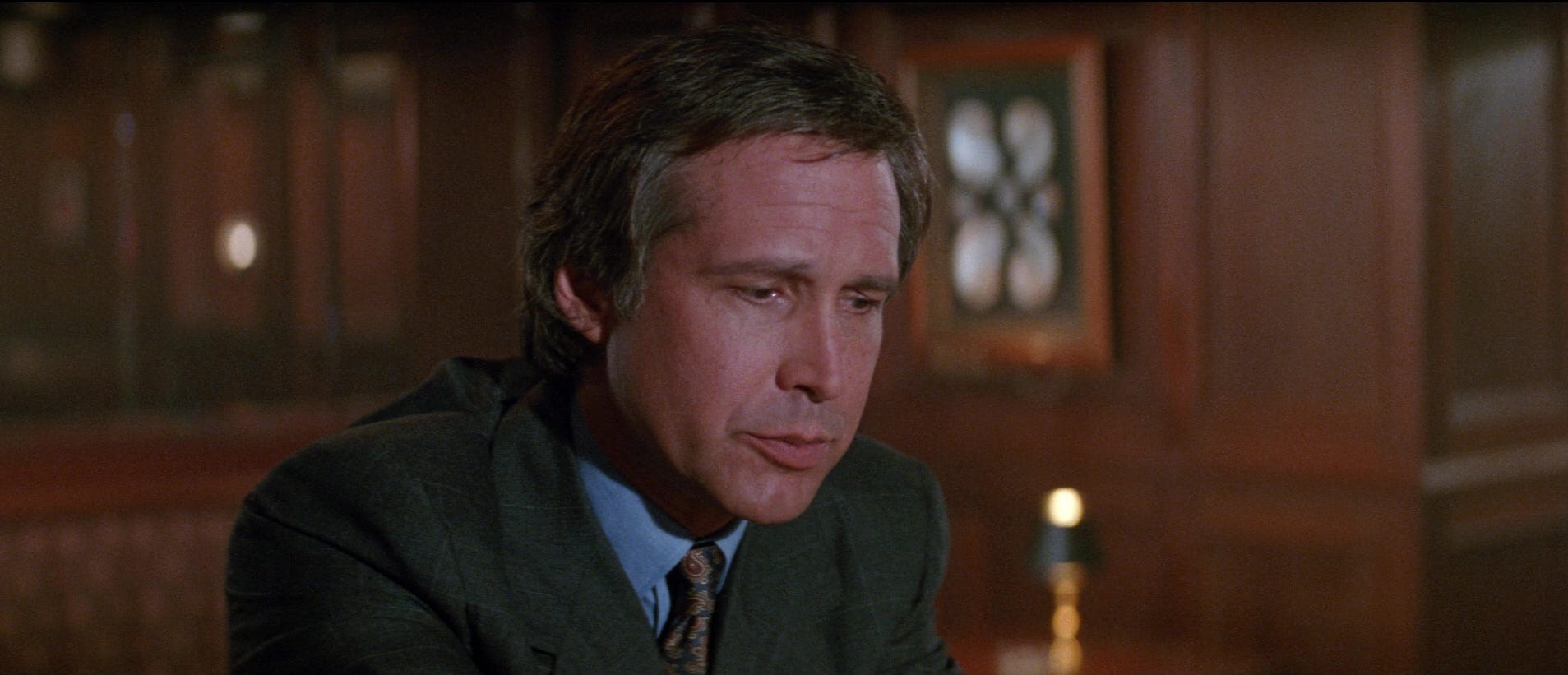
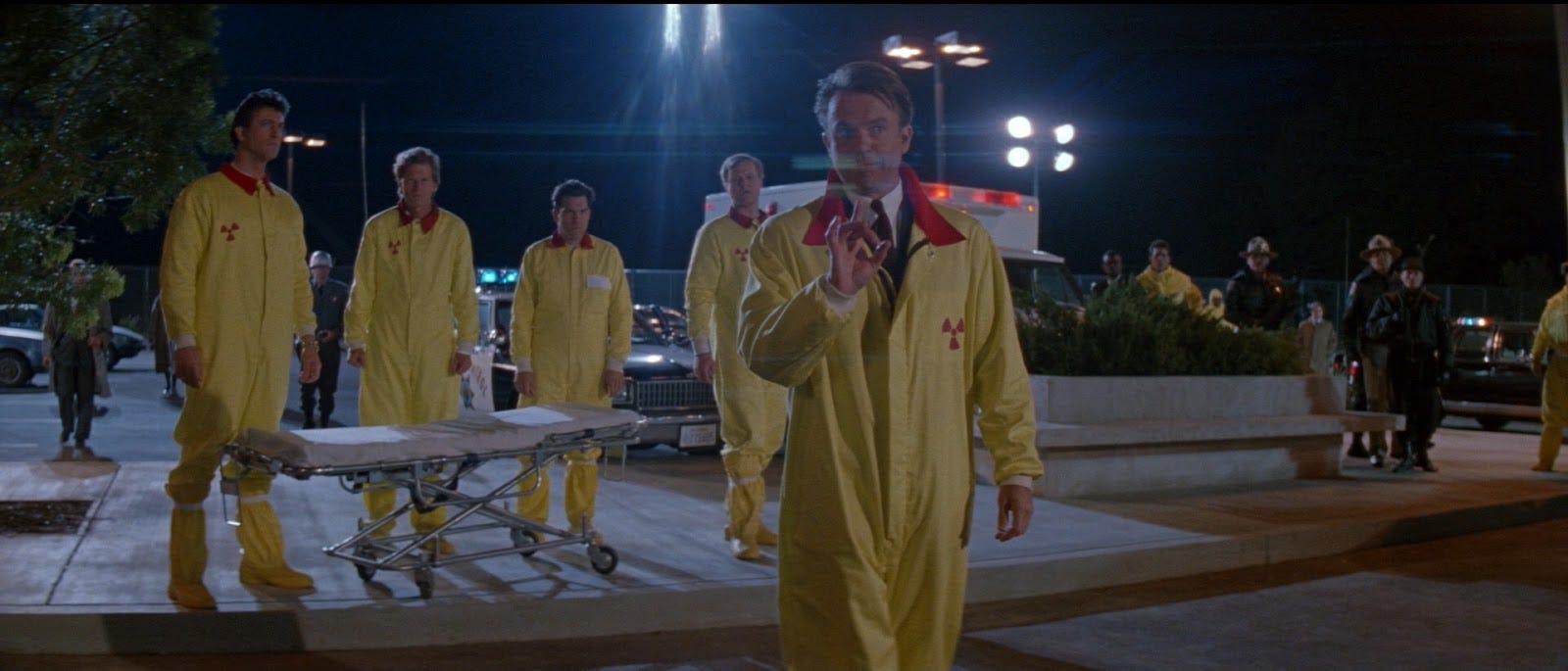
As reported by Edwin McDowell in the New York Times on January 28, 1987, a year of work by Saint yielded an incomplete manuscript of 150 pages, which the author dangled before several New York publishers. Titled Memoirs of an Invisible Man, it was the first-person account of Nick Halloway, a smart-alecky securities analyst who invites a New York Times reporter named Ann Epstein to what he believes will be a boring press event at a government contractor in New Jersey, where he plots a rustic rendezvous with the lady. The company is doing magnetic field research, and an explosion renders Nick invisible. When agents from a non-government agency arrive, he overhears them discussing the national security benefits of capturing and studying the invisible man, and with the clothes on his back and invisible items he’s able to recover from the plant, goes on the run. Halloway discovers that sleeping without eyelids, descending stairs without feet, or eating foods which remain visible while his invisible digestive tract breaks them down make the life of an invisible man tough, but he is in a position to eavesdrop in corporate boardrooms and make a dollar and a cent as the ultimate inside trader.
One or two publishers returned Saint’s manuscript unopened, but he got interest from Athenum, an imprint of Simon & Schuster, whose editor Tom Stewart offered the debut author a $5,000 advance, half payable on completion of a book. This emboldened Saint to query Georges Borchardt, one of the more respected literary agents in New York. Borchardt negotiated with Athenum to kick in an extra $500 for his new client, and more importantly, foreign and film rights. In December 1985, with Saint three-fifths of the way through a manuscript, Borchardt sensed that Hollywood–where the highest grossing movies of each of the last six years were special effects extravaganzas–might be interested in Memoirs of an Invisible Man. He slipped the unfinished manuscript to Phyllis Levy, director of literary development at William Morris Agency. Levy passed the manuscript up the chain to representation for actor Chevy Chase. The first cast member to depart Saturday Night Live for greener pastures (in 1976), ten years later, Chase was one of the five biggest movie stars on the planet. After a rocky start to a film career, his last three pictures–Fletch, National Lampoon’s European Vacation, Spies Like Us--were all among the fourteen highest grossing films of 1985.
At the height of his prestige in 1986, Chase wanted to star in Memoirs of an Invisible Man, and several studios, including Columbia Pictures, Universal Pictures (which had produced an adaptation of the H.G. Wells novel The Invisible Man in 1933, starring Gloria Stuart and Claude Rains) and Warner Bros. Pictures put in bids. Offers climbing at clips of $100,000, Warner Bros.--where Chase and his business manager Bruce Bodner had made Caddyshack (1980), National Lampoon’s Vacation (1983) and its sequel, Deal of the Century (1983), and Spies Like Us (1985)--put in the top bid to acquire the film rights to H.F. Saint’s debut novel, for $1.45 million. (Memoirs of an Invisible Man would arrive in bookstores in April 1987 to mostly enthusiastic reviews). Three weeks after William Morris Agency brought the unpublished manuscript to Chase, the star jumped ship to their rival, Creative Artists Agency. Now dealing with CAA’s co-founder Mike Ovitz, considered by many the most powerful person in Hollywood, Warner Bros. was given little choice on who would be directing Chevy Chase and adapting the screenplay for Memoirs of an Invisible Man. Unsurprisingly, both were CAA clients.
Ivan Reitman had lost some chips he won with Meatballs (1979), Stripes (1981) and Ghostbusters (1984) with a meager entertainment titled Legal Eagles (1986) that had been proposed as a co-starring vehicle for Dustin Hoffman and Bill Murray before transitioning into a romantic thriller with Robert Redford and Debra Winger, but Reitman was one of the top comedy directors working. Under Ovitz’s management, screenwriter William Goldman was rehabilitating his entire career. According to his 2000 memoir, Which Lie Did I Tell?, Goldman — a two-time Academy Award winner, for writing Butch Cassidy and the Sundance Kid (1969) and adapting All the President’s Men (1976) — was visited by Ovitz, who courted the screenwriter away from the law firm representing him, and recently, not too well. Goldman had been recused from The Right Stuff (1983) when director Philip Kaufman proposed they make Chuck Yeager, the maverick test pilot who never flew in space, the central figure in a movie about the Mercury astronauts. Goldman hadn’t earned a screen credit since Butch and Sundance: The Early Days (1979), for “based on characters created by.” In 1986, one month into his representation by CAA, the agency offered Goldman the job of adapting Memoirs of an Invisible Man.
Though Goldman had written chase pictures, he’d never dabbled in science fiction, but accepted the gig. Reitman–who as producer of National Lampoon’s Animal House (1978) had come close to landing Chevy Chase to play Otter–had met with the star to discuss Memoirs of an Invisible Man, and Goldman’s agent told them director and lead actor were on the same page. According to Goldman, his first draft was met with encouragement by both Reitman and Chase. The star did trigger an alarm bell when he casually mentioned to Goldman that he hoped the second draft would touch on the “loneliness of invisibility.” In his memoir, the screenwriter admitted that troubled him. “Why? Because my director wanted to do a funny farce with special effects and my star wanted to do a serious, sad drama. I went to my new agents, CAA. ‘Listen to me,’ I told them, ‘There’s going to be a train wreck and I’m in the middle.’ Here’s what they said: ‘Bill, you’ve been away for a while, things are a little bit different. Ivan is represented by us. Chevy is represented by us. It is what we at CAA specialize in. It is called a package. And there will be no train wreck. Just write the script. It will all sort itself out.’ I met with Ivan. ‘Chevy is kind of interested in investigating the loneliness of invisibility,’ I told him. His reply? Total unruffled calm. ‘Let me handle Chevy.’”
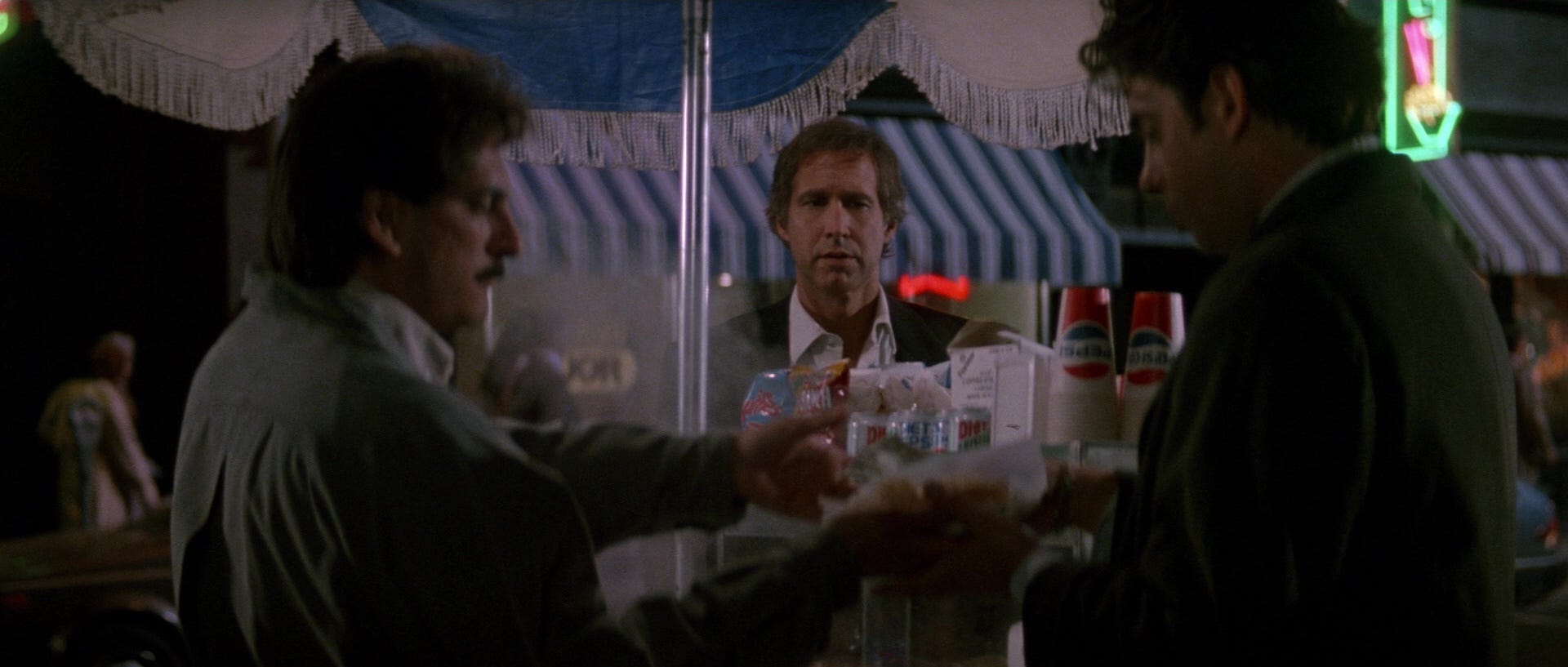
Goldman wrote two more drafts, sprinkling dramatic loneliness here or there. He continued, “And do you want to know why? Because Chevy had a valid point. How could you deal with this material without discussing the awful reality of what it would be like if no one could see you? If you were, I guess, the ultimate freak on Earth? But this had to be considered too–Olivier was not playing the lead. Young Brando was not playing the lead. Or Cagney. My truth was this: I had no problem investigating the loneliness of invisibility, I just didn’t want to investigate it with Chevy Chase. Bright as Chevy was, he had not gotten famous playing drunks or scientists or death-row convicts, he had become so playing a goof who had trouble with stairs.” On the strength of William Goldman’s third draft, Ivan Reitman was ready to go into production, to make Memoirs of an Invisible Man his follow-up to Legal Eagles, in theaters for Christmas 1988. Chevy Chase, who in the nearly two years Reitman and Goldman were adapting the novel had made three pictures with diminishing returns–Three Amigos! (1986), Caddyshack II (1987), Funny Farm (1988)--wasn’t thrilled with Goldman’s third draft.
In a lengthy article by Ric Gentry published in the Los Angeles Times on February 23, 1992, Chase stated, “I think my true talents are in making people laugh. And I enjoy that. But there’s a very different side of me, a darker, more morose side that’s never come through and that I feel I need to explore. And one way to do that, I’ve realized, is through the craft of acting.” Chase shared that when Bodner and he had first met with Warner Bros. executive VP Mark Canton and senior VP William Gerber to discuss making Memoirs of an Invisible Man, they were told, “‘You can make this book as long as it’s hilarious.’ In other words, let’s see a real comedy with Chevy Chase invisible. That they’d go for. But my answer was, ‘Read the book and you’ll see it’s not about that.’ So they read the book. And they said, ‘Well, there’s lots of funny parts in it. It’s 450 pages. You take 150 of those pages–funny.’ And my response was, ‘I want to maintain the integrity of the book. I want it to have substance and depth. Where there’s comedy, I’ll have it in there.’ They just sort of looked at me.” Chase explained his misgivings for William Goldman’s script. “Within a page of the character becoming invisible, he was in a taxi looking up women’s skirts. To them, this was a very Chevy Chase film, Clark Griswold becoming invisible. I said, ‘Wait a minute. This isn’t the direction I want to go at all.’”
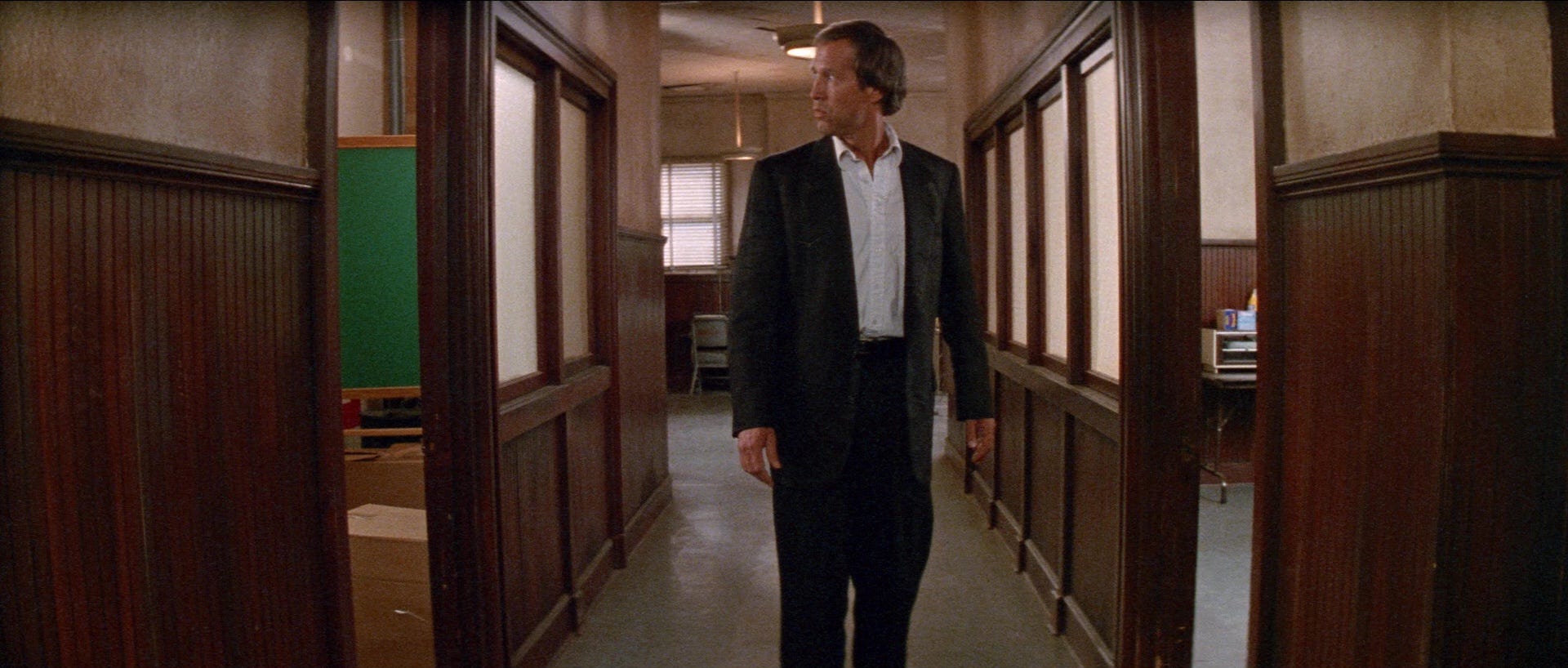
After spending nearly two years on the project, Reitman and Goldman walked, briskly, into collaborating on Twins (1988). Chase and Bodner would later meet with the screenwriter in an effort to bring him back for more rewrites, but Goldman allegedly got up to leave, telling them, “I’m sorry, but I’m too old and too rich to put up with this shit.” Robert Collector & Dana Olsen were screenwriters who’d met through Olsen’s agent and would partner on five or six scripts over a period of three years. Based on their work on an unproduced script with Steve Zacharias titled The Vulgarians, which Olsen described as a precursor to Borat (2006), Collector & Olsen had signed a production deal with Warner Bros. They met Chevy Chase for uncredited rewrite work on National Lampoon’s Christmas Vacation (1989) and worked on a couple of unproduced projects for the star. Switching gears for a director who had experience with action as well as special effects, Chase and Bodner had chosen Richard Donner, as close to a director-in-residency at Warner Bros. — after the success of The Goonies (1985), Lethal Weapon (1987) and Lethal Weapon 2 (1989) — as there could be. Collector & Olsen spent eight months working on three drafts of Memoirs of an Invisible Man for Donner.
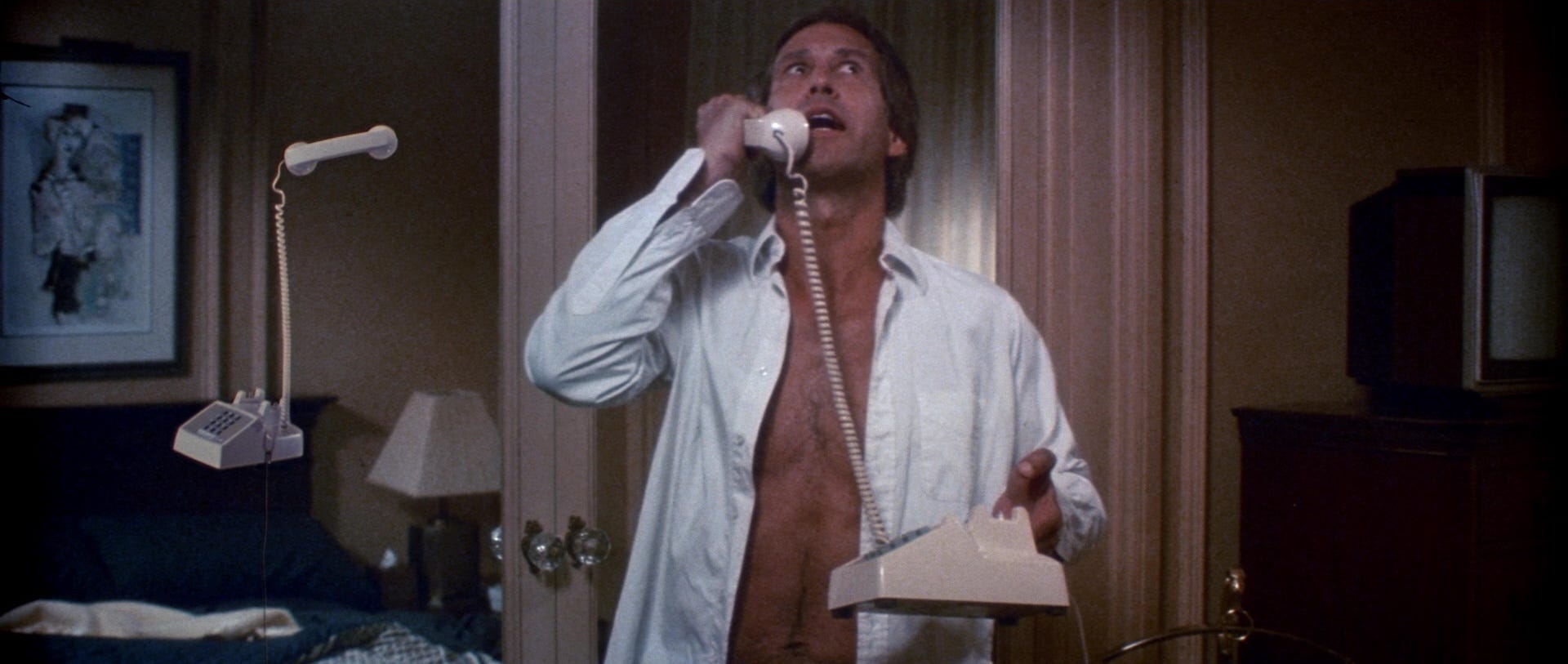
While H.F. Saint was able to tell the reader what Nick Calloway was thinking or feeling, showing an audience an empty screen where Chevy Chase was supposed to be just wouldn’t work. At a loss over whether his character would remain invisible after the lab accident, or be visible to the audience occasionally, and if so, when, Donner dropped out of the project. Chase and Bodner started working their way down the list of available directors, more than one of whom raised the same point-of-view concerns Donner had. Then they landed on John Carpenter. In a candid interview by Steve Swires for Starlog magazine published in April 1992, the director admitted, “I ran out of energy after They Live (1988). I wanted to take some time off and figure out where I wanted to go. I was very proud of They Live, but it was extremely difficult to make. I was working in the low budget area, but I had designs on reaching a broader audience. I wasn’t convinced that that was the way to do it.” Carpenter had completed two pictures in a proposed four-picture deal with Alive Films, with Universal Pictures as distributor. Neither Prince of Darkness (1987) or They Live received the financing to realize their potential, and when Alive backed out of a science fiction picture Carpenter wanted to direct titled Victory Out of Time, claims and counterclaims were filed in court.
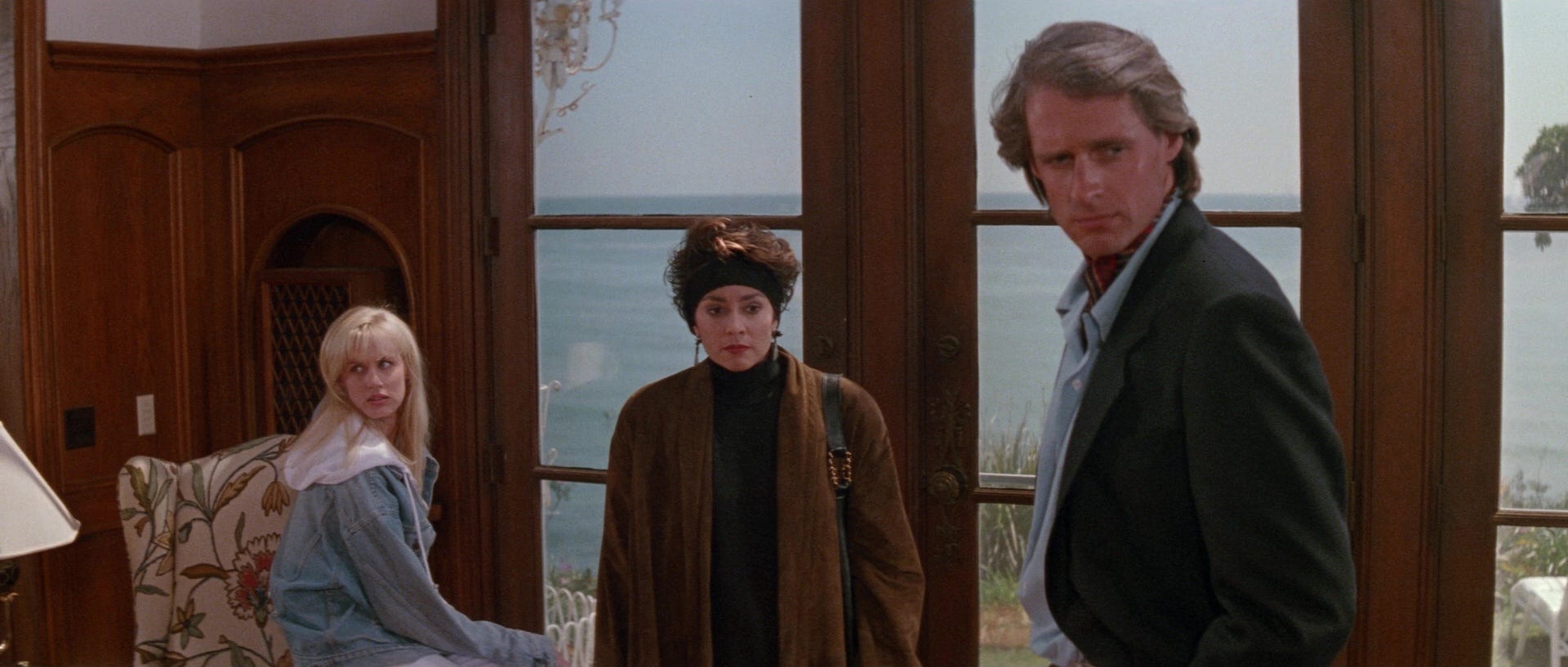
The co-writer/ director of Halloween (1978), Escape From New York (1981) and The Thing (1982) offered his services as a director-for-hire. Columbia Pictures attached Carpenter to direct a post-apocalyptic action film for Cher titled Pincushion. “We got a great screenplay [by John Raffo and Jeb Stuart] for it. But, for whatever reason, Cher was unwilling to commit to it. I left the project, because I didn’t want to do it unless she was in it. It could have been a real cool picture. Somebody else should still do it.” Carpenter spent far less time developing The Exorcist III with author/ screenwriter William Peter Blatty. “I was on that film for about a week. I read Blatty’s script, which was based on his novel Legion. Up until the ending, it was riveting. And yet, it didn’t quite have it in the end. It got strange, and there was no exorcism. I worked with Blatty, and I realized that he wanted to direct the film. I finally discovered that he wasn’t going to do what I wanted. I respect him, so we decided not to work together.” Memoirs of an Invisible Man seemed unlikely to work out either, but in the summer of 1990, Carpenter visited Chevy Chase on the set of Valkenvania, which would be dumped into theaters by Warner Bros. in February 1991 as Nothing But Trouble.
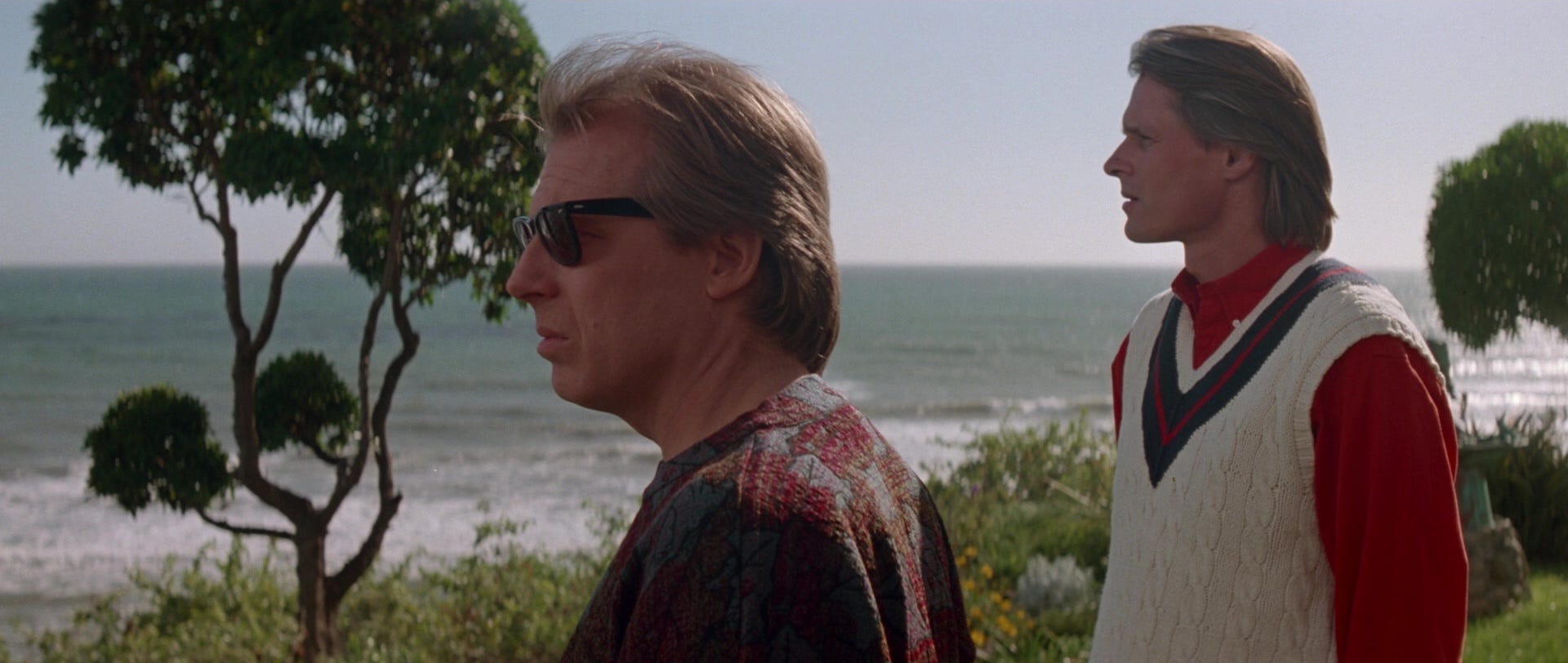
Carpenter continued, “I always liked Chevy in his movies. I thought I could get a good performance out of him. I first met with him as he was about to start filming Nothing But Trouble. I could tell there was something really wrong. Chevy told me that he hasn’t been particularly proud of his work, especially recently. He feels he has made a lot of shitty movies. Some of them were by his own choice, and some of them he was talked into by the studio. He felt Invisible Man was his chance to make a good film for a change.” Robert Collector & Dana Olsen spent the next eighteen months developing a script with John Carpenter, who’d made something of a chase picture with Starman (1984) and recycled that model again, using North By Northwest (1959) as a touchstone. In an interview by Steve Cooper for the podcast Cooper Talk in January 2020, Olsen stated, “They didn’t know what to do with that one. Chevy, I think–respectably–wanted to stretch a little bit. He’d been a huge box office star for Warner Bros in the eighties, and wanted to do something a little different than Clark Griswold, and so he got this book Memoirs of an Invisible Man, and I think the studio wasn’t sure how to sell it as something other than Clark Griswold. And so ultimately that was a tough project. It was a really good script at one point. I don’t know what the hell happened.”
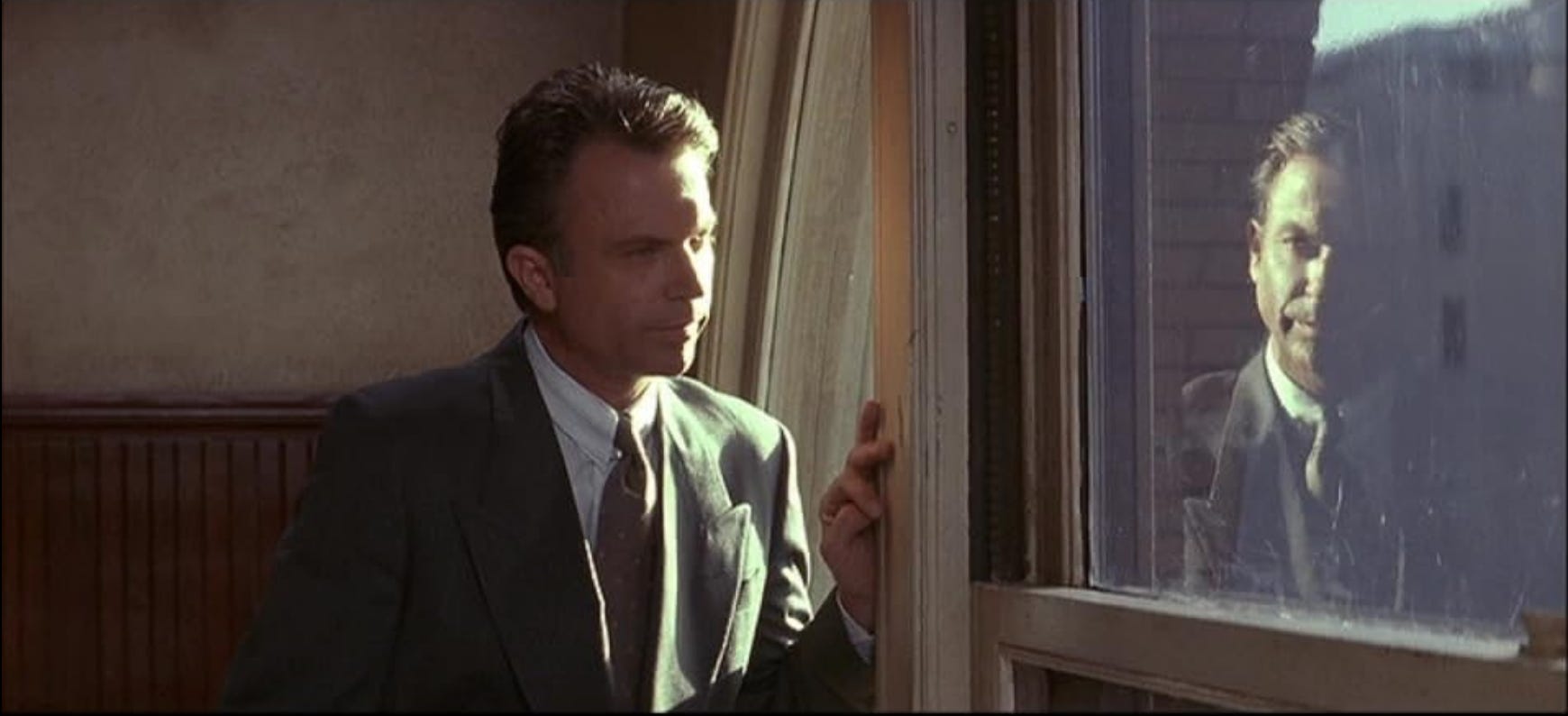
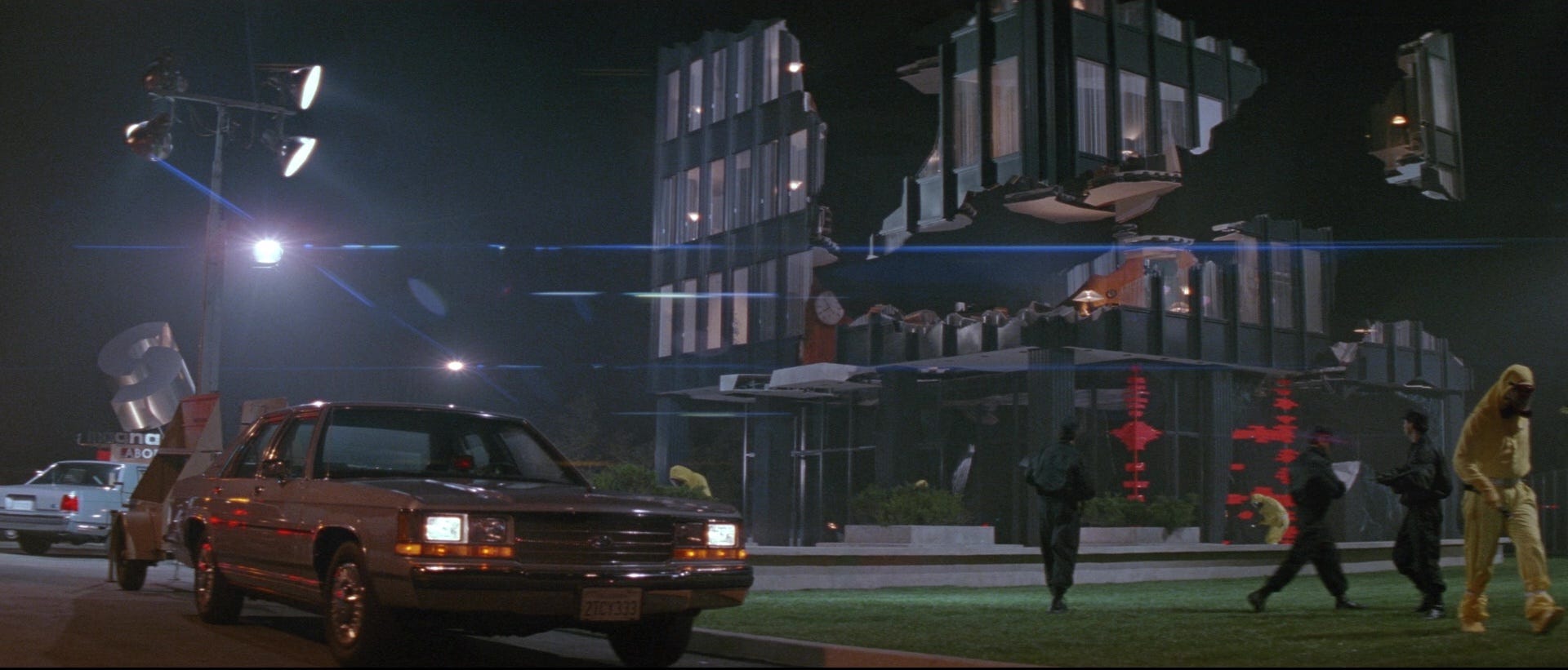
A production budget of roughly $35 million on the line, including nine months of research and development by Industrial Light & Magic, Warner Bros. was nervous about the picture and anxious about trusting it to Carpenter, who’d gone a while without a commercial hit. Seeking to control the look and feel of Memoirs of an Invisible Man, virtually none of the cast or crew of Carpenter’s previous pictures were welcomed back, exceptions being actor Donald Li from Big Trouble In Little China (in a cameo as a cab driver) and production designer Lawrence G. Paull, tasked with constructing a semi-invisible six-story building on Stage 16 of the Warner Bros. lot. Carpenter worked with ILM visual effects supervisor Bruce Nicholson. The director told Starlog, “Bruce and I watched all the Invisible Man movies, and we picked out what they did and didn’t do well. What John Fulton did for that time is astonishing. He used wire work, and an actor moving around black velvet sets. It was humbling to see how much he accomplished with such primitive technology.” Fifty-five years later, ILM was in the developmental stages of an expensive but state of the art process they referred to as “digital compositing,” scanning film into digital code and manipulating that code via computer. This offered endless applications for shots never before achieved in motion pictures. This would become known the world over as “CGI.”
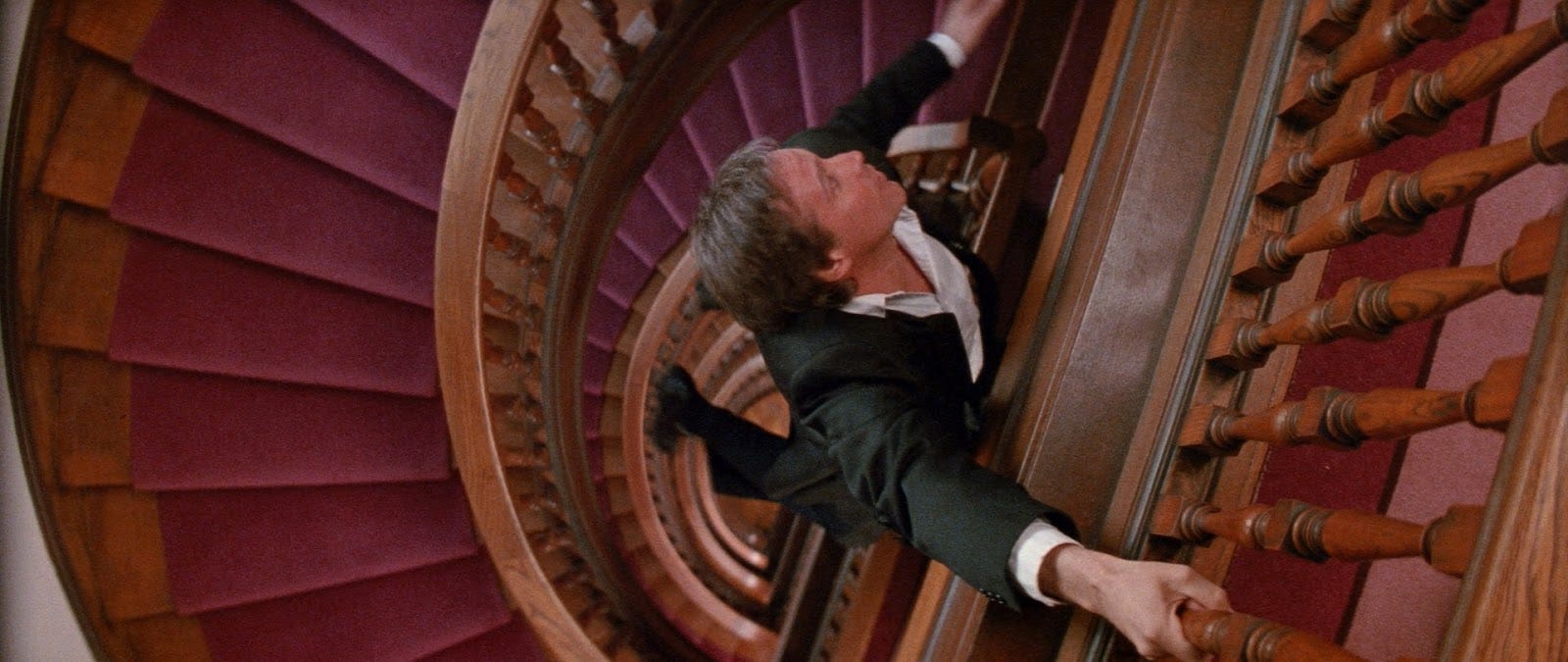
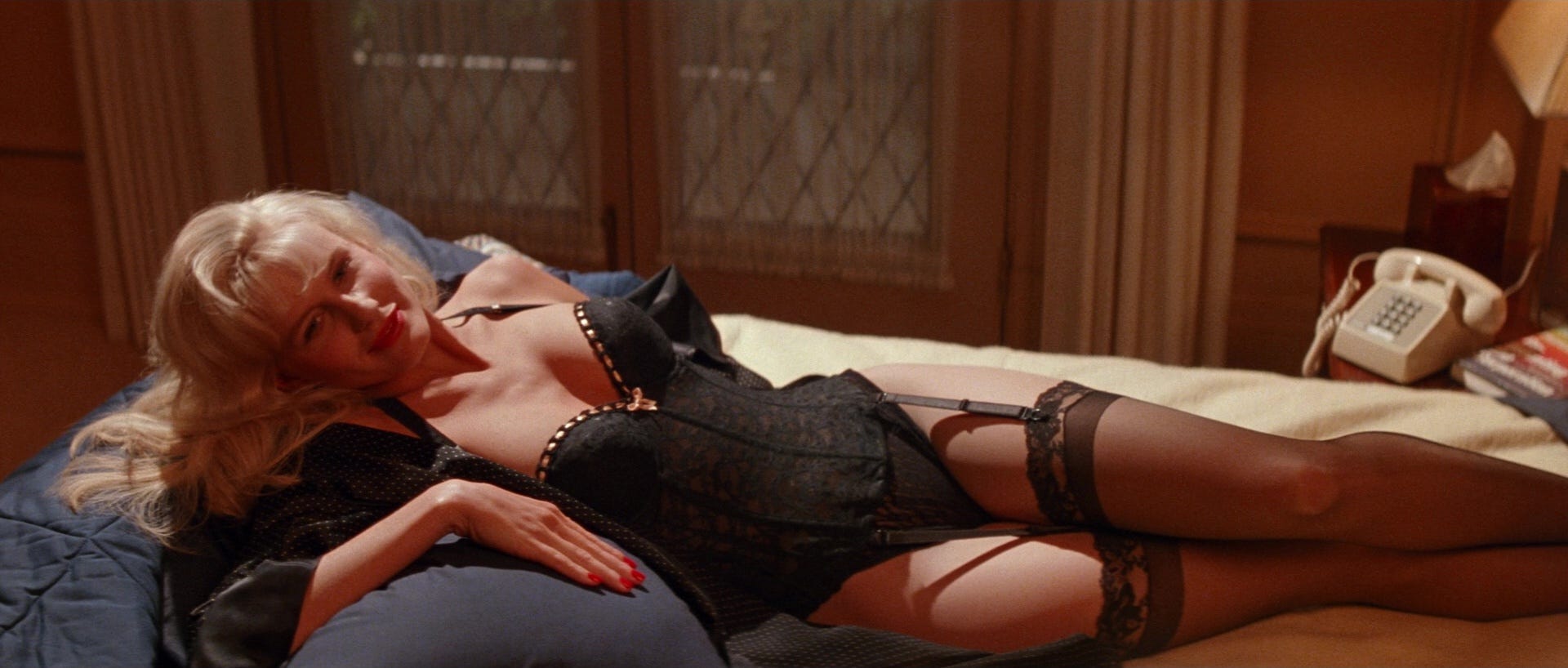
With Daryl Hannah, Sam Neill and Michael McKean filling out the cast, and Dan Kolsrud producing the film with Bruce Bodner, an 84-day shooting schedule commenced in May 1991, with three weeks on location in San Francisco. Warner Bros. anticipated having the lavish entertainment in theaters for December 1991. Chairman Robert Daly and president Terry Semel convened for a screening of a rough cut in September. What they saw compelled the studio to kick the release date for Memoirs of an Invisible Man back. The reason stated to the Los Angeles Times was that the picture required sophisticated marketing to alert audiences that it wasn’t the usual Chevy Chase funny business. In other words, Warner Bros. didn’t know how to sell what they’d seen. They set a release date of February 28, 1992, on 1,753 screens in the U.S. February was a month in which distributors often dumped films with poor commercial prospects. January was a filmgoing graveyard, as moviegoers were watching their wallets following Christmas, students returned to school, and bad weather depressed attendance in many markets, but February, August and September saw plenty of dumping too.
Critics panned the picture. Writing for the Chicago Tribune, Gene Siskel commented, “In terms of the invisibility gimmick, the film appears to play fast and loose with when we can and cannot see Chase as well as with when other characters can see him. Obviously, the commercial instinct of wanting the audience to be able to see Chase, as long as he is collecting a big salary, overrode any desire to make a daring entertainment.” He gave the movie one star out of four. Roger Ebert, in the Chicago Sun Times, offered the filmmakers constructive criticism. “How about a movie that was about the real subject of this one: A relationship between a man who can see a woman, and a woman who cannot see a man? What would they really talk about? What unsettling or intriguing sexual possibilities might there be? Daryl Hannah, who is onscreen some of the time all by herself (talking to Chase’s disembodied voice) makes as much of such opportunities as she can, and has fun with the cosmic absurdity of her situation. But the movie doesn’t help her much.” Ebert pinned on two and a half stars out of four. Eric Lindbom panned the movie in LA Weekly. “With horror pro John Carpenter directing, this adaptation of H.F. Saint’s story was positioned as that nihilistic, adult comic-book movie that Hollywood has flirted with (Darkman, Batman, TV’s Flash) but never quite delivered. Alas, Memoirs doesn’t even come close, and with Carpenter operating on a no-gore leash, the movie also fails to thrill.” Memoirs of an Invisible Man opened a distant second behind Wayne’s World, then in its third weekend of release. It was surrounded by new movies with big stars (Stop! Or My Mom Will Shoot, Medicine Man, Final Analysis) whose studios had diminished hopes for. For its third weekend in release, Warner Bros. pulled Memoirs of an Invisible Man from almost 400 theaters.
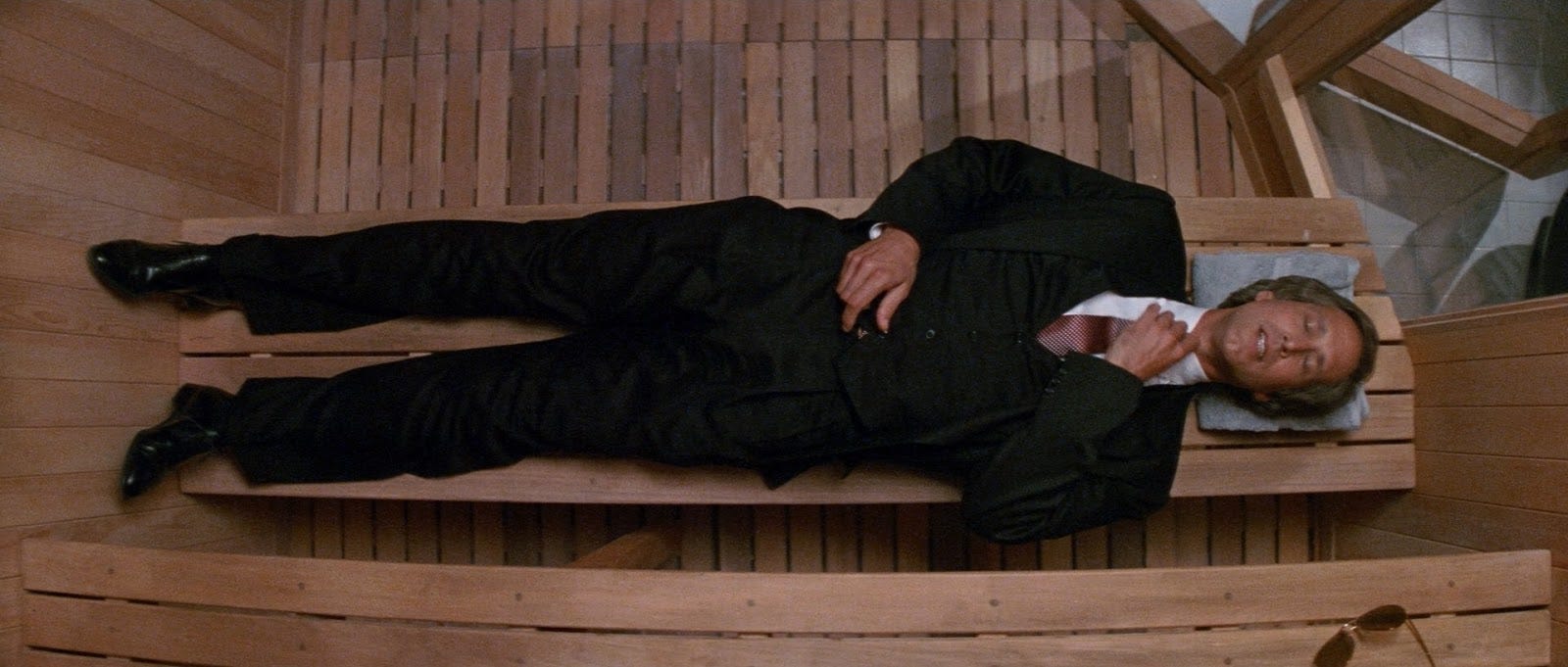
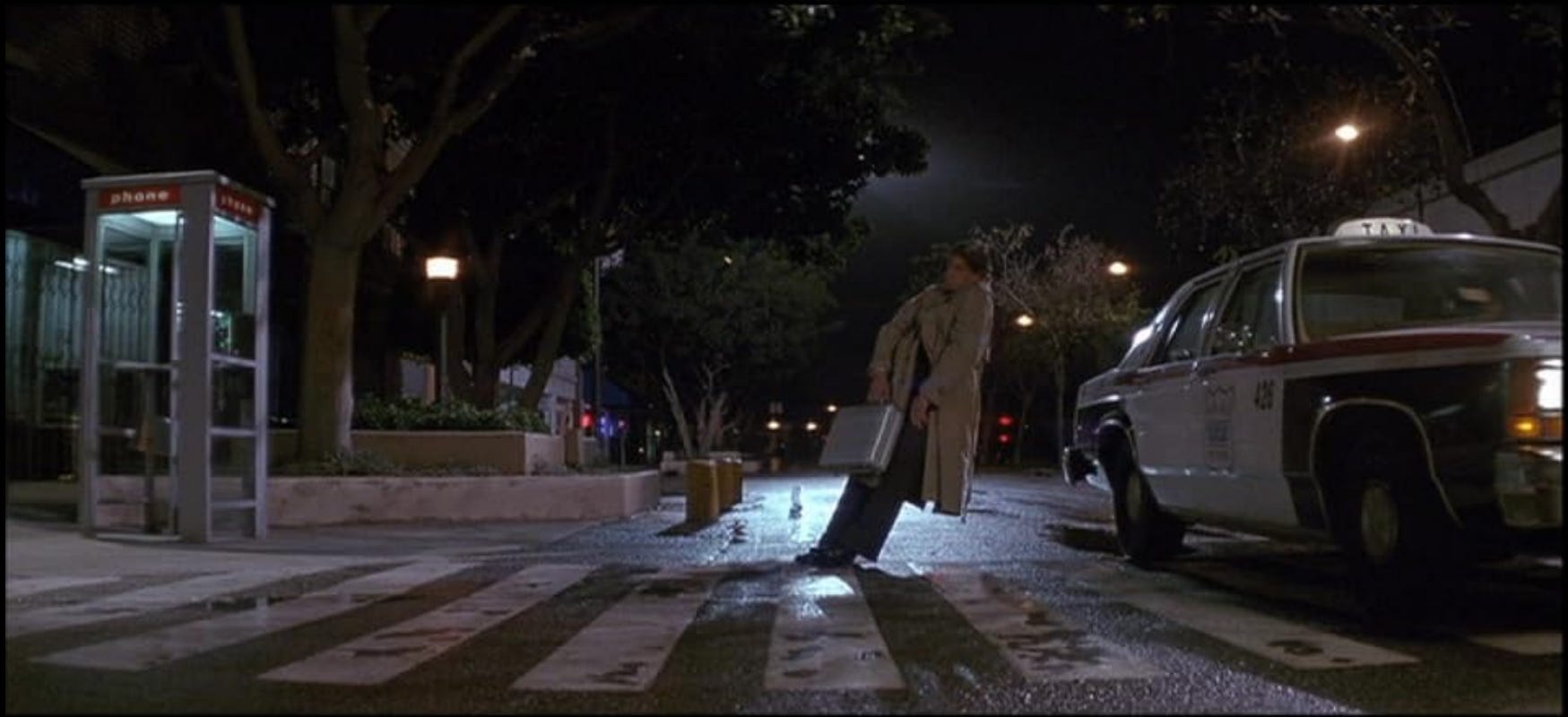
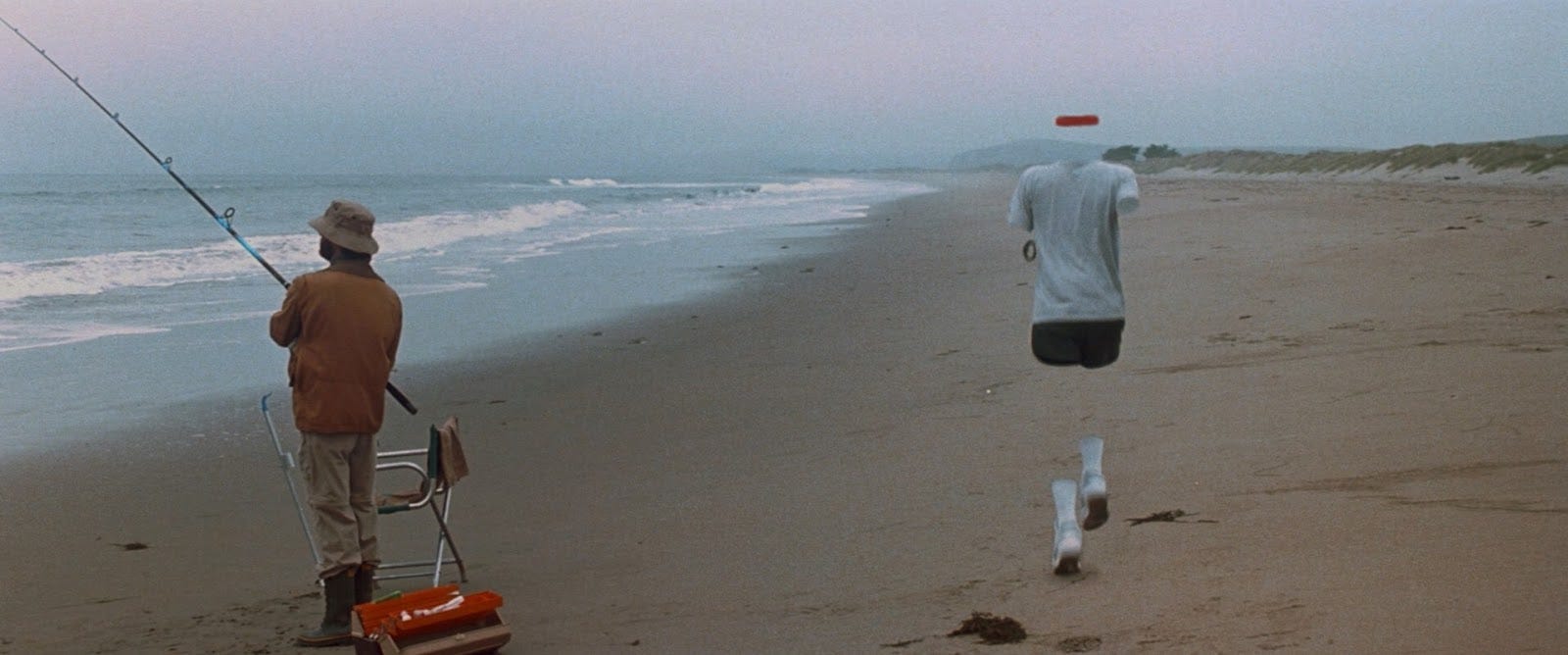
Memoirs of an Invisible Man exceeds expectations when it comes to its lowest bar: employing state of the art visual effects to depict an invisible character. Using tools that Topper (1937) couldn’t dream of, Carpenter, Collector & Olsen, and visual effects supervisor Bruce Nicholson play with a grab bag of tricks. The invisible man inhaling tobacco smoke into briefly visible lungs is striking, and in its standout sequence, he strips out of his clothes while running through Huntington Park in San Francisco. The movie gets some laughs when Chase’s invisible man uses a drunk to hail a cab, and later, overwhelmed by his situation, projectile vomits. For students of visual effects, or the history of CGI, the picture is a must-see. The writers seem to have paid a sufficient amount of thought to the predicaments of invisibility and were ready for a comic star capable of doing pratfalls–someone like Chevy Chase in his prime–to take on the challenge of tripping down stairs because he can’t see his feet, or slamming into doors because he can’t see his hands.
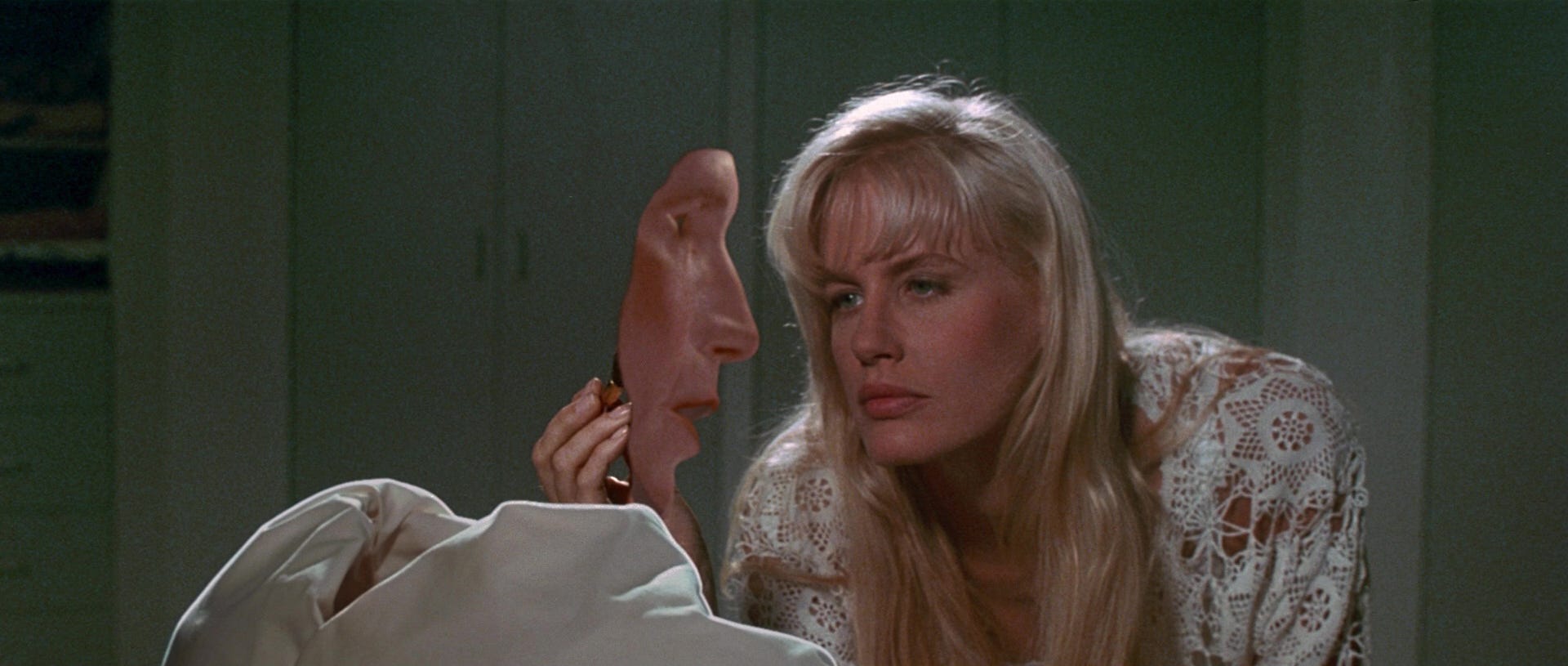
Relocating the action of the novel from the Big Apple to the Bay Area, Memoirs of an Invisible Man starts to go wrong by going moody. In an attempt to get an author’s voice onto the soundtrack, the filmmakers employ voice-over narration by Chase, but instead of wry observation, upload a downcast mood reminiscent of a seedy detective film. John Carpenter’s gifts as a filmmaker communicate quite well how rough it would be to live invisibly, making the voiceover null and void. Chevy Chase, the right star to play the film for physical comedy, is the wrong star to elicit sympathy in an existential drama, at his best when being a know-it-all jerk. Even in the Vacation movies, the characters we sympathize with are those suffering from Clark Griswold’s ineptitude, not Clark. Chase’s desire to stretch while admirable, is awkward at best, and his love scenes with Daryl Hannah are as creepy as those opposite Cindy Morgan in Caddyshack (1980). Tom Hanks or Jeff Bridges would’ve been ideal casting in Reitman or Carpenter’s versions, a likable leading man whose circumstance isolates him from his friends. The cinematography by master of light William A. Fraker is striking, ILM’s visual effects impeachable, and Shirley Walker, who’d work mostly in TV and reunite with Carpenter to compose the music for Escape From L.A. (1996), turns in a workmanlike score with shades of Hitchcock. Removing these technical elements, there’s as little left to hang a hat on as the invisible man’s head.
Video rental category: Science Fiction
Special interest: Man On the Run
Hey Joe, good morning! Well, as usual, your research is impeccable and most illuminating… Now I know why I didn’t like the film and just had an uneasy feeling as I sat in the theater watching it… There were some bits that made me laugh, but the movie as a hole wasn’t a comedy… And fell short of an exploration of what it would truly be like to be invisible and negotiating this world. As always, Joe great job, thanks! Peace! CPZ.