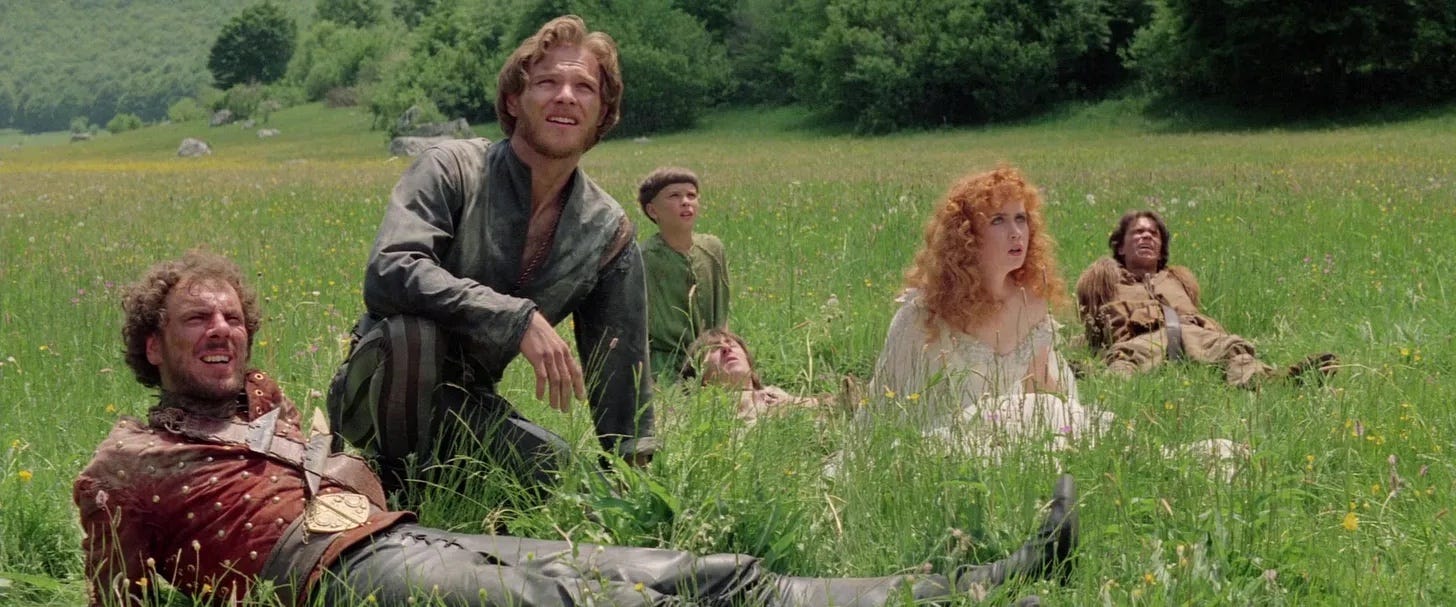

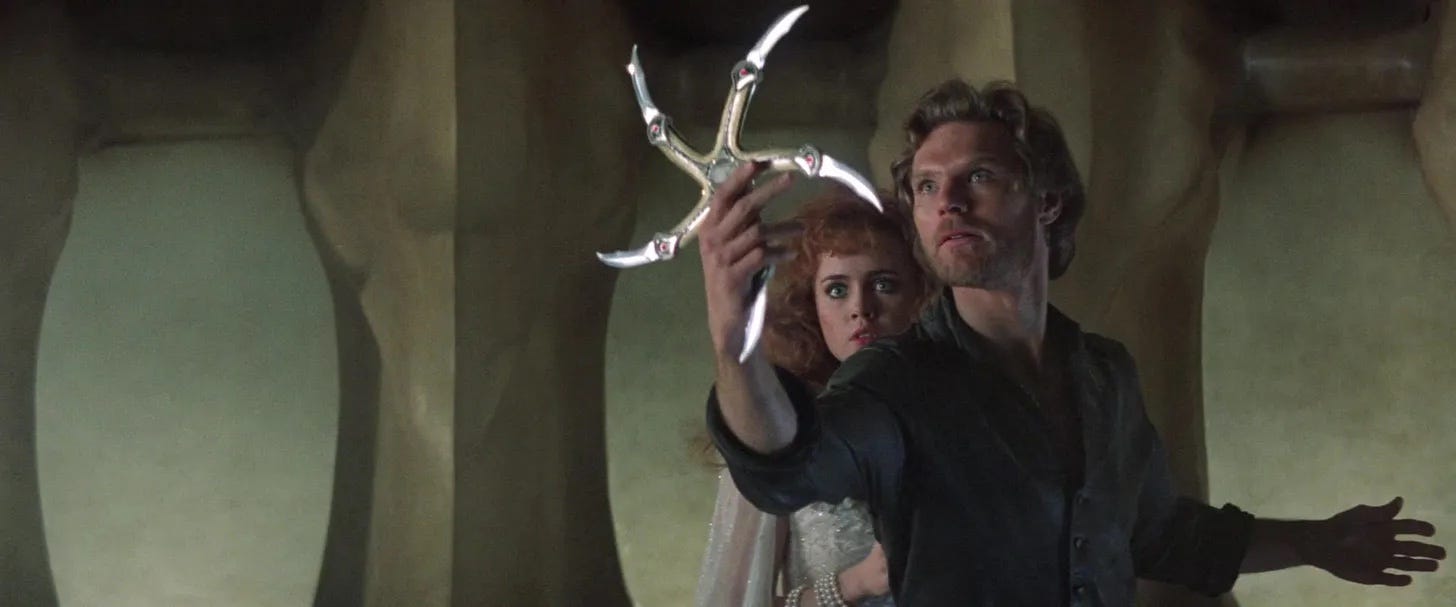
KRULL (1983) is a toy box crammed with so many amusements that Santa Claus would have needed to jump on the lid to shut it. Plastic is all over the place, some of it busted, but for those who want toys, we get toys. Trespassing on the roleplaying game Dungeons & Dragons and plundering Star Wars (1977), the filmmakers do steal their way through this fantasy adventure, but steal from the right sources–Errol Flynn swashbucklers, Ray Harryhausen monster pictures, even some Robert E. Howard–with technical finesse and robust cheer.

In 1980, Columbia Pictures chairman Frank Price and VP of production Guy McElwaine called for a meeting with Ted Mann, founder of Mann Theaters, the mogul having signed a two-year development deal with the studio to pitch them ideas he was reasonably certain his customer base would purchase tickets for. With Mann’s business partner Ron Silverman serving as producer, Mann-Silverman Productions had produced a modest commercial hit, the prison drama Brubaker (1980) starring Robert Redford. Wherever the idea originated–no one has assumed blame or tried to take the credit–Price and McElwaine wanted to use TSR’s massively popular role-playing tabletop game Dungeons & Dragons as the basis for a movie, taking the swordsmen, sorcerers and creatures out of the imaginations of game players and populating a fantasy adventure film with them. Instead of bidding on the film rights at considerable cost, their film would be called anything but Dungeons & Dragons.
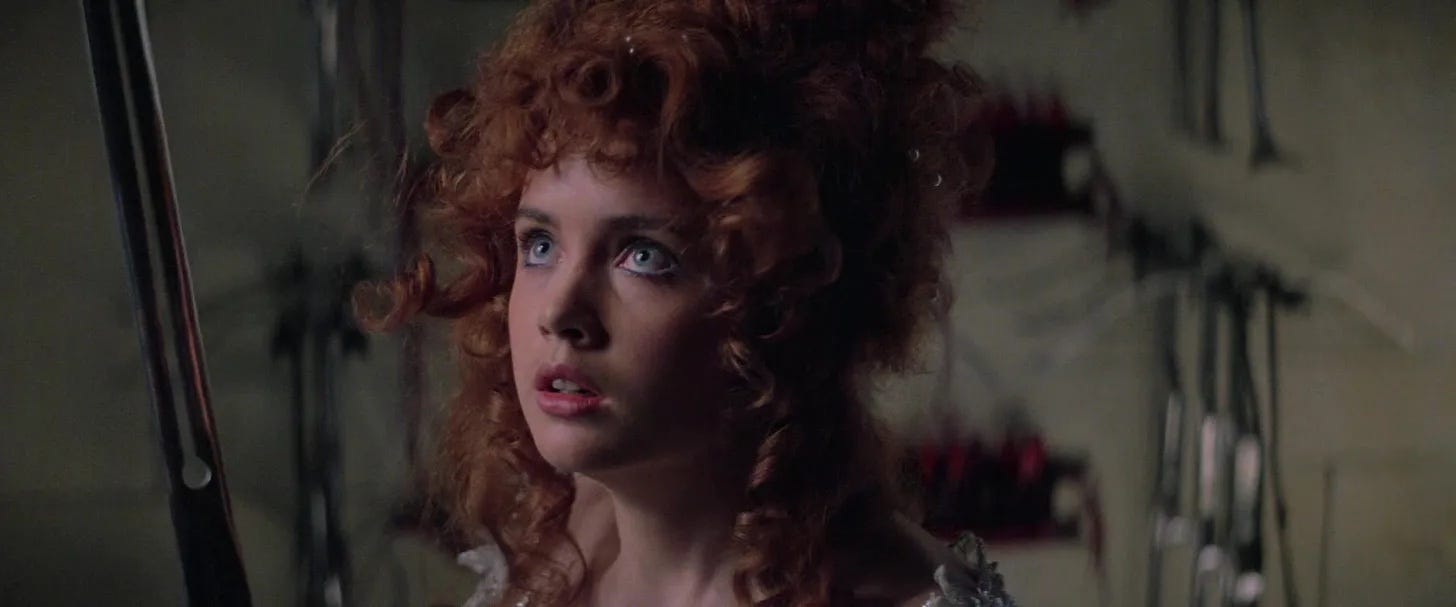
To develop a story, Silverman turned to screenwriter Stanford Sherman. A native of Akron, Ohio and graduate of Yale, Sherman had started his professional career with an advertising agency in New York. Writing on spec, Sherman sold scripts for television’s The Man From U.N.C.L.E. and in 1966, the first of eighteen episodes he’d pen for Batman, beginning with a two-parter in which the Penguin (Burgess Meredith) runs for mayor of Gotham City and to oppose him, Batman (Adam West) announces a Bat campaign. Sherman would write a spec script titled Sweeter Than Honey that Alan J. Pakula came close to directing and was commissioned to write a madcap comedy for producer/ director Stanley Kramer titled The Sheiks of Araby. Neither would be produced. Ron Silverman had worked with Sherman and thought the writer had the requisite imagination for the fantasy adventure that Columbia wanted. Sherman and Silverman came up with enough of a story to commit to paper, which the screenwriter was commissioned to sketch a treatment from. Sherman came back with the first thirty pages of a script. Wary of having to go through Columbia’s story department and getting a pass, Silverman took a chance on what Sherman had titled The Dragons of Krull and invited Price and McElwaine for breakfast at Mann’s apartment to read their thirty pages in person. Price committed to developing the project on the spot.
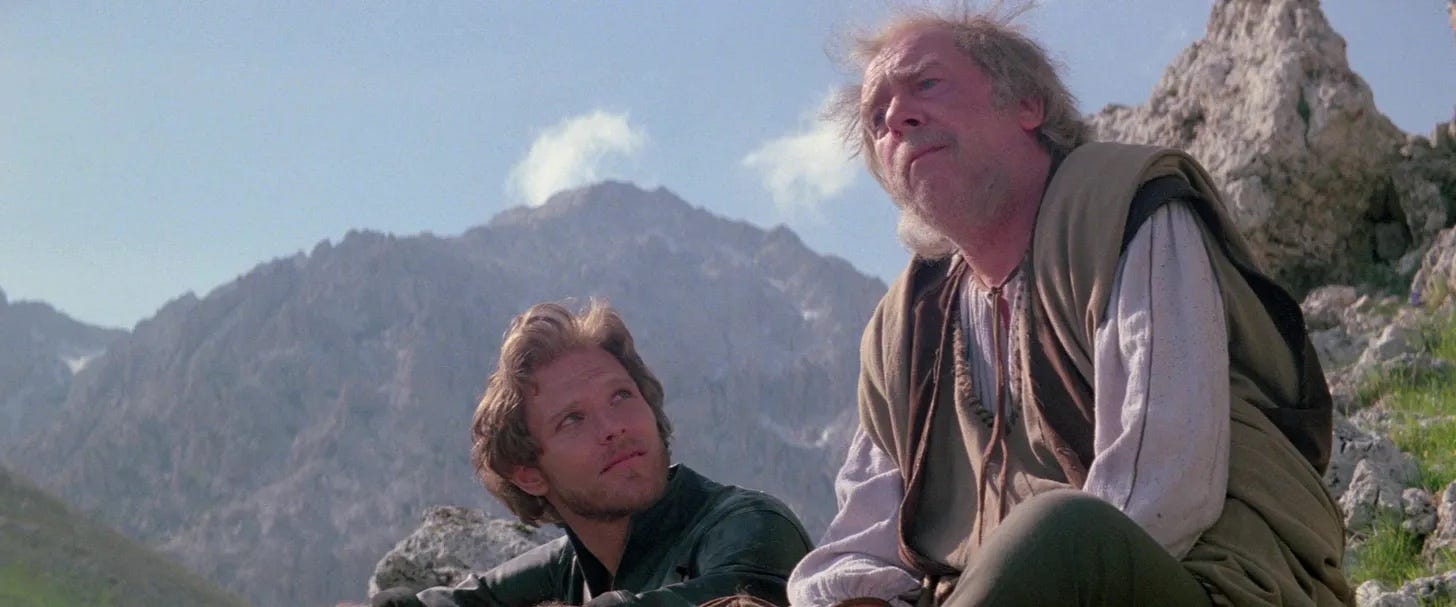
Stanford Sherman would turn in a draft of The Dragons of Krull quickly. Silverman’s only serious choice to direct was Peter Yates, a skilled journeyman whose British heist film Robbery (1967) had punched his ticket to Hollywood. Bullitt (1968), The Hot Rock (1972) and The Friends of Eddie Coyle (1973) were considered new classics by some film aficionados, while Mother, Jugs & Speed (1976), The Deep (1977) and Breaking Away (1979) pleasing to general audiences. Silverman thought highly enough of Yates to wait two months for him to wrap his new film, the thriller Eyewitness (1981), without engaging other directors. Yates was dubious about repeating himself, encountering an underwater sequence within the first ten pages of The Dragons of Krull that reminded him of The Deep, but according to Silverman, the director’s wife saw in the material an opportunity for her husband to try something new: an epic fantasy. With the press in an uproar over films that had run lavishly over-budget–Apocalypse Now (1979), 1941 (1979), Star Trek: The Motion Picture (1979), The Blues Brothers (1980), Heaven’s Gate (1980)--Columbia took the measure of placing Mann, Silverman and Yates on the company payroll for three months in late 1980 so the filmmakers could storyboard, budget and schedule The Dragons of Krull before the studio committed to production or distribution.
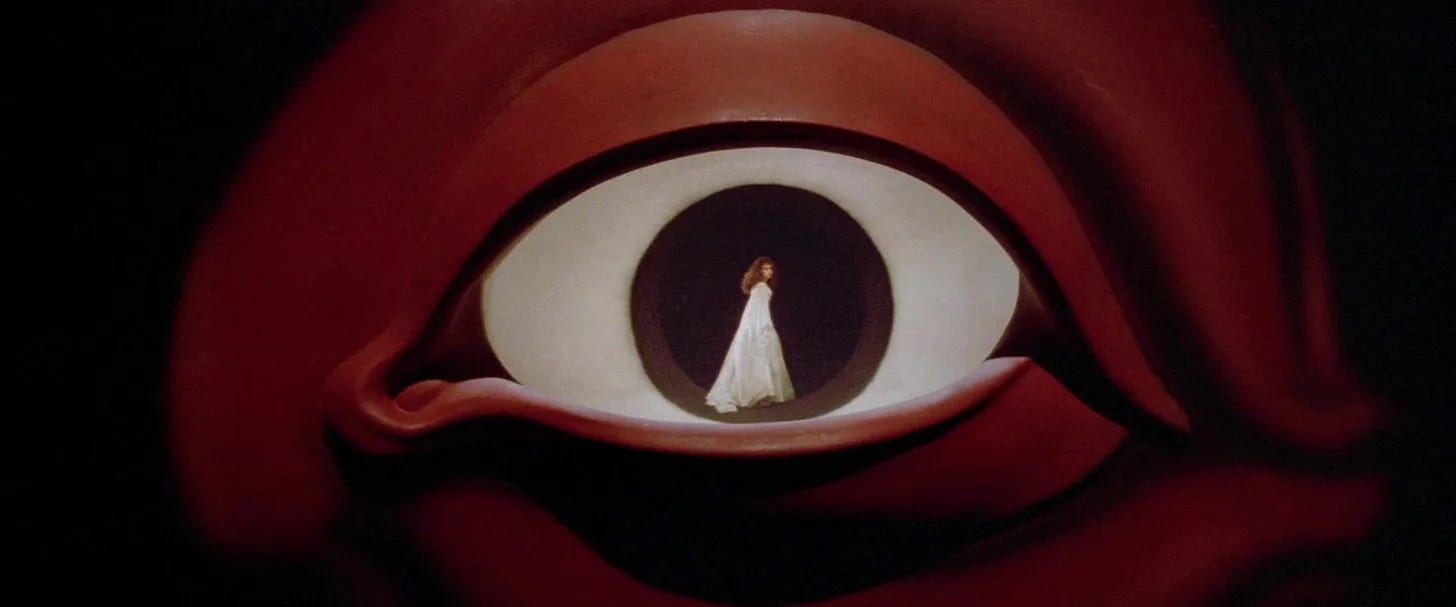
When Ron Silverman and Peter Yates arrived in London for pre-production, they made three key hires: Steven Grimes, the British production designer who’d worked with director Sydney Pollack on six pictures up to The Electric Horseman (1980); Peter Suschitzy, the cinematographer of The Empire Strikes Back (1980); and Derek Meddings, the visual effects supervisor of Moonraker (1979) and For Your Eyes Only (1981), a miniature and model effects wizard who’d worked on several James Bond films, as well as Superman: The Movie (1978). Yates huddled with Stanford Sherman to work on the script before proposing that a fresh writer–Steve Tesich, author of Breaking Away and Eyewitness–take over. According to Silverman, Tesich’s draft backed away from adventure in favor of dialogue, a result that neither the producer or studio deemed acceptable, and after spending the entirety of 1981 in pre-production, Sherman was brought back in December to generate the shooting script for what was now titled simply Krull (the WGA would award sole writing credit to Stanford Sherman).
The engine of Sherman’s early scripts had been a dragon, the familiar beast abducting a princess and setting the plot in motion, but Dragonslayer (1981) had beaten the filmmakers to the punch, an extraordinary live-action dragon animated by Industrial Light & Magic. The screenwriter refashioned his villain into an interstellar creature referred to as the Beast, whose army arrives on the planet Krull to enslave its populace, riding forth from a Black Fortress which teleports to a new corner of Krull each day. Tasked with describing his new film to the press, Yates likened it to Captain Blood (1935), Star Wars and Excalibur (1981), in other words, a swashbuckling science fiction film with sword and sorcery elements. Christopher Tucker, the makeup designer of The Elephant Man (1980), had been commissioned to design the creatures, but when his work proceeded at a pace too slow for what had been scheduled for a December 1981 start, Nick Maley, a member of the makeup team that had built Yoda for The Empire Strikes Back, was approached. Looking to make his own mark, Maley accepted the job, redesigning and building costumes for the Slayers–in six weeks.
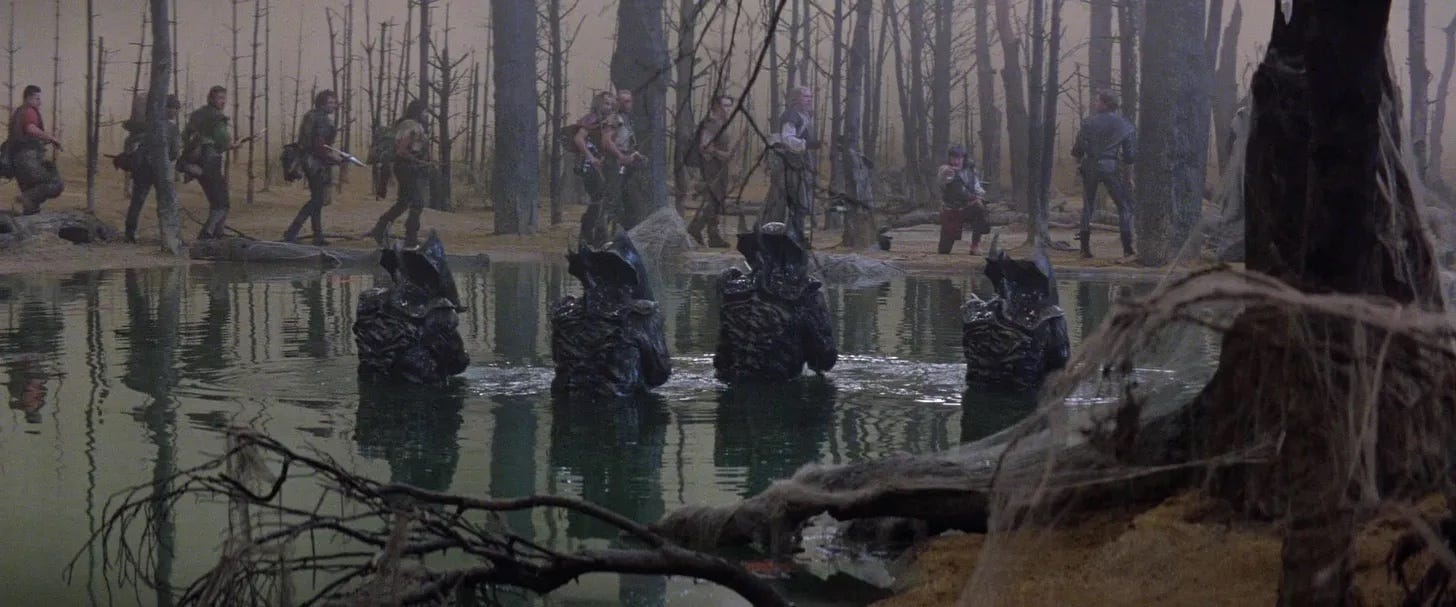
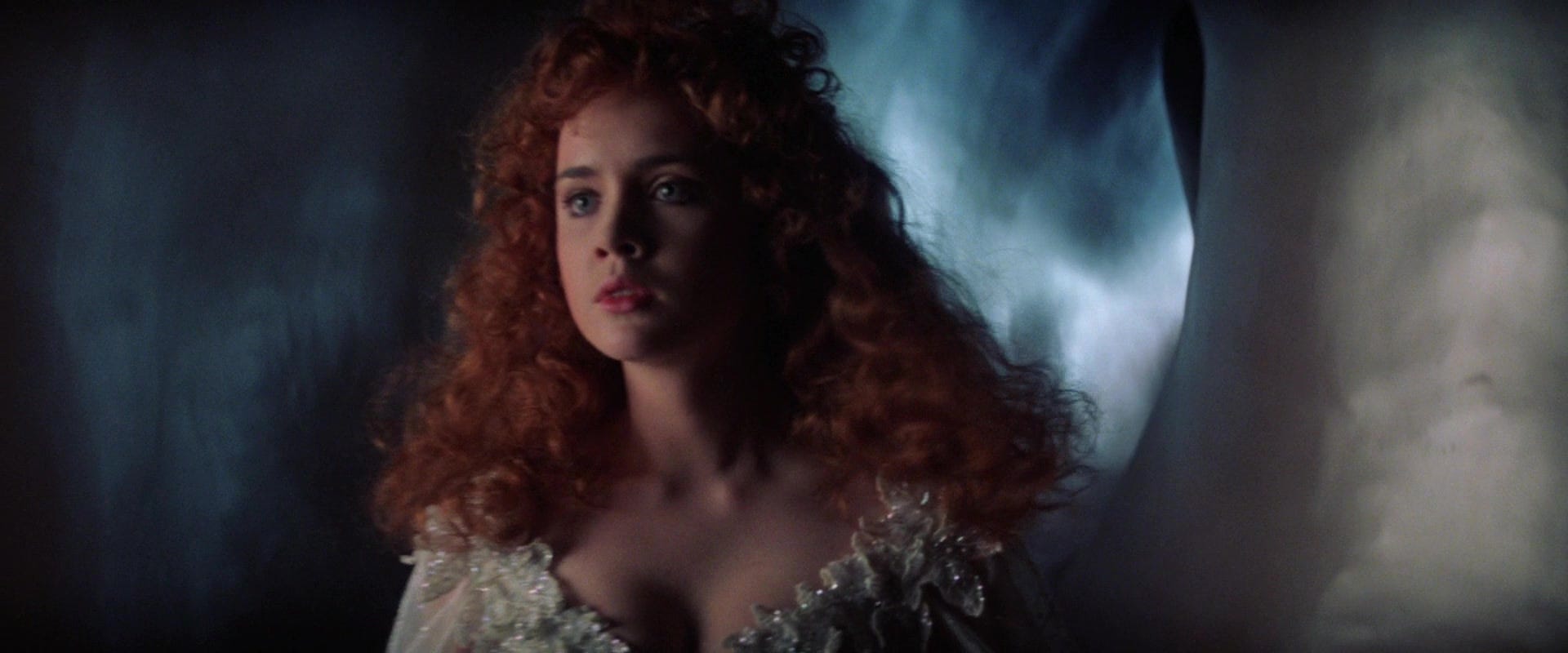
The producers and financing for Krull were American, and so was the lead actor, 31-year-old Ken Marshall, who’d starred in the Italian-produced television mini-series Marco Polo. Much of the remaining cast was composed of players from the U.K.: Lysette Anthony (then an 18-year-old model making her film debut), Freddie Jones, David Battley (as the film’s comic relief, a magician named Ergo), Alun Armstrong, Liam Neeson, Robbie Coltrane, Bernard Bresslaw (playing a benevolent Cyclops) and Francesca Annis as “the Widow of the Web.” The production budget for Krull was roughly $25 million, a less extravagant price than either Return of the Jedi ($32.5 million) or Superman III ($39 million) would come with, but a considerable cost. Filming commenced January 1982 at Pinewood Studios in England, where twenty-three sets would be constructed on ten soundstages. Pinewood’s colossal 007 Stage–built in 1976 to film the submarine base for the James Bond extravaganza The Spy Who Loved Me–would be utilized to shoot the swamp sequence, in which the heroes contend with an ambush by Slayers and with quicksand. Location shooting took place on the volcanic island of Lanzarote in the Canary Islands of Spain (noticeable in the scene where the party wrangles the Fire Mares) and in the photogenic region around the city of L’ Aquila in northern Italy (for the mountain climbing scene).
The marathon to get Krull into theaters concluded on July 29, 1983, when Columbia opened the picture in 1,281 theaters in the U.S., a bigger release than blockbusters like Flashdance and Vacation had enjoyed. Critics were unimpressed, to put it mildly. On At the Movies, Gene Siskel and Roger Ebert gave the picture two thumbs down, fixating on the films logical contrivances, of which there are several. Ebert tipped off by stating, “Our next movie is named Krull and it’s a very expensive, ambitious version of those sword and sorcery movies, in which the past meets the future and knights with swords battle villains with laser guns, and these movies are basically ridiculous. I mean, you just know a horse can’t outrun a spaceship. Krull is one of the most boring, nonsensical, illogical fantasies in a long time, maybe all the way back to Dragonslayer.” Siskel chimed in, “I sat here with so many questions, including if the mountain could transport itself, why do we have to see it in the opening titles?” Siskel acknowledged the villain was one of the best since Star Wars, but one that the heroes should have had no way to defeat.
Siskel & Ebert ranked Krull even lower in the quality than another summer movie they reviewed that week: Staying Alive, a glam rock sequel to Saturday Night Fever starring John Travolta. Writing in LA Weekly, Michael Dare panned it. “The only people who will have a swell time watching Krull are fans of plot inconsistencies. For one thing, why doesn’t the bad guy tie down and rape the princess he’s kidnapped instead of just threatening her and waiting for her daring rescue? One can only assume that Peter Yates has never read Ursula LeGuin, Robert Heinlein, or any other practitioner of true fantasy. That so much money was obviously spent on such mindlessness only compounds the misery. It might not be in 3D, but is one of the best films entirely in clicheorama.” Krull opened head-to-head against National Lampoon’s Vacation and a horny teenager comedy starring Matthew Modine and Phoebe Cates titled Private School. The PG-rated fantasy adventure earned less per screen than either, and spent only three weekends among the top ten grossing films in the States. It qualified as a critical and commercial flop, but over time, did win over a significant number of science fiction/ fantasy fans, building a cult following among viewers who might have been too busy playing Dungeons & Dragons to see Krull in theaters.
Krull is broken in two critical areas. Its villain, the Beast, doesn’t work, not when it’s on screen. As a galactic villain, it might’ve been effective as something teased in dialogue for subsequent films, like Jabba the Hutt in Star Wars. Played here by an actor in a rubber suit, it looks vaguely like Gill Man from Creature of the Black Lagoon, distorted optically to appear huge. While the effect is eerie, it’s not clear that the Beast is enjoying being the Beast, or what it wants by conquering worlds and in particular, abducting a princess, their relationship complicated by a height gap of about fifty feet. The gold standard for villainy in films like Krull is Maleficent in Disney’s Sleeping Beauty (1959), or for space opera, Darth Vader, and the corner the filmmakers backed into when they discarded their dragon leaves them without a good villain. Stanford Sherman is largely writing with his wrists bound, revering faerie tale tropes too strictly, like the stoic prince setting off to rescue his princess. Even in 1982, the characters played by Ken Marshall and Lysette Anthony (the latter dubbed by American actor Lindsay Crouse for no credible reason whatsoever) warranted agency. There’s no compelling storytelling reason for the princess to be imprisoned. Having their wedding party wiped out and being left to watch their world enslaved would be sufficient punishment, and more interesting, sending the princess off on a fool’s errand to vanquish the villain, the prince reluctantly going along to protect her. While not necessarily original, it would’ve at least given the characters depth.
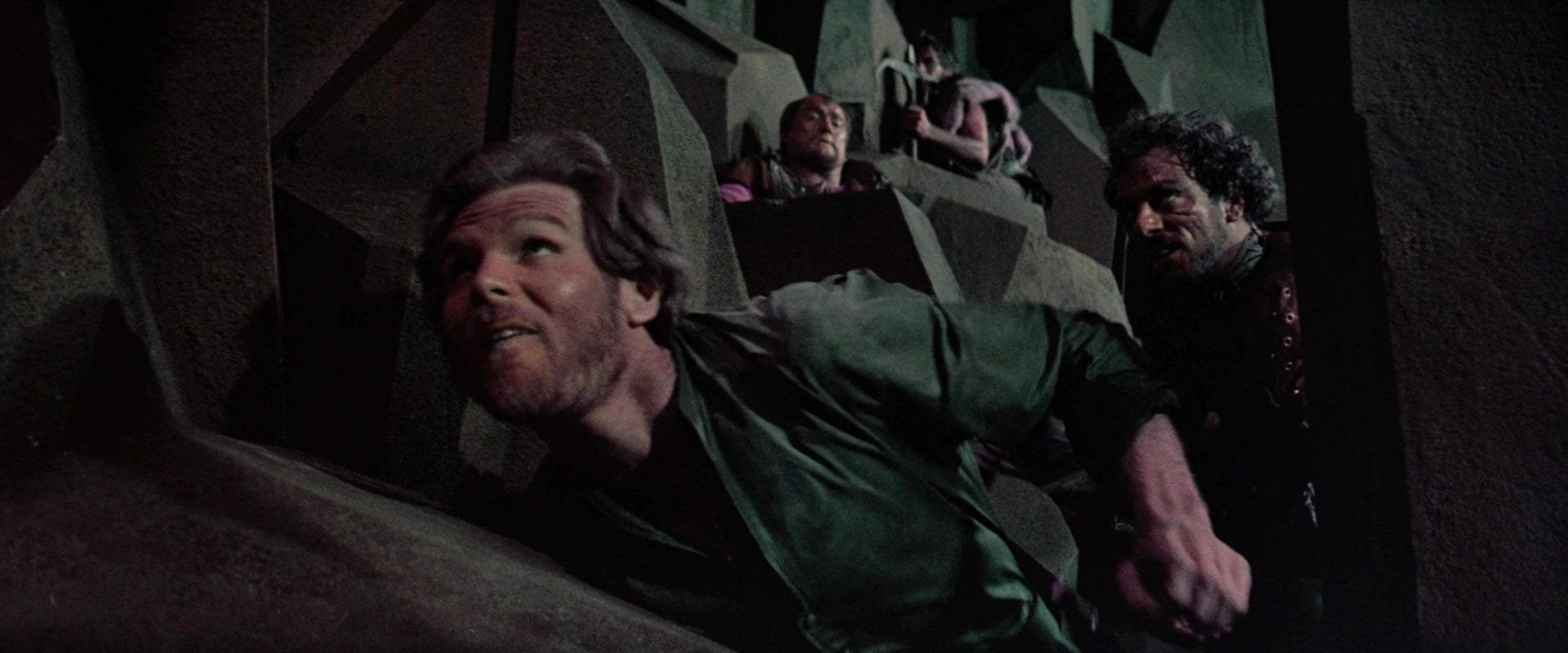
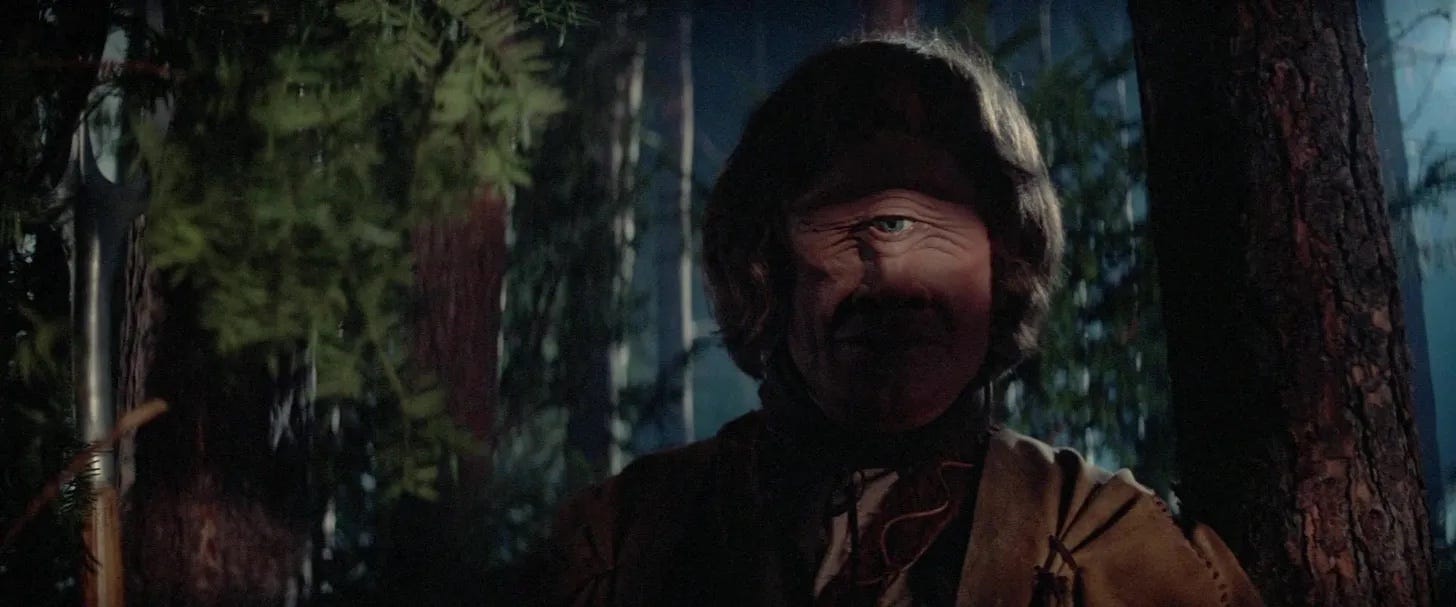
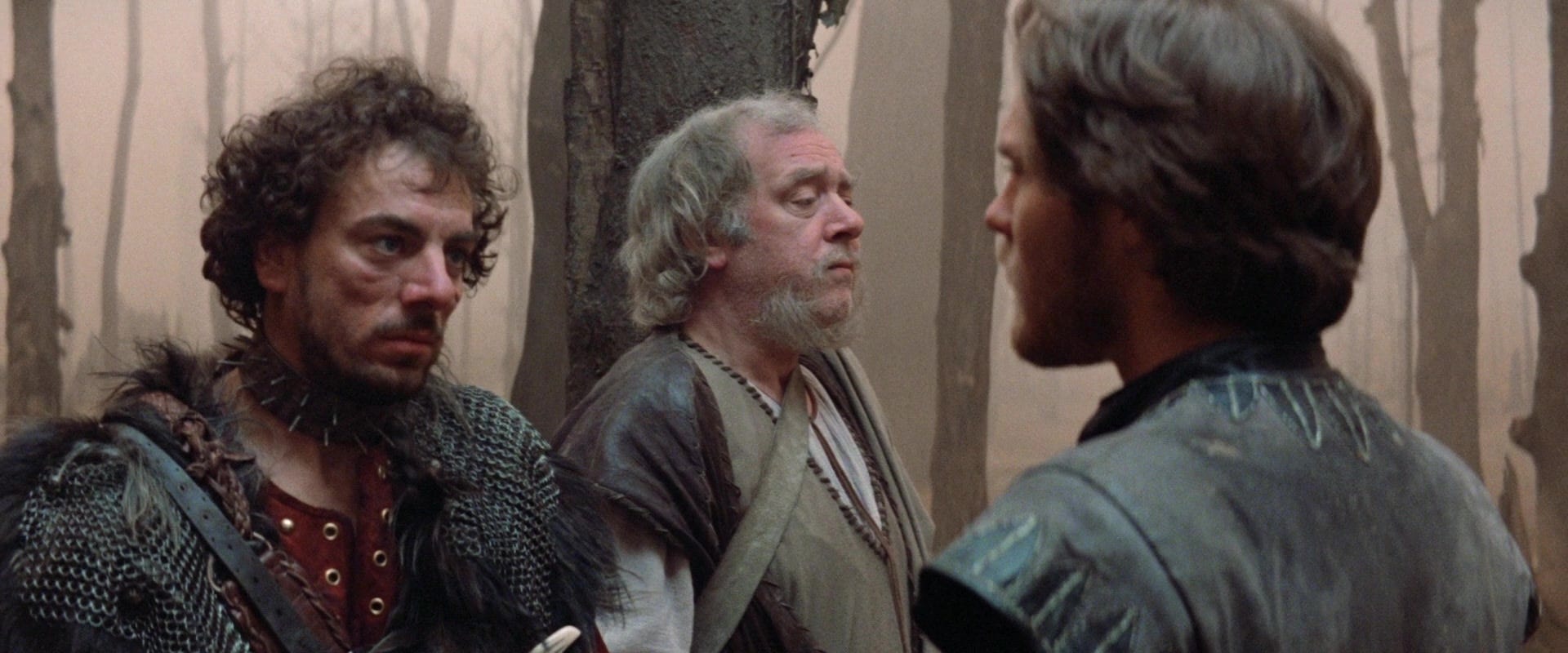
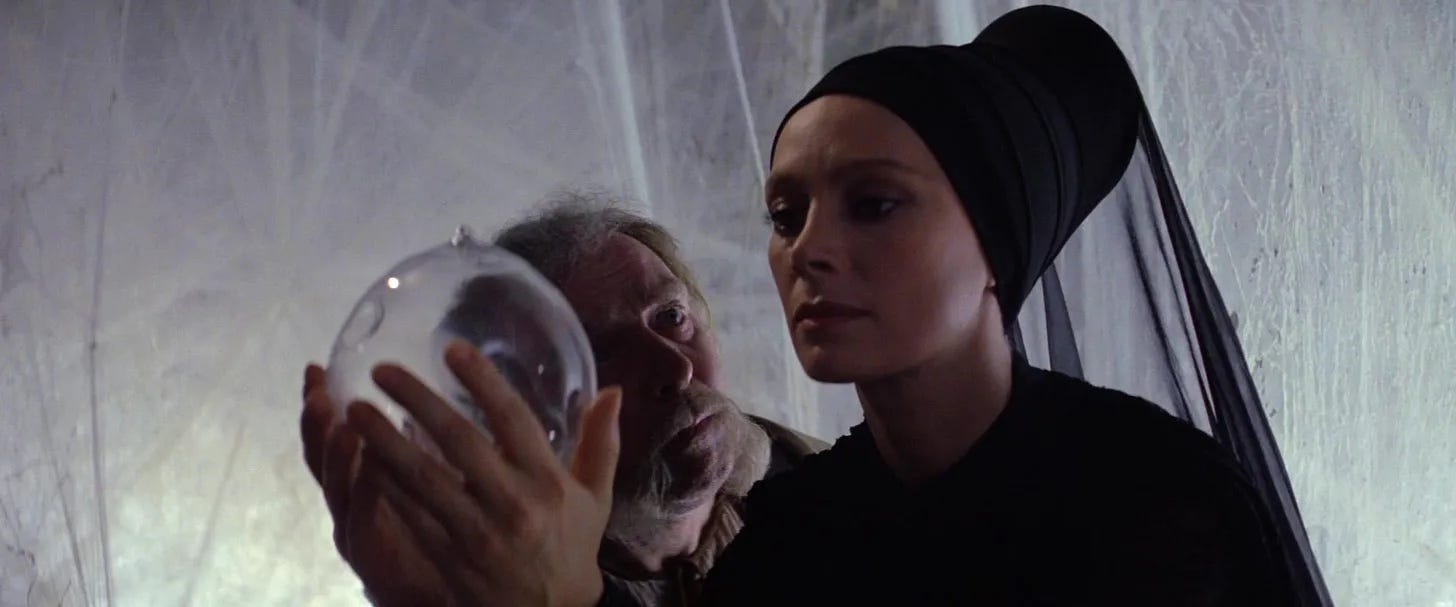
There are some treats to be had in Krull. James Horner, coming off Star Trek II: The Wrath of Khan (1982) and 48 HRS. (1982) and establishing himself as the most prolific film composer not named John Williams or Jerry Goldsmith, composed a bold, exciting score–performed by the London Symphony Orchestra–that fits a fantasy adventure like a glove. The band of thieves employed by the prince aren’t differentiated by unique skills or characteristics, but in a credit to casting director Patsy Pollock, who cast Reds (1981), the actors look letter perfect, Liam Neeson and Robbie Coltrane in early roles, and Alun Armstrong as their gravel-cheeked leader. In spite of a Cyclops (courtesy Nick Maley’s prosthetic makeup) who is to Krull what Chewbacca is to Star Wars, there are no creatures that measure up to the best in Ray Harryhausen’s stop-motion pantheon, and for a director as enamored by Errol Flynn as Yates, the fight choreography is surprisingly mundane. The film is designed and shot with a panache Harryhausen’s films lack, and the fanciful script gets close to what makes Dungeons & Dragons fun, a seer played by Francesca Annis having cloistered herself in a cavern protected by a giant spider. It arrived on the market too late, the ideal release date for a family-friendly movie like this being Thanksgiving 1982. Krull would’ve been best served as as an appetizer for Return of the Jedi instead of a dessert. The movie plays much better today, particularly compared to most of the Star Wars films that have followed the original trilogy into release.
Video rental category: Fantasy
Special interest: Sword and Sorcery