

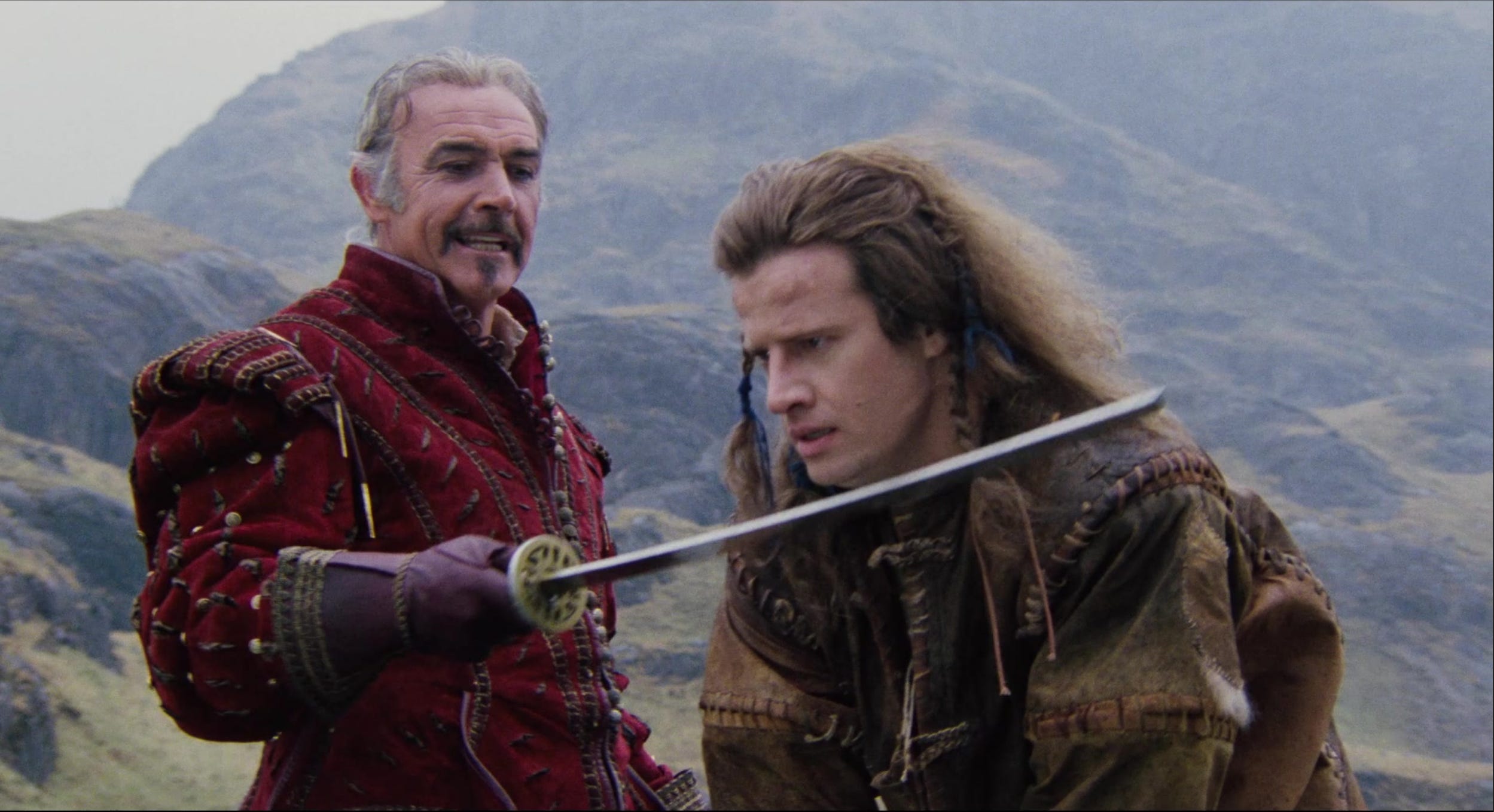
HIGHLANDER (1986) might be the worst movie to ever launch a franchise, at least a franchise that has spread from film to television to print with this sort of wildfire intensity, and forty years after its release, has yet to be contained. Its novel blend of new world action and old world adventure is a big part of its appeal, the original film mining the best of both worlds to introduce something as fresh now as it was then. When it comes to achieving greatness, both screenplay and casting get halfway there, leaving much to be desired.
Gregory Widen grew up in Laguna Beach, California and by the age of eighteen had already trained as a paramedic. He had his mind set on becoming a firefighter. In 1980, the year Widen graduated high school, he accompanied family on a trip to the United Kingdom. Among the tourist sites the Widens visited was the Tower of London. “They have the world’s largest collection of armory. I was walking through it and I thought, ‘What if you owned all this?’ Then I thought, ‘What if you wore all this?’ And then I thought, ‘What if you never died and you were giving someone a tour saying you owned all this?’” Visiting the Scottish Highlands pitched the seeds for what would become Widen’s story about an immortal Scotsman. After taking a gap year to complete his training as a firefighter, Widen enrolled part-time in the graduate screenwriting program offered by the University of California Los Angeles. His love of movies had introduced him to The Duellists (1977), the feature film directing debut of Ridley Scott. The historical drama dramatized a fifteen-year rivalry between two soldiers (Keith Carradine and Harvey Keitel) fighting for France during the Napoleonic Wars.
Tasked with completing a student thesis screenplay, Widen imagined a rivalry between two immortals spanning five hundred years. With the working title Shadow Clan, his script was set mostly in present day Washington D.C., where a Scottish warrior from the 16th century named Conor MacLeod is lurking around. His adversary, the Knight, seeks to be the last immortal standing. Widen transitioned between police investigating a series of headless corpses piling up in the present and MacLeod’s mentorship five hundred years ago by an immortal Spaniard named Juan Cid Romirez. In the climax, MacLeod duels the Knight at the Jefferson Memorial. Two of Widen’s UCLA screenwriting classmates were full-time students and roommates, Fred Dekker and Ethan Wiley. Widen huddled with the duo to generate a stronger title for his script. (In the category of things least likely to ever occur, Highlander would open in the U.S. one weekend after a horror picture Dekker had started writing and Wiley had finished, adding much tongue-in-cheek humor, as House). Their instructor Richard Walter saw in Widen’s screenplay the nuts and bolts for a script that might sell. He contacted a literary agent named Harold Moskovitz, a player who trusted Walter to scout UCLA for fresh writing talent.
Agreeing with the instructor’s positive assessment of Highlander, Moskovitz got Widen’s script to the producing tandem of Peter S. Davis & William Panzer. Davis had started his career in New York as an attorney before moving to Los Angeles in the mid-1970s with dreams of producing movies. Panzer was a graduate of New York University Film School, who as a cameraman or editor was working in commercials. In an executive producer capacity, Davis had helped raise financing for a crime film Panzer produced titled The Death Collector (1976), which featured Joe Pesci in his first movie role. They followed this with a thriller that predated The Stunt Man (1980) titled Stunts (1977) starring Robert Forster, based on a story by Robert Shaye, founder of New Line Cinema. Davis originated the story for Steel (1980), which Lee Majors both starred in and produced, and spent nearly eighteen months wrangling for a theatrical release, briefly opening under the title Look Down and Die. Panzer’s first impression of Highlander came with coverage by Harold Moskovitz, who’d retain an associate producer credit for his services.
Panzer recalled, “He said, ‘I don’t think this is the best script I’ve ever read, but a really good idea.’ It did have some of the principal characters in it and the idea of immortality, the idea of Immortals in conflict, but it was much darker. And it was less romantic.” In late 1982, Davis-Panzer Productions took out a $1,500 option on the script and didn’t waste time bringing in professional screenwriters to forge the material into a movie. Peter Bellwood held an M.A. in History from Cambridge University, where he auditioned for the Cambridge Footlights and met Peter Cook. After a stint in advertising, Bellwood was invited to write and perform with Cook & Dudley Moore in the stage revue Beyond the Fringe. Once the show completed two national tours of America, Bellwood remained in New York, writing the libretto for the 1970 Broadway adaptation of the novel Elmer Gantry, a notorious flop. Moving to Los Angeles, Bellwood found a writing partner in Larry Ferguson, who’d grown up in Klamath Falls, Oregon. Ferguson was a red-blooded jock who discovered theater arts in high school and spent much of his youth pursuing an acting career in New York and L.A. Bellwood & Ferguson were commissioned to write what qualified as Davis & Panzer’s biggest success to that time, the disaster drama St. Helens (1982), one of the first made-for-television pictures by HBO.
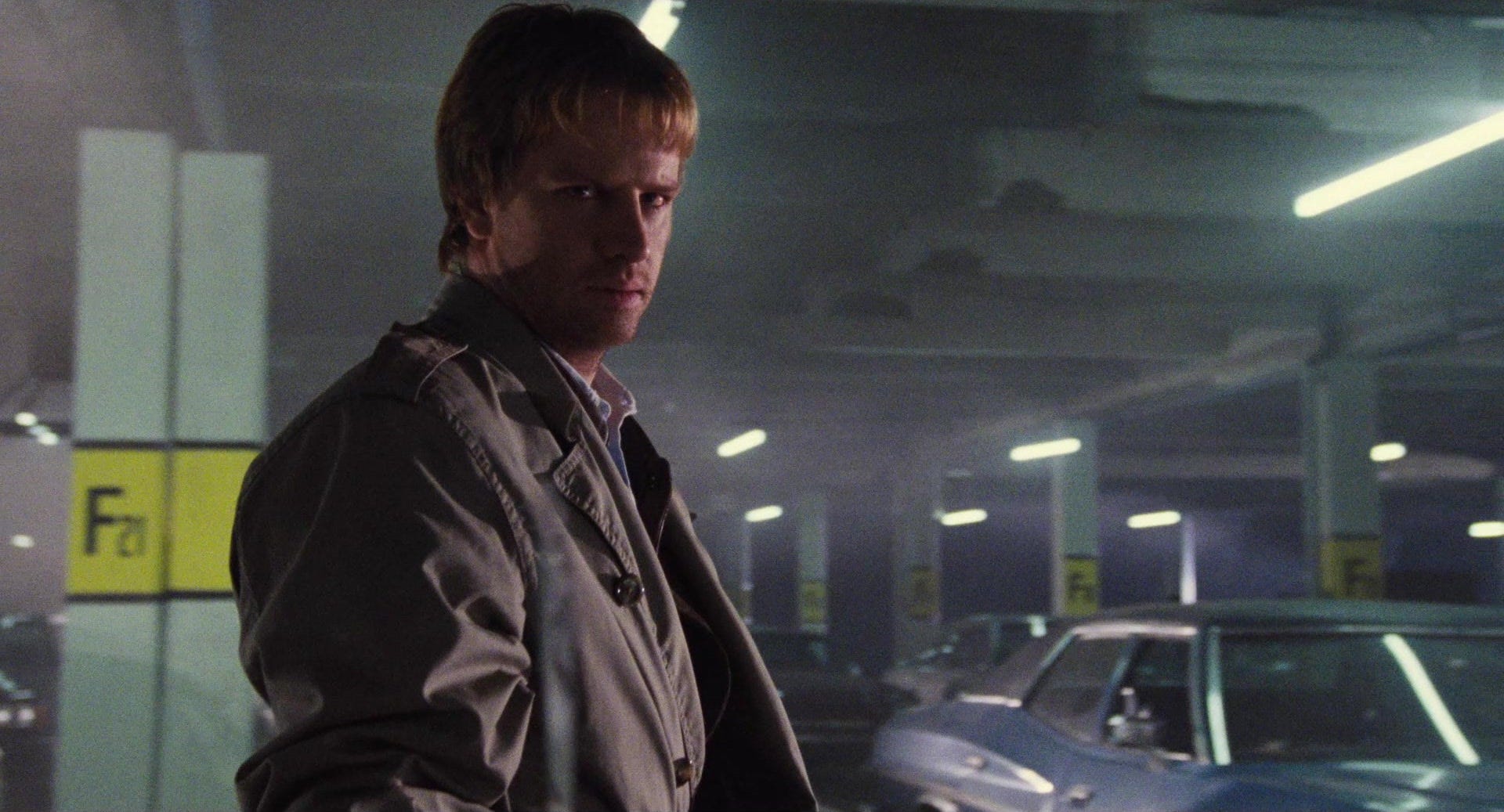
Working off a 62-page outline of Gregory Widen’s screenplay, Bellwood & Ferguson started adapting Highlander in early 1983. The faster typist, Bellwood took dictation while Ferguson prowled the room generating ideas. They relocated the contemporary action to New York, staging the opening duel in the parking garage of Madison Square Garden (Widen had staged the duel in the alley behind an adult theater). Instead of a national monument, Bellwood & Ferguson set the climactic duel at Coney Island Amusement Park. Connor MacLeod is going by the name Russell Nash in the present, while his adversary was sketched in greater detail, a Prussian named Count von Krohn, answering to the name Victor Kruger in the present. Bellwood & Ferguson cooked up a mythology for the Immortals, binding them together in an energy they called the Quickening. When an Immortal lopped off the head of another Immortal in battle, whoever was left standing inherited his foe’s power. The Quickening also made Immortals aware of each other when in close proximity. When only a certain number of Immortals were left, they would be drawn into final combat in what was referred to as the Gathering, the victor to inherit what Bellwood & Ferguson called the Prize, the lifeforce of all the Immortals. A line in Widen’s script, “There can be but one,” became a mantra in Bellwood & Ferguson: “There can be only one.”
The success of St. Helen’s earned Davis & Panzer a six-picture distribution deal with Twentieth Century Fox. Financing for Davis-Panzer Productions’ latest picture, The Osterman Weekend (1983), had been assembled by a British sales executive named Michael Ryan, and he was retained by the producers to raise the money for Highlander. Ryan had sold an Australian creature feature titled Razorback (1984) and believed its director would be a good fit for an international action/ adventure film. Russell Mulcahy had his start editing news segments for Channel 7 in Sydney. Mulcahy found himself shooting promos for local bands like AC/DC and Hush, and discovered there was an emerging market for these musical short films, which would shortly become known as music video. In a lengthy interview with Paul Rowlands for the Money Into Light blog in July 2016, Mulcahy recalled, “I went to England for two weeks to make a small video and I ended up staying two years. I did the video for Buggles, ‘Video Killed the Radio Star’, which opened up MTV. Before I went off to do Razorback I did a whole series of videos in a row: ‘True’ with Spandau Ballet, ‘Total Eclipse of the Heart’ with Bonnie Tyler, ‘I’m Still Standing’ and ‘That’s Why They Call It The Blues’ with Elton John, and ‘The Reflex’ with Duran Duran.” (Mulcahy was being modest about his credentials. He also directed Duran Duran’s first music video “Planet Earth” and the British New Wave band’s two most iconic, “Hungry Like the Wolf” and “Rio”).
In 1984, Michael Ryan put together a reel of Mulcahy’s music video work and presented it to Davis & Panzer, who liked what they saw. Mulcahy continued, “I read the script when I was cutting the ‘Wild Boys’ video. I loved the genre, I loved the action, and I loved the strange complexity of the intercutting timelines. What really grabbed me though was the sense of tragic, epic romance in the story, the man who couldn’t die and had to watch people he fell in love with wither and die in front of him. That continual pain and angst was a driving force in the character of Connor. He wanted to win the Prize because he was sick and tired of being Immortal.” William Panzer phoned Peter Bellwood with news that they’d found their director. The screenwriter recalled, “I said to Bill, ‘Has he made any movies?’ and Panzer said, ‘Yeah, he made one movie.’ When I got off the phone I called Larry and said, ‘They’re going to hire this guy Russell Mulcahy,’ and Larry said, ‘Great, what’s he done?’ and I said, ‘Well, he’s only made one movie, it’s called Razorback and at the climax of the movie, the heroine is eaten by a giant warthog.’ There was a long pause and Larry said, ‘This may be our guy.’” Mulcahy was announced as director of Highlander in December 1984.
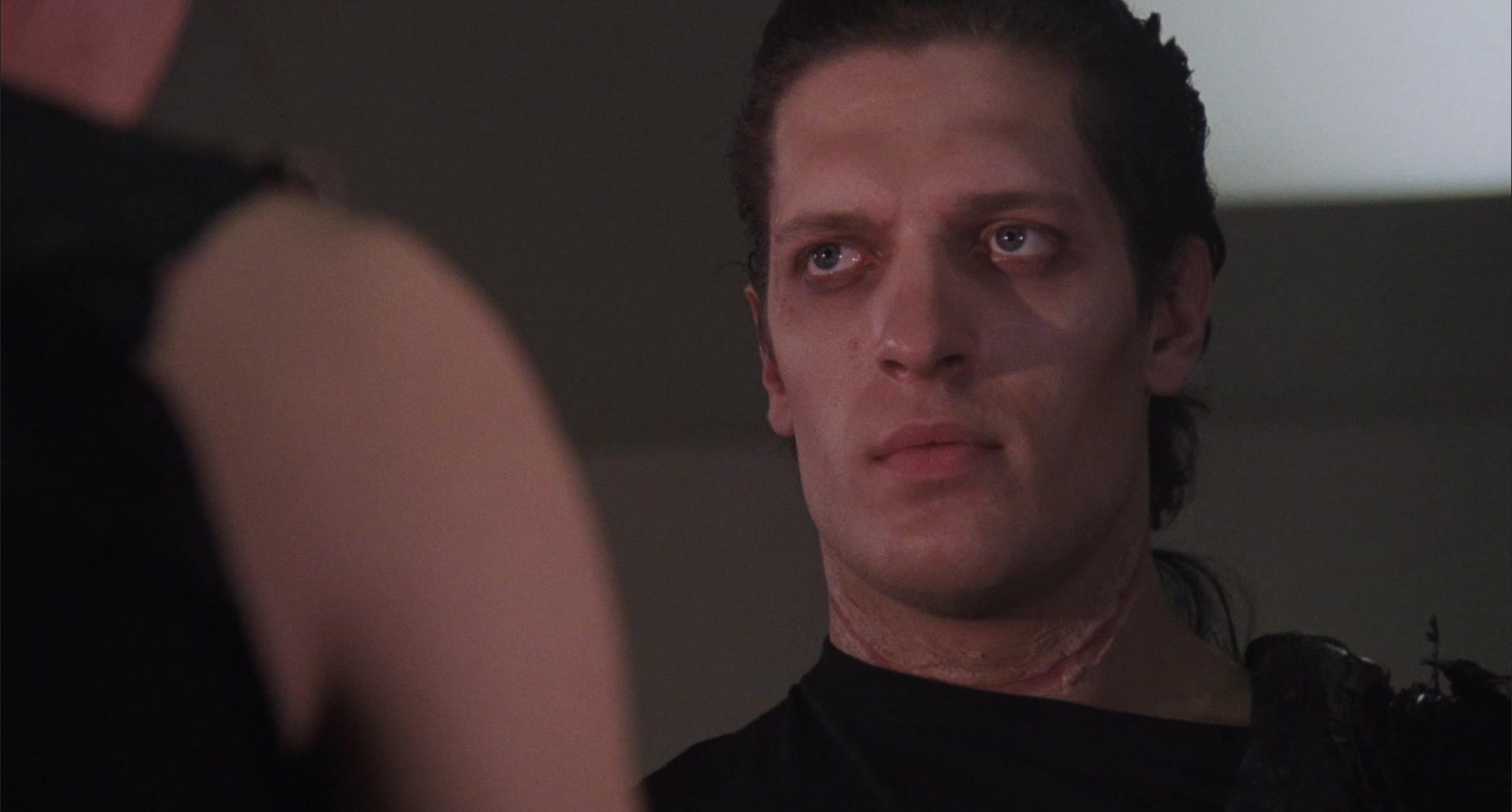
Thorn EMI Screen Entertainment saw in Highlander the potential for a movie that had something for everyone, and could perform well in markets all over the world. In exchange for distribution rights outside the U.S. and Canada, including home video, EMI–which Mulcahy was familiar with as Duran Duran’s record label–had offered to put up a production budget of $13.8 million, in effect, making Highlander a British film. When it came to casting the villain, now named Kurgan to avoid any association with Freddy Krueger, the producers threw out Arnold Schwarzenegger’s name due to his turn as The Terminator (1984), but the star had been inspired to go into acting by watching John Wayne, and was neither interested in becoming known as a bad guy or available if he had been interested. Russell Mulcahy was at a party in New York where he was talking to Sting about the character. The musician/ actor recommended his co-star from The Bride (1985), who’d played Frankenstein’s Monster to his Dr. Frankenstein. At 6’3” with a presence that made him seem a half a foot taller, the actor’s name was Clancy Brown.
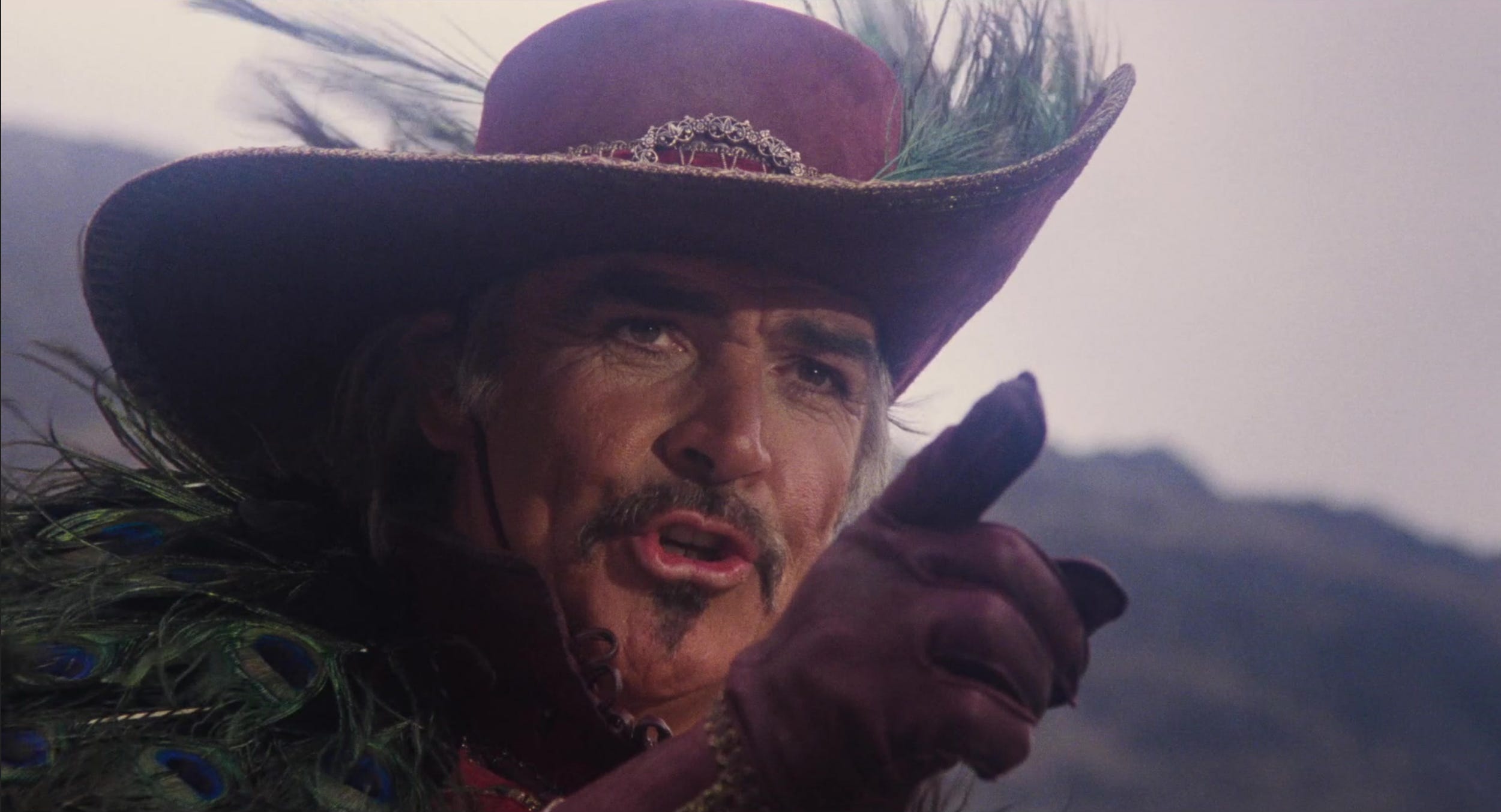
The first name that came to Davis & Panzer’s mind when it came to casting their hero, a Scottish warrior, may have been Sean Connery’s. Twenty-five years past his expiration date to credibly play Connor MacLeod, the producers instead zeroed in on Connery for MacLeod’s mentor, now named Juan Sánchez-Villalobos Ramírez. In an obituary published February 23, 2021, the Hollywood Reporter quoted the late Peter S. Davis on one of his career accomplishments, booking Connery to play the master swordsman in his movie. “I thought he would be great in the role, but I was discouraged by everyone. Everyone told me there was no chance in the world I’d get Sean Connery. I talked to his agents at the time, and they said, ‘Davis, just make an offer … you know he’s a very well-paid actor. Make an offer.’ I offered $300,000 for one week’s work. They told me I was far off the mark. But then, I upped the ante from $500,000 to $700,000. Still nothing. So finally, his agents said, ‘Peter, we like nice round numbers.’ So we offered a million.”
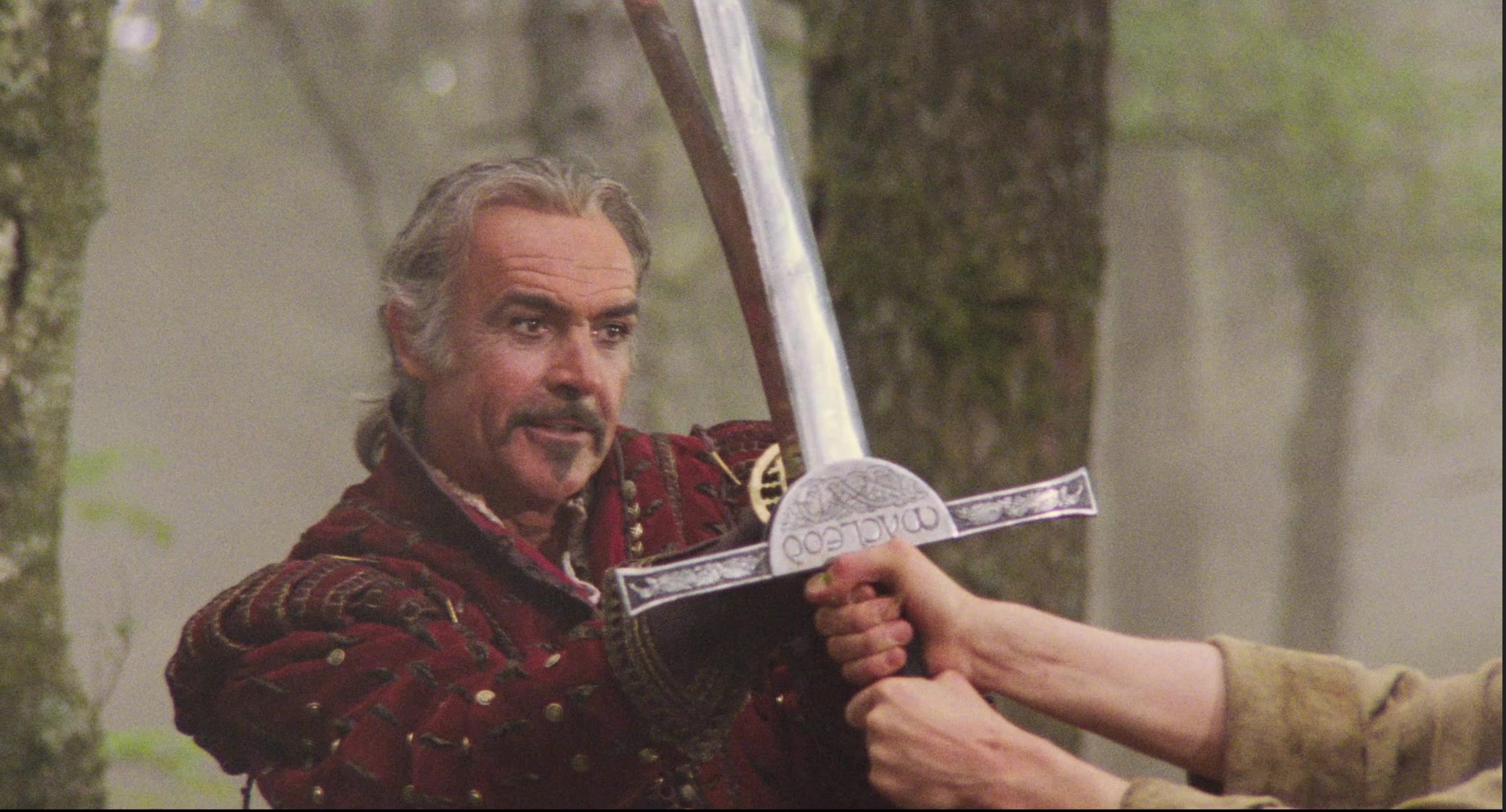
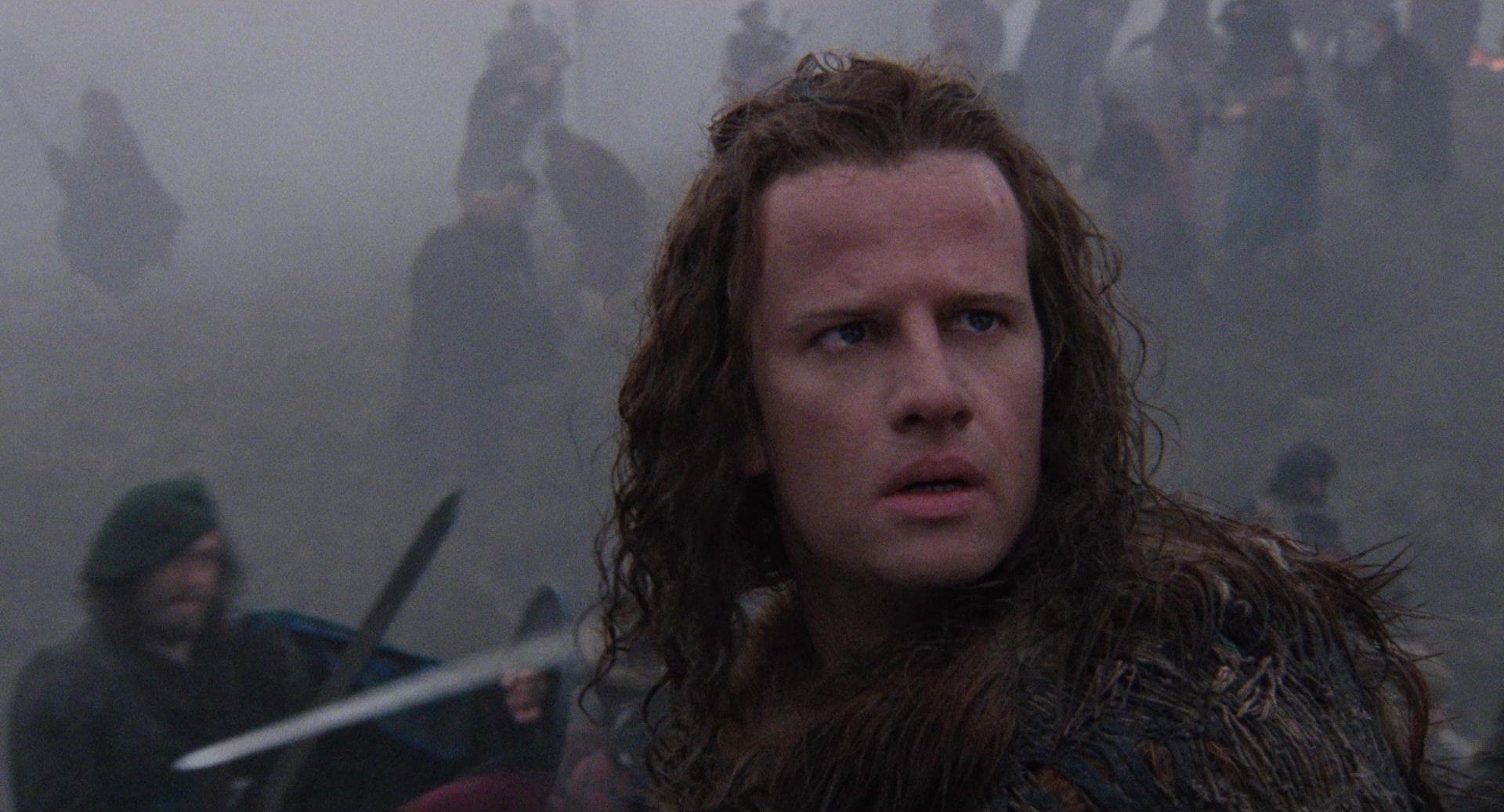
Davis continued, “That got the script to Sean. We immediately heard back that he enjoyed the piece if he got to make certain changes to broaden the role. We finally settled on the million for the week’s work. David Tringham, who was first assistant director on the film–from the old school of filmmaking–told us shooting Sean would be near impossible in a week. But they made it work. David, director Russell Mulcahy and production designer Allan Cameron built the sets back to back to back so Sean could be moved from one scene to the next. Russell shot the shit out of it and managed to get true value out of our million dollars.” David Keith–who’d played Richard Gere’s navy training buddy in An Officer and a Gentleman (1982)-and Barry Bostwick interviewed for the role of MacLeod, but Mulcahy took credit for flipping through magazines at Davis & Panzer’s office in Los Angeles and coming across publicity Christopher Lambert had done for his starring role in Greystoke: The Legend of Tarzan, Lord of the Apes (1984). Notified that Lambert, an American by birth who’d grown up in Switzerland and France, didn’t speak English, the director was undeterred, believing the actor had the look he was after for his otherworldly hero.
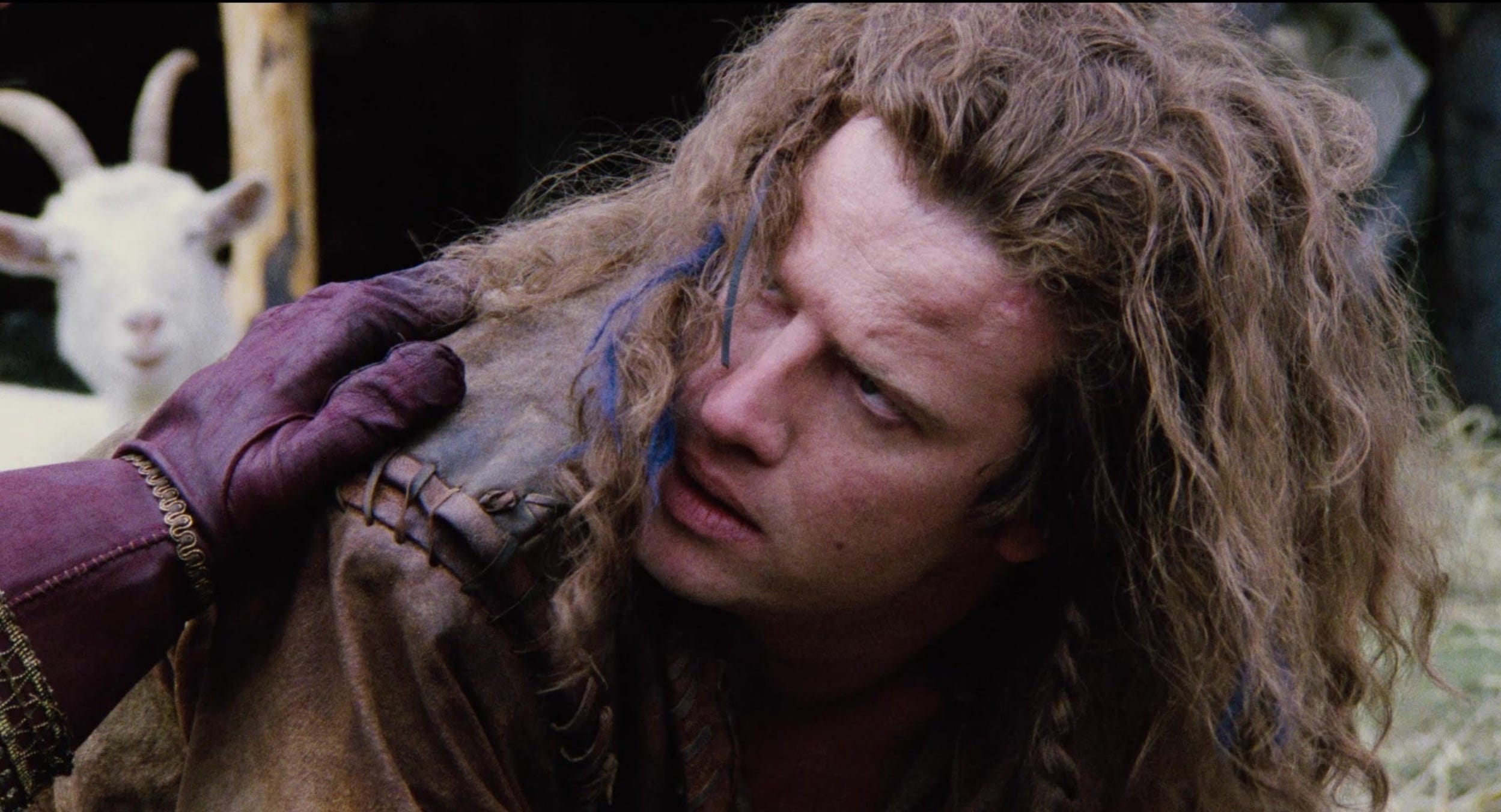
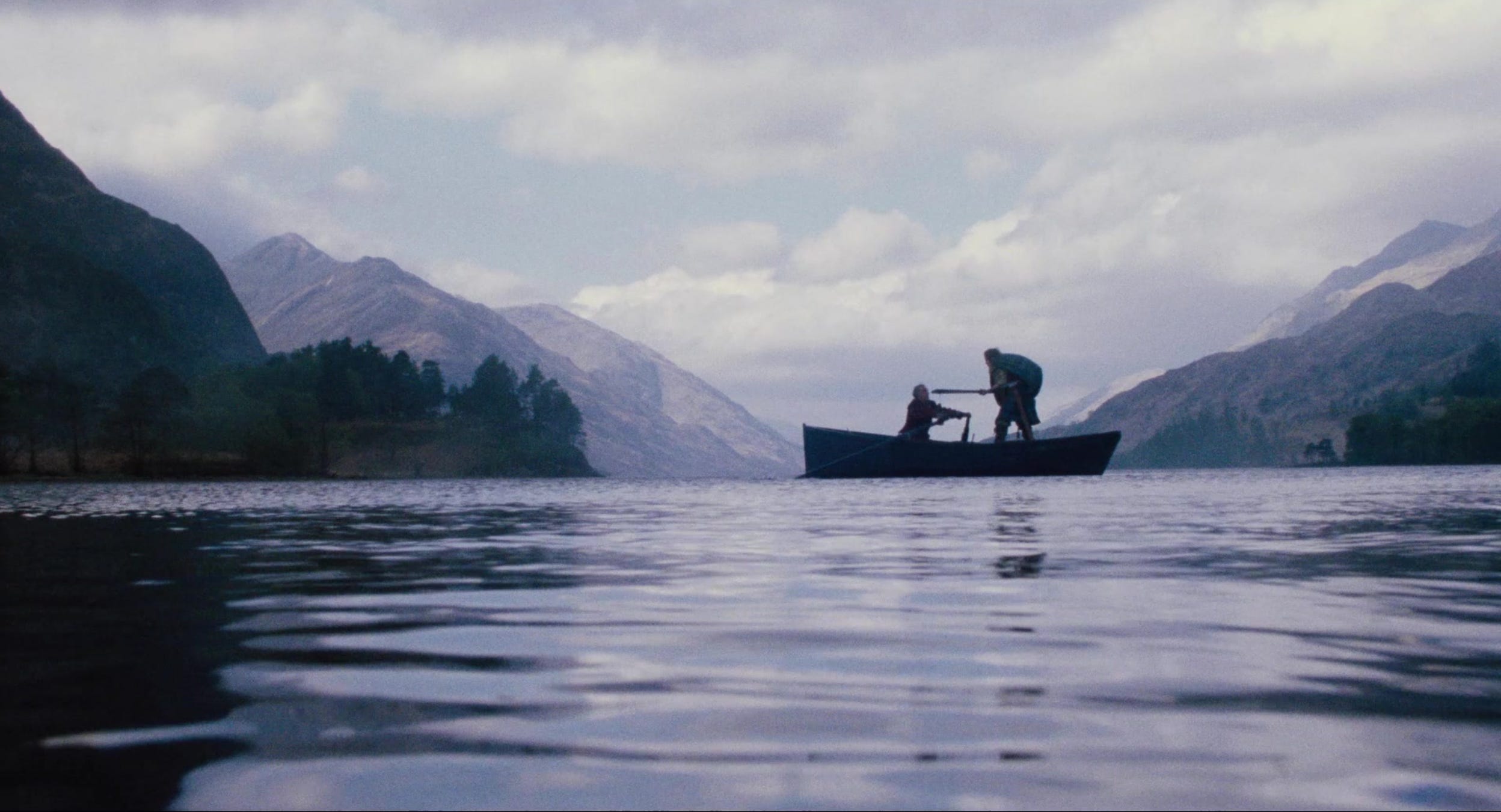
The production’s tax subsidies came with certain strings attached, the hiring of a certain number of British cast and crew. This prohibited Mulcahy from employing either of two cameramen he’d worked with previously, Dean Semler (Australian) and Tony Mitchell (American), to light the picture in the U.K. Director of photography Gerry Fisher, who’d lit Sean Connery in The Offence (1973), got the job by virtue of his British citizenship. Shooting commenced May 1985 in London. A parking garage at Earls Court Exhibition Centre stood in for what was supposed to be Madison Square Garden in New York. Jacob Street Studios, which wasn’t much of a “studio” but located in what had been a pet food factory in central London, was adjacent to streets and alleys that in 1985 looked as sketchy as those in the Big Apple. This location was used to stage most of the street scenes. The duel between Kurgan and Ramirez was also shot at Jacob Street Studios. With Connery’s meter running, the production jumped to Loch Shiel in Scotland for the scene where Ramirez trains MacLeod on a rowboat, while Lambert and Connery’s sprint was filmed on a small beach near the village of Arisaig in an area referred to as Refuge Bay. The battle sequence was filmed near the village of Glencoe, under the peak of the Buachaille Etive Beag ridge. The majestic 13th century fortress where MacLeod is introduced marching into battle was shot at Eilean Donan Castle, on an inlet near Dornie.
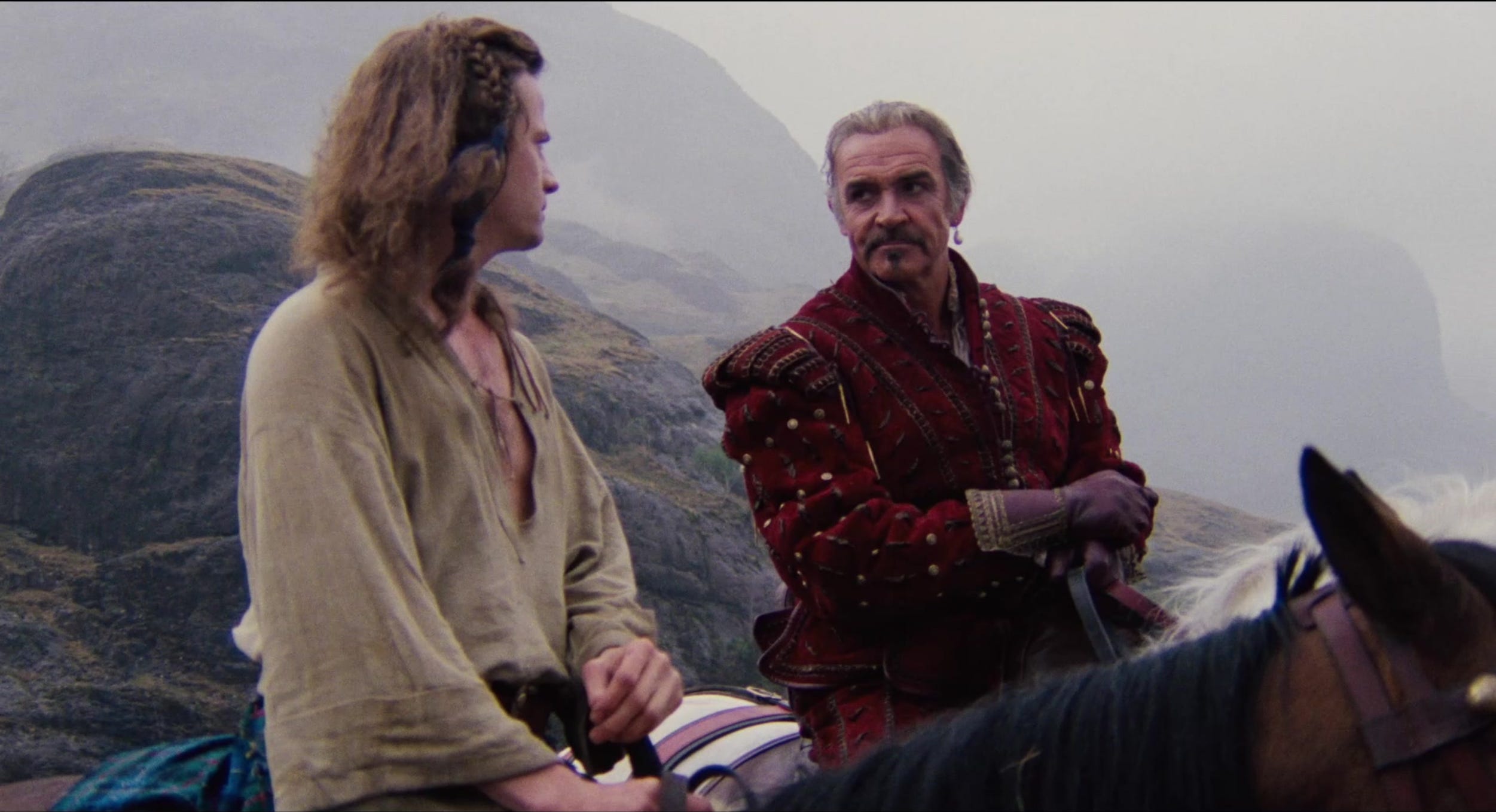
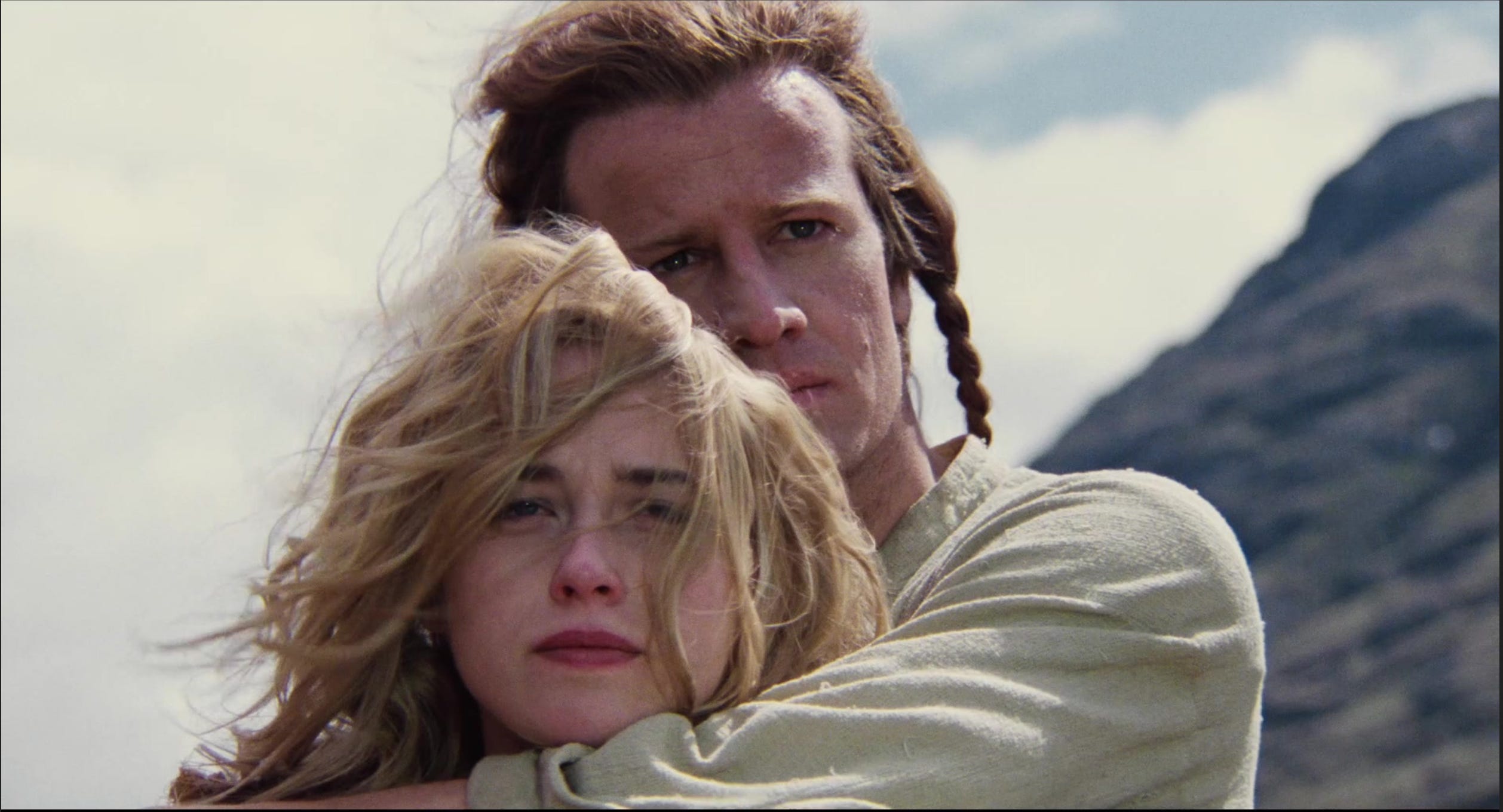
The production’s tax subsidies came with certain strings attached, the hiring of a certain number of British cast and crew. This prohibited Mulcahy from employing two colleagues, Dean Semler (Australian) or Tony Mitchell (American), to light the picture in the U.K., director of photography Gerry Fisher, who’d lit Sean Connery in The Offence (1973), getting the job by virtue of his British citizenship. Shooting commenced May 1985 in London. A parking garage at Earls Court Exhibition Centre in London stood in for what was supposed to be Madison Square Garden in New York. Jacob Street Studios, which wasn’t much of a “studio” but located in what had been a pet food factory in central London, was adjacent to streets and alleys that in 1985 looked as sketchy as those in the Big Apple. This location was used to stage most of the street scenes. The duel between Kurgan and Ramirez was also shot at Jacob Street Studios. With Connery’s meter running, the production jumped to Loch Shiel in Scotland for the scene where Ramirez trains MacLeod on a rowboat, while Lambert and Connery’s sprint was filmed on a small beach near the village of Arisaig in an area referred to as Refuge Bay. Connor’s cottage and forge–the latter of which doesn’t appear to have many customers–was filmed in Glen Nevis. The battle sequence was shot near the village of Glencoe, under the peak of the Buachaille Etive Beag ridge. The majestic 13th century fortress where MacLeod is introduced marching into battle was shot at Eilean Donan Castle, on an inlet near Dornie.
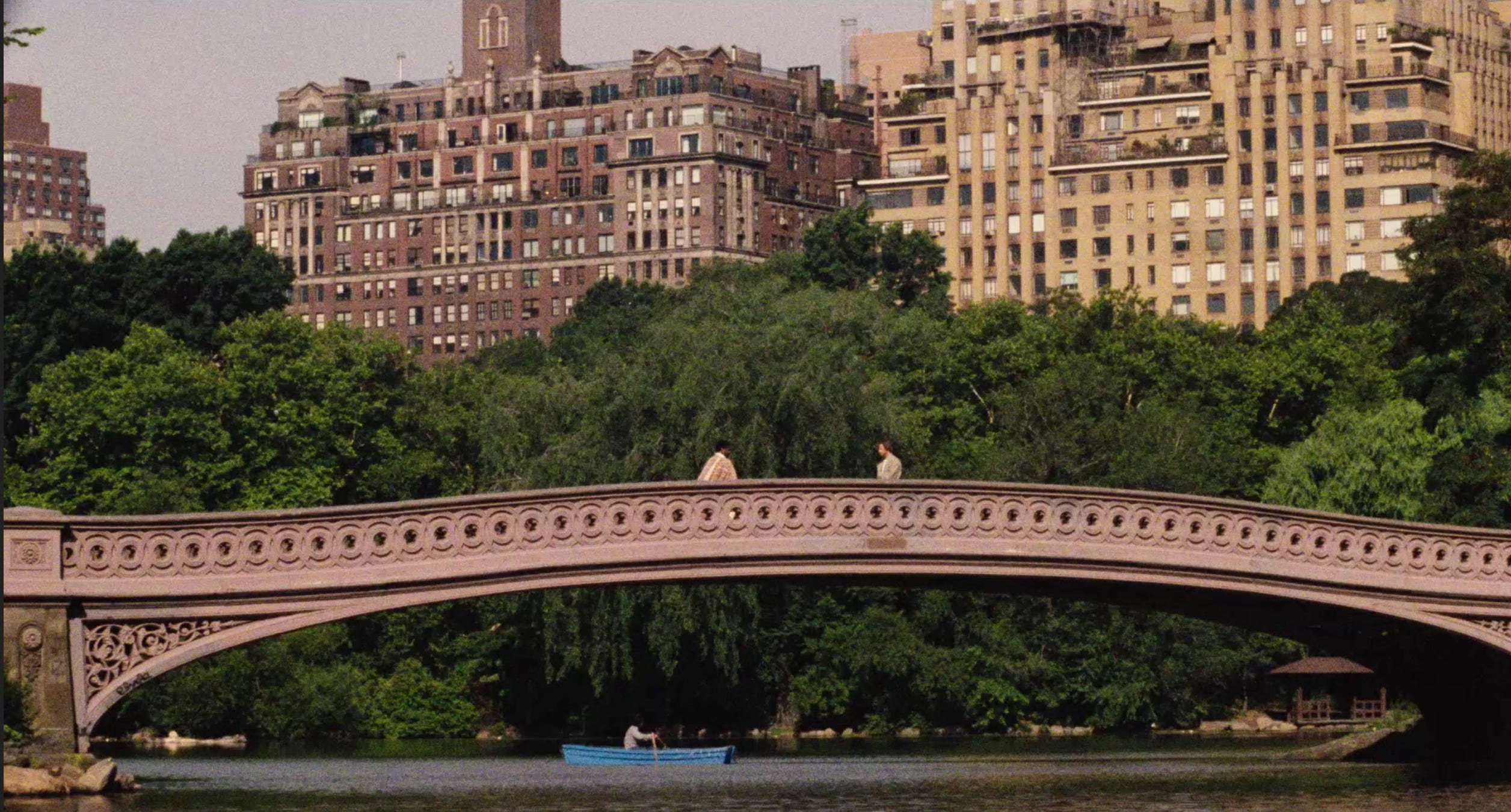
Back in London, the church where MacLeod and Kurgan parlay was filmed in St. Augustine’s Kilburn. America was further spoofed in England, with MacLeod’s drunken duel (said to take place at Boston Commons) filmed outside Brocket Hall in Hertfordshire. When Coney Island became cost prohibitive to shoot the climax, the filmmakers settled on the rooftop of Silvercup Studios in Queens, which was topped with a magnificent, red and white neon-lit sign and offered views of the Queensboro Bridge and Manhattan skyline. The production built a ⅔ scale version of the front side of the sign in London, shooting the back side in Queens for its views of New York. Unable to get inside Madison Square Garden or obtain permission from the NHL to film a hockey game, the filmmakers settled for shooting an AWA wrestling match at Meadowlands Arena, home of the New Jersey Nets. In the wrestling contest, the Fabulous Freebirds (Michael Hayes, Terry Gordy, Buddy Roberts) face off against Greg Gagne, Jim Brunzell, and the Tonga Kid. One of the few sequences actually shot in New York was Krugan’s vehicular rampage, filmed on Canal Street alongside Broadway in Lower Manhattan. Central Park provided the most memorable location in the picture, Bow Bridge used for the scene with MacLeod meets the friendly neighborhood Immortal played by Hugh Quarshie.
To record a theme song, the producers of A View To A Kill (1985) had already snared Duran Duran at what would be their commercial peak to write and perform a song for the new James Bond film, but fortune may have been smiling on Highlander when all four members of Queen accepted an invitation to attend a screening of the film in London. Russell Mulcahy had visited the set of Flash Gordon (1980) and was familiar with how well the science fiction fantasy had incorporated the rock band’s sound. To his surprise, Queen didn’t agree to contribute a song, but an album’s worth, each member of the band writing at least one. Freddie Mercury penned the opening title track, “Princes of the Universe.” Brian May wrote “Hammer To Fall” (which would be included in Queen’s historic Live Aid set in July 1985) and the film’s main theme, “Who Wants To Live Forever.” Bassist John Deacon contributed “One Year of Love” and drummer Roger Taylor “A Kind of Magic” and “A Dozen Red Roses For My Darling.” To score the film, Peter Davis & William Panzer commissioned Michael Kamen, the composer and conductor having worked with the producers on Stunts.
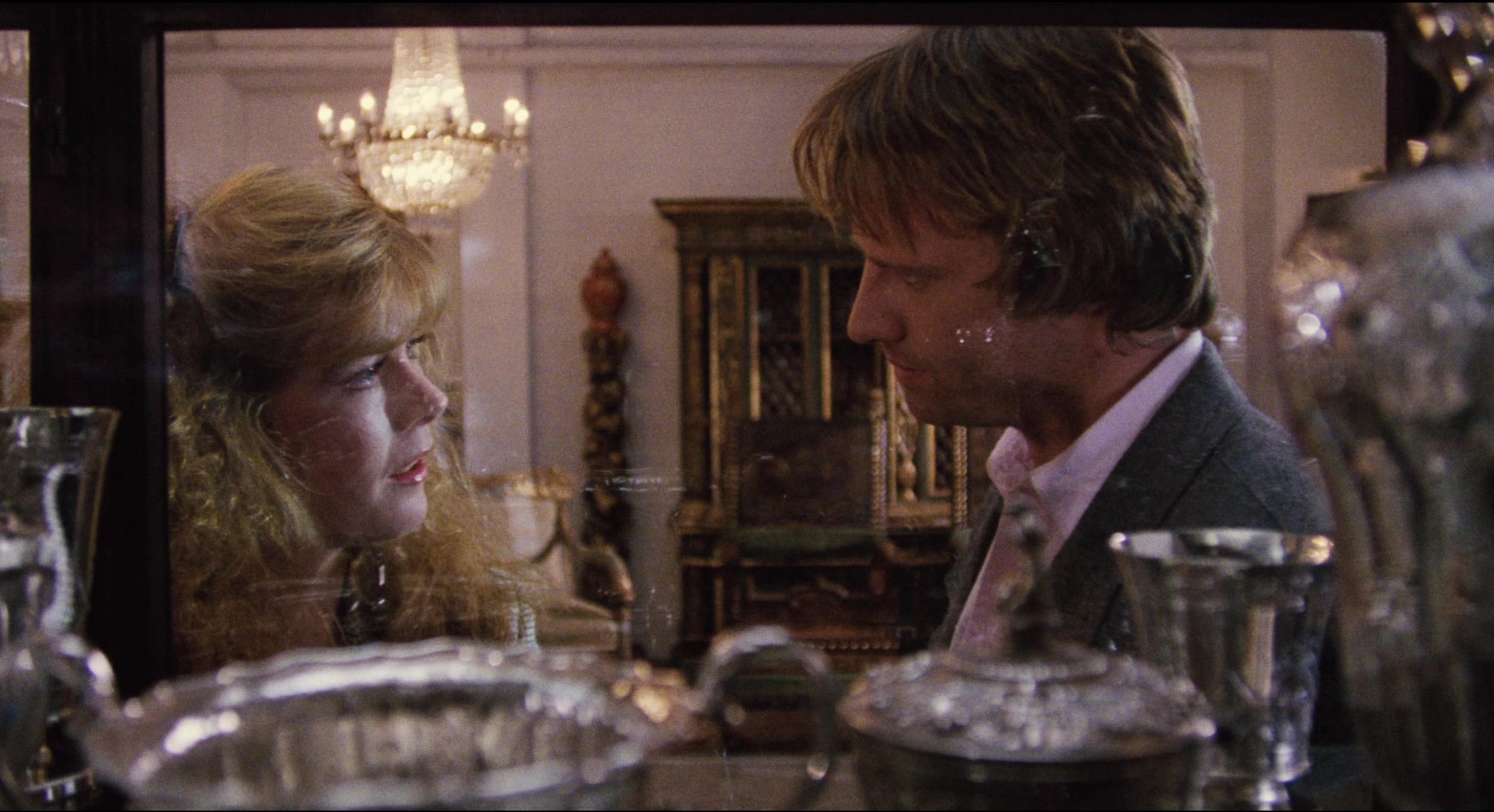
Film editor Peter Honess, who’d cut Electric Dreams (1984) and Plenty (1985), was responsible for dialing Highlander into a picture audiences the world over could access. The U.S. and Europe would initially see slightly different cuts. At 111 minutes, the version of Highlander that would screen in the States was missing scenes or shots that would be preserved overseas. Two scenes were chopped: MacLeod rescues a girl from the SS during World War II (later revealed to be his secretary in the present day) and later, visiting the Central Park Zoo with the antiques expert Brenda, the Immortal talks about losing his wife four hundred years ago, Kurgan lurking in the background. Moments considered too weird for the American palette were excised: flashbacks to a Scottish battlefield in the 16th century intercut with the wrestling match in the present, MacLeod’s parking garage opponent Fasil (stuntman Peter Diamond) doing backflips, MacLeod enduring extended physical abuse while being driven from his village, and Kurgan licking a priest’s hand. The 116-minute European version of Highlander is the one now available for streaming, while the U.S. version has been relegated to the dustbin of history.
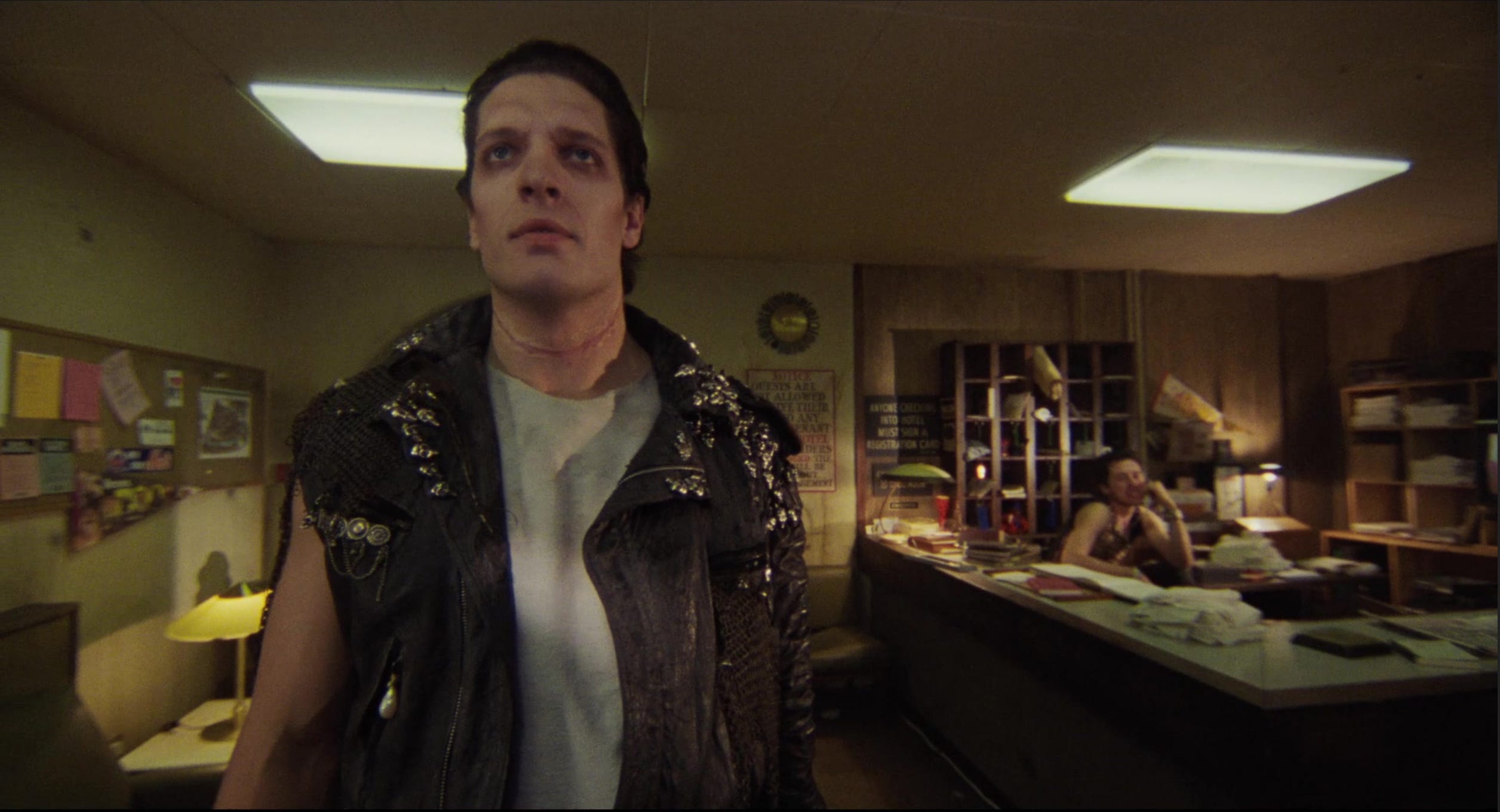
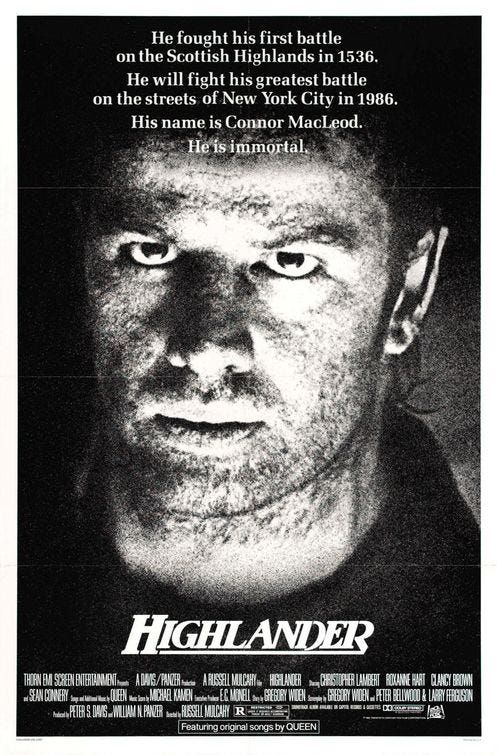
At Fox, these cuts weren’t nearly enough to excite the studio. Peter Davis & William Panzer had struck their distribution arrangement with then vice-chairman Norman Levy, who in September 1984 resigned. Levy alleged that Denver oilman and studio owner Marvin Davis had reneged on promises of a bonus and a 5% ownership stake in Fox, awarding those to chairman Barry Diller. Levy filed a lawsuit, which Fox responded to with discovery motions looking into Levy’s business dealings at the studio, including those with Davis-Panzer Productions. There’s no evidence that Highlander was test screened or performed poorly at those screenings, but Fox punted on the picture. Interviewed for the Projection Booth podcast airing December 6, 2016, Russell Mulcahy responded, “It didn’t do well in the U.S. One, because … have you ever seen the poster? The U.S. poster? It’s probably the worst film poster I’ve ever seen. It looks like a serial killer film, a cheap sort of like, I don’t know what it looks like, it had nothing to do with the film. And then you see the French posters and the other posters and they tell a story, they give you an idea of the genre. That black and white poster killed the film. I think. And the complete zero lack of publicity.”
Fox declined to screen Highlander for critics, opening it March 7, 1986 on 1,040 screens in the U.S. Critical reaction there was strongly negative. Roger Ebert didn’t review the film, but when his television partner Gene Siskel filed a report for the Chicago Tribune, he didn’t pull his punches. “Oh, how one wishes for some human moments in Highlander. If these are indeed the people who are going to save our planet, as the film suggests in quick conclusion, well, maybe it’s a good time to consider buying an acre in Montana or someplace else remote. The Highlanders in this film are the kind of superheroes who would want to make swordsmanship mandatory in grammar school.” He gave the film one-and-a-half stars out of four. Walter Goodman, backup film critic at the New York Times, was no more accommodating. “But the movie is not especially funny, and of course it is not serious. What is it? There is no point asking for much of a rationale for this sort of exercise, and there is nothing necessarily wrong with a farfetched premise or with hyped up effects, as long as they make us believe, for a while, that it matters. Since none of the characters makes sense even on the movie’s own terms, Highlander keeps on exploding for almost two hours, with nothing at stake.” Michael Dare with the LA Weekly was brutal. “Mulcahy directs not just like a man who’s only directed rock videos but like a man who’s never seen anything but rock videos. Whenever the music swells, you expect Freddie Mercury to step out from behind a rock. Mulcahy’s a generic von Stroheim, taking time-honored effects and bleeding them out by raising questions and ignoring answers.”
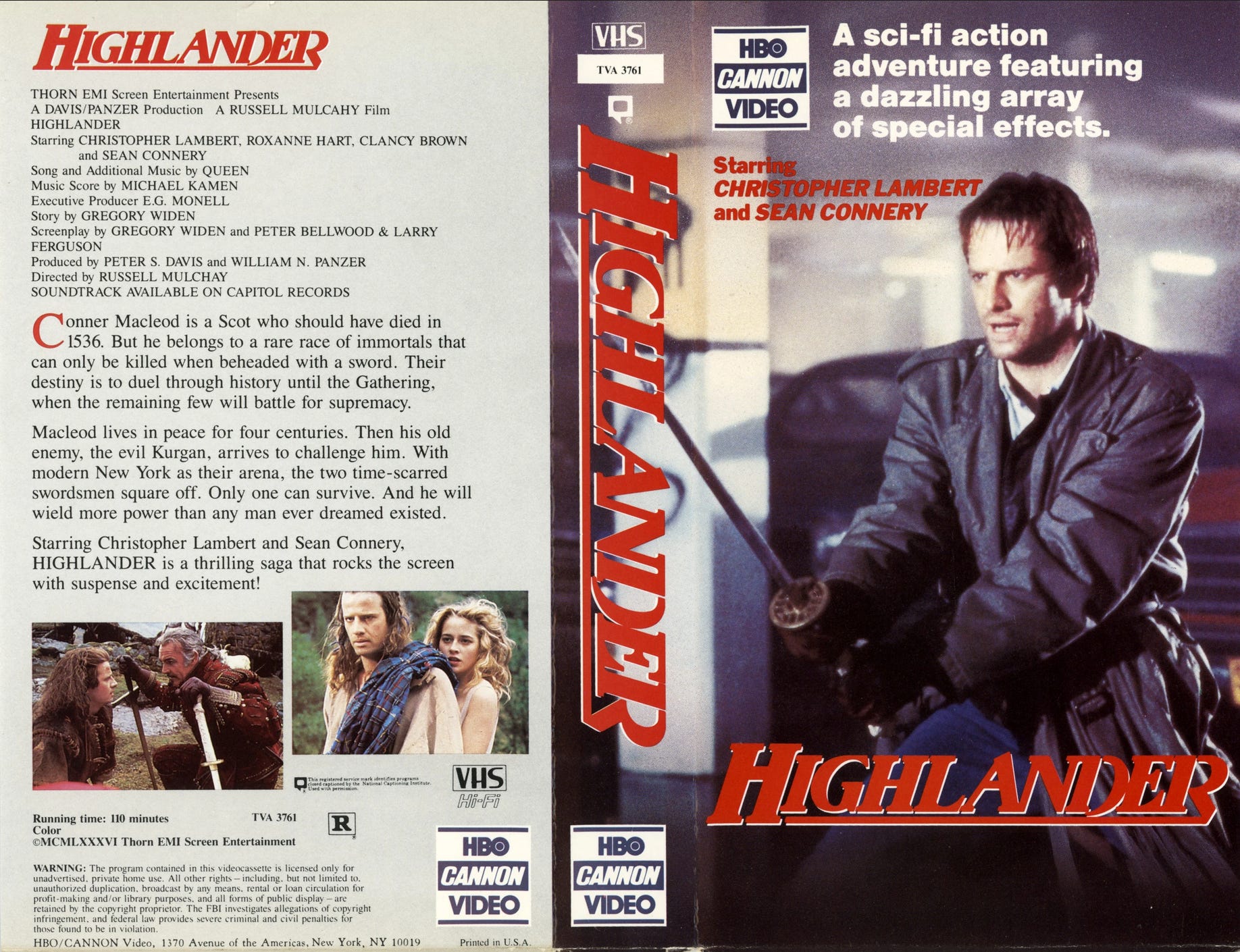
With Pretty In Pink and House atop the box office in their second weekend of release, Highlander opened at #7. By its second weekend, it had fallen out of the top ten. Opening in the U.K. in August 1986, Highlander received a kinder reception from British critics, and in France and Belgium, where Christopher Lambert was a star, box office was far better than it had been in the States. The film’s home video distributor–HBO/ Cannon Video–packaged it as an A-class version of a Chuck Norris or ninja movie, and video is how Highlander caught on in popularity. Investors came running to Davis & Panzer for a sequel. Written by Peter Bellwood and directed by Russell Mulcahy, Highlander 2: The Quickening (1991) reunited Lambert and Connery, but the decision to film it in Argentina (with a British crew arriving soon after the Falklands War) was a fiasco, and Mulcahy was kept out of the editing suite. Highlander 2 alienated nearly everyone familiar with the original, Lambert going as far to promote it as a decent movie, but warning Highlander fans that it wasn’t a sequel. The series should have died a quick death, but fans wanted more. Highlander: The Series debuted in 1992, Adrian Paul playing MacLeod’s clansman Duncan for five seasons in syndication. (Xena: Warrior Princess actually followed on the coattails of Highlander, running for six seasons beginning in 1995). The success of the series spawned a spin-off, Highlander: The Raven, that lasted one season (1998-1999). Christopher Lambert returned for two more feature films, Highlander III: The Sorcerer (1994) and with Adrian Paul for Highlander: Endgame (2000). A short-lived comic book was published in 2006, and many licensed novels followed it.
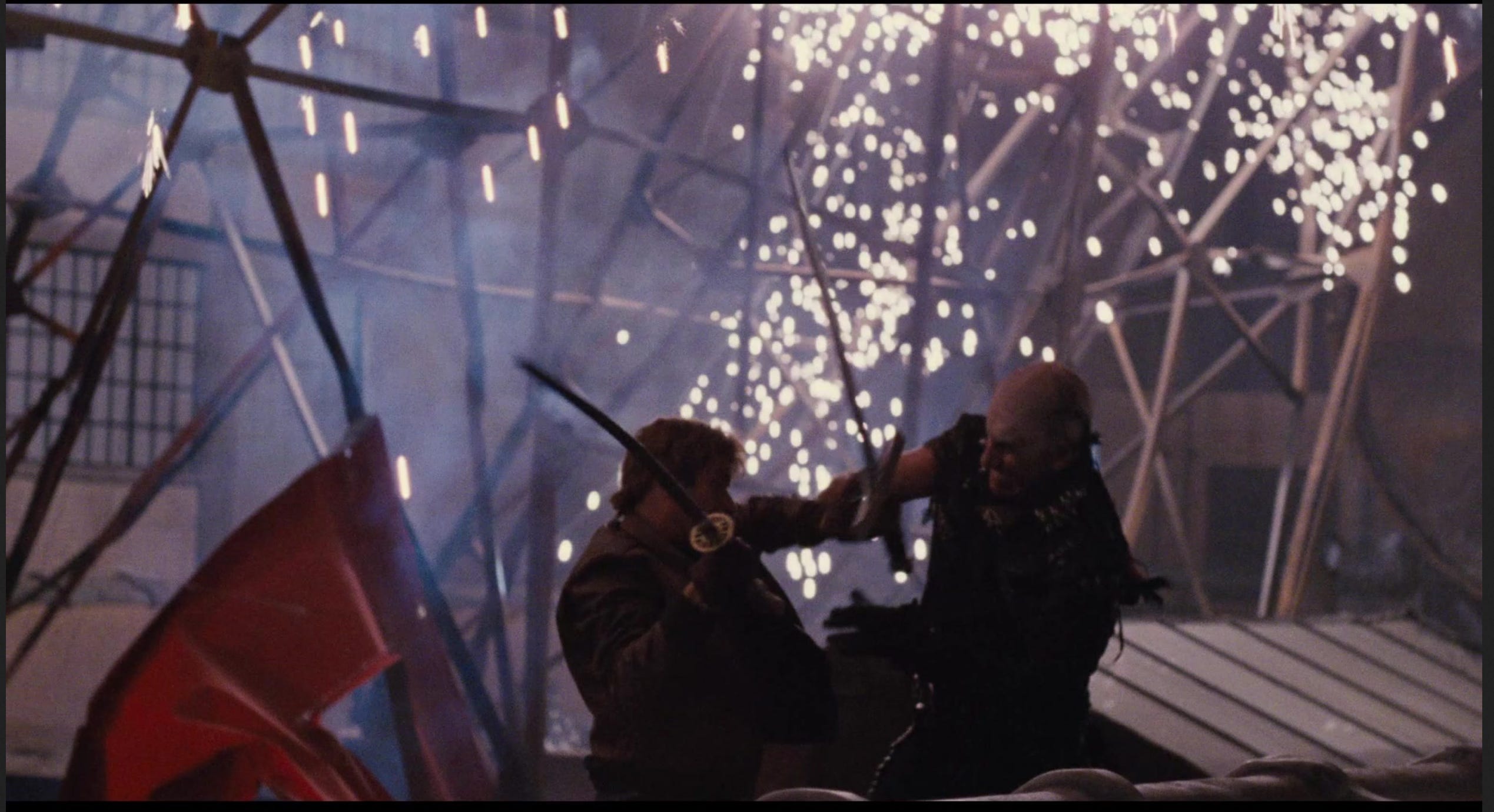
Highlander was conceived during the peak of the Dungeons & Dragons gaming craze, the success of The Sword and the Sorcerer (1982) and its lavish neighbor Conan the Barbarian (1982) fueling the sword and sorcery sub-genre on the big screen for five years. Most, if not all, of those films boiled down to a well-oiled He-Man swinging a broadsword around a magician named something like Skeletor, this being the foundation of Hasbro’s Masters of the Universe toyline and the animated series that promoted it. By opening in the familiar present, Highlander immediately sets itself apart visually, aligning itself with Anne Rice’s gothic vampire novels more than another B-movie about mazes and monsters. It is half cast superbly. Clancy Brown–who the James Bond producers missed out on booking as a heavy–stabilizes Kurgan as an ancient bad penny and sustains his character through a script that isn’t worthy of Brown and a director who didn’t really care what his character wanted. The goodwill Sean Connery brings to the picture can’t be overstated. Highlander began a fifteen-year wave in which the tide of several movies rose considerably due to Connery’s transition from action hero to mentor. Not many actors other than Morgan Freeman could lay claim to becoming cooler with age, but Connery could. He is the chief reason to see the movie.
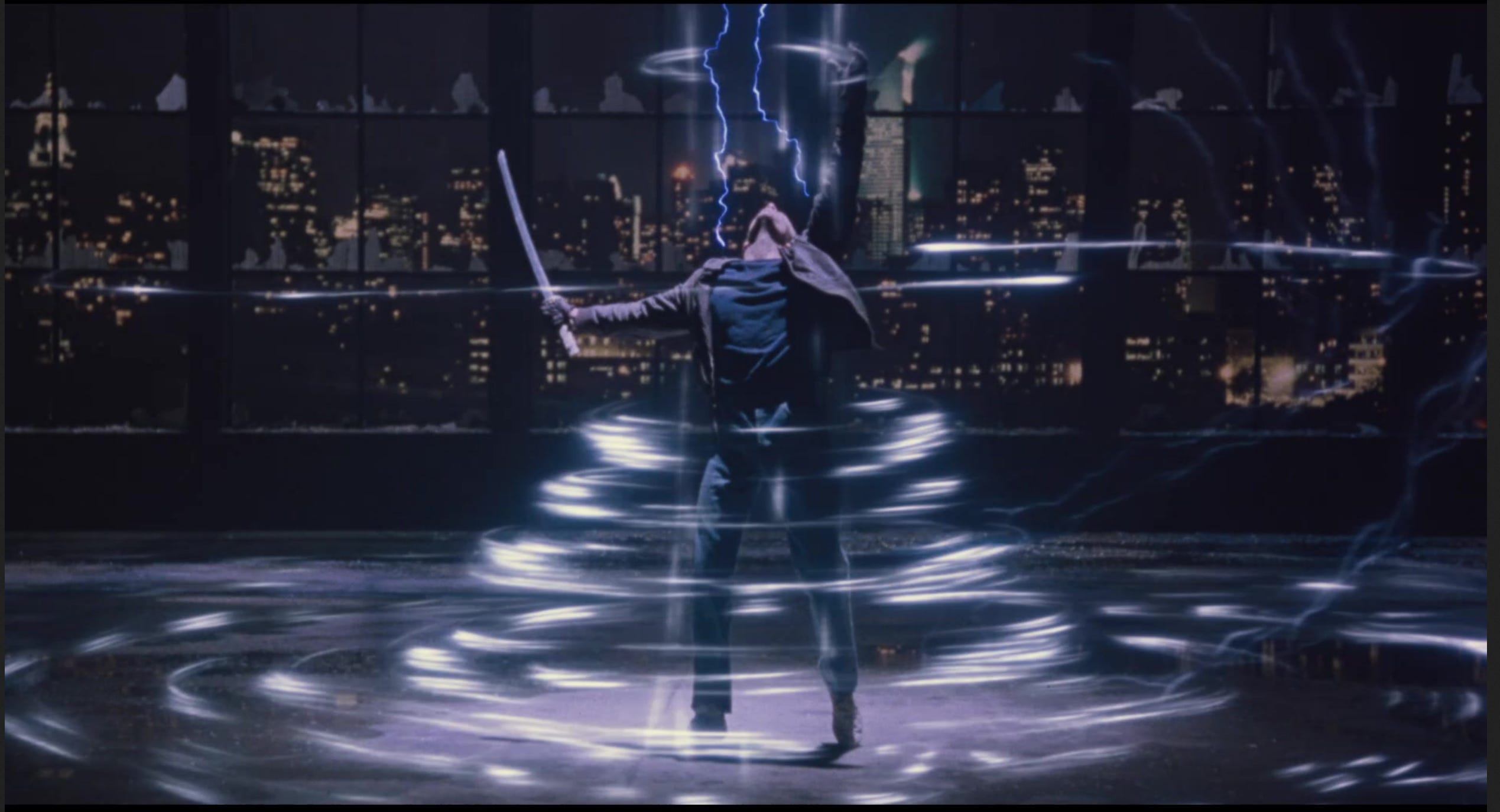
The rest of the cast don’t deserve Highlander. Christopher Lambert has a suitably alien quality, but beyond his utility as a model, isn’t a credible film star, unable to rise above whatever material has been given to him. For a few years, his contemporary was Viggo Mortensen, and long before The Lord of the Rings trilogy, he was the sensitive warrior both Greystoke and this series needed. Roxanne Hart comes off more as a department store manager than a sword expert. Her character calls for an athlete/ scholar like Joanna Cassidy. The less said about the actors cast as New York cops–the Dennis Franz school of smug policemen wasn’t consulted–the better. The screenplay spends too much time invested in its police subplot, wasting time considering that the poster has already solved the case for us. Opportunities to explore what abilities an otherwise normal man would develop after 500 years–knowing what people are going to do or say, or having read 500x the number of books–are squandered. The swordfighting is more ridiculous than MacLeod or Ramirez’s accents. The Prize is neither tangible nor ultimately compelling, looking more like whatever possesses Michael Jackson in one of his music videos. The subdued pop music sound by Queen–a clear reflection of Freddie Mercury’s declining health–isn’t simpatico with the hyperkinetic energy Mulcahy injects into his film’s pace.
Video rental category: Fantasy
Special interest: Sword and Sorcery
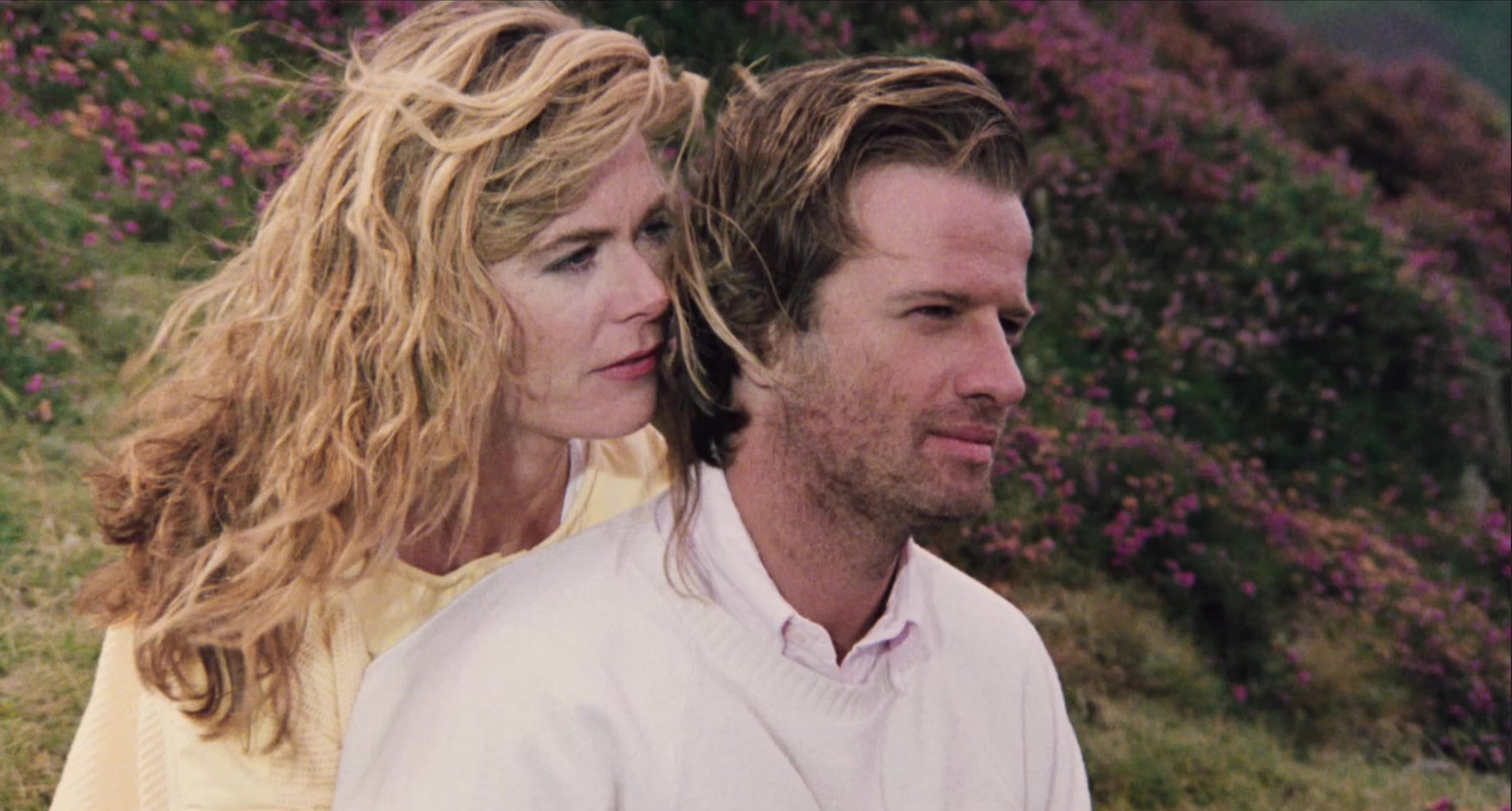
Thanks to Jonathan Melville, author of A Kind of Magic: Making the Original Highlander, his 2020 book documenting much of the film’s production history that might’ve otherwise been lost to time.
Hey Joe, good morning! I gotta tell you, I so enjoy reading all your background information on any given movie, but I’m amazed that any movies get made… It’s just amazing how writers and screenplays and producers, etc. all come together or don’t all come together… It’s just amazing. Anyway, I’ll hold until I read part two to try and understand my reaction to this movie, but I’ll just say right now, that I love the idea of immortals battling each other over hundreds of years, I love the visuals of armor and swords in modern day perspective, I thought it was particularly clever and inventive the concepts of the quickening and the gathering… But for some reason, I’m not sure why, I just didn’t like Christopher Lambert in any scene he was in except maybe the dueling… But anyway, I’ll wait for your analysis in part two to see if it’s maybe it’s because he didn’t speak English or whatever… In the meantime, as always, great research, great information and I’ll await your ultimate analysis. Peace! CPZ