
Standup comic/ actor/ writer/ director Woody Allen was born on November 30, 1935 in the Bronx, NY. To celebrate his 90th birthday, Video Days returns to his third decade of work this month with ten films from the master filmmaker.
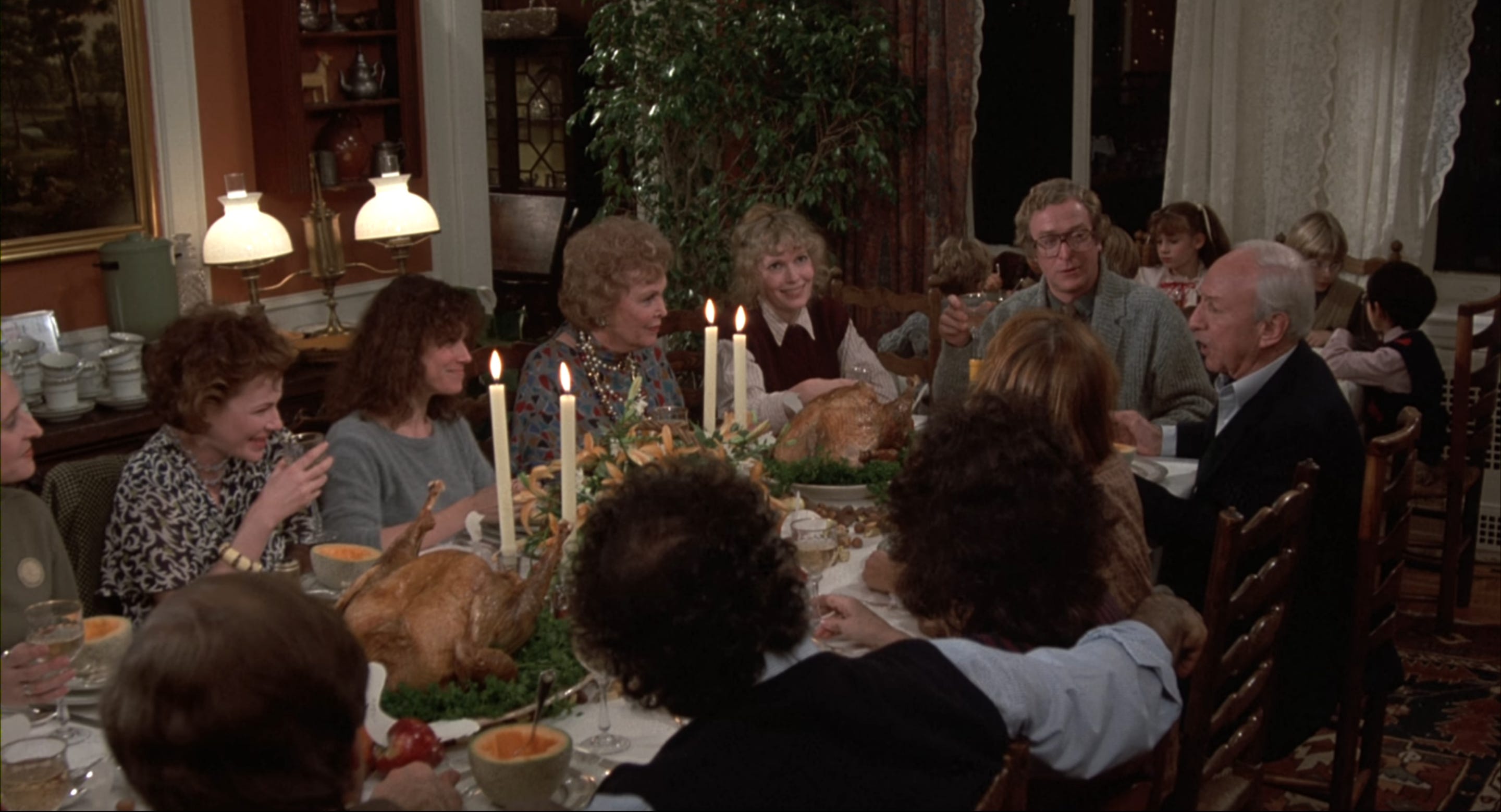
HANNAH AND HER SISTERS (1986) glows from its opening shot — of the magnetic Barbara Hershey — to its conclusion, which instills hope that, as mired as human beings tend to be in our unhappiness, things usually have a way of working out. Produced during one of the most socially conservative eras of the 20th century, this romantic comedy features a man lusting after his sister-in-law, friends competing over a man they met at the same time, and another man’s evolving relationship with his ex-wife’s sister. Instead of alienating us from its characters, the absurdity of their affairs draws us closer, until we find ourselves invested in their happiness.
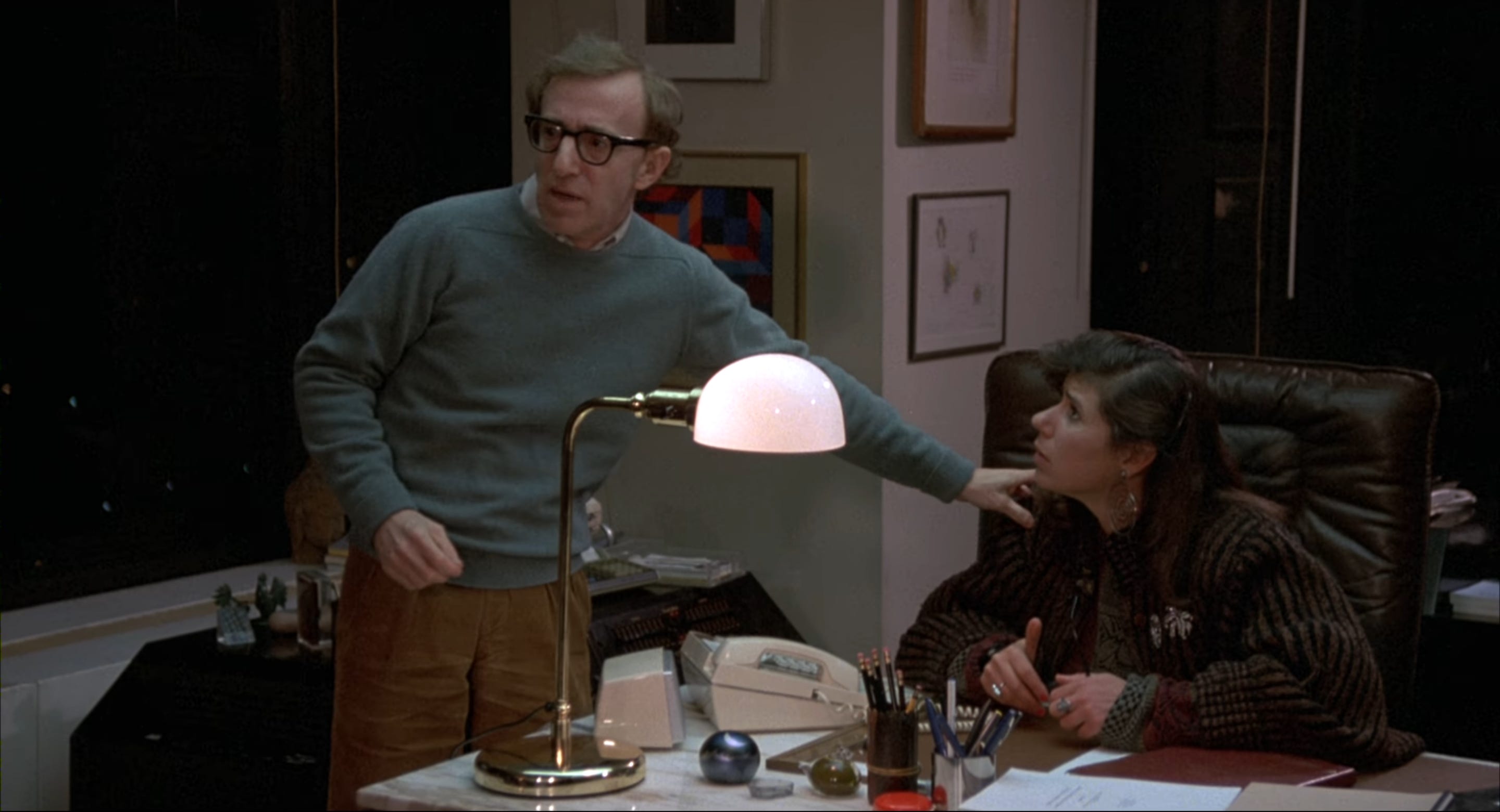
According to Woody Allen, the genesis of what became his fifteenth feature film was a reread of Anna Karenina one summer. Allen thought it might be interesting to make a film that jumped between characters instead of following one, as Leo Tolstoy had done in his novel. Before he even considered that, Allen had a title reminiscent of a Russian novel: Hannah and Her Sisters. One of the threads the filmmaker wanted to pull concerned a character in love with his wife’s sister. In a seemingly unrelated storyline, another character would grow anxious when his doctor schedules him for tests at a hospital. Allen had long been a fan of Michael Caine, an actor twice nominated for Academy Awards for Best Actor, in Alfie (1966) and Sleuth (1972). Caine had demonstrated a facility for comedy and drama, and Allen wanted Elliott, the financial advisor besotted by his wife’s sister, to be a regular bloke, something Caine could also pull off. Mia Farrow, the leading lady of Allen’s previous five pictures, was cast in the ensemble as Hannah, and as her sisters Lee and Holly, Barbara Hershey and Dianne Wiest. While Wiest had been featured in The Purple Rose of Cairo (1985), Hershey was working on her first Woody Allen film. More familiar to casting agents than the public in pictures like The Stunt Man (1980), The Entity (1982) and The Right Stuff (1983), stardom had eluded Hershey since the late sixties.
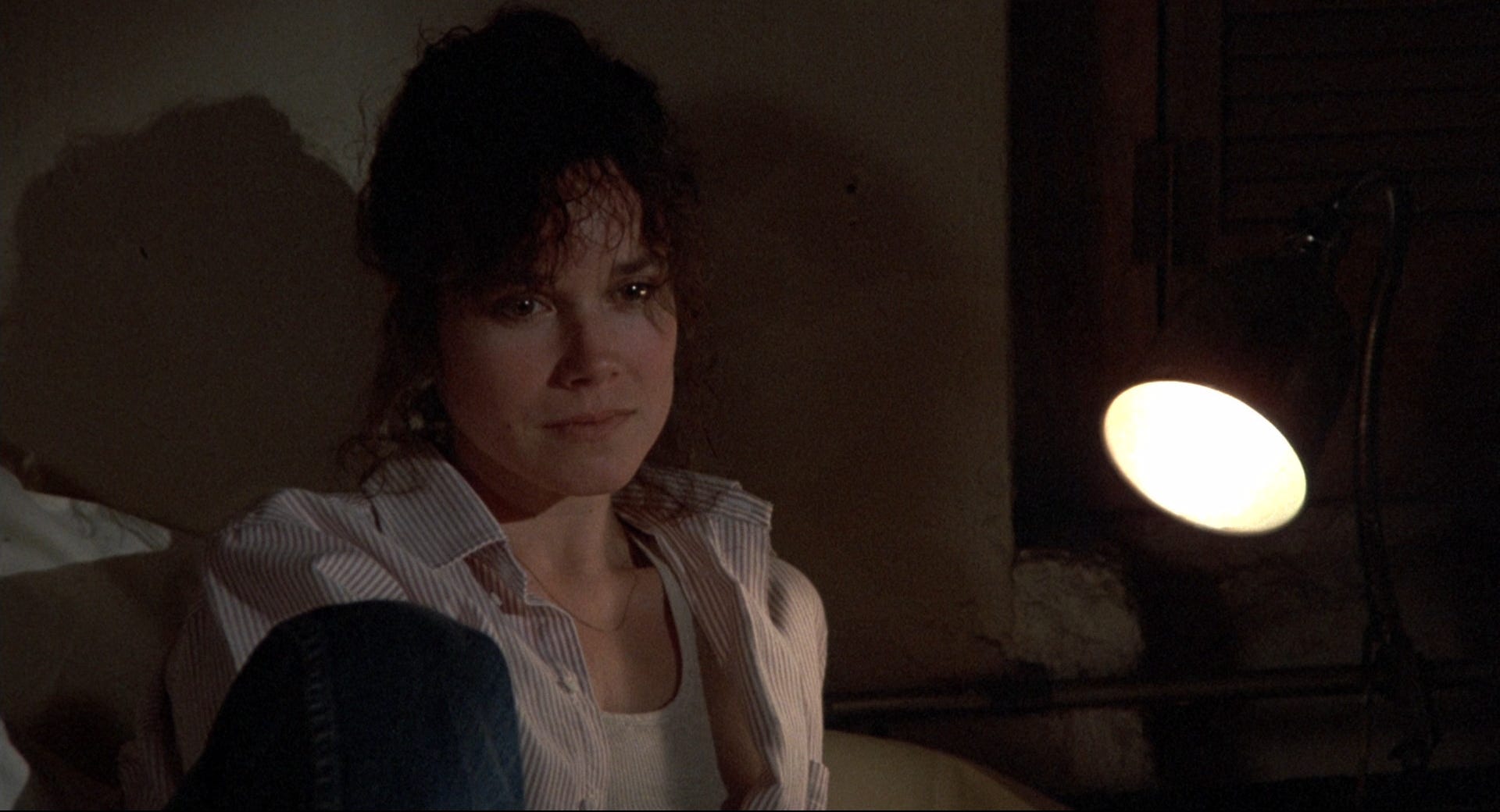
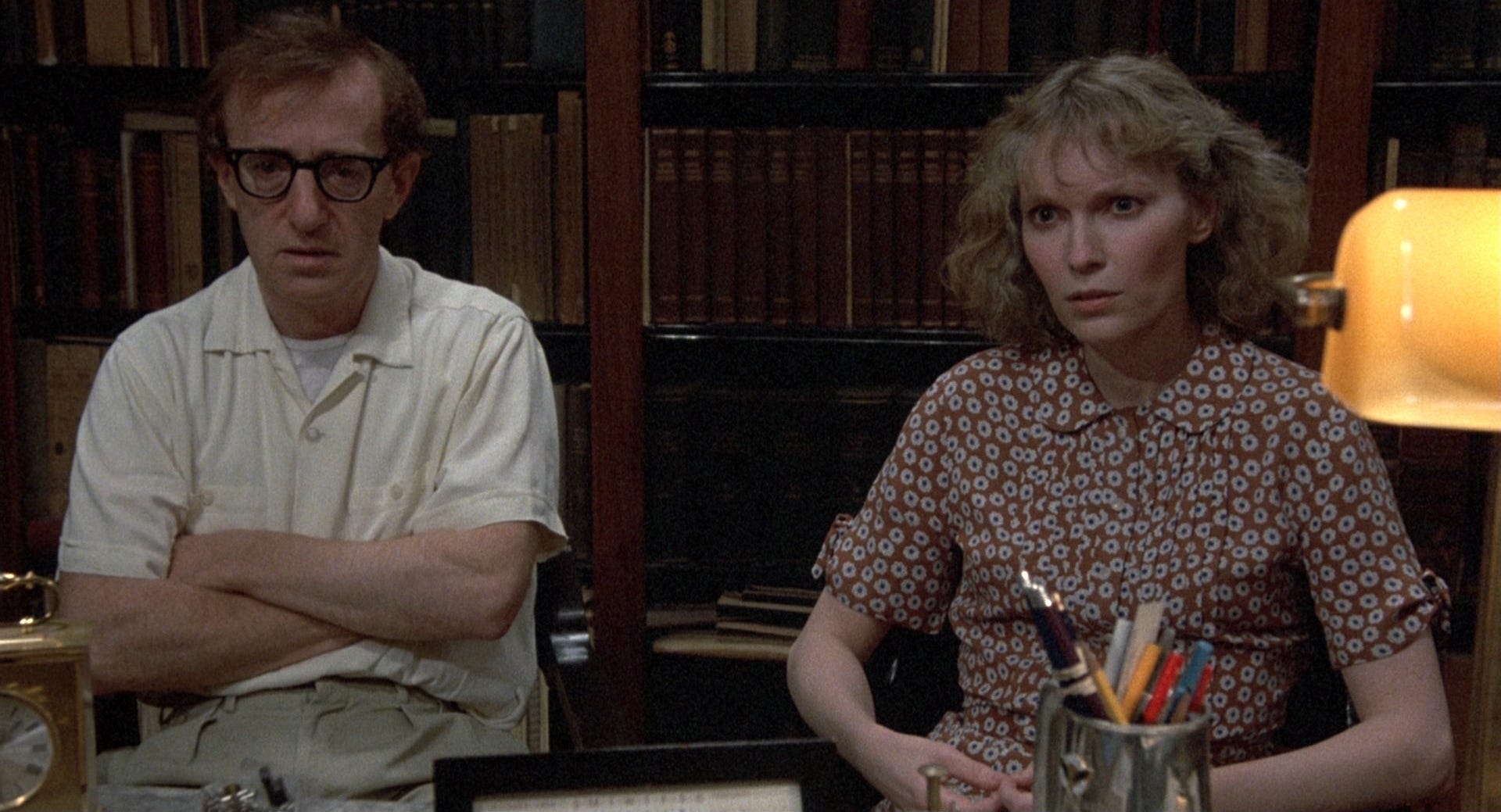
Max Von Sydow, who’d appeared in eleven films for one of Allen’s filmmaking icons, Ingmar Bergman, was suggested by casting director Juliet Taylor (Allen had pictured Frederick, the reticent older man Lee is living with, as a Ben Gazarra type). The role of Hannah’s thespian mother was a no-brainer, with Farrow’s mother Maureen O’Sullivan–who’d played Jane opposite Johnny Weissmuller in six Tarzan pictures for MGM between 1932-1942–joining the cast. Allen took on the role of Hannah’s ex-husband Mickey, a hypochondriac who reevaluates his career–producing a sketch comedy show for network television–and his relationship with the Almighty when a hearing loss in one ear sends him to the hospital for tests. Replacing cinematographer Gordon Willis–who’d lit Allen’s eight previous films–was Carlo Di Palma, the Italian director of photography on three pictures for Michaelangelo Antonioni, working on one of his first English-language productions. Hannah and Her Sisters would begin a collaboration between Allen and Di Palma spanning eleven films and a TV movie.
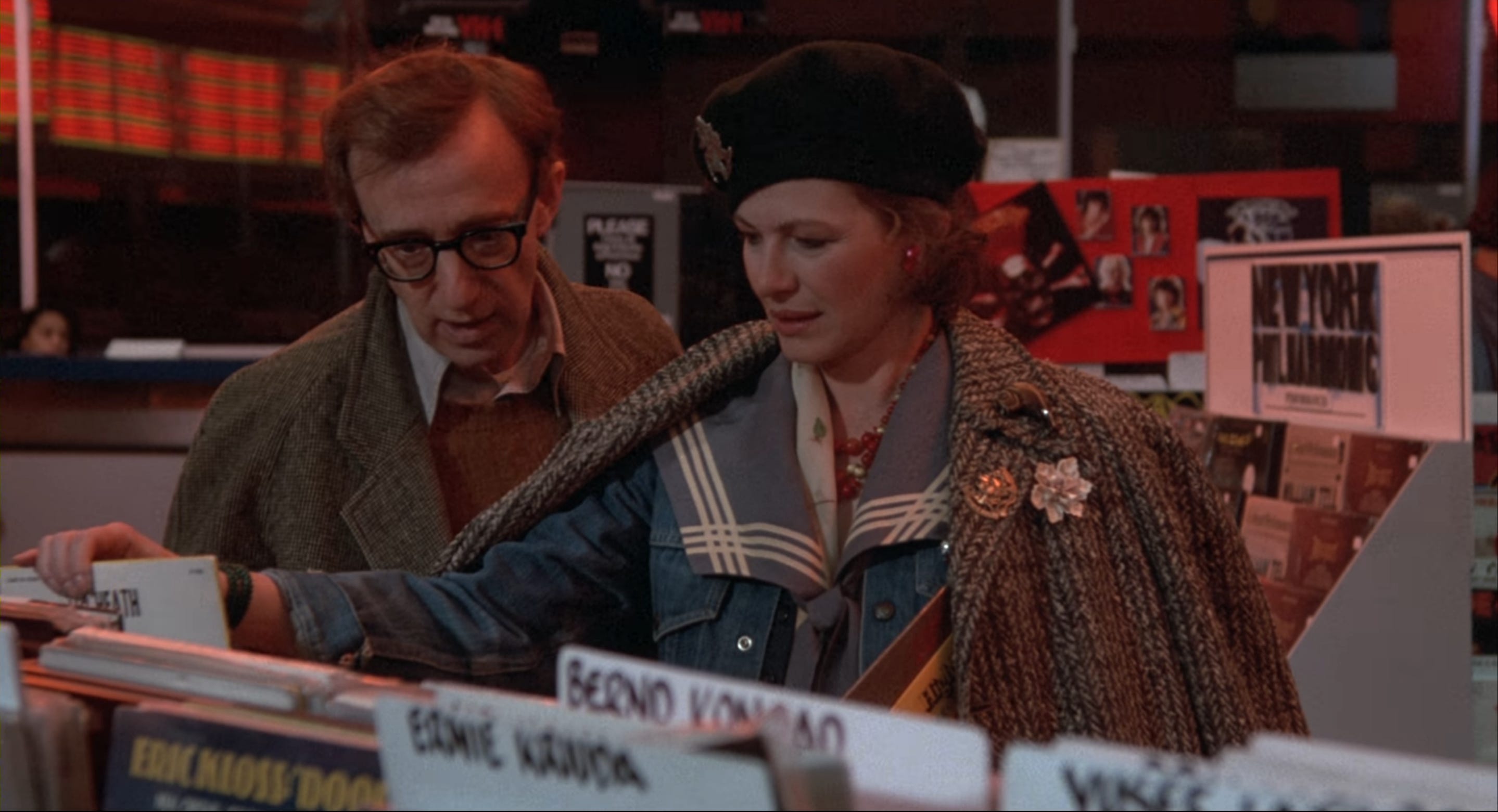
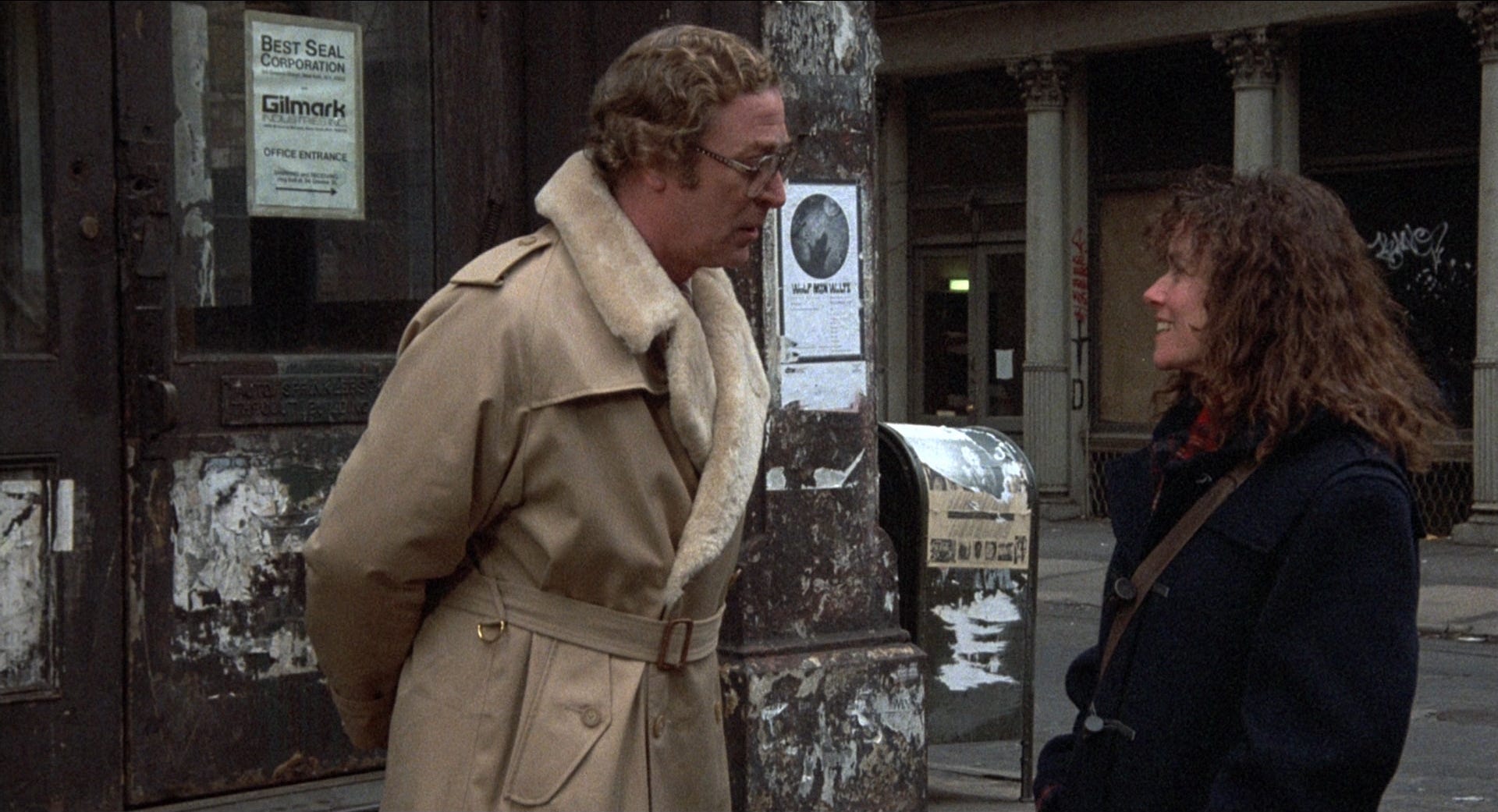
Hannah and Her Sisters commenced filming in October 1984. Hannah and Elliott’s apartment (site of the three Thanksgiving celebrations which anchor the story) were filmed in Mia Farrow’s home at the Langham, an apartment building in Central Park West. The loft that Lee shares with Frederick was found in SoHo, and the bookstore she takes Elliott to after he purposely bumps into her was the Pageant Book and Print Shop, since relocated and replaced by an Irish bar. Interiors at the Metropolitan Opera House at Lincoln Center, CBGB and the Cafe Carlyle were used as musical venues for date scenes, while the record store where Mickey reunites with Holly was Tower Records in the East Village. Finished in time to reach theaters for the Thanksgiving holiday weekend of 1985, Allen’s financier and distributor Orion Pictures bet that the film had broad commercial appeal worthy of a larger marketing campaign and release. Hannah and Her Sisters would be the first Woody Allen film since A Midsummer Night’s Sex Comedy in July 1982 to even be advertised on TV. When its cast started making the rounds on national television to promote the film, it wasn’t Woody Allen presenting a clip of his character kvetching about God, but Michael Caine with a scene of Elliott exalting about the power of love.
Orion opened Hannah and Her Sisters in a limited release of 54 screens on February 7, 1986. In the film’s seventh weekend, the studio expanded the release to 761 screens. The result was the biggest box office hit Woody Allen had enjoyed since Manhattan (1979) and it would remain his most popular in ticket sales for twenty years, until the psychological thriller Match Point (2005). The romantic comedy remained among the top ten grossing films in the U.S. for nine weekends. Almost a year later, Hannah and Her Sisters would be nominated for seven Academy Awards, including Best Picture. Michael Caine (Best Supporting Actor), Dianne Wiest (Best Supporting Actress) and Woody Allen (Best Original Screenplay) all won Oscars. Allen, as his wont, was not present at the awards ceremony, and Shirley MacLaine accepted the Oscar on his behalf. Poor Michael Caine was unable to get a flight out of the Bahamas, where he was stuck making Jaws: The Revenge (1987), a job the actor would later mock by stating he’d never seen the movie, but had seen the house it bought his mother (Sigourney Weaver, nominated for Best Actress in Aliens, accepted the award on Caine’s behalf and as of 2025, it’s the closest she’s come to delivering an Oscar acceptance speech).
It’s possible to read the title Hannah and Her Sisters and mistake it for a movie about the relationship between three sisters, holding Woody Allen accountable for delivering one about two men (who never meet) and their relationship with Hannah and her sisters. Diane Keaton, Jessica Lange and Sissy Spacek would star in something closer to a comedy about sisterhood with an adaptation of Beth Henley’s play Crimes of the Heart (1986). Hannah and Her Sisters has endured because it has more to do with the power three sisters radiate outside their circle, and how it changes two men who drift too close. Allen’s screenplay is wonderful. Each of his characters are drawn as real people with desire, intelligence and a sense of humor. These are individuals a lot of us have met. Hannah–the only main character whose thoughts aren’t shared through voice-over narration–appears to be the most prosperous and supportive, but is only willing to pursue so much opportunity for herself or empathy for others. The middle sister Holly is an addictive and chaotic personality, competing against Hannah instead of working on herself. The youngest sister, Lee, is the most beautiful and the most aimless, dependent on the charity of her parents or older, unavailable men (muddying the waters is the fact that Dianne Wiest and Barbara Hershey are the same age, and Wiest comes across as the youngest in her performance). Allen is most critical of his male characters, Elliott and Mickey, who have the world in their pocket and are willing to throw it all away for things they can never possess.

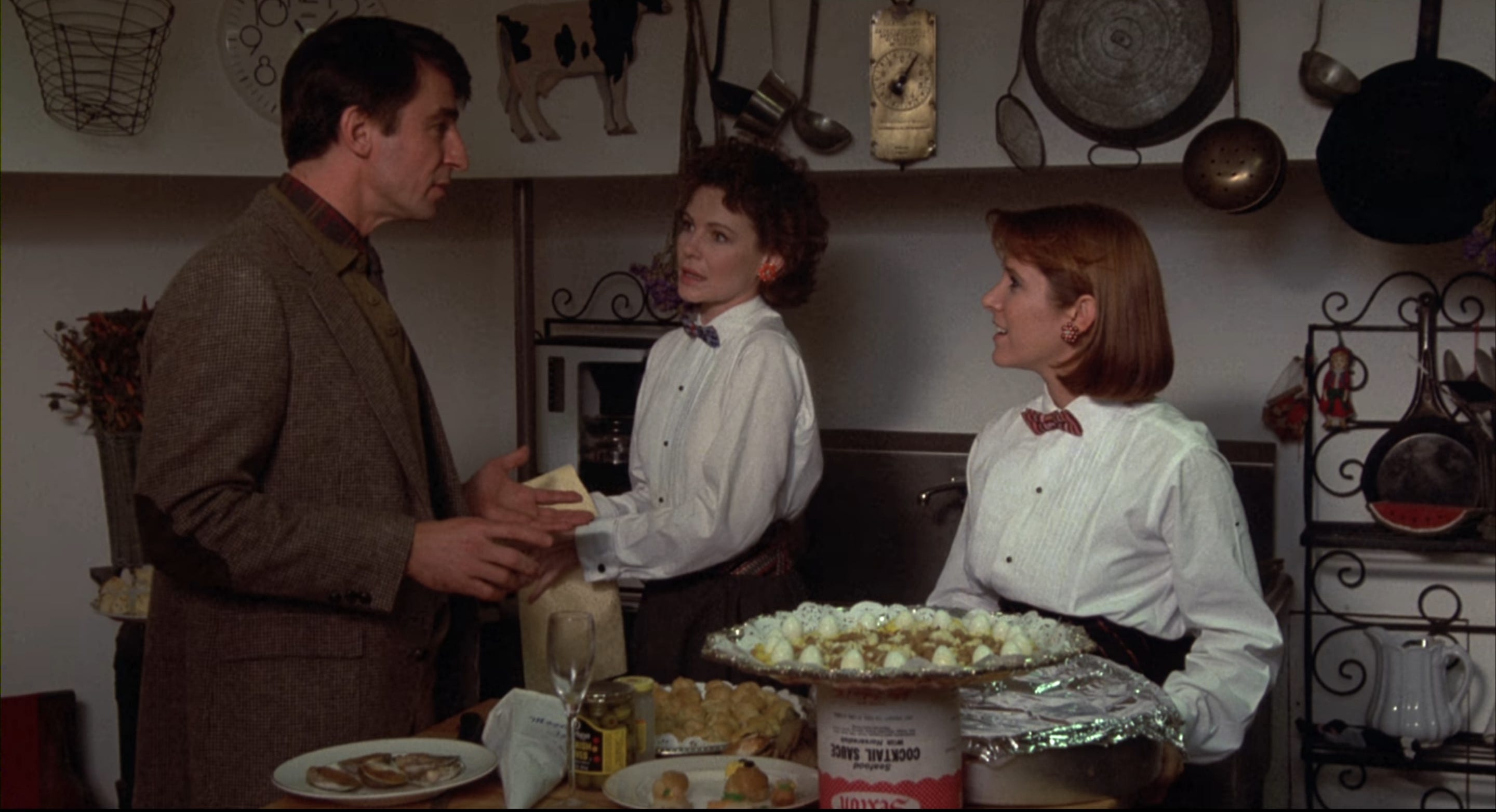
The acting in Hannah and Her Sisters is a horn of plenty. This was the first film by Woody Allen that lined up what could be considered an all-star cast. No part for Barbara Hershey is a supporting part, and rather than act on the viewer, Hershey beckons us to play scenes with her. Within three seconds, we can see why Elliott would risk his marriage for her character. Max Von Sydow, often cast as otherworldly villains or sages, is a delight to see in a contemporary comedy, and his end-of-the-relationship scene with Hershey leaves a mark. Michael Caine also seems like a deviation from the actor Allen typically gives runway. A pro at sex comedy, Caine won his Oscar as a career achievement more than anything he achieves in this role, but he makes everyone he performs with, namely Hershey and Farrow, better. Wiest glows like a lantern, relaxing into her character by letting the situations Holly puts herself in do the acting for her. In one scene, Wiest wrestles with Carrie Fisher (playing her business partner) over which of them should be dropped off last by the architect (Sam Waterston) who’s taken them on an architecture tour. By the time Mickey spots Holly alone in a record store, we’re rooting for these two lonely souls to reconnect. Hannah and Her Sisters is loaded with more music than any non-musical Allen would ever direct, Derek Smith serving as piano double for the family patriarch played by Lloyd Nolan. Characters serenade each other, play records for each other, attend live music events together (it is strange hearing goth rock, courtesy the Montréal band 39 Steps appearing as themselves, rocking out in a Woody Allen movie, but the actor’s reaction is priceless).
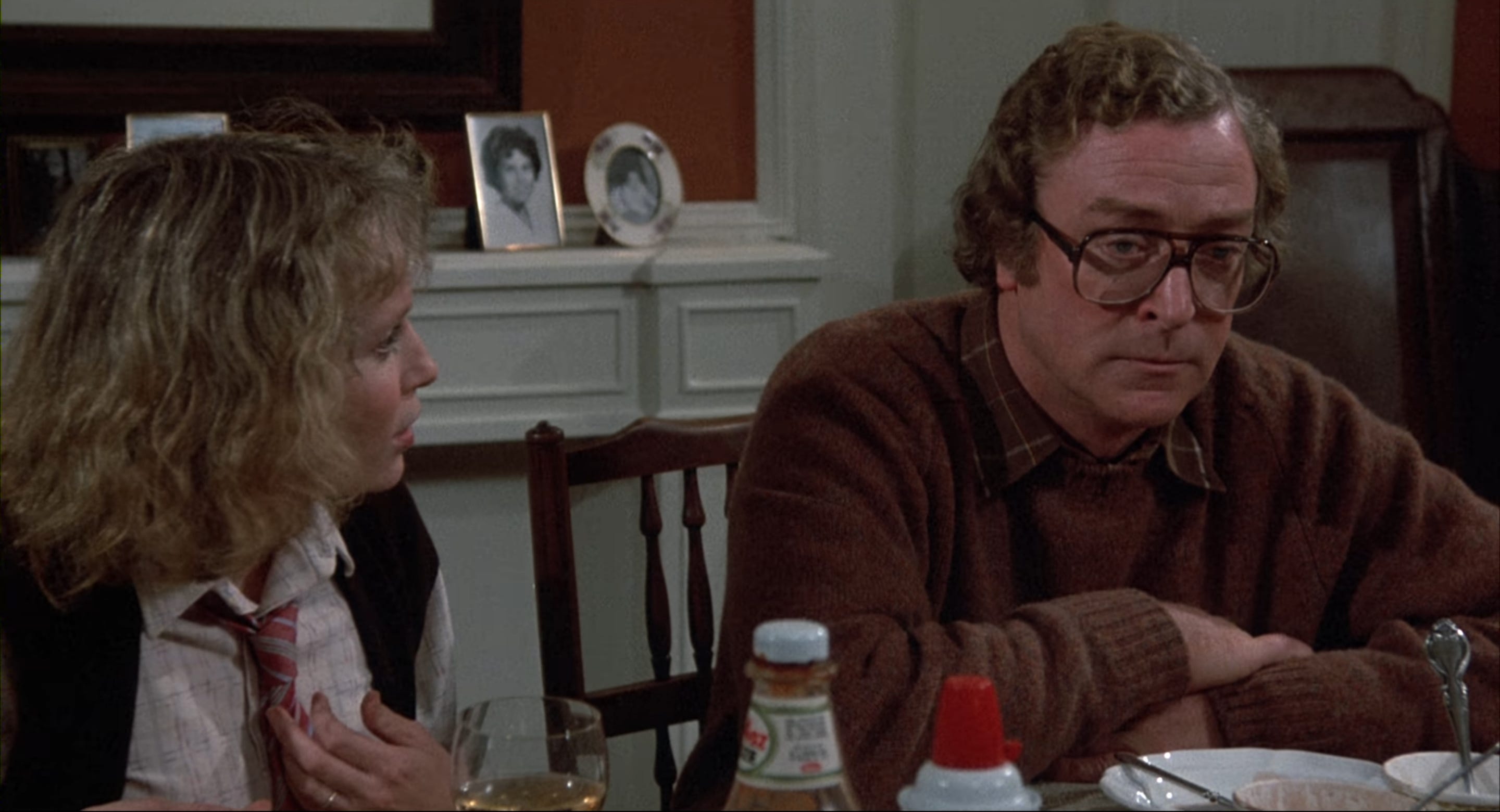
Woody’s cast (from most to least screen time): Woody Allen, Barbara Hershey, Michael Caine, Dianne Wiest, Mia Farrow, Max Von Sydow, Carrie Fisher, Maureen O’Sullivan, Lloyd Nolan, Julie Kavner, Sam Waterston (uncredited), Daniel Stern, Tony Roberts (uncredited), Joanna Gleason, Richard Jenkins, John Turturro, Christian Clemenson, Lewis Black, Julia Louis-Dreyfus, J.T. Walsh
Woody’s opening credits music: “You Made Me Love You (I Didn’t Want To Do It),” Harry James and His Orchestra (1941)
Woody’s closing credits music: “Isn’t It Romantic?,” Derek Smith (1985) / “I’ve Heard That Song Before,” Harry James and His Orchestra (1942)
Video rental category: Romantic Comedy
Special interest: Family Dysfunction