
Standup comic/ actor/ writer/ director Woody Allen was born on November 30, 1935 in the Bronx, NY. To celebrate his 90th birthday, Video Days returns to his third decade of work this month with ten films from the master filmmaker.
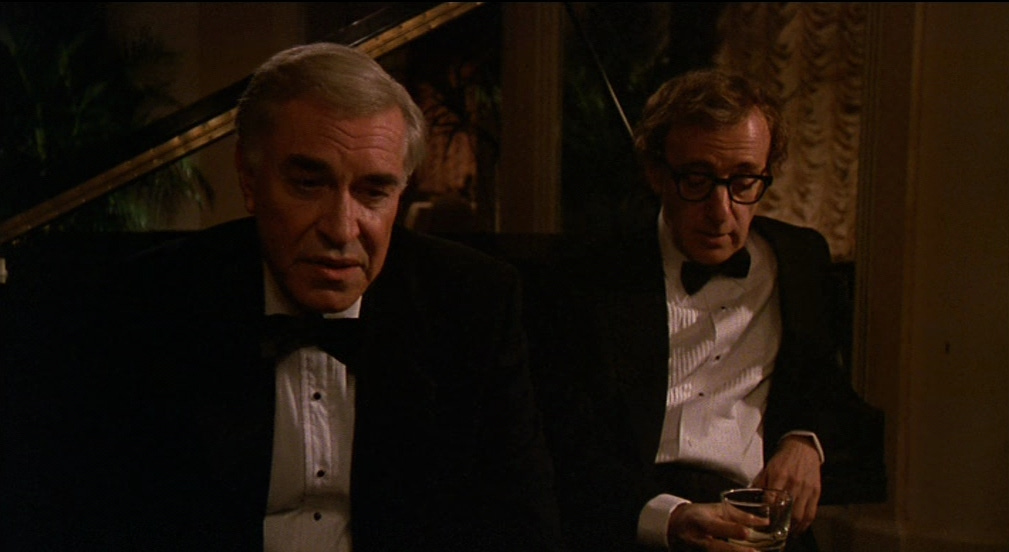
CRIMES AND MISDEMEANORS (1989) is so well hidden under thoughtful dialogue that explores the meaning of existence, punctuated by well-timed comic relief, that it’s easy to overlook it for being a skillful balance of suspense and comedy, two difficult genres to mix effectively. Written, directed and co-starring Woody Allen, this film reflects how sophisticated he’d grown as a filmmaker after twenty years of work, writing the most compelling part for a character Allen doesn’t play himself, as well as giving his finest film performance to date.
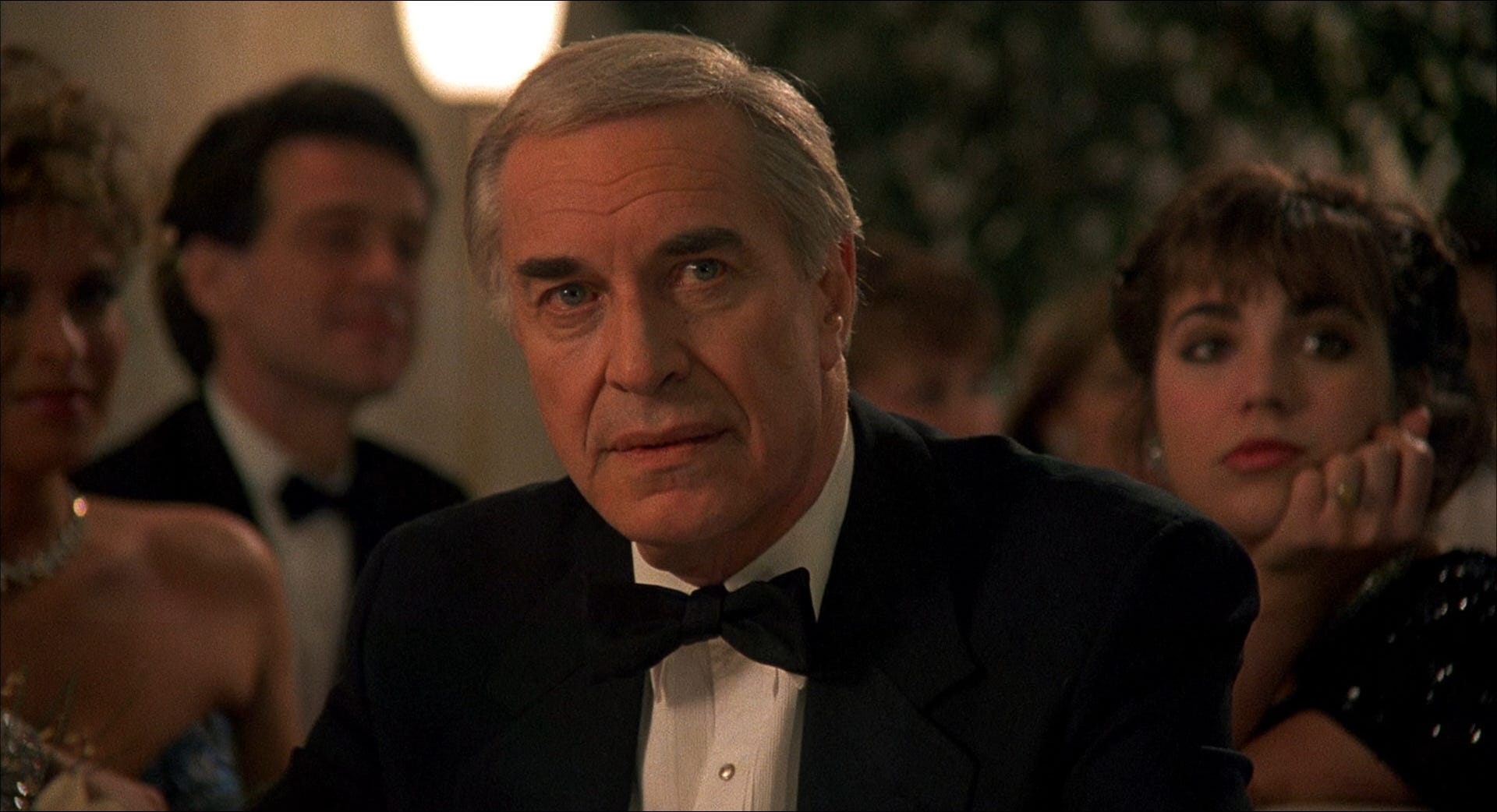
The genesis for what would become Woody Allen’s nineteenth feature film seems to have been a desire to explore the other side, one could say the dark side, of his popular romantic comedy Hannah and Her Sisters (1986). The film’s critical and commercial success prompted Allen to question whether he’d been too gentle on those characters and left them, and viewers, with too much hope. Instead of a script involving three sisters, he began writing about two brothers, a doctor whose success has shielded him from the harsher realities of the world, and his brother, a hoodlum he turns to for help when a woman threatens to expose their sexual affair to his wife and financial affairs to his colleagues, inserting the word “embezzlement.” Allen completed one-half of a first draft in the summer of 1988 before embarking on a holiday in Europe, planning to finish the second half when he returned to New York. Instead, Allen began sketching the remainder of his script on piles of hotel stationery (in Woody Allen: A Biography, Eric Lax obtained scraps of Allen’s writing from the Gritti Palace Venice, Villa d’Este on the shores of Lake Como, Hotel Hassler in Rome, and Grand Hôtel Stockholm. By the time he arrived at Claridge’s in London, his assistant Jane Martin made sure Allen’s bits and pieces were stored in the hotel safe to prevent being damaged or lost).
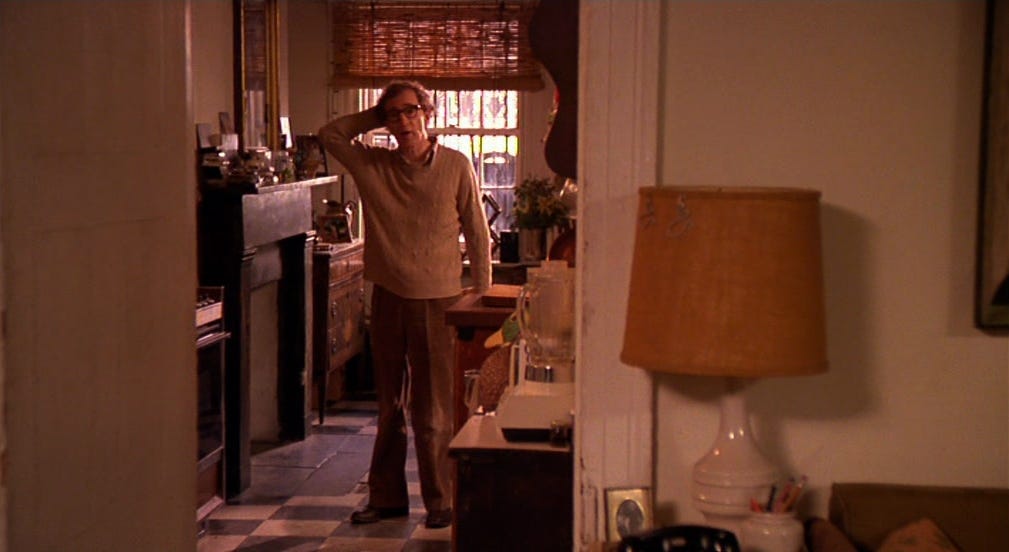
In addition to a serious story about two brothers weighing good and evil, Allen had another seemingly unrelated story, a comical one, involving a documentary filmmaker who attempts to seduce a married social worker by making a film about retired vaudevillians interned at the retirement home where she works. Neither story was substantial enough for a feature film, so Allen combined them into one script, the doctor and the documentary filmmaker crossing paths in the final scene. Allen–who’d stayed behind the camera for his last three pictures, September (1987), Radio Days (1987), Another Woman (1988)--took the role of the documentarian, Cliff Stern. Casting director Juliet Taylor spent four weeks trying to cast the doctor, an ophthalmologist named Judah Rosenthal who embraced science and turned a blind eye to the spiritual teachings of his Orthodox Jewish childhood. Having worked recently with Michael Caine, Denholm Elliott and Ian Holm, Allen lamented that the pool of acting talent wasn’t as deep in the U.S. as it was in England. One of Allen’s aides put in a call to Martin Landau and booked the actor on a flight from Los Angeles to New York to interview for the part.
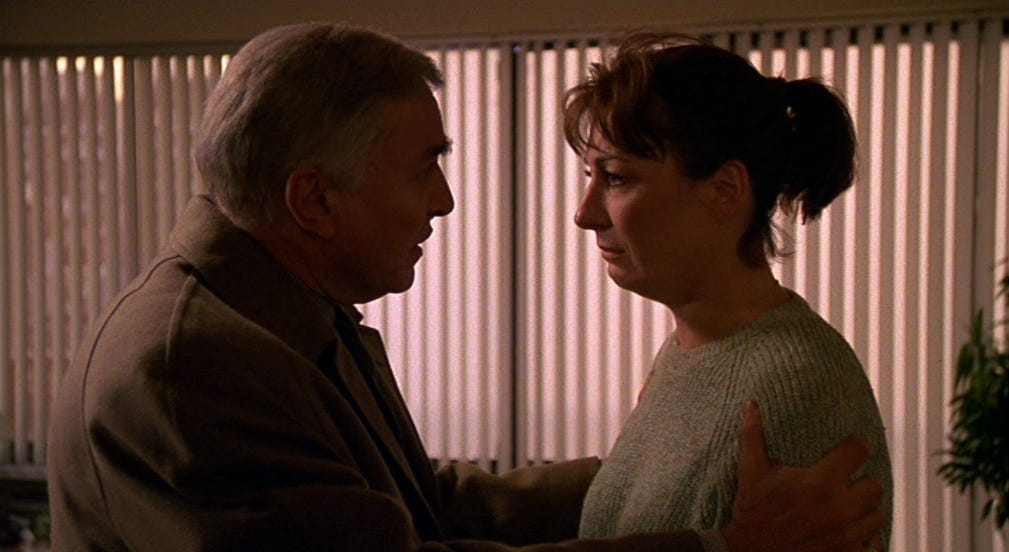
As a young man in 1951, Martin Landau walked away from a lucrative career as a staff cartoonist for the New York Daily News, having caught the acting bug. With little to no experience, he was hired by a summer stock company for a resort off the coast of Portland, Maine, performing in twelve different shows over thirteen weeks. In 1955, Landau applied for an opening at the Actor’s Studio in New York. Of five hundred applicants seeking to study with famed acting instructor Lee Strasberg, Landau and someone named Steve McQueen were selected. Landau’s classmates would also include James Dean, Eartha Kitt, Geraldine Page, Marlon Brando, Montgomery Clift and Marilyn Monroe. When Paddy Chayefsky’s play Middle of the Night starring Edward G. Robinson opened in Los Angeles with Gena Rowlands and Landau in the cast, Alfred Hitchcock took notice and cast him as a bad guy in North By Northwest (1959). In 1966, Landau and his wife Barbara Bain would be cast as the leads in the television series Mission: Impossible and remain with the show through three seasons. The couple would star in another popular series, Space: 1999 (1975-1977), but success in film eluded Landau. Through most of the eighties, he was cast as one-dimensional villains in B-movies.
Landau’s fortunes shifted when Francis Coppola sought him to play the loyal financier of maverick carmaker Preston Tucker (Jeff Bridges) in an A-movie, Tucker: The Man and His Dream (1988). On the ascent, with an Academy Award nomination for Best Supporting Actor in the coming months, Landau prepared for his meeting with Woody Allen by reading eight of the filmmaker’s screenplays over three days. His meeting went well enough for Landau to receive a full copy of Allen’s new script, a rarity for actors in a Woody Allen film, who often received sides without much context for what was going on in the big picture. Landau appraised the script as the finest he’d read by Allen the writer, but didn’t think that Allen the director quite knew what he’d written, pitching the character of Judah Rosenthal in terms of Edward G. Robinson, rough and streetwise. Landau risked talking himself out of a job by telling Allen that whoever was cast in the part needed to be sympathetic, more of an everyman, otherwise, the audience would be repulsed by the character’s choices. Booked on a return flight to L.A. at noon, Landau was offered the part.
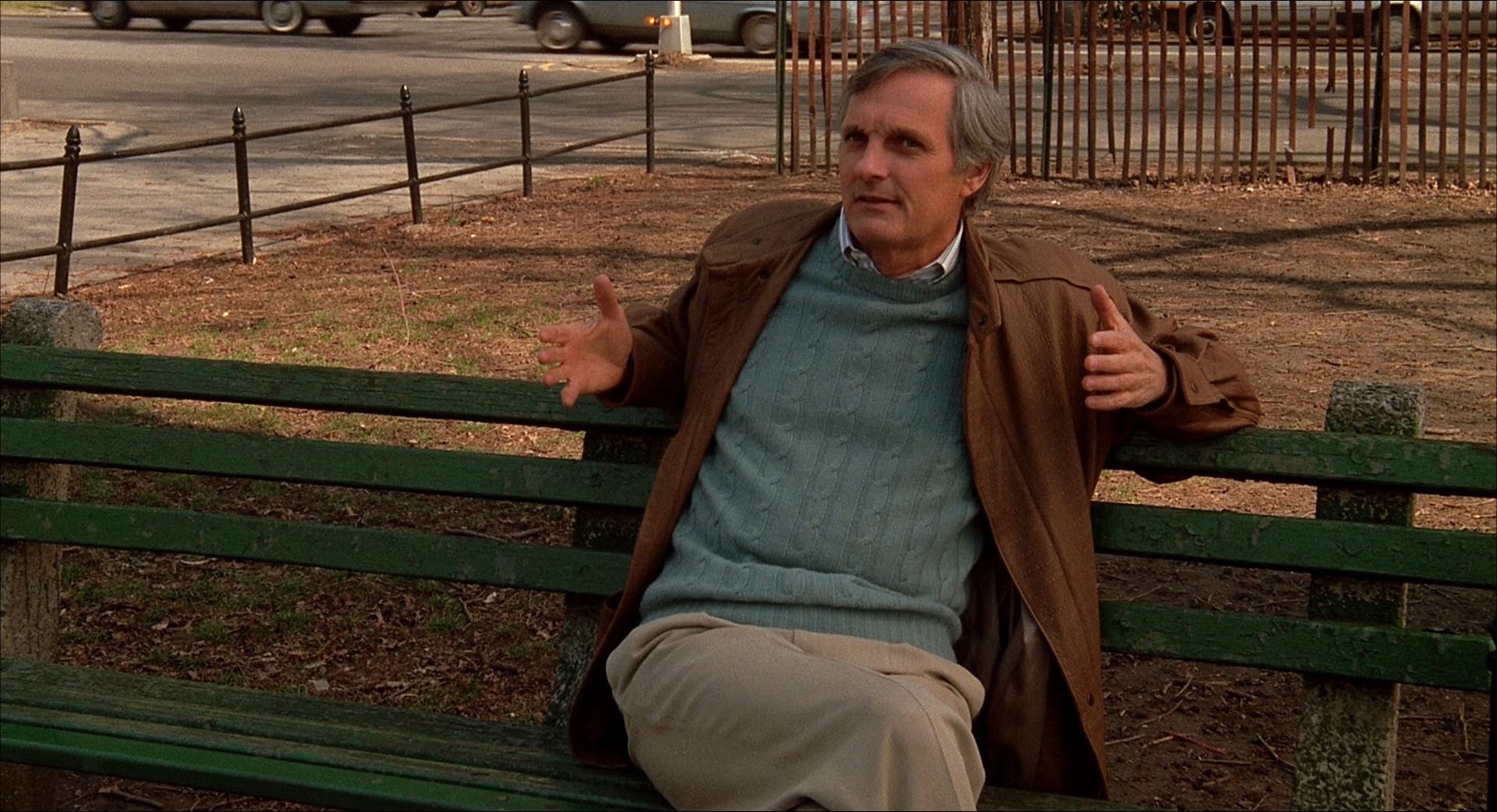
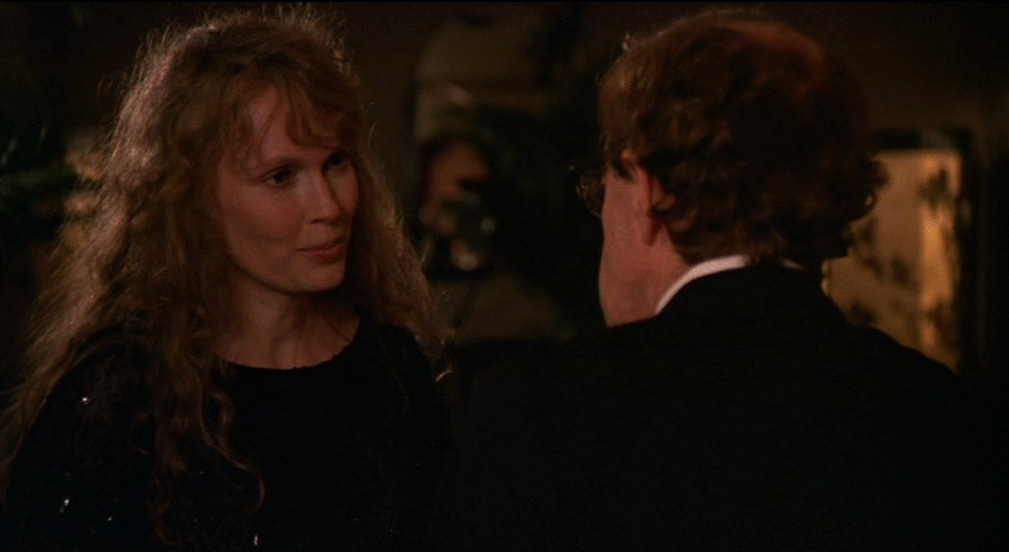
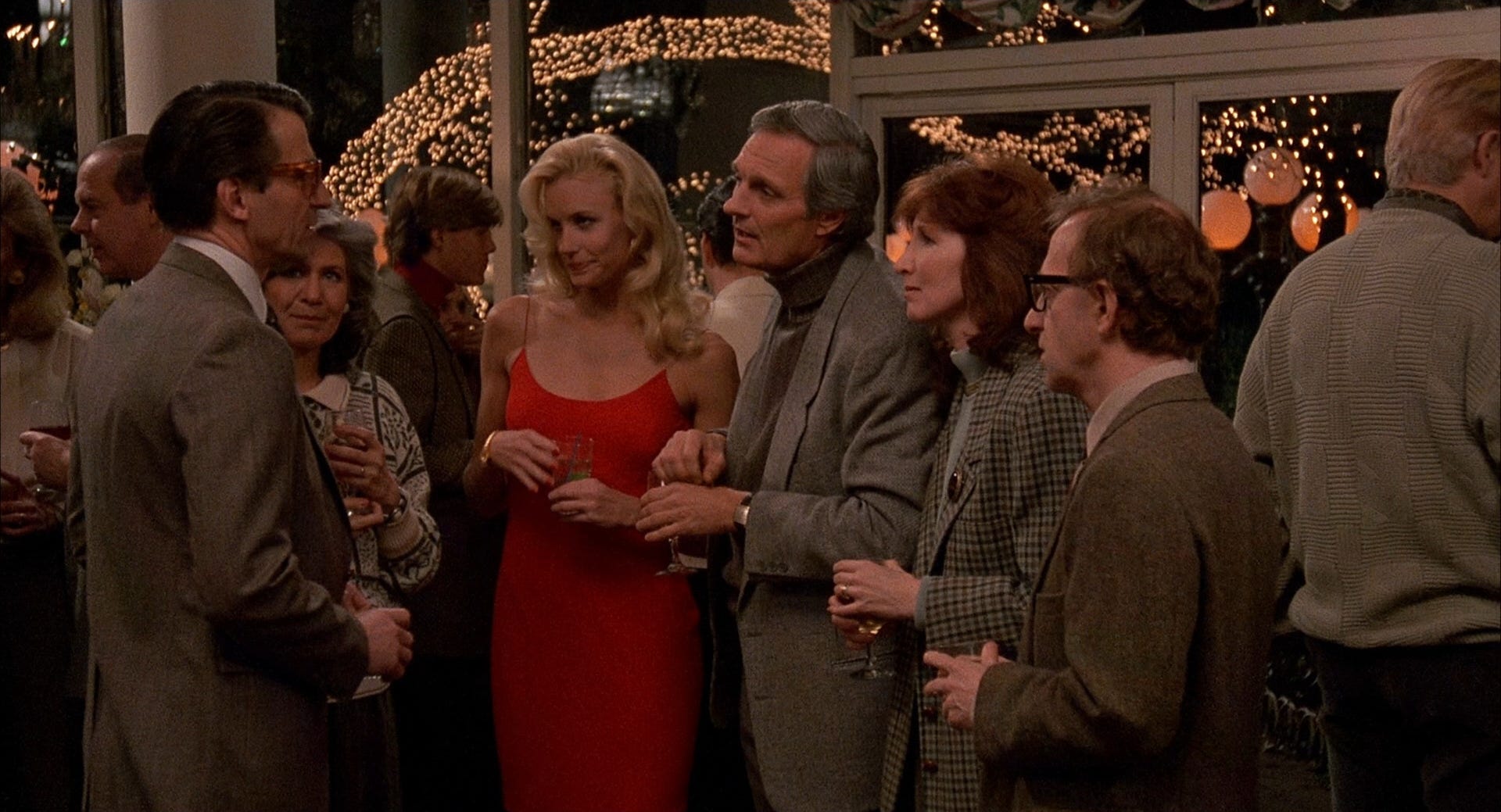
Joining Martin Landau and Woody Allen were Anjelica Huston as Judah’s emotionally unraveling mistress, Mia Farrow as the social worker who Cliff is besotted with, Joanna Gleason as Cliff’s wife, Claire Bloom as Judah’s wife, Sam Waterston as a vision-impaired rabbi Judah seeks counsel from, Alan Alda as a pompous TV producer, and Sean Young (in one scene) as an aspiring actress Cliff tries to seduce by pretending to be a producer. Shooting what had been referred to as Woody Allen Untitled ‘88 and was now going by the title Brothers commenced on October 3, 1988. Bleeker Street Cinema in Greenwich Village (shuttered in 1990) was used for both exteriors and interiors, while the childhood home Judah returns to visit was filmed in south Yonkers. Allen had wanted to cast Jerry Orbach as Judah’s streetwise brother, but when Orbach was unavailable, went with another actor. Unable or unwilling to give Allen what he wanted, the actor was replaced after three days of filming, and by this time, a slot had opened up in Orbach’s schedule and he stepped into the part. Filming wrapped in March 1989.
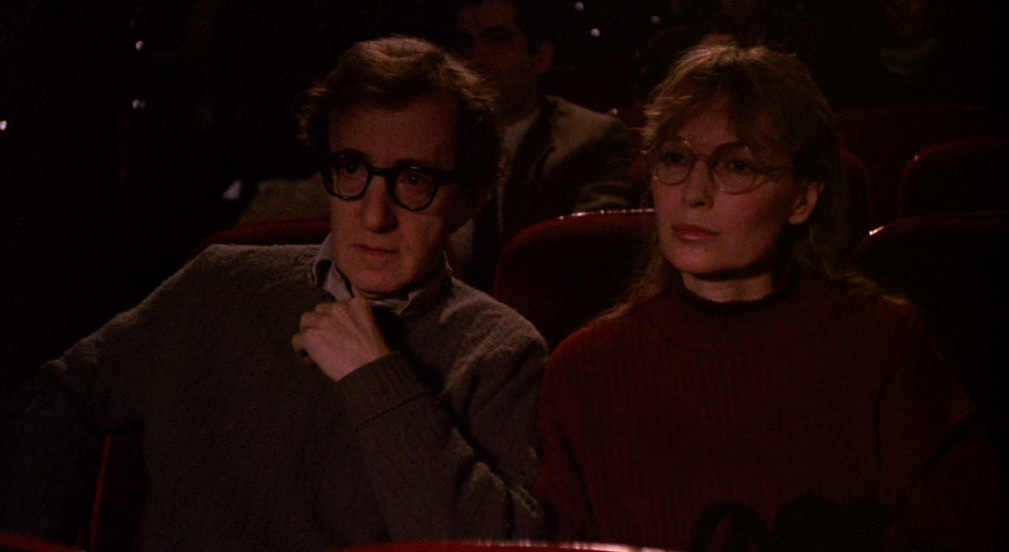
As was often the case when watching an assembly of his films, Allen not only saw what he could do better, but had the money to do so baked into his budget. He decided to rewrite and reshoot the majority of Cliff’s storyline. Instead of Farrow’s character being a social worker, she was rewritten as a producer for public television, divorced instead of married. Cliff falls for her while making a documentary on his brother-in-law, Lester, a fabulously successful producer of television comedies who represents everything Cliff despises. Alan Alda’s part was expanded considerably, Lester offering Cliff a job strictly as a favor to his sister. Cliff takes the money in order to finish his passion project, a documentary on an aging philosophy professor (German actor Martin Bergmann). Reshooting the wedding reception that concludes the film (at the Waldorf Astoria Hotel in Manhattan), Sean Young was not asked to return, her role written out of the picture. Allen made a minor alteration in Judah’s story, reshooting a scene between Landau and Huston that had taken place in her character’s apartment. Allen opted to reshoot it as written in a parked car at a gas station.
One of the new scenes involved Cliff and his wife having drinks at a jazz club with Alda and Farrow’s characters, reciting Emily Dickinson (which Lester quotes better than anyone at the table). The house band featured Derek Smith (piano), Major Halley Jr. (bass), Walt Levinsky (clarinet), Charles Miles (alto saxophone), George Masso (trombone) and Warren Vache Jr. (trumpet). Credited as the Jazz Band, Allen placed their performance of the Cole Porter tune “Rosalie” over the opening and closing credits. Settling on a title as reshoots were completed in May 1989, Allen learned that Brothers was unavailable. He considered Anything Else (which became the title of his thirty-third film in 2003) as well as High Crimes and Misdemeanors, which reminded Allen of a Gilbert and Sullivan opera in an unflattering way, before settling on Crimes and Misdemeanors. Opening on October 3 on 66 screens, critics were nearly unanimous in awarding the drama/ comedy the strongest accolades of any Woody Allen film in the 1980s. On their syndicated TV program At the Movies, Gene Siskel & Roger Ebert gave Crimes and Misdemeanors two thumbs up. Ebert opened his review stating, “And this is one of the very best movies Woody Allen has made, a movie that moves back and forth between drama and comedy to paint a cynical and despairing and sometimes very funny portrait of the modern world.”
Siskel began his summary by stating, “Well, the whole issue is that this is the essence of the eighties we’re seeing. ‘Can you do something for my career? Can I get away with it?’ is the name of the game, and the picture is so unremitting … It’s just terrific.” He added, “The other thing is, there’s a whole mood in Hollywood pictures to teach us the way to behave through showing us right-thinking people, I mean that’s the standard way. Gandhi, that kind of attitude. And here’s a picture that comes along and shows us possibly the way to behave by showing us the way people do behave, and it isn’t good. To me, it’s a much more interesting approach.” Both critics included Crimes and Misdemeanors on their lists of 1989’s ten best films, #8 for Ebert and #7 for Siskel. Buoyed by the reviews and anticipating broader than typical appeal for a Woody Allen film, Orion Pictures expanded the release to 440 screens for its fourth weekend. Despite commercial competition from Back to the Future Part II, Harlem Nights, The Little Mermaid, Look Who’s Talking, Steel Magnolias, All Dogs Go To Heaven and Prancer, Crimes and Misdemeanors expanded to 525 screens over the 1989 Thanksgiving holiday weekend and altogether spent five weekends among the top ten grossing films in the U.S., making it Woody Allen’s second biggest box office success of the eighties. The film was nominated for three Academy Awards: Best Supporting Actor (Martin Landau), Best Director (Woody Allen) and Best Original Screenplay (Woody Allen).
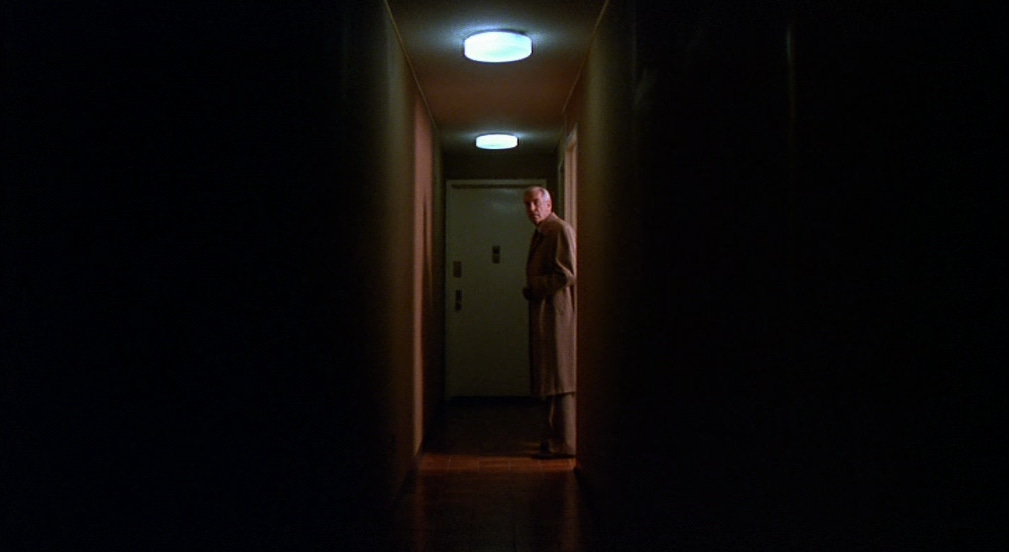
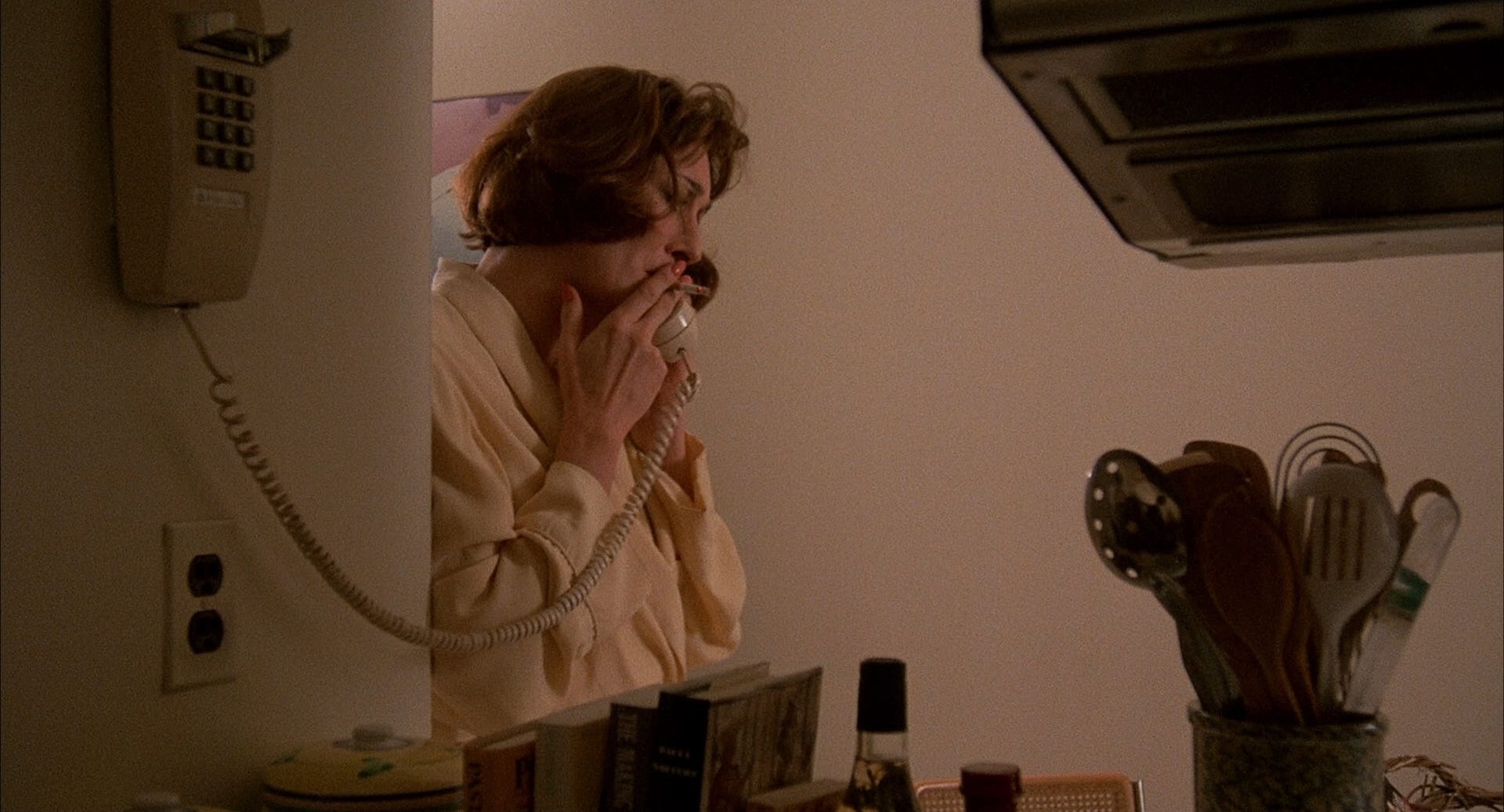
Crimes and Misdemeanors stands among Annie Hall (1977), Manhattan (1979), Hannah and Her Sisters and Another Woman as the five best pictures written and directed by Woody Allen in his first twenty years as a filmmaker. Though Allen had experimented with suspense in Another Woman, this is an enthralling departure, his first film in which a murder was plotted and a corpse discovered (Victor Argo plays the police detective who has a few questions for Judah). But as if Allen were in the favor-granting mood to his financiers, it also marked a return to form for Woody Allen the comic actor (“I can’t watch his stuff,” Cliff rants to his wife about her beloved brother’s television work, “It’s sub-mental!”) as well as a step forward for him as an actor, period. Instead of feeling disjointed–as if half the script were scribbled on stationery, which it was–the two halves of Crimes and Misdemeanors balance each other, contrasting everyday sins with those that carry prison sentences. Among the questions asked by Crimes and Misdemeanors are what the nature of sin is, whether confession is good for the soul, or whether sparing your loved ones pain counts for something with God, if there is a God. Credit goes to Anjelica Huston, the daughter of a film director who grew up meeting brilliant people and modeling. Here, Huston is stripped of her nobility, playing a flight attendant who doesn’t possess a drop of culture, but unlike Judah’s wife, is willing to make him the center of her life. She deludes herself that her loyalty will be rewarded, and realizing it won’t, is split open like a raw nerve.
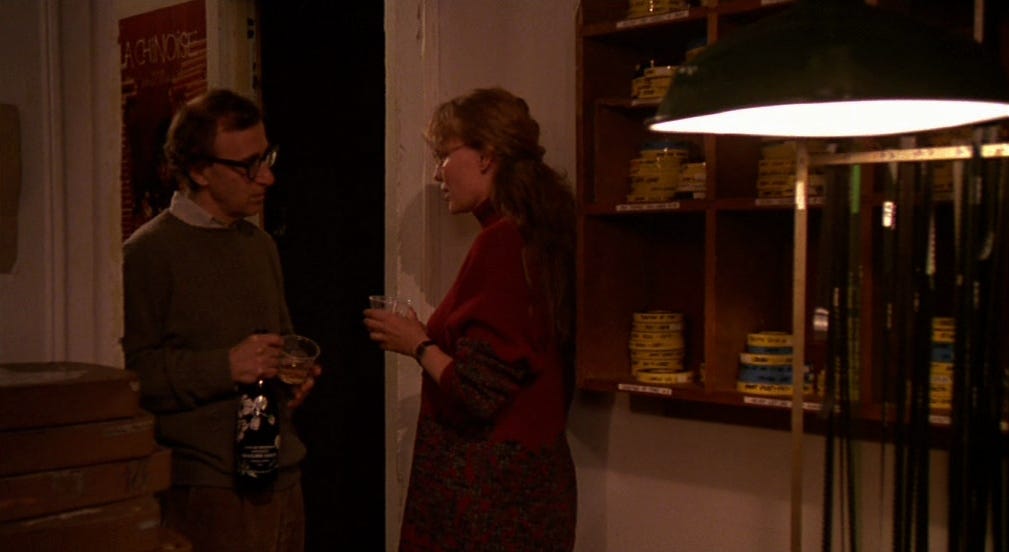
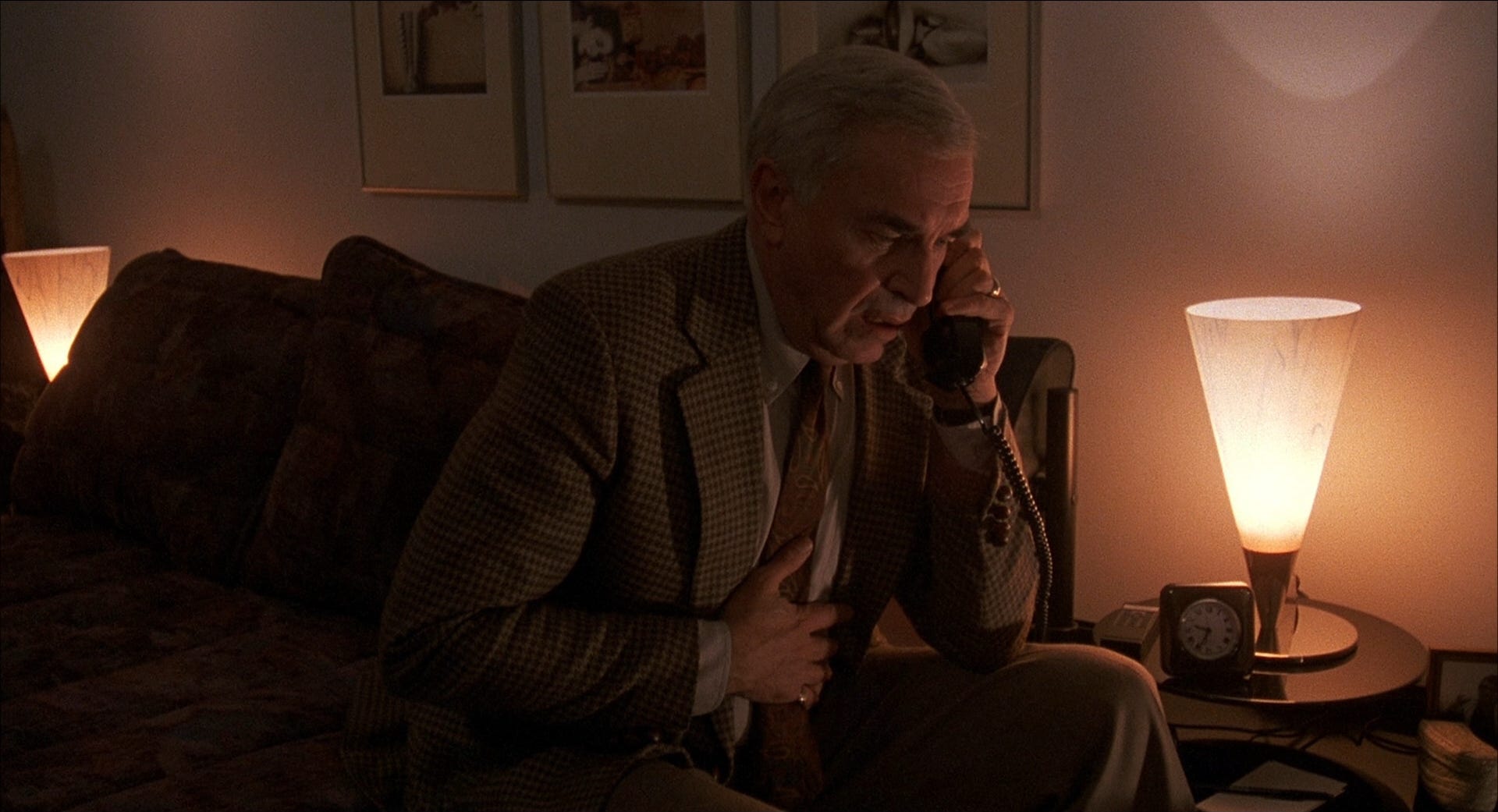
Huston is terrific, as is Martin Landau. The moment Judah appears on the verge of confessing murder to his family is stunning in terms of performance. What makes Judah Rosenthal such a rich character is how deep he’s fallen into a well. The crimes he’s committed–Did he make promises to his mistress? Did he embezzle funds?--are as unclear to him as what action he should take to atone. Cliff is guilty of smaller crimes, but is just as confused. Allen’s ardor for Mia Farrow’s character comes across as very real, and her rejection of him is something Allen makes the viewer feel. The script does have signs it was written with speed, with much of the story moving forward by dialogue instead of action, like a play, and some of that dialogue perfunctory. (Caroline Aaron, playing Cliff’s sister, shares a dating story from hell that Allen reacts to as if they’d been rehearsing for too long). Allen does handle transitions between storylines well, using movie clips–from Mr. and Mrs. Smith (1941), This Gun For Hire (1942) and The Last Gangster (1937)–that Cliff is watching and that comment on what Judah was grappling with in the previous scene. Alan Alda is a tremendous relief hitter, and the decision to give his character–better looking than Cliff, richer than Cliff and also smarter than Cliff–more screen time unearths a whole other movie, one about a man cursed by a family member who has everything he wishes he did. The cumulative effect is a tragic comedy that packs in existential questions and laughter, made by a filmmaker who’d been honing this very sort of film for years.
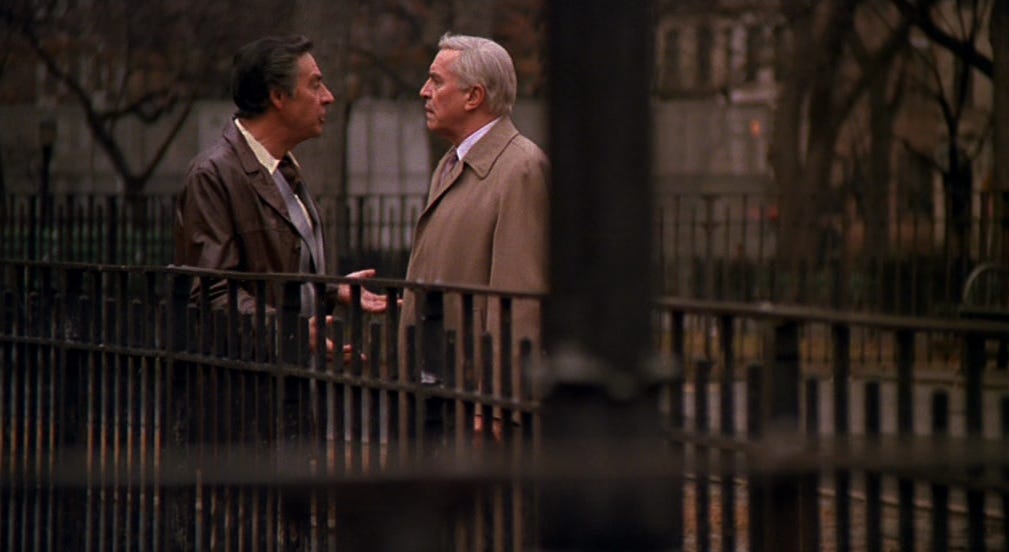
Woody’s cast (from most to least screen time): Martin Landau, Woody Allen, Anjelica Huston, Alan Alda, Mia Farrow, Sam Waterston, Jerry Orbach, Joanna Gleason, Caroline Aaron, Claire Bloom, Anna Berger, David S. Howard, Stephanie Roth, Gregg Edelman, Martin Bergmann, Jenny Nichols, Daryl Hannah (uncredited), Victor Argo, Frances Conroy
Woody’s opening/ closing credits music: “Rosalie,” written by Cole Porter, performed by the Jazz Band (1989)
Woody’s closing credits music: “Sweet Georgia Brown,” Coleman Hawkins and His All-Star Jam Band (1937)
Video rental category: Drama
Special interest: Midlife Crisis