

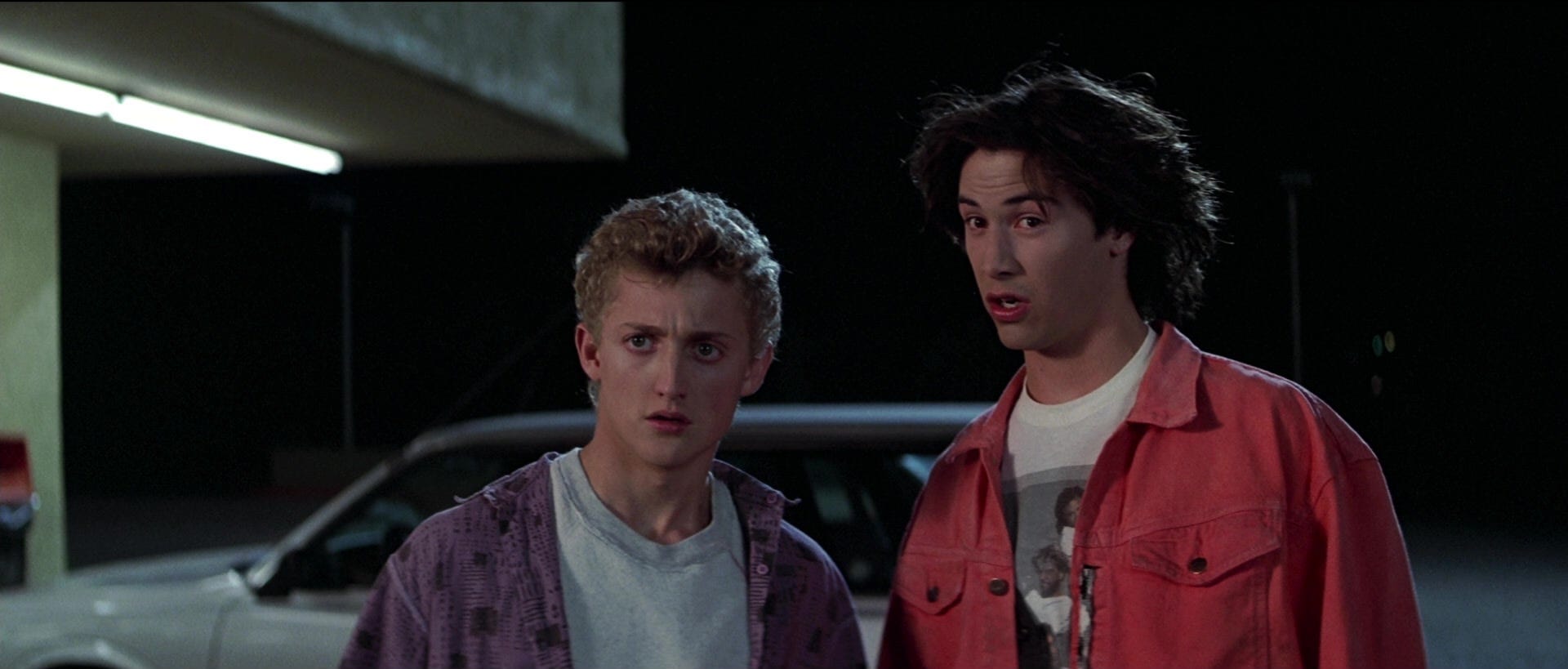
BILL & TED’S EXCELLENT ADVENTURE (1989) is a comedy in which suburban teenagers are promoted to the unlikely role of diplomat when they travel through time, and though it’s not the same movie as Back to the Future (1985), it’s a better movie in many ways. One has funnier jokes, better performances, less repetition, depicts the bygone as something other than a television sitcom, teaches us about history, and is wrapped in a positive message. The film that does that isn’t the one that topped the box office for months, but nearly went straight to cable TV.
Chris Matheson & Ed Solomon met in January 1981 on the campus of the University of California Los Angeles. They were enrolled together in a playwriting course. Matheson was from L.A., the youngest of three children of Richard Matheson, author of I Am Legend and A Stir of Echoes who adapted several of his short stories into some of the best episodes of The Twilight Zone, namely Little Girl Lost and Nightmare At 20,000 Feet. Solomon was from Boston. According to legend, at the age of 8, he wrote a letter to NBC, c/o Laugh-In, with his sketch comedy ideas and a suggestion for the show to air later so he could finish his homework before it was on. Solomon received a letter seeking permission to submit the boy’s jokes to the writing staff, but Solomon’s parents refused. Relocating to Southern California, he did morning announcements and hosted his high school variety show. Within a week of arriving at UCLA, Solomon participated in an open-mic night at the Comedy Store. The response to his joke repertoire was so ecstatic, Solomon considered dropping out of college to make a living as a stand-up comedian. Inviting friends to his set the following week, the response was so cold that Solomon not only stayed in school but chose economics as his major.
Matheson & Solomon discovered they shared a sense of humor and taste in movies, Blazing Saddles (1973) and Monty Python and the Holy Grail (1974) representing their gold standard as far as writing: crude or hastily thrown together and very silly. They joined the UCLA Comedy Club, which hadn’t existed when they arrived on campus. Jim Birge, a theater arts guest lecturer, rented a theater on Sunset Boulevard to gather students once a week–no audience–to simply workshop material. Performing for a paying crowd, the troupe anchored their amateur bits with one professional headliner, like Bruce Baum or Garry Shandling, the latter of whom told Solomon he had two good jokes and asked the UCLA senior if he’d be interested in writing with him. Solomon graduated in 1982, and Shandling’s recommendation got him a job on the writing staff of the sitcom Laverne & Shirley. Matheson enrolled in graduate school in San Diego. The two remained active in the UCLA Comedy Club, and one night in 1983, Matheson suggested an improv about two teenagers discussing history despite knowing absolutely nothing about it. Matheson’s improv with Solomon had their characters cramming for an exam, while one of their dads kept coming in to ask them to turn down their stereo.
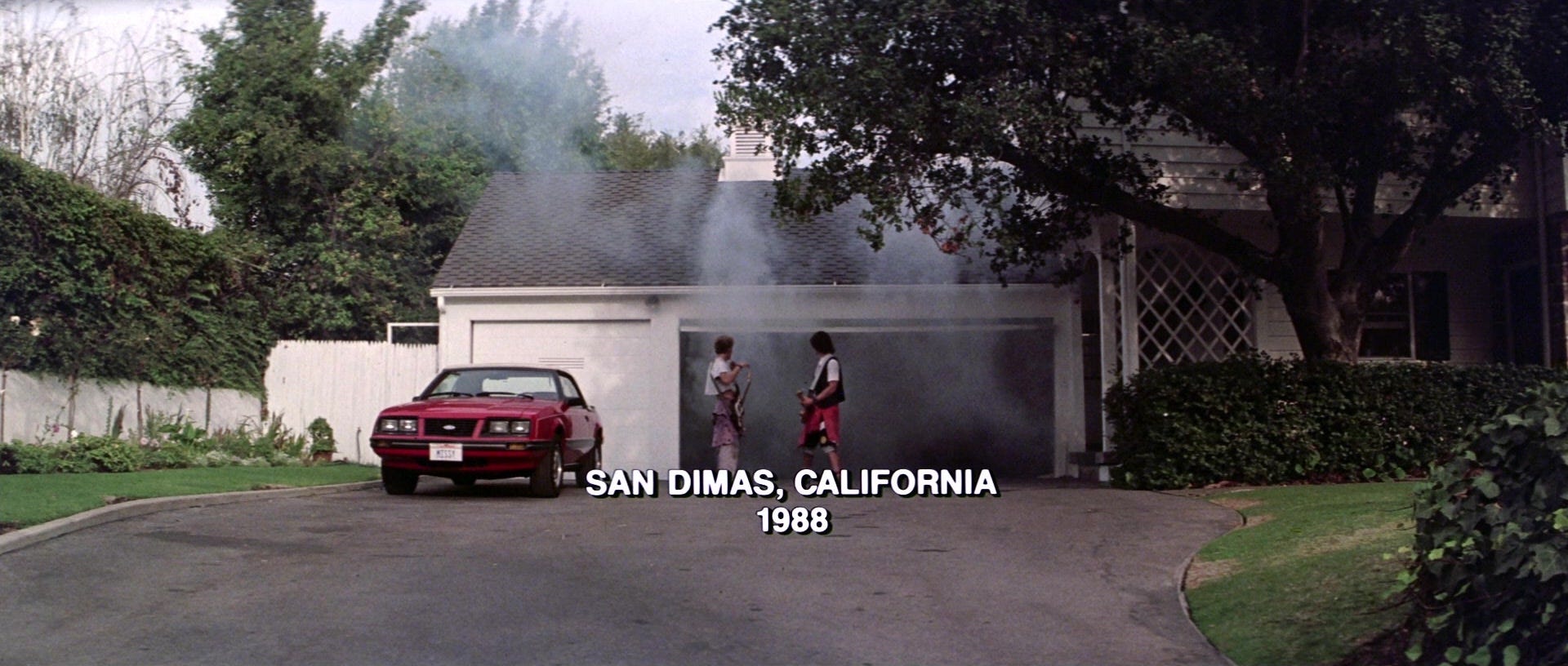
In their improv, Matheson & Solomon referred to each other as “Bill” and “Ted.” Still an econ major, Solomon hadn’t lost the comedy bug, writing jokes for Jimmie Walker, as well as plays. Matheson recalled, “After I went off to grad school, Ed and I were talking on the phone and cracking up about the idea that these guys had gone back in history, and through sheer bumbling, were responsible for everything bad that ever happened to mankind, including the Plague, world wars, the Titanic. The implications of that were a little dark, however, such as the Holocaust, but we got a big kick out of sending them back into history. We were going to write a sketch film, with this as one of the skits, but my dad said, ‘That sounds like a whole movie.’” Matheson & Solomon spent seven days in Lake Tahoe sketching an outline for their script, then returned to Los Angeles for four days of binge writing–much of it at a Ships Coffee Shop–where they completed a draft by hand. They’d fleshed out Bill and Ted somewhat, but the characters didn’t really have defined personalities, their education-challenged dialogue mostly interchangeable.
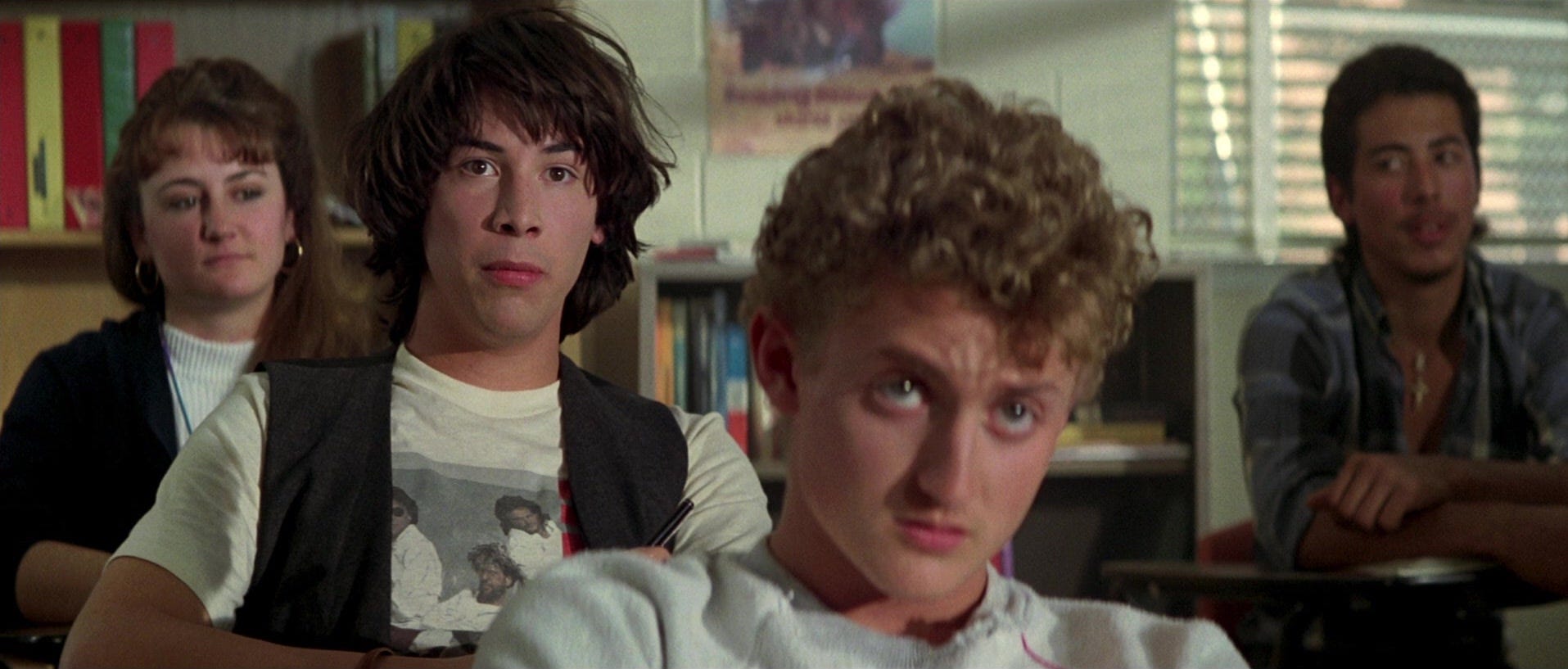
Dividing the manuscript, Matheson and Solomon each typed up their portion to produce a working draft. Solomon recalled, “[The first draft] was called Bill & Ted’s Time Van and had most of what the movie has, although there were some significant changes. Rufus was a twenty-seven year old high school sophomore and drove a van that traveled through time for no reason we cared to explain, probably because we didn’t know how. It seemed to blow a hole in the reality of the film, so to fix that we had an idea that made us laugh: What if seven hundred years from now, their music literally saves the world? We then switched the title to Bill & Ted’s Excellent Adventure.” Matheson & Solomon’s first draft would be dated September 15, 1984. Solomon’s agent so disliked the script that he refused to send it out for submission, and when Solomon proposed that maybe he should be working with someone who believed in him, the agency dropped him as a client. David Greenblatt, an agent at ICM who’d offered to represent Solomon out of UCLA, loved the script, and stepped in to rep Matheson & Solomon. Within two months, he had an offer for them.
Richard Matheson had gotten a copy of his son’s script to Stephen Deutsch, producer of the film adaptation of Matheson’s novel Bid Time Return, produced as Somewhere In Time (1980) with Christopher Reeve and Jane Seymour as the leads. Deutsch, who nearly five years later would retain a co-executive producer credit for his services, got the script to Robert W. Cort, a former executive vice-president at Twentieth Century Fox who’d accepted the job as president of Interscope Communications. Ted Field, founder of Interscope Racing, had expanded from Formula One to feature films, and with a watchful eye on the market, Interscope’s first production was a sleeper hit: Revenge of the Nerds (1984). Interscope took Bill & Ted’s Excellent Adventure off the market, optioning the script for $5,000, with $15,000 for a rewrite and $10,000 for a polish against $105,000 if the movie were made, all split between Matheson & Solomon after taxes and their agent’s ten-percent. An Interscope principal named Scott Kroopf was appointed the project’s producer, with Joel Soisson & Michael S. Murphey, neither much older than Chris Matheson & Ed Solomon, also aboard as producers.
Kroopf recalled, “The script was on the Black List. Everyone around town knew it and loved it, not only for its incredibly goofy, funny quality but for the way Chris and Ed used language to create a whole Bill & Ted speak and unique take on friendship.” Within twenty-four hours of Interscope optioning the script, Kroopf got a call from Warner Bros. Perhaps betting that a teenage time travel picture going into production with Steven Spielberg as its executive producer titled Back to the Future (1985) would be successful, the studio wanted to develop Bill & Ted’s Excellent Adventure. Speaking to Eric Goldman for an article in Cultured Pop published February 23, 2024, Ed Solomon recalled, “The first director we met with was this guy named Rick Rosenthal and he had just directed Halloween II (1981). I don’t know why they thought he’d be right for it. We had a meeting with him and he had some ideas. And I remember Chris and I saying we didn’t think those ideas worked. This was the first meeting we had on the script. And he goes, ‘Well, if you don’t like it, we’ll find other writers who do.’” Rosenthal didn’t stick around for long, but Matheson & Solomon discovered that Warner Bros. had plenty of ideas too.
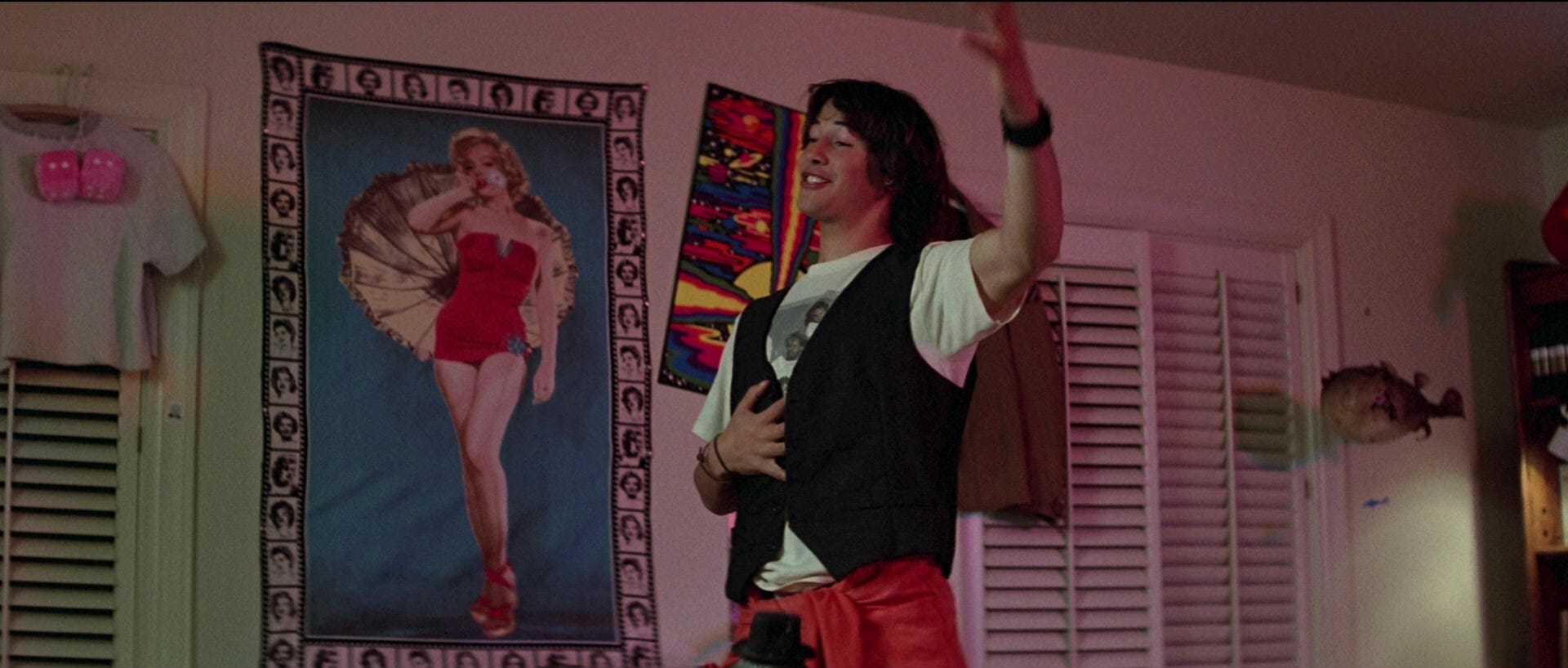
Solomon continued, “We did a series of rewrites, continuously making the script worse, in my opinion. We didn’t know any better, it was our first deal. They kept saying, ‘This is a summer teen movie comedy which will only appeal to kids, so we have to emphasize that.’” Needing a director, Joel Soisson & Michael Murphey suggested an assistant editor on a picture they’d written titled Hambone and Hillie (1983). A graduate of the University of Texas at Austin, Stephen Herek had since broken into directing features with Critters (1986), a competently made Gremlins (1984) rip-off starring Dee Wallace that was better than it needed to be. Speaking to David Weiner for a retrospective in the Hollywood Reporter published February 15, 2019, Herek recalled Chris Matheson & Ed Solomon’s original draft of Bill & Ted’s Excellent Adventure. “The story was incredibly laugh-out-loud. They wrote such lovable characters, and their jokes are always a little off-center. I remember a couple of times just belly laughs, although after reading the script I’m going, ‘Wow, this is either going to be a huge hit or a huge flop.’ There was going to be nothing in between, because it was very acute in its jokes and a very specific audience.”
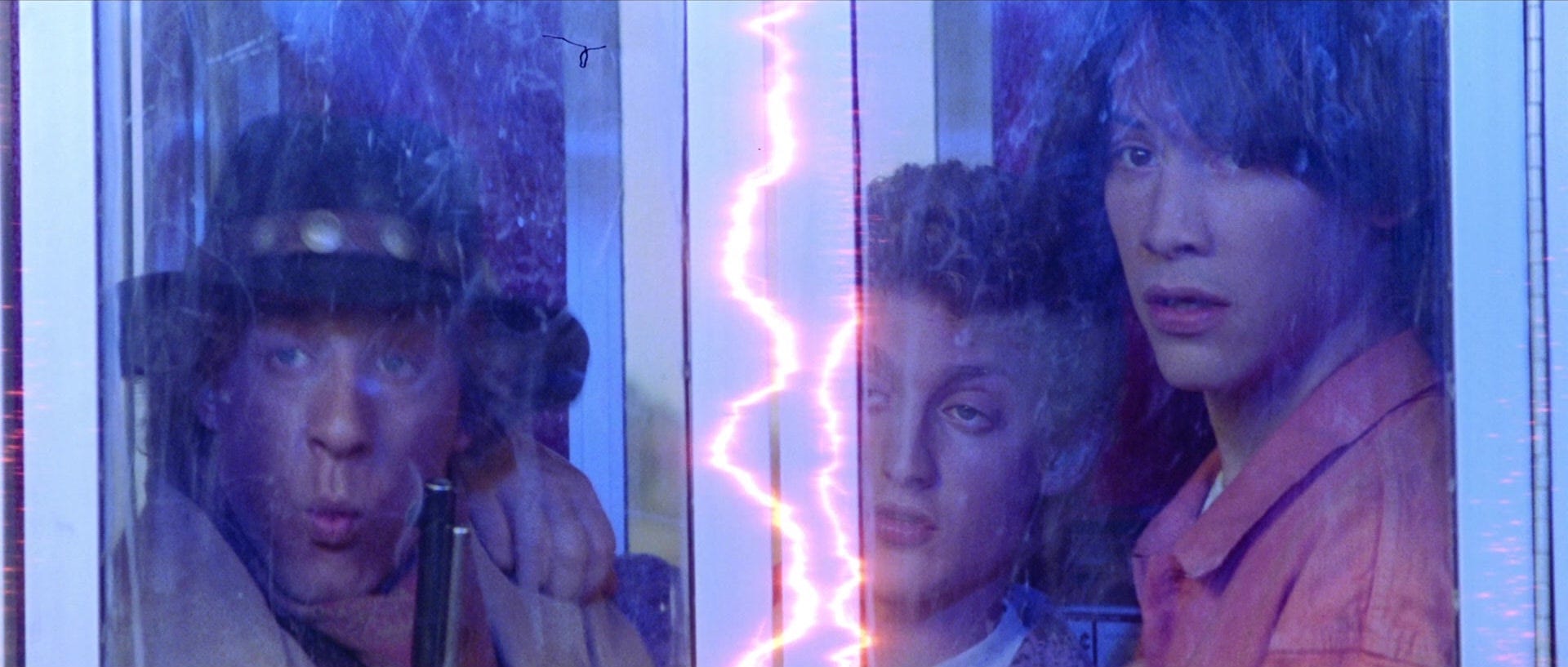
Stephen Herek’s suggestions for the script improved it. “[Originally] it was a van but visually all I could come up with was an image of Scooby Doo. I tried to put a certain believability to it. The idea that there’s these phone lines–the circuits of time–and you can dial a number, connect to a circuit, go through these wires and then boom! You’re spit out into this phone number in time. It felt like it could be a lot of fun but also had a certain logic to it.” [Matheson & Solomon and Herek would all plead ignorance of Doctor Who, the forever-running BBC science fiction series that sent its title character through space and time in an English phone booth. In the U.S., the program was considered more educational than commercial, reruns relegated to public television on weekends at practically midnight]. Herek thought so much of the material and its potential he campaigned Warner Bros. for the budget to make a quality version. This was a fatal misunderstanding of why the studio had hired him: everyone was expected to work cheap. Roughly one year after Back to the Future had opened to blockbuster business over the 1985 Fourth of July weekend, Warner Bros. made the decision to put Bill & Ted’s Excellent Adventure into turnaround.
Six months later, De Laurentiis Entertainment Group expressed interest in acquiring the project. Italian producer Dino De Laurentiis had taken advantage of labor regulations in North Carolina favorable to him striking ground on a production facility in the city of Wilmington. DEG also saved money on story development, letting major studios like Warner Bros. do that work for them, acquiring scripts in turnaround. De Laurentiis’ daughter Raffaella De Laurentiis, producer of Conan the Destroyer (1984) and Dune (1984) and president of production at DEG, liked Bill & Ted’s Excellent Adventure and set up a meeting between the filmmakers and her father. According to Joel Soisson, they decided that the only way to pitch the European mogul–an age gap making it unlikely he’d relate to the material and a language gap prohibiting his understanding of it–was to frame their project as a comedy in which Napoleon Bonaparte travels through time. DEG greenlit Bill & Ted’s Excellent Adventure at a production budget of $8.5 million. (The producers would give a “special thanks” to Raffaella De Laurentiis in the end credits, indicating their debt to her).
During auditions in Los Angeles, Keanu Reeves, who’d been featured in the critically acclaimed River’s Edge (1986) and little else, stood apart with a lovable sort of goofiness that seemed perfect for Bill. Alex Winter, a film student at Tisch School of the Arts at New York University, developed the best rapport with Reeves in auditions, both showing up on motorcycles, both bass players. For Winter, it was just another gig, but also not. The actor recalled, “What struck me at the time was the language. It was very distinct for what was presented as a teen comedy. It wasn’t like other teen comedies–God knows you’d audition for a ton of those. If it wasn’t a John Hughes movie it was a knock-off John Hughes movie and the language was always the same: teens acting like forty-year-olds in therapy. Bill and Ted were very childlike and spoke in this ornate way. That stood out. It was more fun.” Solomon added, “[Alex and Keanu] are really charming, smart and good looking guys. When Chris and I initially wrote the characters we pictured spotty guys with low rider jeans with their boxers sticking out, heavy metal T‑shirts and long hair. What Alex and Keanu brought was a more winning and charming personality, and what they embody that’s crucial to who Bill and Ted are is a benevolence of spirit and positivity. As soon as it was them, it was them.”
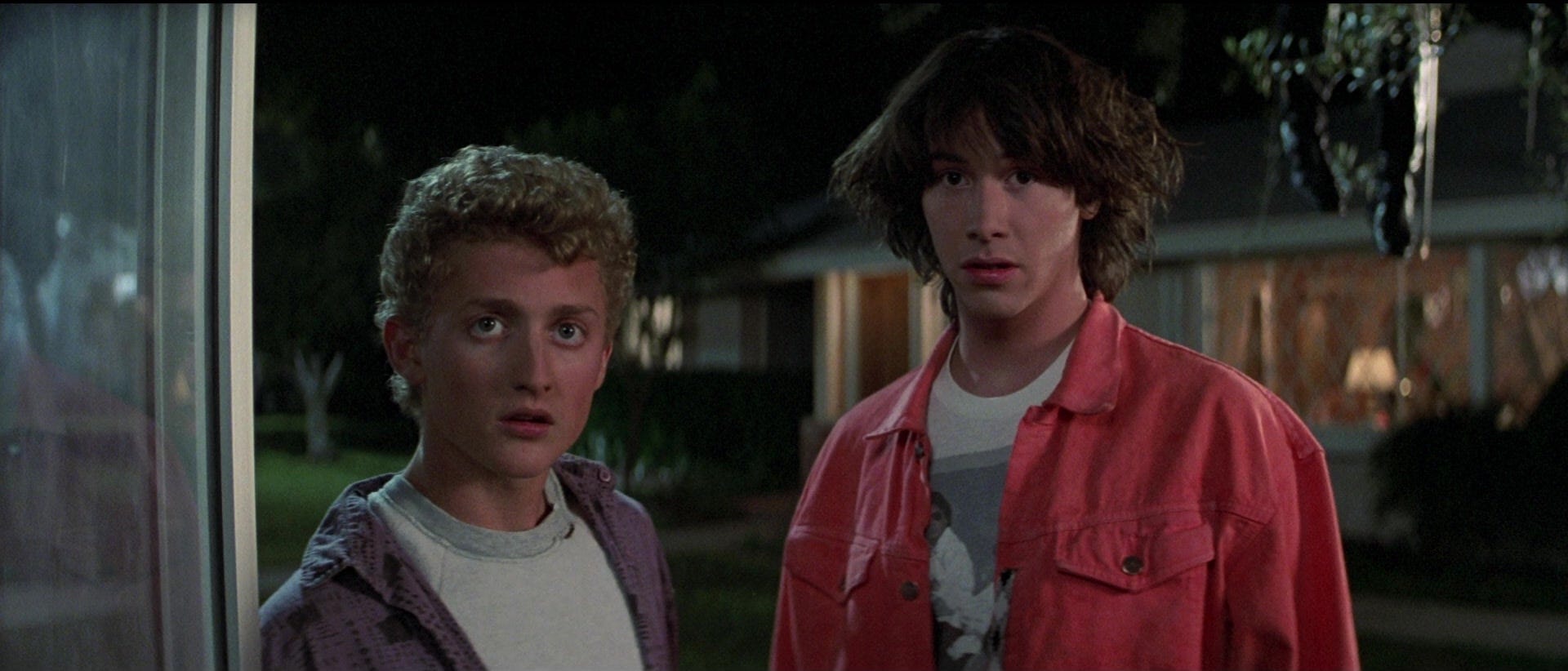
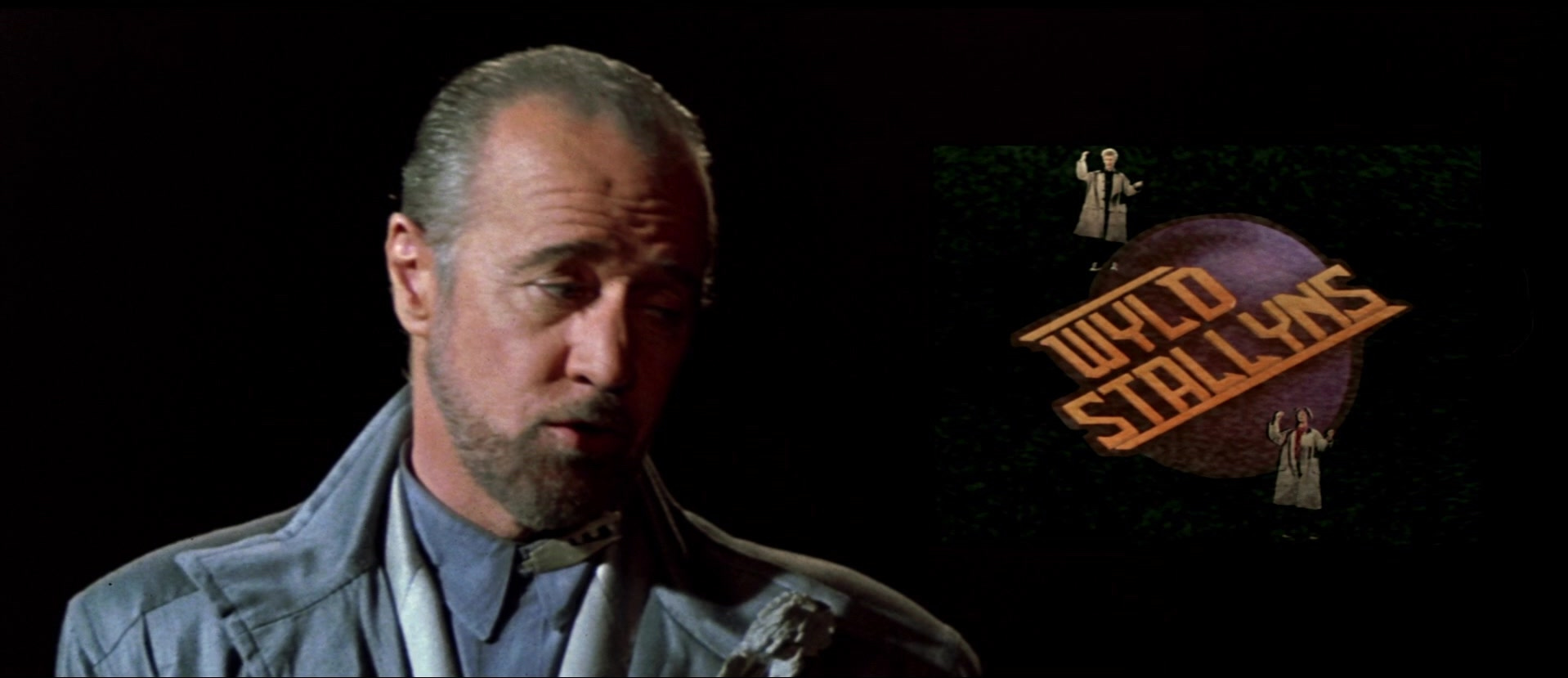
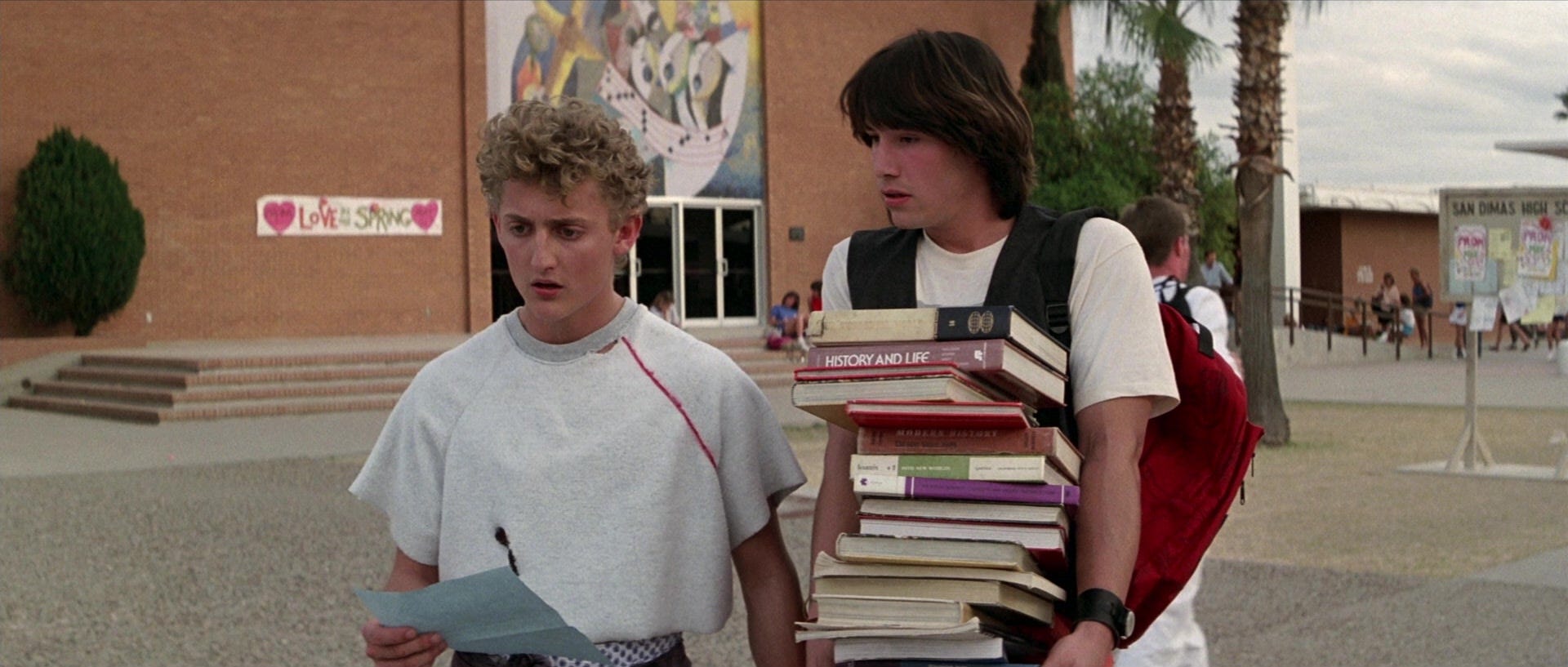
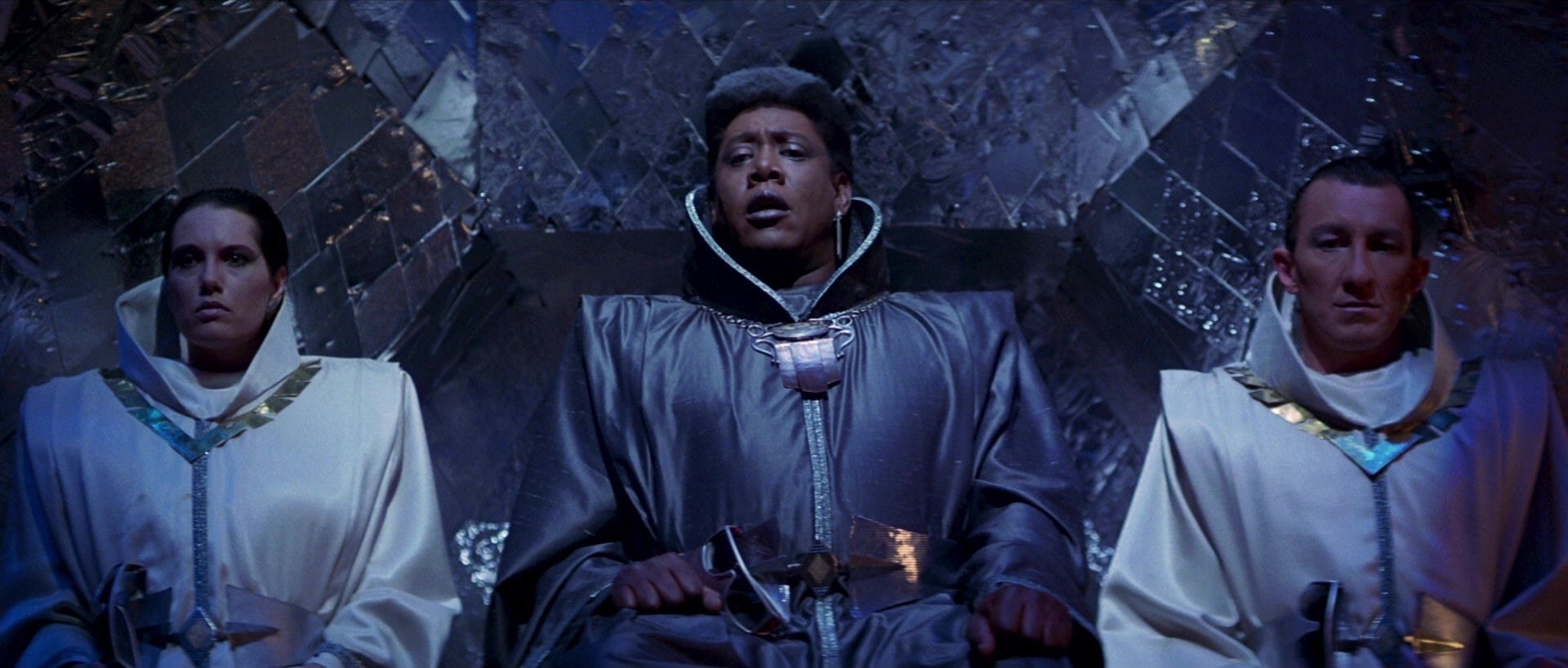
To cast Rufus, an emissary from seven hundred years in the future, where Bill & Ted’s music has united the planet, the filmmakers started with the idea of Eddie Van Halen, given that Bill & Ted worshiped the guitarist. Van Halen frontman David Lee Roth was much more comfortable in front of a camera, but his antics didn’t mesh with Reeves and Winter. Ringo Starr got closer to being cast, until Scott Kroopf, who’d just worked with George Carlin as a producer of Outrageous Fortune (1987), reminded everyone how good the stand-up comedian had been in a small role. To play the Three Most Important People in the World in the 27th century, ZZ Top were discussed. In uncredited cameos, saxophonist Clarence Clemons of the E Street Band and vocalists Martha Davis of The Motels and Fee Waybill of The Tubes were cast. Continuing the rock ‘n roll theme, Jane Wiedlin, rhythm guitarist of The Go-Go’s, took the part of Joan of Arc. Filming for Bill & Ted’s Excellent Adventure commenced on February 9, 1987 in the area of Phoenix, Arizona, which stood in for San Dimas, California. Coronado High School in Scottsdale was used for campus exteriors, while interiors were shot at East High School, in Phoenix, which had been shuttered at the time of filming and would be torn down in 2002.
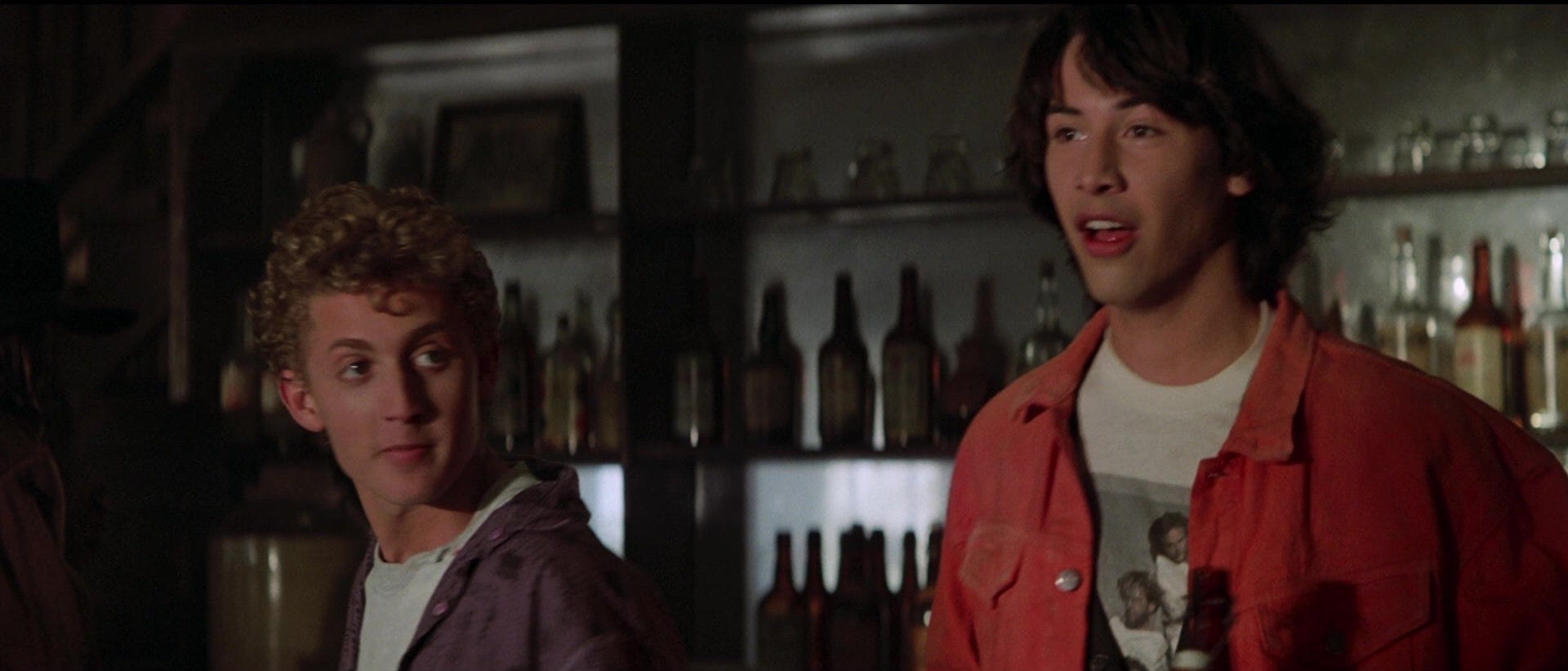
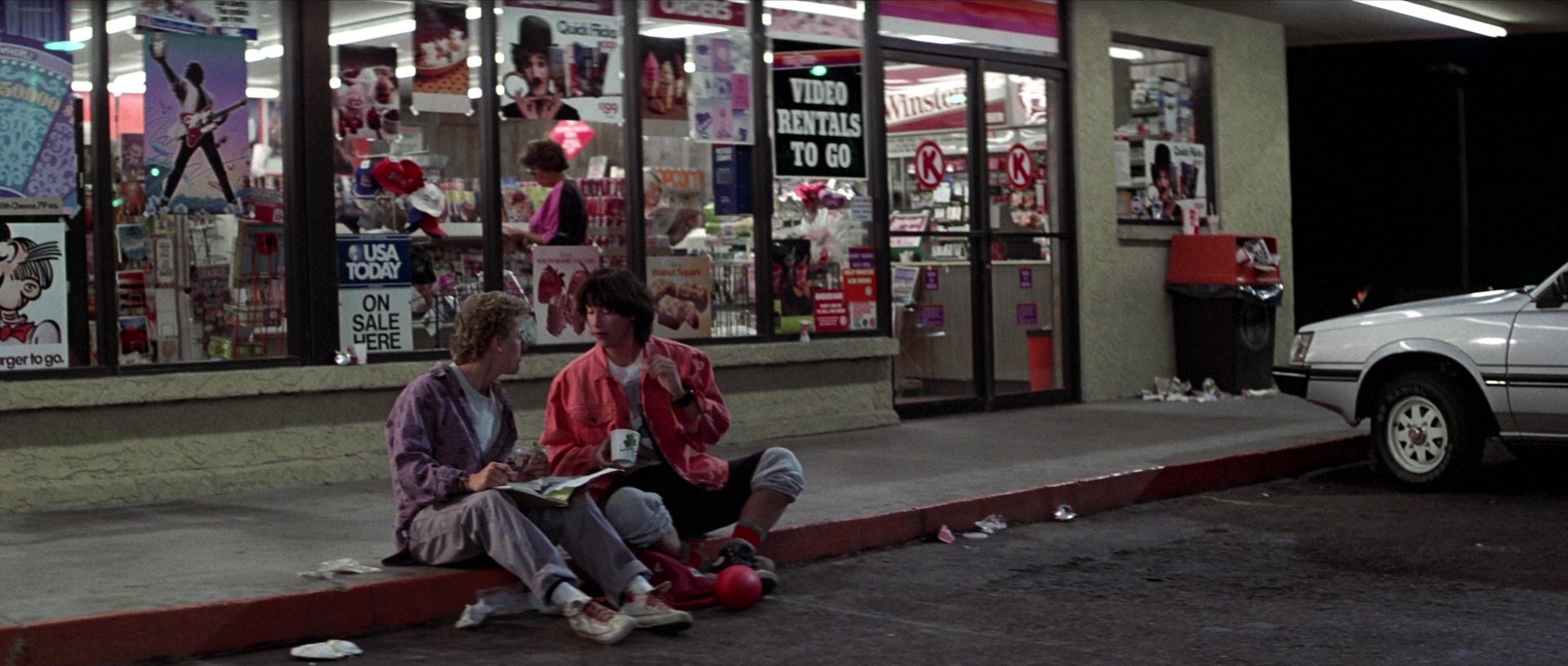
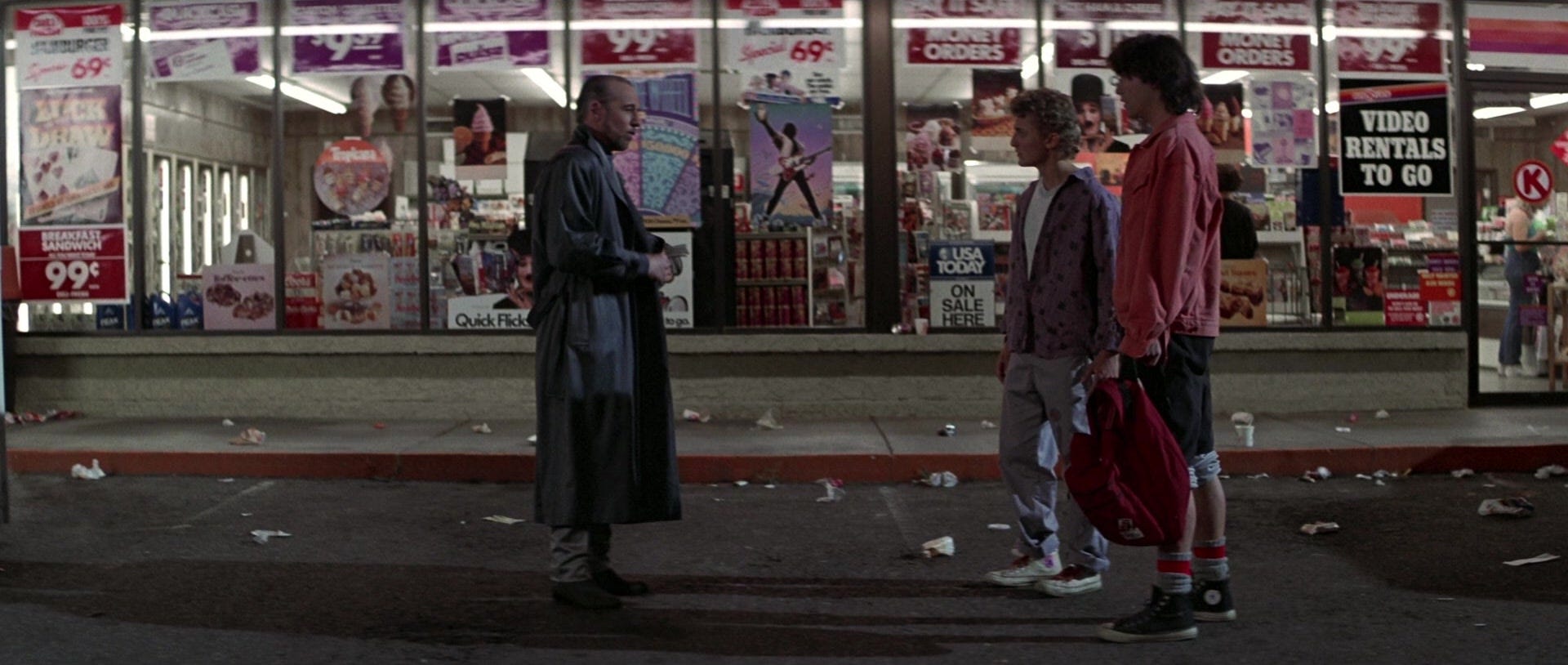
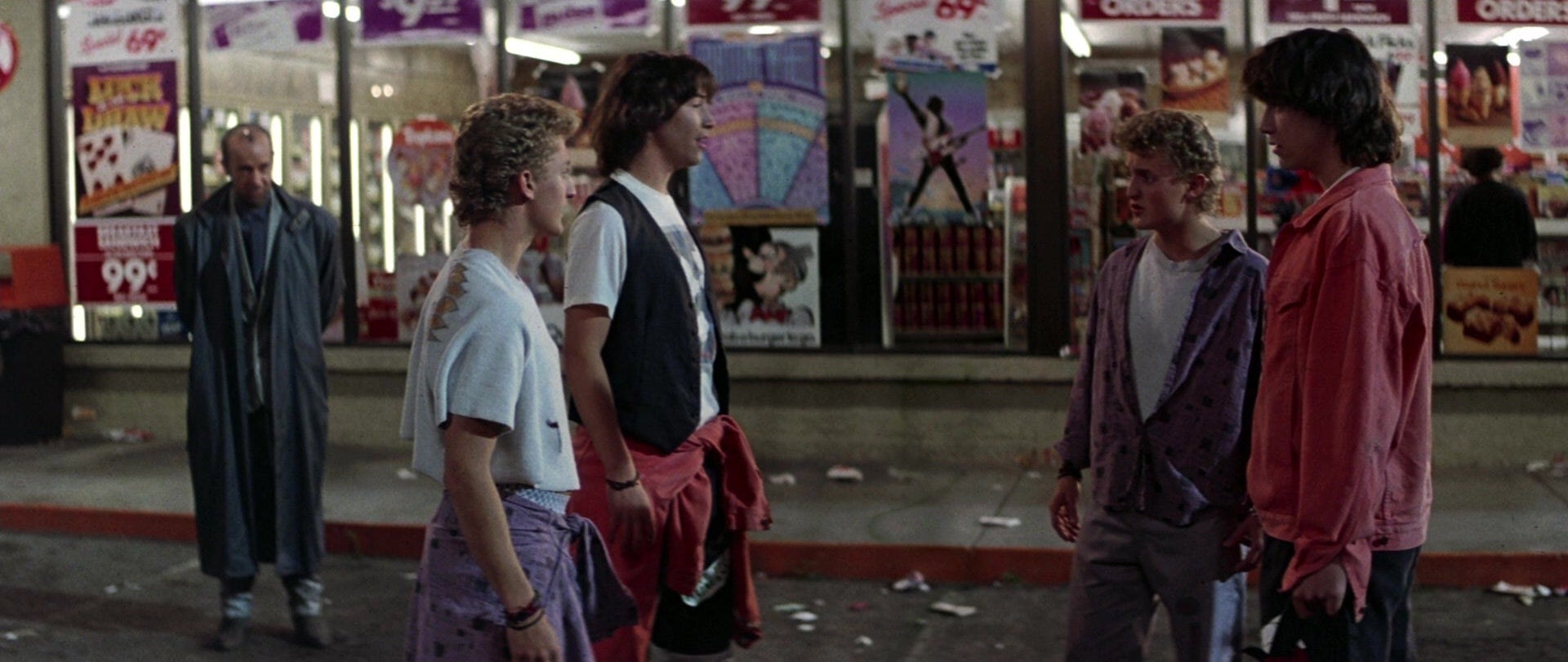
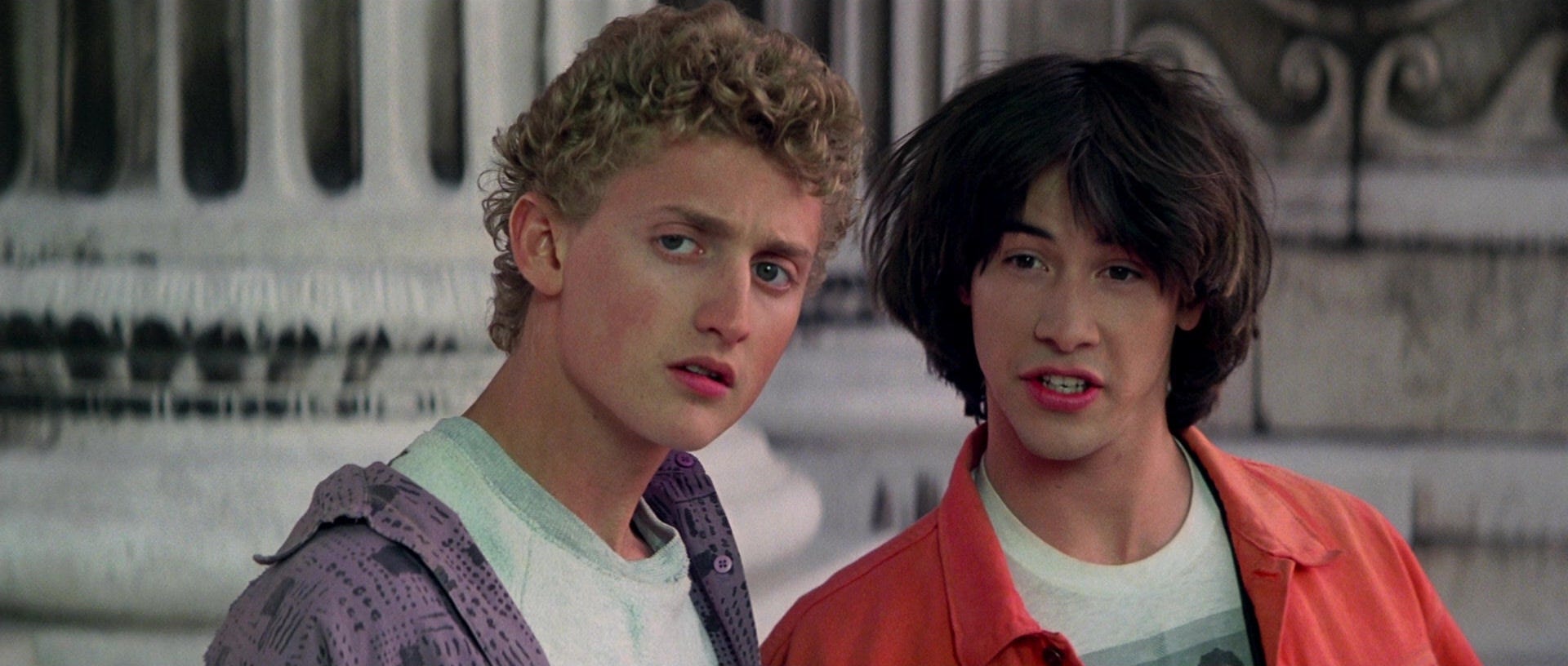
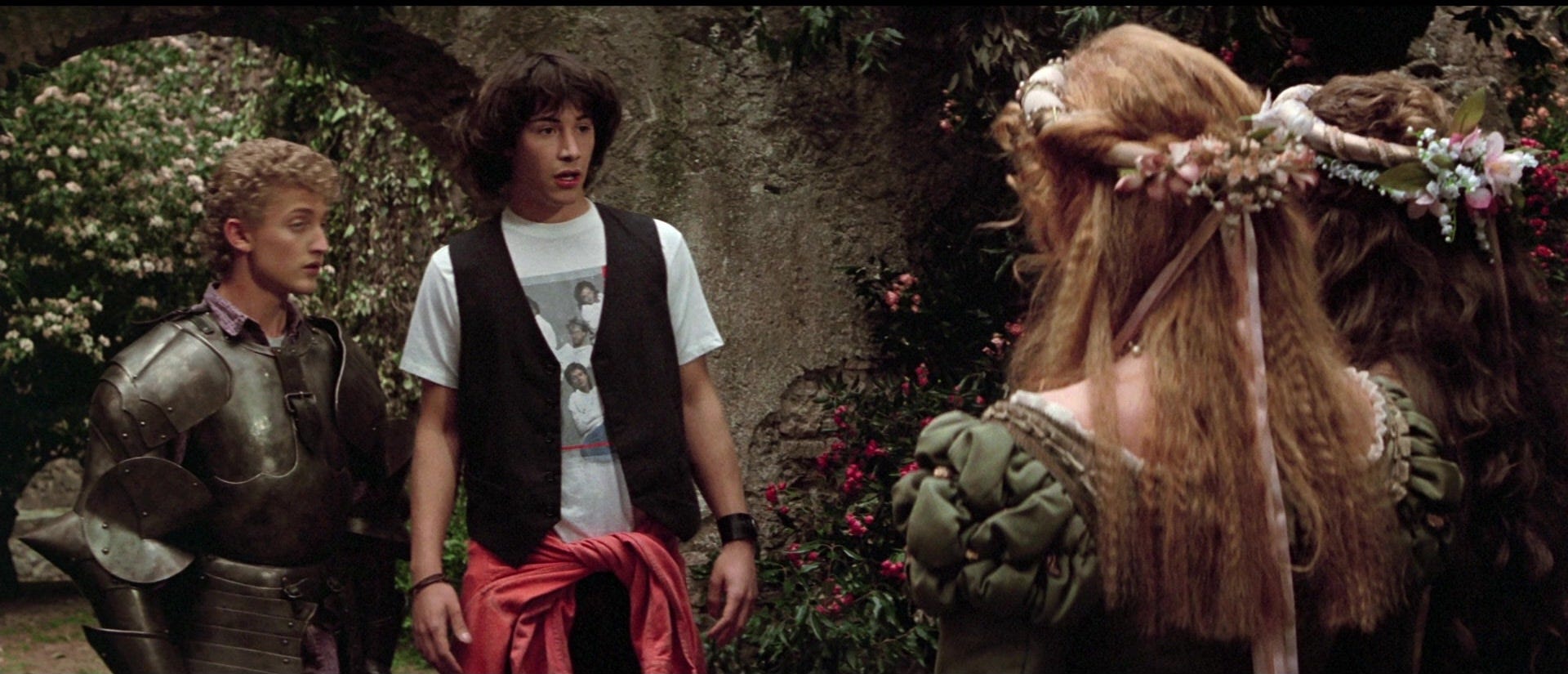
7-Eleven declining to participate in the movie, Circle K stepped in, and for the scene where Bill & Ted meet Rufus, a convenience store in Tempe, at West Southern Avenue at South Hardy Drive served as a filming location. The wild west scenes were shot at now defunct Carefree Studios in Carefree, Arizona. A Chuck E. Cheese in Phoenix stood in for the ice cream parlor “Zyggie’s,” where Chris Matheson & Ed Solomon appeared as obnoxious servers who wait on Napoleon. Temple Village Lanes was used for the bowling alley scene, and “Waterloo,” the water park where Bill & Ted catch up with the conqueror, was shot at Golfland/ Sunsplash in Mesa. The Metrocenter in Phoenix was used to film the mall sequence, standing in for “San Dimas Mall.” Unexpectedly for a low budget film, Dino De Laurentiis had the connections to shoot most of the scenes set in the ancient world in Italy, where cast and crew were flown for the final two weeks of principal photography. The Piazza Venetia in central Rome stood in for ancient Athens, while the medieval sequence was filmed in and around Odescalchi Castle, on Lake Bracciano.
The woes for Bill & Ted’s Excellent Adventure began in earnest when Dino De Laurentiis and executives at DEG were screened a rough cut. DEG was already in dire financial shape after virtually all of their productions–Raw Deal (1986), Maximum Overdrive (1986), Blue Velvet (1986), Tai-Pan (1986), King Kong Lives (1986), From the Hip (1987)--failed to hit at the box office and some landed among the worst reviewed films of the year. In the coming months, Million Dollar Mystery (1987), Near Dark (1987), Hiding Out (1987), Date with an Angel (1987), Illegally Yours (1988) and Pumpkinhead (1988) would bring worse news, each film appealing to fewer moviegoers than the last. The carefree silliness of Bill & Ted’s Excellent Adventure did not land well in the anxious screening room, and in a case of buyer’s remorse, De Laurentiis put the teen comedy up for sale. None of the distributors who got a look at the rough cut thought any more of it than the Italian mogul had, and instead of arriving in theaters in the spring of 1988, the picture ended up in a vault in Wilmington. Cable television was mentioned as a potential destination.
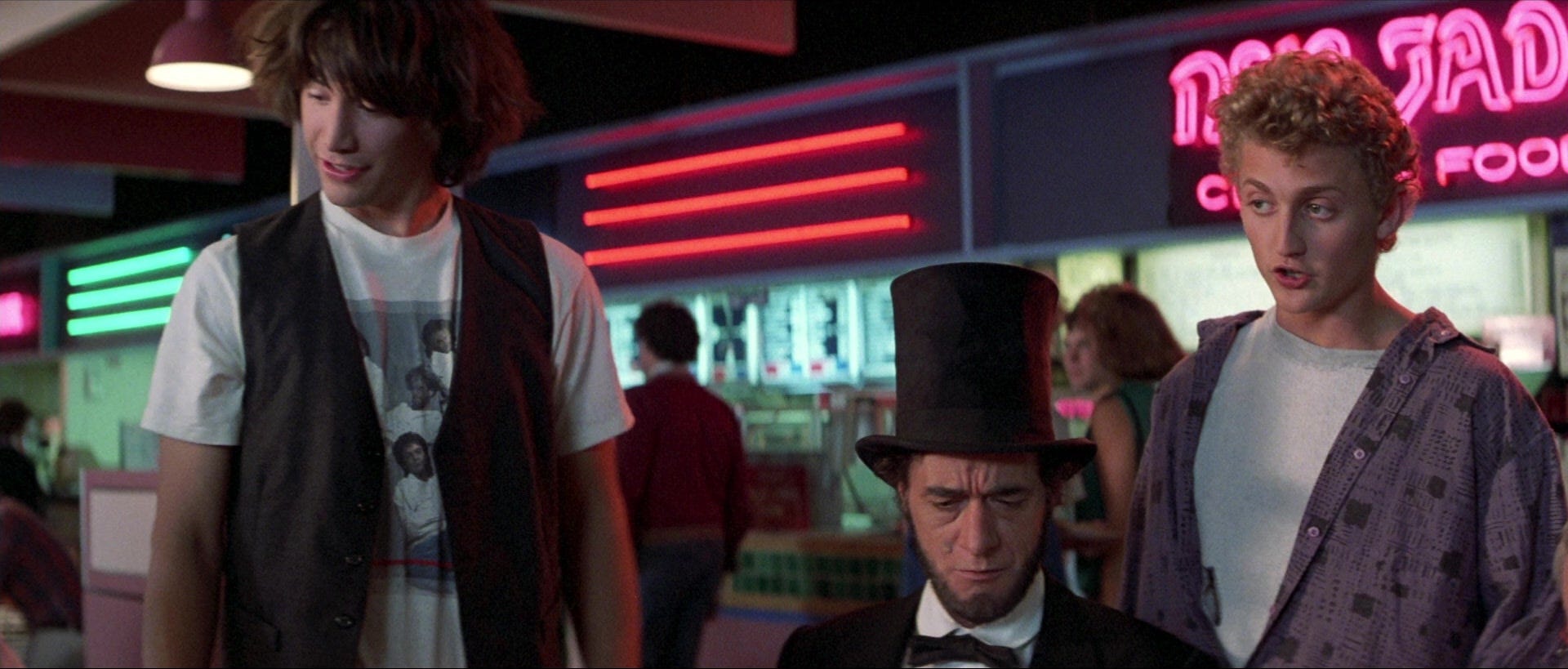
Producer Scott Kroopf went to see Rick Finkelstein, a former executive vice-president at DEG who’d taken a job as president of Nelson Entertainment, a company that had bought the home video division of Embassy Pictures in 1985 and more recently entered into a co-financing deal with Castle Rock Entertainment in exchange for domestic video and foreign distribution rights on their pictures, an upcoming one titled When Harry Met Sally … (1989). Finkelstein had been a champion of Bill & Ted’s Excellent Adventure, and with Kroopf selling the movie for virtually ten cents on the dollar–$1 million–found a buyer. Nelson was not only willing to provide completion costs for a musical score and visual effects, but through their relationship with Orion Pictures on films like Prancer (1988), arrange theatrical distribution. In post-production, Stephen Herek began to see why distributors may have treated Bill & Ted’s Excellent Adventure like it was the worst movie ever made. Neither the beginning or ending worked. As scripted and shot, Bill & Ted were introduced at a school bus stop, where they launch into a choreographed air guitar number that continues on their ride to school. Lopping the sequence entirely, Herek gained addition by subtraction. The rough cut concluded with Bill & Ted presenting their history report–Billy the Kid, Socrates, Beethoven, Sigmund Freud, Genghis Khan and Abraham Lincoln in tow with Napoleon and Joan of Arc–to their teacher (Bernie Casey) and a dozen peers in their small classroom. This was capped by the boys attending prom (in shorts) with the princesses (Diane Franklin, Kimberley LaBelle). With Nelson willing to kick in the funds, Herek reshot the ending in an auditorium, turning Bill & Ted’s report into a raucous sound and light show in front of what appears to be two hundred spectators. (The prom scene was dropped).
A test screening for Bill & Ted’s Excellent Adventure was booked in the best home field a teen comedy could have: the Sherman Oaks Galleria in Sherman Oaks, California. Ed Solomon claims he was visiting the mall and with no expectation of being recognized as the co-writer, was recruited to attend the screening, a free movie pitched to him as George Carlin helping some boys travel through time. Solomon passed, realizing later his participation in the focus group as a ringer might have helped his own movie get a release. This turned out to be unnecessary. To the surprise of everyone involved in the film, its test scores in Sherman Oaks went through the roof. Certain this was a fluke, Orion scheduled a second screening as far from Southern California as they could get: Secaucus, New Jersey. Those scores were even higher. Buoyed by the results, Orion set Bill & Ted’s Excellent Adventure for a release on President’s Day weekend, February 17, 1989, in 1,196 theaters. This was almost half the screens Universal Pictures was opening the Tom Hanks comedy The ‘Burbs in, but critics pinned both films with some of the worst reviews of the year. Gene Siskel and Roger Ebert didn’t even bother attending a press screening of Bill & Ted’s Excellent Adventure.
Johanna Steinmetz, Siskel’s substitute in the Chicago Tribune, wrote: “It helps if you think of Bill & Ted’s Excellent Adventure as sort of a Sesame Street for teens. Beneath the self-aggrandizing plot, the rock music, the dudespeak and the humor lurks a smattering of knowledge.” She gave it two stars out of four. Writing for the New York Times, Vincent Canby could barely muster the energy to salvage the comedy. “The one dimly interesting thing about Bill & Ted’s Excellent Adventure is the way the two teenage heroes communicate in superlatives. ‘We are about to fail most egregiously,’ says Ted to Bill, or maybe it’s Bill to Ted. They are also fond of odd words, such as bodacious. Other than that, they are inconsistent ciphers.” Filing a piece for the Los Angeles Times, bench critic Chris Willman chimed in: “Make no mistake. Bill & Ted’s Excellent Adventure is not a satire of mindlessness; it’s unabashed glorification of dumbness for dumbness’ sake.” Since John Hughes and all the cast members of the so-called Brat Pack had graduated to pictures aimed mostly at adults, teenagers hadn’t had a good movie that met them where they lived. The Naked Gun (1988), Twins (1988) and Rain Man (1988) were atop the box office, and none featured a teenage character with youthful preoccupations.
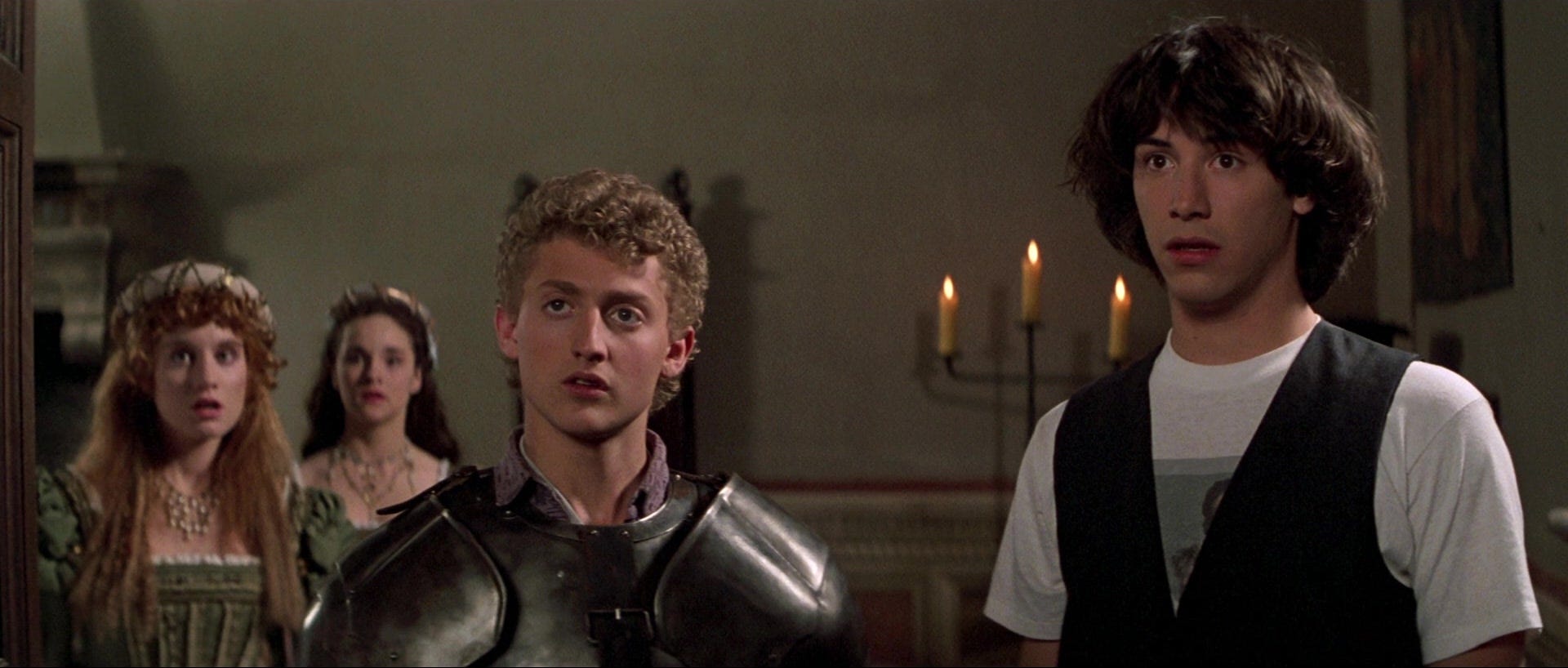
Even without Van Halen or ZZ Top, a zest for rock ‘n roll shot through Bill & Ted’s Excellent Adventure and helped sell it, a trailer capped with the moment a medieval monarch instructs his minions to place Bill & Ted in the iron maiden (“Iron Maiden?! Excellent!”). The comedy was a sleeper hit, spending eight weekends among the top ten grossing pictures in the U.S., where Orion expanded the release to 1,321 theaters in its fifth weekend. If DEG had believed in the picture enough to open it in as many theaters as Orion did, it would’ve been the highest grossing film in the history of the company, which filed for bankruptcy in 1989. Bill & Ted launched an animated series (Bill & Ted’s Excellent Adventures, Season 1 of 2 featuring the voices of Reeves, Winter, Carlin and Casey), a Nintendo video game, and with diminishing returns, a short-lived half-hour comedy on Fox also titled Bill & Ted’s Excellent Adventures, and a breakfast cereal. Bill & Ted’s Bogus Journey (1991), written by Chris Matheson & Ed Solomon, directed by Peter Hewitt but reuniting the cast of the original, was a modest commercial hit, its decision to “kill” the franchise characters and send the boys to hell a creative gamble that didn’t amuse moviegoers as much as it did the cast. Amid speculation that dated back to the dawn of the Internet, a legacy sequel starring Keanu Reeves & Alex Winter and written by Matheson & Solomon, Bill & Ted Face the Music (2020), was finally produced, just in time for the COVID lockdown.
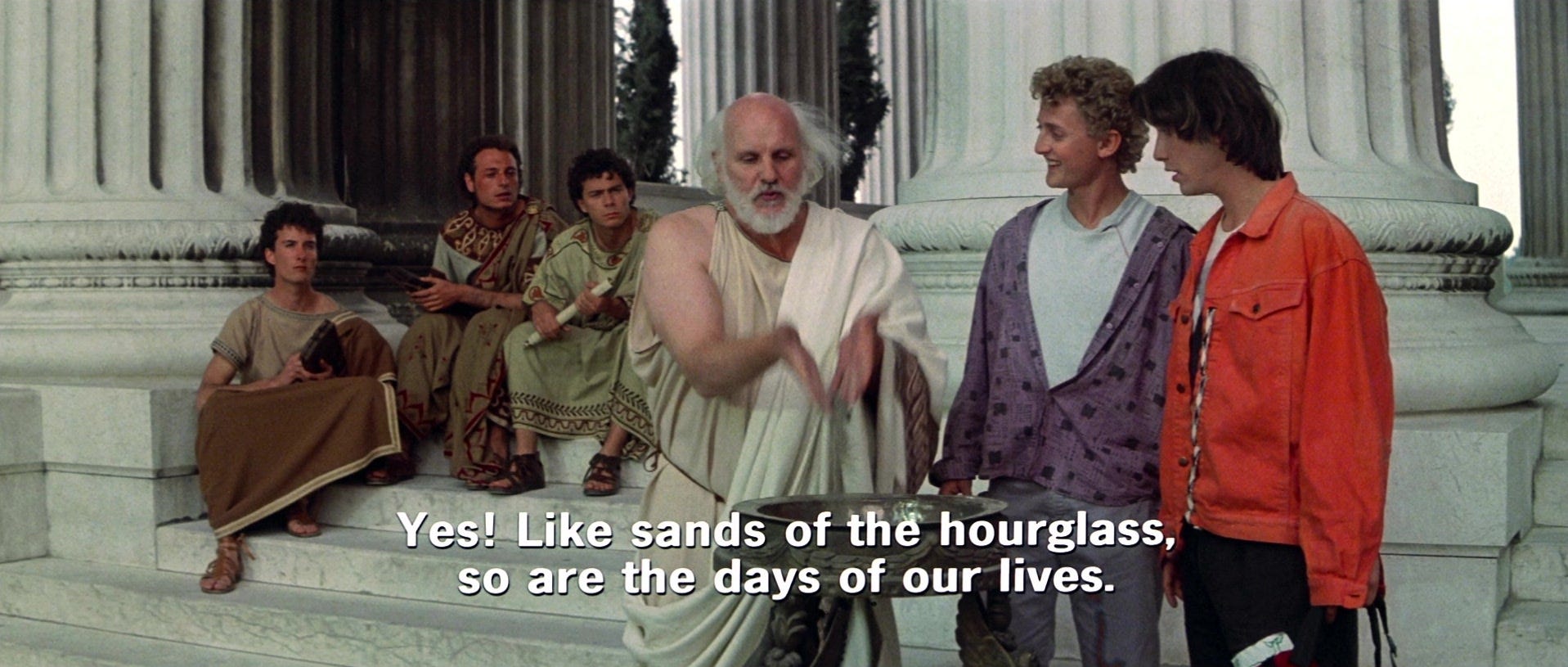
Based on material they developed in their improv club or at coffee shops, it’s not surprising that visual wit is not in abundant supply in Chris Matheson & Ed Solomon’s screenplay, and if it had been, there wouldn’t have been enough money in the budget to realize it. As a result, Bill & Ted’s Excellent Adventure gets off to a middling start, like a bargain Back to the Future that takes the Jeff Spicoli (Sean Penn) character from Fast Times at Ridgemont High (1982) and sands down his edges, leaving us language and attitude. The more time we spend with Bill & Ted, though, the more the movie shuffles in a direction that distinguishes it from the ‘80s movies that mixed teenagers and science. Rather than tech, the childlike yearning of Bill & Ted becomes the fuel that propels them on their journey through time, not unlike sexual lust sending the Christopher Reeve character into the past in Somewhere In Time. Chris Matheson’s take on time travel is more playful than his father’s, and the film is loaded with laughs (one nugget is Bill & Ted referring to Socrates as “So-Crates,” Bill quoting the Greek philosopher from their textbook, “The only true wisdom consists in knowing that you know nothing!” to which Ted replies, “That’s us, dude”).
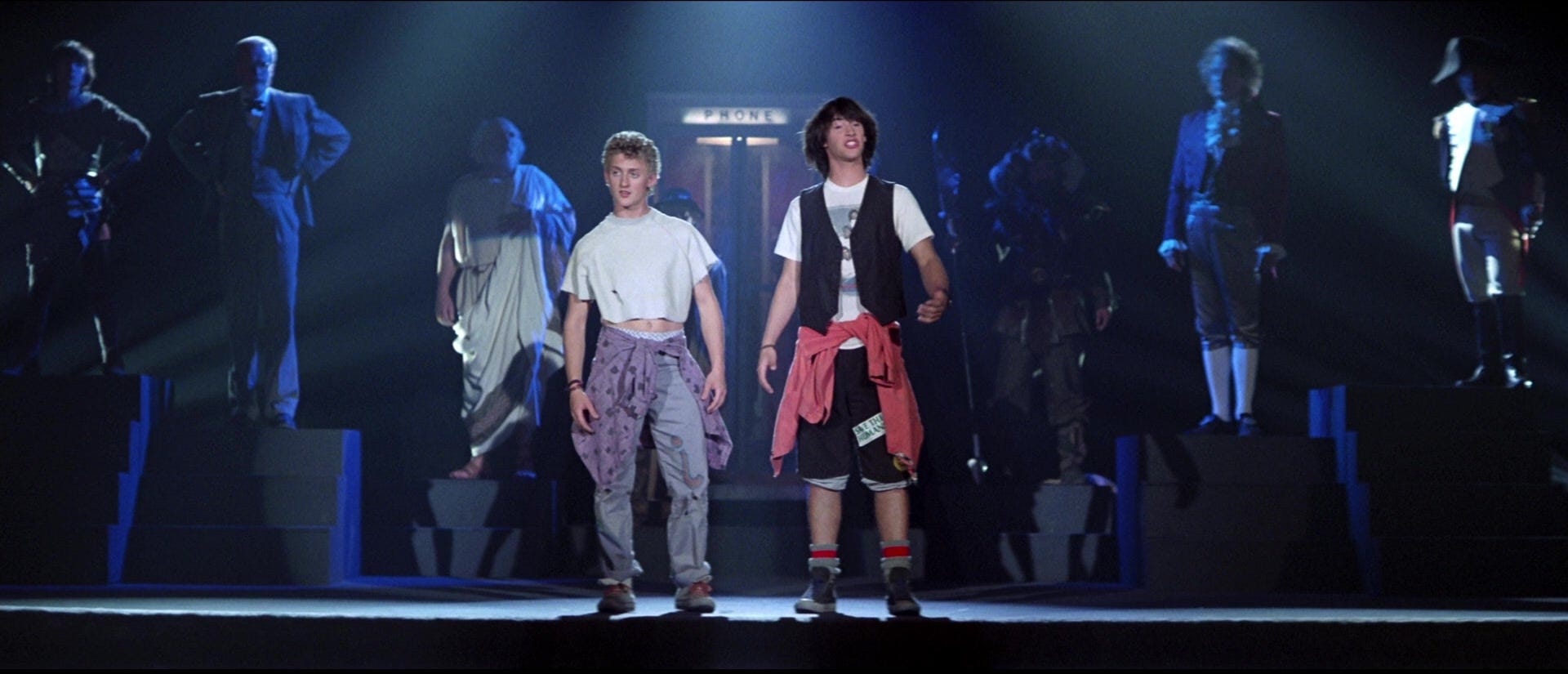
While it’s easy to get their characters confused, Keanu Reeves brings an infectiously endearing, puppy quality to Bill, while as Ted, Alex Winter is jumpier, more like a cat, disgruntled over being reminded by his bosom buddy what a babe his stepmother Missy (Amy Stock-Poynton) is. They make a winning comic duo, ironic considering Bill & Ted’s Bogus Journey would be the last time either actor was trusted in a comedy. Just as Matheson & Solomon improvise their way from scene to scene, Stephen Herek adapts to the limitations he was dealt, overcoming a shortage of substantial moments between Bill & Ted and the historical figures they stuff into their phone booth. What the comedy does is teach us things about each figure. This is a departure from Back to the Future, in which the lesson Marty McFly takes from the past is that he can steal Chuck Berry’s act. This movie, as unsophisticated it is, has a kinder, deeper message behind it. Instead of suggesting that time travel could help us acquire material goods or an upper middle class lifestyle, Bill & Ted’s Excellent Adventure arrives on being excellent to each other as its major takeaway. Rather than settle for Abraham Lincoln telling us this, the characters of Bill & Ted embody this spirit of good will, refusing to blame anyone for their grades or failing to rock like Eddie Van Halen. While the sequel would give Bill & Ted the world building and supporting cast they warranted, the boys learn something in their first outing, and in a happy accident, so do we.
Video rental category: Comedy
Special interest: Weird Science
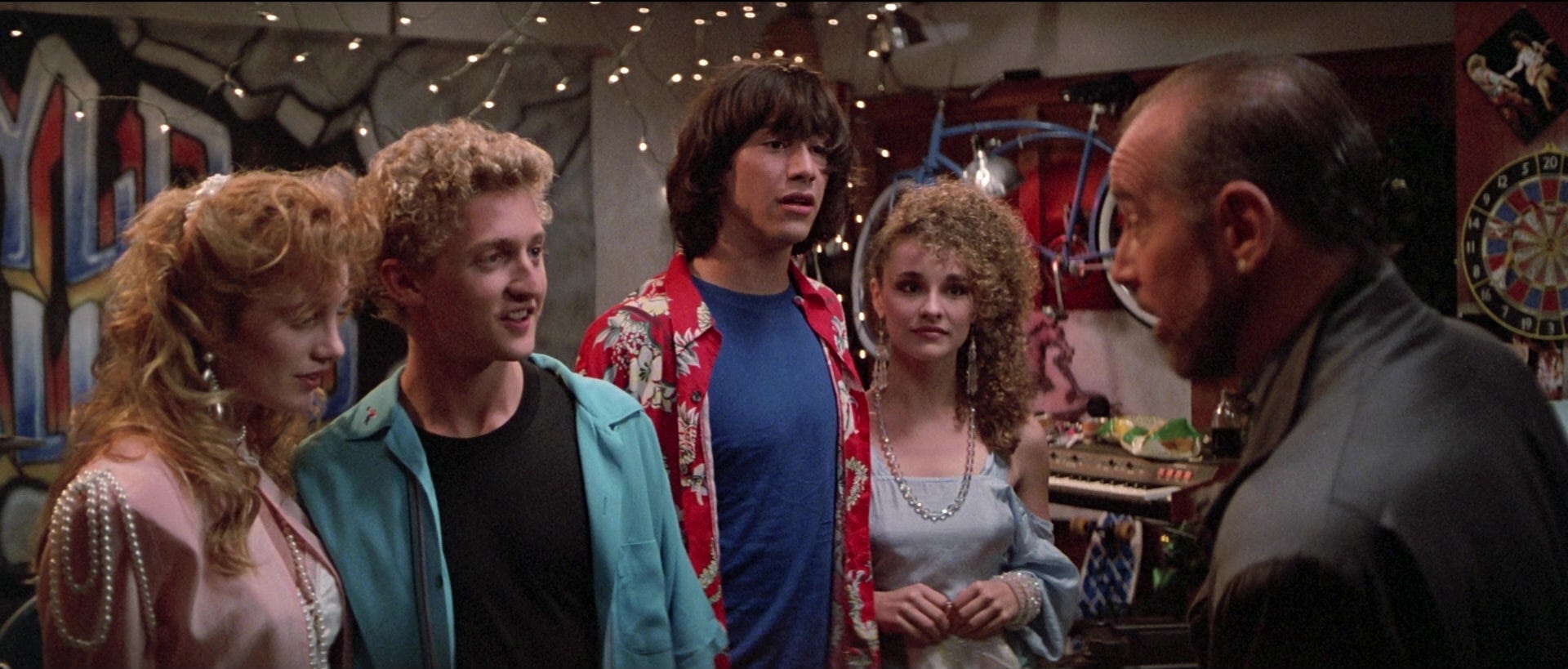
Thanks to Bill & Ted’s Excellent Online Adventure, a bodacious fan site that fills in much of the film’s production history
p.s. kind of cool after seeing Alex Winter in lost boys, to see him in the most excellent adventure was somehow gratifying… Always wondered what happened to him and his career.
Hey Joe, good morning! Thanks for this one… Most excellent! As always, most bodaciously written! Peace! CPZ